
In August 2026, Dynamic Creatures officially split from Boston Dynamics, creating an independent company focused on humanoids intended for the entertainment and hospitality industries. The decision reflects a broader approach to robotics - one geared towards factories, the other towards people - and clearly separates two different models: one for industry, the other for the human environment.
Separation as a strategy, not a breakup
Dynamic Creatures did not disappear in the shadows - on the contrary: its official separation from Boston Dynamics on September 8, 2026, is the result of a long-term strategy. The company did not cease to exist, but took full control over the development direction of humanoids in sectors where human interaction and experience are key. This was not a conflict, but a transition from joint activities to a partnership with clearly divided areas of operation.
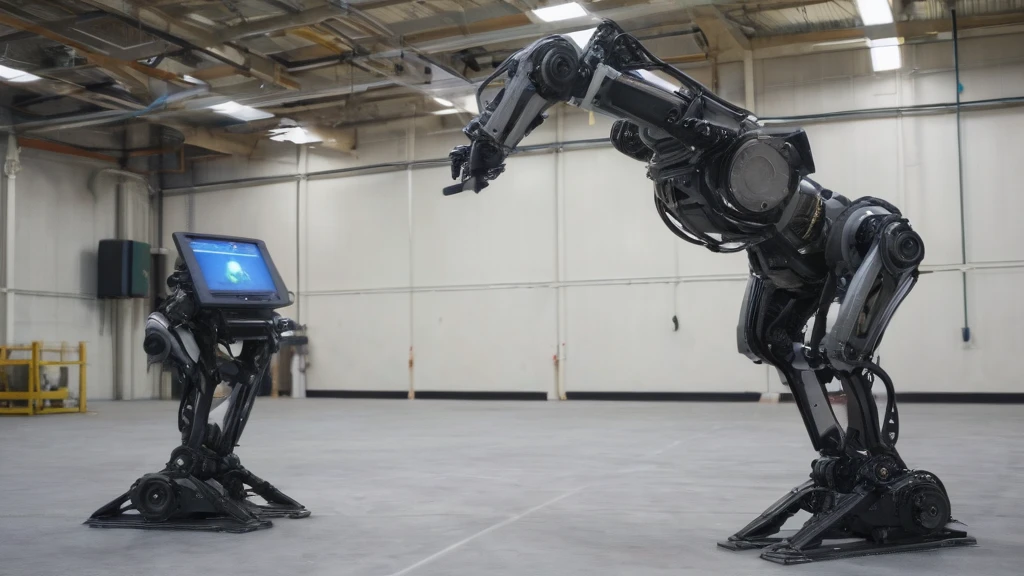
Behind this move lies a real change in Hyundai Motor Group's approach to robotics. In 2026, the company emphasized that Atlas is to be not only a technological achievement, but also an industrial product - with planned production of 30 thousand units per year in the USA by 2028. In this context, the separation of Dynamic Creatures allows Boston Dynamics to focus on the commercialization of Atlas, and not on the development of user interaction.
Two worlds of robotics: factory and human
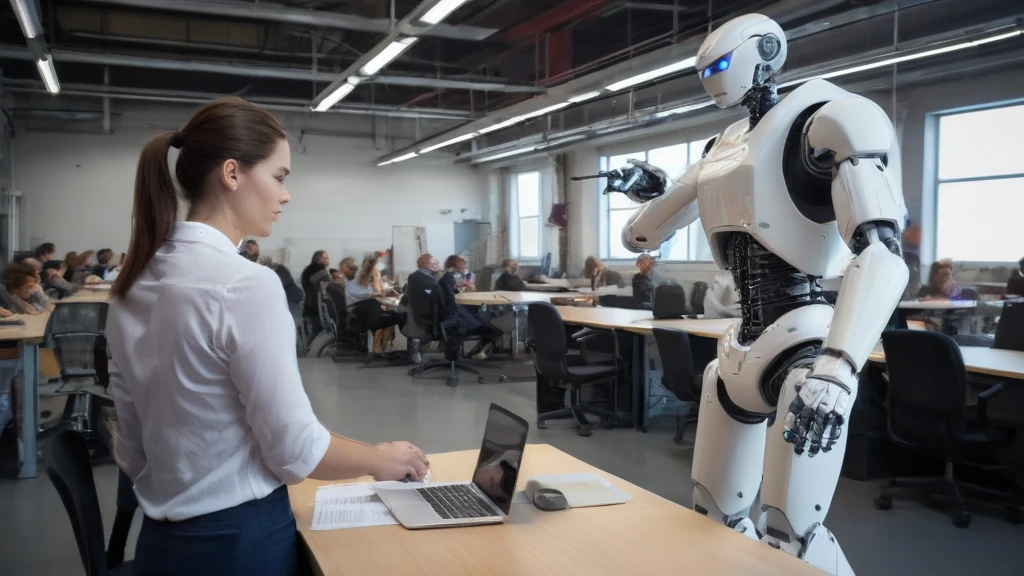
The difference between the new direction of Dynamic Creatures and the mission of Atlas is fundamental. Atlas operates in industrial conditions - its success is measured by efficiency, reliability and return on investment. Robots there do not have to be 'friendly', but they must perform tasks flawlessly: transporting materials, assembly, sorting. Dynamic Creatures operates in a completely different world - where a robot is a character, and its value depends on how well it conveys emotions, reacts to people and creates an experience.
This means that it is no longer just about whether a robot can walk up stairs, but whether it can smile at the right moment, understand a joke or help a guest in an amusement park. From this perspective, specialization is not a limitation - it is a way to achieve value that cannot be measured only by technical parameters.
Industry and entertainment: two business models
In industry, robots are part of the process - their task is to replace people in repetitive, physically demanding or dangerous activities. In entertainment, a robot is part of the story - its function is to build emotions, interaction and memories. These two models cannot operate on the same technological platform without compromises.
Dynamic Creatures can now develop characters, interaction scenarios, and emotion expression systems - all without the pressure associated with mass production. Boston Dynamics, on the other hand, can focus on reducing costs, optimizing performance in factory environments, and integrating with existing production lines. Therefore, the separation is not a breakup, but a transition from an experiment to a business model.
Does this mean the end of general-purpose humanoids?
 Enlarged imageClose zoomPrevious image
No. The separation of Dynamic Creatures does not mean that general-purpose robots will cease to exist - but it shows that their role is changing. In the future, there will no longer be competition over who has the most degrees of freedom or can run better. Instead, the market will begin to evaluate in which scenarios a robot can create value - whether by increasing the number of visitors in a park or improving the efficiency of an assembly line.
This shift is already visible: Agility Robotics is focusing on Digit in logistics, and Boston Dynamics on Atlas in production. Dynamic Creatures is another step in this direction - not towards universality, but towards specialization.
What does this mean for the future of robotics?
The separation of Dynamic Creatures from Boston Dynamics is not just a company decision - it is a signal to the entire industry. It indicates that the commercialization of humanoids is no longer a technological issue, but a business one. The key question becomes not 'can a robot do everything,' but 'can it do something specific better than a human - and is it profitable?'
In the future, we expect more such separate entities: one for industry, another for services, and a third for the home. This is not a breakup, but maturity. Robotics is ceasing to be an experiment - it is becoming part of ecosystems where value is defined by the scenario, not by parameters.