Programming Toshiba Robots in SCOL
Precise Control of Toshiba Robots
Advanced Programming in SCOL
Process Optimization in Automation
Effective Integration of Toshiba Robots
Modern Solutions for Industry
SCOL: Niche Programming for Precision
SCOL is a specialized tool for programming Toshiba robots, providing high precision and control over automation processes. NexaRob provides support with configuration, optimization, and integration of SCOL systems, adapting them to specific production requirements.
Contact us Watch the videoDiscover SCOL, a Unique Niche Language Designed for Toshiba Robots and Advanced Automation Across Diverse Industries
Programming Toshiba Industrial Robots in SCOL
SCOL, Toshiba SCOL, is a specialized programming language developed for selected Toshiba robotic solutions. By focusing on precise motion and flexibility in integration with peripheral devices, SCOL helps achieve high efficiency in processes ranging from simple pick & place tasks to more complex assembly or inspection operations. At NexaRob, we value SCOL especially in applications where accuracy, stability, and efficient adaptation to non-standard production requirements are important.
Why SCOL?
- Designed for Toshiba Robots: SCOL takes hardware characteristics into account, enabling more effective use of the mechanical and electronic capabilities of robots.
- Advanced Motion Support: In addition to standard point-to-point (PTP) and linear instructions, SCOL offers versatile commands for smooth trajectories, with acceleration and deceleration adapted to process requirements.
- Integration with Vision Systems and Sensors: The language supports communication with 2D/3D cameras and force sensors, enabling dynamic real-time motion correction, especially useful in delicate assembly or inspection tasks.
How Can NexaRob Help?
- Requirements analysis: Together with the customer, we define the goals and application context to determine whether SCOL is the most appropriate tool and which Toshiba robot models should be used.
- Code Creation and Optimization: Our team prepares SCOL applications, tests them in a simulation environment, and then adapts them at the actual workstation, ensuring stability and performance.
- Support and training: We offer operator training, service during use, and consulting on the development of new functions so that your team can easily take advantage of Toshiba robotics capabilities.
See How SCOL Stands Out from Other Robotics Languages and Where Toshiba Robots Gain Particular Value
Key Functions and Application Examples in SCOL
Although the robotics world offers numerous programming solutions, SCOL is a dedicated and specialized tool designed exclusively for Toshiba robots. Below are the features that make SCOL suitable for many industries while providing flexibility and accuracy:
Advanced Motion Instructions
SCOL makes it possible to define both standard point-to-point movements and more complex trajectories useful in precision assembly or welding tasks.
Application: Electronics industry, delicate component assembly, automotive, assembly of small parts, and food industry, packaging non-standard products.
Flexible Communication
The language provides libraries and protocols that simplify integration with force sensors, vision systems and PLC controllers. The robot can respond to changing conditions in real time.
Application: Processes with high variability in object shape and position, such as sorting small items or vision-based product quality inspection.
Modular Code Structure
Creating separate procedures for specific tasks, such as moving, checking, and assembly, makes applications easier to manage and edit. When changes are needed, parameters can therefore be adapted quickly to a new product range.
Application: Production lines requiring frequent product modifications, for example in the cosmetics or pharmaceutical sectors.
Extended Safety Functions
SCOL provides tools for defining work zones and collision thresholds. If configured values are exceeded, the robot immediately stops moving, protecting operators and equipment.
Application: Industries where safety is a priority, such as laboratories or environments where robots work directly alongside employees.
Application Versatility
Thanks to compact, precise Toshiba robots and attention to detail in SCOL, applications are possible across many sectors, from electronic component assembly and light material processing to inspection in environments with elevated hygiene standards.
Application: Manufacturers with diverse portfolios that want to respond quickly to changing orders and market requirements.
SCOL Language focuses on precision and flexibility, which, combined with devices Toshiba provides efficient and scalable automation solutions. NexaRob provides support at every implementation stage, from early analysis and design through training and service. This allows your production line to meet growing market requirements while maintaining high standards of quality and safety.
Learn how to effectively create and modify SCOL code using a variety of tools and modes to accelerate the deployment of Toshiba robots in your company
Main Programming Modes and Methods in Toshiba SCOL
Toshiba robots can be programmed in SCOL in several ways, from entering commands directly on the operator panel, known as a teach pendant, to advanced simulation environments that make it possible to optimize code before actual startup. NexaRob helps select methods suited to the characteristics of a given production line, ensuring a safe, flexible, and efficient application deployment. The main programming modes are described below:
Teach Pendant (Online Programming)
- Direct command editing: Using the control panel, the operator can enter SCOL commands and set motion points directly on the Toshiba robot.
- Rapid Adjustments on the Line: This method is ideal for minor corrections or tests that do not require stopping the entire production process.
- Potential Limitations: For more complex projects involving many points or sophisticated logic, manually entering code in this way can become time-consuming.
Offline Programming (Simulation Environment)
- Working on a computer: SCOL code can be created and tested in a simulation environment, such as Toshiba's dedicated tool. This enables motion trajectories to be refined and collisions analyzed without interrupting production.
- Saving Time and Resources: After a program verified offline is uploaded to the real robot, only a short final calibration phase is required. This limits downtime and reduces the risk of errors caused by insufficient testing.
- Application: Particularly useful in projects requiring advanced precision, many control points or extensive control logic.
Remote Online Programming, Network-Based Control
- Remote code editing: With appropriate network security, NexaRob specialists or your internal team can connect to a Toshiba robot over the internet and update SCOL code in real time.
- Support from anywhere: This method enables a rapid response to potential problems or optimization needs without requiring an engineer to be physically present at the facility.
Hybrid Approach
- Combination of several methods: In practice, a simple Teach Pendant mode for corrections and calibration is often combined with more advanced offline tools for large projects requiring in-depth analysis.
- Gradual Code Improvement: An iterative approach makes it easier to eliminate errors and introduce changes without stopping the entire line.
Various programming methods in SCOL provide comprehensive capabilities for adapting to production needs, combining fast implementation of changes with reliable application operation. In the following sections, we will discuss how Toshiba robots, thanks to SCOL language - integrate with vision systems and sensors, further improving and securing production processes.
Learn how Toshiba robots using SCOL work with cameras and sensors to dynamically correct movement and increase production-line efficiency
Integration with Vision Systems and Sensors in Toshiba SCOL
Toshiba robots programmed in SCOL can go significantly beyond reproducing predetermined paths thanks to the ability to communicate with vision systems and various sensors, including force and torque sensors. This intelligent integration enables dynamic responses to changes in the environment and adaptation to different scenarios in real time. Below we present the key aspects of this cooperation:
Vision Systems
- Protocols and libraries: SCOL supports libraries that make it easier to receive data from 2D/3D cameras. In practice, this means a Toshiba robot can receive up-to-date information about the position, shape, or orientation of objects on the line.
- On-the-fly trajectory correction: If components are arranged randomly or small shifts occur, the robot continuously modifies its path. This reduces errors and shortens pick & place operation time.
Force and Torque Sensors
- Precision assembly: In processes requiring particular delicacy, such as assembling sensitive modules, SCOL enables force level monitoring to avoid crushing or cracking a component.
- Collision Detection: When torque exceeds the threshold defined in SCOL code, the robot automatically stops moving. This helps protect equipment and operators from the risk of damage or accidents.
Expanded Kinematic Capabilities
- Cooperation with Additional Axes: Toshiba robots can control, for example, rotary tables or positioners, while SCOL synchronizes their movement in complex assembly or welding applications.
- Application: Multi-stage assembly in automotive, high-speed packaging with dynamic correction in the food industry, or complex testing processes in electronics.
Application Examples
Food Industry
A camera identifies products of different shapes and sizes, while the Toshiba robot corrects position on the fly to place them gently into packaging without damage.
Electronics
Delicate assembly of sensitive components, where a force sensor controls pressure to minimize the risk of damage. A camera additionally verifies correct positioning of boards or connectors.
Logistics
The robot recognizes barcodes or labels on packages and sorts them appropriately in the warehouse. If a valid label is missing, SCOL can direct the package to a manual inspection station.
Thanks to integration with vision systems and sensors, Toshiba robots in jSCOL language adapt to the dynamic requirements of the production line, increasing process precision and safety. NexaRob supports the selection of the best equipment, software configuration, and operator training so that the company can fully leverage the innovative potential of Toshiba robotics.
See how the SCOL language transformed the assembly process in the electronics industry by reducing cycle time and the number of damaged components
Case Study: Precision Assembly of Electronic Components Using Toshiba SCOL
In the electronics sector, where hundreds of thousands of delicate components must be assembled every day, even a small error in precision or force selection can significantly affect production costs and quality. Toshiba robots programmed in SCOL proved to be highly effective support in projects requiring multi-stage integration and continuous adaptation to new product models. Below, we present information from a real implementation in which NexaRob supported the customer at every stage, from analysis and code development to operator training.
Context and Key Challenges
- Delicate integrated circuits: The components had very tight tolerances, and some of them reacted negatively to excessive pressure or vibration.
- Continuously Changing Product Line: New device models were introduced every few months, requiring rapid reprogramming of assembly sequences.
- Stringent Quality Standards: Every defect resulted in significant complaint costs and delivery delays. A solution was needed that would reduce the number of damaged components to an absolute minimum.
Key Solutions in SCOL Code
Modular Division of Operations
NexaRob designed separate procedures for successive stages, such as picking a component, applying paste, and assembly, and adjusted parameters such as speed, force, and position in configuration files. This allowed operators to modify individual parameters themselves without having to change the entire code.
Integration with Force Sensors and Vision Systems
In real time, the robot received data from a 2D camera and corrected the gripper position on the fly. In addition, a force sensor informed SCOL of any excessive pressure, preventing housing deformation or bent pins.
Short quality tests after each cycle
After assembly, the robot performed a sequence of test movements to verify that no components had been incorrectly installed. This reduced the number of products sent for manual inspection.
Results and Benefits
- 20-30% increase in efficiency: Automatic trajectory correction and easy switching between variants eliminated many of the downtimes typical of the previous manual assembly system.
- Reduction of defective units: A force sensor and vision system reduced assembly errors by approximately 40%, resulting in real savings and higher customer satisfaction.
- Easy adaptation to new models: SCOL code, with its modular architecture, proved relatively easy to modify, helping the company gain a competitive advantage by introducing new products more frequently.
This case study demonstrates how Toshiba robots with software in SCOL language can meet the requirements of intensive electronics assembly lines, where precision, gentle handling, and a fast production rate are essential. NexaRob provided comprehensive customer support, ensuring an effective final result and smooth adaptation to changing market needs.
Learn how to systematically improve SCOL applications and maintain full safety so Toshiba robots preserve maximum efficiency in a dynamic production environment
Code Optimization and Safety Procedures in Toshiba SCOL
After implementing a solution in SCOL, continuous code monitoring and improvement are extremely important to ensure Toshiba robots operate reliably while meeting occupational safety and quality requirements. NexaRob highlights several key steps that will help your team maintain high efficiency and readiness for further application development:
Regular Performance Analysis
- Collecting statistics: It is worth recording the number of processed units, the duration of individual stages, and any errors or downtime. The collected data will help identify areas requiring optimization.
- Motion refactoring: Even minor adjustments to motion points or speed can shorten the cycle without reducing quality. With SCOL, it is enough to modify individual procedures or configuration values.
Safety and Emergency Mechanisms
- Safety Zones: SCOL software makes it possible to define zones in which the robot moves at a specified speed and force. Crossing zone boundaries can, for example, trigger speed reduction or stop the motion.
- Regular Emergency Tests: We recommend periodically checking collision-stop functions and excessive-torque detection. This helps ensure that the safety system is not merely a formality but provides real protection for employees and equipment.
Modular Code Structure and Easy Scalability
- Procedures and functions: If SCOL code is divided into smaller specialized blocks, changes and new functionality are easier to introduce. An operator can quickly edit individual parameters without affecting the rest of the application.
- Expansion with new workstations: As a company grows and the production line requires additional Toshiba robots, modular code shortens implementation time for new machines because a large part of the logic can be reused from existing solutions.
Software and Firmware Updates
- New controller versions: Toshiba may release controller or firmware updates that introduce improvements in communication or security. It is good practice to check whether such improvements provide benefits in a given environment.
- Consulting and Service: NexaRob regularly audits code to verify that all procedures meet current industry requirements and whether robot movements can be optimized further.
Long-term optimization and attention to safety procedures in SCOL language is the foundation of a stable, efficient, and flexible production line. NexaRob provides comprehensive support, from modernization consulting and service work to training that develops team skills. This enables Toshiba robots to perform diverse processes more efficiently while adapting to changing market requirements and growing quality expectations.
Clear up your questions about programming Toshiba robots using SCOL and learn how NexaRob can support your project
Frequently Asked Questions
No. SCOL was designed so that people with a basic understanding of control logic can learn it quickly. NexaRob offers dedicated training that makes it easier to begin working with the language.
SCOL-based solutions are used in electronics, food, automotive, and logistics, where precise manipulation and rapid adaptation to changing production conditions are required.
Yes, simulation tools are available that allow SCOL code to be created and tested without interrupting ongoing production. This lets you refine the application while minimizing the risk of errors during live deployment.
The SCOL language enables Toshiba robots to receive data from 2D/3D cameras and force sensors. Based on this data, the robot dynamically corrects its motion trajectory, increasing the precision of operations such as pick & place or assembly.
As standard, these robots operate within designated zones, but by defining speed and force limits and emergency stop procedures, the SCOL system can be adapted to environments where robots work with people while maintaining appropriate safeguards.
Update frequency depends on the dynamics of your production. With frequent changes to the product range, updates may be regular, while on stable lines they may be less frequent and mainly focused on optimization or introducing standards-compliant improvements.
Yes, NexaRob provides comprehensive support, from assistance in selecting the right equipment, through writing and optimizing SCOL code, to dedicated operator training and service support during system operation.
Migration may require analysis of differences in syntax and control logic, but thanks to SCOL's modular code structure, most sections can be transferred relatively smoothly. NexaRob provides support during migration, minimizing the risk of downtime.
Contact us by email or phone. NexaRob will provide an initial analysis of your needs, advise on hardware and software, and develop FTL code together with operator training. This can help your production line operate more efficiently, safely, and flexibly in response to changing market conditions.

Do you have more questions?
contact NexaRob. Our specialists provide comprehensive support in designing, implementing and maintaining SCOL applications. Together, we will help ensure your automation solutions are efficient, safe and configured to meet your business requirements.
Automate Your Business with NexaRob - Contact Us!
Interesting Facts from Around the World
How does the new diffusion model change the approach to autonomous driving?
The new QualiDrive model introduces an innovative approach to trajectory generation in autonomous vehicle guidance - instead of
Combining data from drones and ground vehicles improves the continuity of tracking for autonomous cars.
A study conducted in a simulation showed that the combination of data from a drone (UAV) and a ground vehicle (UGV)
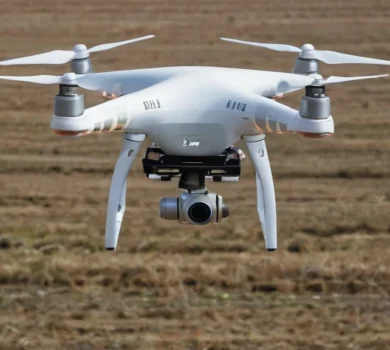
Vision-language models as aids for autonomous drones: balancing speed and precision.
A study conducted on autonomous drones showed that vision-language models, despite their potential for advanced semantic reasoning,
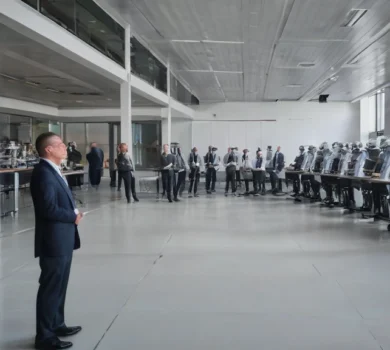
IRIM 2026 Seminar: How can robotics achieve seamless physical interaction with humans?
On October 21, 2026, the Institute for Robotics and Intelligent Machines will host a lecture.
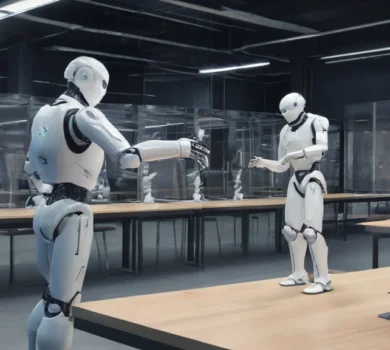
DriveWorld3D: a new generative simulation for safe autonomous driving
The new DriveWorld3D system, developed by the Robostreet team in Cambridge, is designed to help create safer models