


The dataset as a basis for the development of human-robot interaction.
A new research project presents the first systematic approach to building a multimodal dataset for analyzing engagement in human-humanoid interaction. Researchers at Seoul University have created a data collection protocol that combines physiological signals from wearable devices, behavioral data and user self-assessments. Unlike previous studies, which were mainly based on observable behavioral signals, the new dataset makes it possible to analyze deeper, multidimensional interaction.
The dataset was designed to work at different levels of task complexity, which allows for studying how user engagement changes depending on the challenge. This approach may be key to developing robots that can dynamically adapt to a person's emotional state and level of engagement.
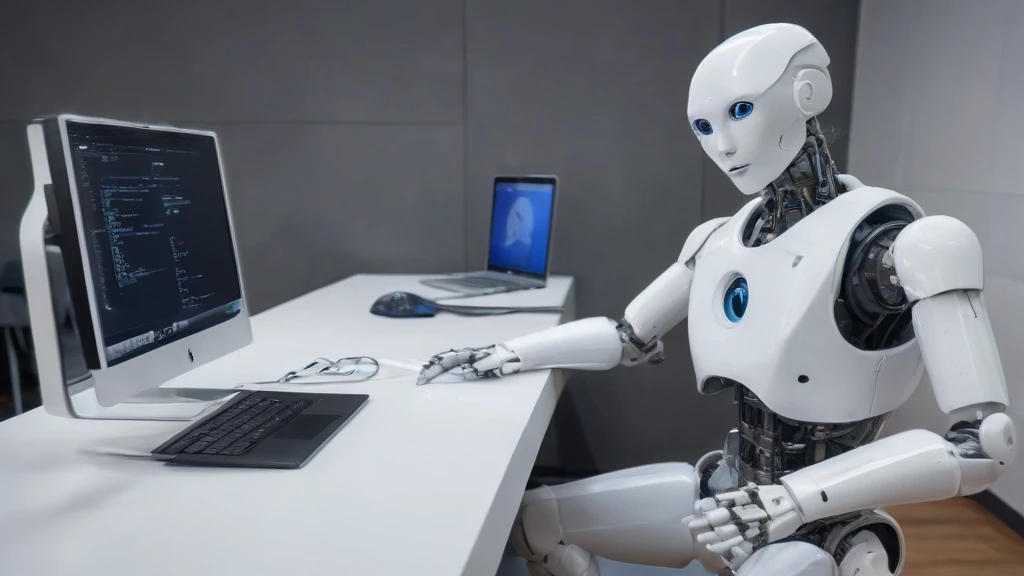 Enlarged imageClose zoomPrevious image
Data from various sources - key to comprehensive analysis.
The key to the new approach is the integration of data from multiple channels. Physiological signals, such as changes in heart rate or skin conductance activity, provide information about the user's internal state - their level of stress or emotion. Behavioral data, e.g., body movements, gestures, reaction time, show how the user interacts with the robot in a visible way. Self-assessments complement this data, providing a direct perspective from the experiment participant.
This combination allows for building models that not only react to behaviors but also predict the user's mental state. This can lead to the creation of humanoids that not only perform tasks but also learn from people and adapt their approach in real time.
Significance for future HRI systems.
The new dataset is important not only for researchers, but also for designers of human-robot interaction systems. It provides a common point of reference for testing engagement analysis algorithms, which can accelerate the development of intelligent robots in education, rehabilitation or work support.
However, it is worth emphasizing that the dataset is the result of a research experiment and has not yet been implemented in real systems. Its value lies in providing the structure and data that can be used to train machine learning models, but it does not constitute a ready-made commercial solution.
Limitations and prospects
The research was conducted in a controlled laboratory environment, which limits its generalizability to real-world usage conditions. The lack of information about the duration of the experiments, the number of participants, or the specifics of the tasks makes it impossible to assess the representativeness of the data.
Furthermore, although the dataset includes physiological signals, it does not contain detailed information about how they are processed or what algorithms were used for analysis. This leaves open questions regarding its practical usefulness in HRI systems.
It is worth emphasizing that although the dataset was created in a laboratory setting, its structure and multimodality open the way for the development of HRI systems in real-world environments, such as hospitals, schools, or factories. For example, in physical rehabilitation, humanoid robots can use engagement analysis to adjust the intensity of exercises, which increases the effectiveness of therapy and improves patient engagement. In education, similar models can help teachers identify students with low levels of engagement, enabling real-time intervention. humanoid robots can use engagement analysis to adjust the intensity of exercises, which increases the effectiveness of therapy and improves patient engagement. In education, similar models can help teachers identify students with low levels of engagement, enabling real-time intervention.
Although the dataset does not contain ready-made algorithms, its availability to the research community may accelerate the development of machine learning solutions that will be able to interpret complex human signals in a way that is not only technical but also ethical. In this context, it is important to remember the limitations related to the privacy of physiological data - their processing requires strict security standards and user consent. Such considerations are crucial for building trust in robots in everyday life, which is one of the main challenges of HRI in the future. The aforementioned perspectives show
In the context of development prospects, the new dataset opens the way to creating HRI systems with greater emotional intelligence and adaptability. By integrating physiological, behavioral, and self-assessment signals, researchers can develop machine learning models that not only react to user behavior but also predict their mental state in real time. This is crucial for applications in education, rehabilitation, and work support, where user engagement is one of the main indicators of interaction effectiveness. For example, in hospitals, humanoid robots can adjust the pace of therapy based on an analysis of patient stress or fatigue, which increases safety and treatment effectiveness.