
Cutting, welding, and transport of heavy components with reliable NexaRob solutions.
Robots for the Metal Industry
The Power of Robotics for Metal!
Automation in the Metal Industry: Modern Solutions for Diverse Processes
Robots for the Metal Industry
The metal industry plays an important role across many economic sectors, from steel-structure production and CNC machining to advanced aerospace and automotive applications. High requirements for precision, safety and repeatability make automation an essential element of modern metalworking facilities. Working with trusted industrial-robotics suppliers, NexaRob provides customized system integrations that increase production efficiency in the metal industry while supporting stable quality and compliance with stringent standards.
Application Characteristics
Key Metal-Industry Processes Supported by Automation
Automation in the metal sector covers a wide range of operations that contribute to high productivity, raw-material savings and cost optimization. Below are the most important areas where robots and systems integrated by NexaRob can play a key role:
-
Cutting, Grinding and Polishing: Advanced industrial robots provide precise and repeatable surface processing, ensuring a smooth finish on parts while reducing material waste.
-
Welding: Automating these processes helps achieve high-quality welds and reduce the number of defective joints, which is particularly important in the production of structural elements and machine components.
-
Stamping and Forging: Robotic assistance in metal-forming operations is effective where strict parameter control, improved safety, and shorter production cycles are important.
-
CNC Machining and Assembly: Robots can automatically tend CNC machine tools and other equipment for cutting, drilling, or milling, accelerating transitions between operations and reducing downtime.
- Logistics and Warehousing: Automated transporters and mobile robots support the movement of heavy metal products, minimizing accident risk and ensuring smooth material flow within the facility.
By automating these key processes in the metal industry, companies can effectively increase efficiency, improve competitiveness, and meet growing customer expectations regarding quality and on-time order fulfillment.
Key Benefits
Why Automation in the Metal Industry Delivers Breakthrough Results
Automation of processes in the metal industry opens the way to higher productivity, precision, and stable product quality. Below we present six key benefits driving the growing popularity of robotics in the metalworking sector:
-
Increased Precision and Repeatability: Thanks to automated control and monitoring systems, every stage of production, from cutting to assembly, can be carried out within defined tolerances, minimizing defects and rework.
-
Higher Operational Efficiency: Robots operate without downtime, accelerating the production cycle and enabling companies to respond quickly to increased demand or changes in orders.
-
Reduction of Production Costs: Automation reduces the demand for manual work in repetitive or dangerous tasks, lowering operating costs and increasing the efficiency of raw material use.
-
Improved Workplace Safety and Hygiene: The metal industry often involves high temperatures, sharp edges, and heavy loads. Replacing human labor with robots in these areas reduces the risk of accidents and injuries.
-
Flexibility and Scalability: Robotic workstations can be retooled easily and adapted to new products or materials, enabling smooth changes in the production range.
- Compliance with Norms and Standards: Robotic systems help maintain high quality standards, making it easier to meet industry requirements and document processes for inspections and audits.
Versatility and Precision in Every Detail
Advanced Robotic Solutions in the Metal Industry
NexaRob automation solutions are used across many segments of the metal industry, helping companies achieve ambitious goals related to efficiency, safety and resource optimization. Below we present six key areas where the technologies we provide have a significant impact on efficiency:
CNC Machining and Precision Cutting
Tasks involving milling, turning or drilling metal components require high accuracy and process stability. Automation enables faster and more precise operation of CNC machines.
Applications:
- Automatic loading and unloading of components in CNC machine tools.
- Dynamic adjustment of cutting parameters in response to measurement data.
- Real-time monitoring of machining quality.
Benefits:
- Increased production-process efficiency.
- Reduced risk of errors during tool setup.
- Better control over machine operating cycles.
Metal Welding and Soldering
Welding robots enable precise and repeatable welds that are essential for the strength of steel or aluminum structures. Their role is growing especially in industries with high safety standards, such as automotive and energy.
Applications:
- Automatic welding of large-scale structures.
- Soldering precision electronic and mechanical components.
- Welding using vision systems to track the weld seam.
Benefits:
- Consistent weld-joint quality regardless of production volume.
- Reduced consumption of welding materials.
- Reduced operator exposure to hazardous working conditions.
Laser, Plasma, and Water Cutting
Automating metal cutting processes increases precision, reduces material waste and speeds up preparation of parts for further processing. Different cutting methods (laser, plasma, waterjet) can be integrated with robots, expanding production capabilities.
Applications:
- Precision cutting of components with non-standard shapes.
- Forming thick-walled components using waterjet cutting.
- Automatic cutting of holes and grooves in steel profiles.
Benefits:
- Higher precision compared with traditional cutting methods.
Reduced production waste.
- Ability to complete custom CAD projects without manual processing.
Assembly and Processing of Steel Structures
Complex steel structures such as machine frames and load-bearing elements require numerous assembly, cutting and welding operations. Robotic workstations help join large and heavy components while maintaining full quality control.
Applications:
- Automatic positioning and assembly of steel components.
- Joining structures requiring high precision.
- Processing parts to remove welding residue.
Benefits:
- Increased accuracy when assembling large structures.
- Shorter assembly times thanks to automatic positioning systems.
- Improved workplace safety by minimizing manual transport of components.
Metal Logistics and Warehousing
The metal industry often handles raw materials and semi-finished products with high weight and irregular shapes. Automating internal logistics enables efficient management of these material flows and their safe storage.
Applications:
- Transporting metal raw materials within a production facility.
Warehouse management using RFID systems.
- Order picking and preparing materials for shipment.
Benefits:
- Reduced risk of material damage during transport.
- Increased efficiency of material flow between processes.
- Optimal use of warehouse space thanks to automated storage racks.
Repair and Reconditioning of Metal Components
Some metal components, particularly in the energy or petrochemical industries, are expensive to manufacture, so refurbishment and repair can be more cost-effective than purchasing new ones. Robotic systems enable precise repair, for example filling defects, welding or polishing.
Applications:
Surfacing damaged surfaces of machine components.
- Precision polishing and grinding of refurbished components.
- Inspection of refurbished components using non-destructive testing techniques.
Benefits:
- Reduced industrial machine servicing costs.
- Extending the life cycle of key components.
- Greater flexibility in service operations thanks to automatic diagnostic systems.
Robots for the Plastics Industry
Recommended Robot Types for the Plastics Industry
Selecting the right automation technologies in the plastics industry is essential for effective raw material processing, part forming, and quality control. NexaRob, working with a global network of robotics technology suppliers, offers a variety of solutions tailored to facilities manufacturing plastic and composite products.
Articulated robots provide multi-axis movement, enabling efficient execution of highly complex tasks such as welding in hard-to-reach areas or assembling diverse components.
Applications:
- Welding and brazing steel structures.
- Assembly of components in the machinery industry.
- Precision cutting of materials, for example by laser and plasma.
Benefits:
- High precision and flexibility of movement.
- Ability to handle demanding processes in difficult conditions.
Easy integration with different processing technologies.
Example:
An articulated robot integrated into a production line at an agricultural machinery plant reduced the welding time of structural frames while improving their quality.
SCARA robots are optimized for fast and precise operations in the horizontal plane, making them ideal for handling medium-sized parts in the metal industry.
Applications:
- Sorting and packaging metal parts.
- Quality inspection of components with precise dimensions.
- Assembly of lightweight components and labeling.
Benefits:
- High efficiency in repetitive tasks.
- Easy implementation in environments with limited space.
- Fast operating cycles and fewer errors.
Example:
A SCARA robot used on a screw and nut assembly line improved the packaging process by eliminating sorting errors and speeding up order fulfillment.
Cartesian robots moving along the X, Y, and Z axes enable stable and repeatable operations such as handling, packaging, or precision machining. They are highly effective in tasks requiring high accuracy and repeatability.
Applications:
- Loading and unloading CNC machines.
- Automatic arrangement of parts in containers.
- Surface finishing of parts with regular shapes.
Benefits:
- Simple integration with production lines.
- High stability and reliability in long-running processes.
- Minimizing the time between successive operations.
Example:
A Cartesian robot in a tool factory automated the process of transferring cutting inserts between a machine tool and an assembly station, significantly improving operational flow.
Cobots enable safe collaboration with people, so they can be used for precision operations that require both human dexterity and machine accuracy.
Applications:
- Assembly of metal components with employee assistance.
- Assistance with quality inspection.
- Logistics work involving smaller components.
Benefits:
- Workplace safety thanks to advanced collision detection systems.
- Rapid adaptation to new tasks.
- Ability to cooperate in dynamic production conditions.
Example:
A cobot supporting the manual assembly of valve bodies at a pressure equipment factory increased operator safety and improved the quality of finished products.
Mobile robots can autonomously move raw materials and finished products within a facility, optimizing material flow in a dynamically changing production environment.
Applications:
- Transport of sheets, bars, and finished parts between workstations.
- Automatic supply of raw materials and components to assembly lines.
Handling warehouse zones and releasing products for shipping.
Benefits:
- Flexible routes and delivery schedules.
- Reduced waiting time for materials.
- Safe transport of heavy loads.
Example:
An AMR robot at a metal-structure facility automatically delivered materials to processing stations, improving production-line operation and eliminating downtime caused by manual transport.
Professional Integration of Robotics Solutions and Comprehensive Technical Support for the Metal Industry
Integration and Support
Automation in the metal industry involves not only implementing robots, but also precisely adapting systems to complex processing, assembly and logistics operations. NexaRob provides comprehensive support that enables companies to use the potential of robotics in difficult and demanding production conditions.
Stages of the Integration Process
-
Needs Analysis and Consulting: We begin with a detailed analysis of the client's production profile, requirements, and business objectives. This allows us to create a personalized automation plan that takes into account the type of operations performed and the specific characteristics of metal products.
-
Design and Simulations: We create a detailed design of robotic workstations and material flow and use simulation software to verify the ergonomics and effectiveness of the proposed solutions.
-
Robot Installation and Programming: Our engineers install and configure robots while ensuring compatibility with existing infrastructure. We program the equipment to provide precise processing and highly efficient production.
-
Personnel Testing and Training: Each system is thoroughly tested under conditions close to real operation to avoid surprises during use. We then train operators and maintenance staff, preparing them to handle automated processes effectively.
- After-Sales Support and Service: After implementation, we provide ongoing service and consulting support. Regular equipment inspections and rapid service response help maintain a high level of reliability and safety at the facility.
Scope of Support Services
-
Regular Inspections and Maintenance: Scheduled inspections of robots and equipment are essential for extending their service life and maintaining high production quality.
-
System Modernization and Expansion: We offer software updates and the addition of new robotic modules, allowing companies to remain flexible in a changing market environment.
-
Training and Courses for Operators: Comprehensive training programs enable employees to quickly master operation of robotic workstations, improving efficiency and safety.
-
Remote Diagnostics and Monitoring: Remote monitoring tools enable faults to be detected quickly and repairs to be performed without stopping production for extended periods.
- Technical Consulting: NexaRob experts are available to help solve technical challenges and provide guidance on optimizing robot operation in the metal industry.
Wondering how to robotize your processes in the metal industry? Contact NexaRob. Our specialists will help select the most cost-effective and advanced solutions!
Frequently Asked Questions
Automation in the Metal Industry - Answers to Your Most Frequently Asked Questions
Are you wondering how automation can improve processes in your production facility? We answer the most frequently asked questions about automation in the metal industry, from machining and welding to component transport and storage. Find the answers below or contact our team to learn more.
Automation increases efficiency, improves product quality, and reduces the risk of errors or accidents. Robots shorten production cycle time, allowing companies to respond more quickly to growing market requirements.
Yes. We work with suppliers of specialized welding, laser, and plasma systems, integrating them with articulated or Cartesian robots depending on the requirements and the type of materials being processed.
Implementation time depends on process complexity, the number of workstations and the level of integration with existing infrastructure. It usually includes analysis, design, installation, testing and staff training and can take from several weeks to several months.
Yes. We offer various financing models, including leasing, loans, and flexible payment plans, allowing customers to spread implementation costs in a convenient way.
Cartesian and articulated robots perform very well in loading and unloading CNC machines. Integration with vision systems further increases precision and reduces human involvement in repetitive activities.
NexaRob works with robot manufacturers whose products meet safety regulations and quality standards such as CE, ISO, and OSHA, helping ensure safe equipment use and easier industry audits.
Regular inspections are recommended according to the schedule specified in the technical documentation. In practice, inspections are performed every 3-6 months depending on intensity and type of use.
Of course. NexaRob offers modernization and software-upgrade services so that industrial robots can meet new production tasks. We also support expansion with additional modules and accessories.
The first step is to conduct a profitability analysis and estimate potential time and material savings. We provide consultations and process audits to identify areas where automation can deliver the greatest benefits.

Our specialists will be happy to advise which automation solutions will work best in your company. Contact us today or visit other sections of our website to learn more about the technologies we offer.
Why NexaRob?
Your Trusted Partner in Metal Industry Automation
At NexaRob, we believe effective automation of processes in the metal industry requires combining advanced technologies, expert knowledge and an individual approach to every project. By cooperating with trusted robot suppliers and proven technology partners, we can deliver solutions that genuinely support the competitiveness of companies specializing in metal processing.
-
Industry Experience: Our team has experience with projects across different segments of the metal industry, from precision-component production to large-scale structures. This gives us an understanding of specific technical challenges and quality expectations.
-
Solution Flexibility: We adapt automation systems to the characteristics of your production line, taking into account both current needs and future development plans. Our projects are designed for easy scaling and modernization.
-
Partnership with Global Leaders: We cooperate with robot and software manufacturers recognized in global markets. This provides confidence that the technologies used in your facility represent a high level of innovation.
-
Comprehensive Support: From detailed analysis through design and implementation to training and service, NexaRob supports clients at every stage of integration. We continuously invest in development and work to ensure that the solutions we supply are as user-friendly as possible in everyday operation.
- Strong Focus on Safety: The metal industry can involve high machine loads and work at elevated temperatures. The robotic systems we implement take stringent workplace safety requirements and operator protection into account.
Would you like to learn more about how NexaRob can support the development of your metal-industry production? Contact us and we will present individual solutions tailored to your business goals.
Automate Your Business with NexaRob - Contact Us!
Global Reach
We Operate Globally, Support Locally
NexaRob operates across many international markets, offering advanced automation solutions tailored to the specific characteristics and requirements of different regions. Our global reach ensures that your metal-industry company can rely on high standards of technical support and access to innovative robotics solutions, regardless of location.
-
Presence in Global Markets: Thanks to a broad network of trusted partners and customers in many countries, NexaRob provides access to proven robotics solutions dedicated to the metal industry. Our integration experience across different production environments translates into flexibility and reliability of the systems we deliver.
-
Compliance with Local Regulations: The metal industry is often subject to strict safety regulations and technical standards. NexaRob takes compliance with applicable regulations and standards, such as CE, ISO, and OSHA, into account when proposing solutions, supporting smooth integration in facilities operating across different markets.
-
On-Site Service Support: We provide local service support through cooperation with suppliers and service centers in key regions. This ensures fast and effective responses to our customers' needs, regardless of time zone or local conditions.
-
Adaptation to Production Conditions: Each market has unique challenges and needs, particularly in the metal industry, where processing technologies, quality standards and raw material types can vary significantly. NexaRob offers robot modifications and configurations tailored to the specific requirements and realities of individual countries.
- Investments in Infrastructure and Expertise: We develop our local capabilities by training specialists and expanding infrastructure to provide smooth implementation, service, and modernization of robotic systems for customers around the world.
Would you like to expand into new markets or optimize production at foreign branches? Contact NexaRob to explore global automation opportunities in the metal industry.

United States

China

Japan

Germany

India

United Kingdom

France

Italy

Canada

South Korea

Brazil

Australia

Spain

Mexico

Indonesia

Netherlands

Saudi Arabia

Turkey

Switzerland

Taiwan

Poland

Sweden

Belgium

Thailand

Ireland

Austria

Norway

Israel

United Arab Emirates

Argentina

South Africa

Denmark

Philippines

Singapore

Malaysia

Colombia

Bangladesh

Egypt

Chile

Finland

Vietnam

Portugal

Czech Republic

Romania

New Zealand

Peru

Greece

Ukraine

Slovakia

Hungary

Slovenia

Croatia

Serbia

Bulgaria

Estonia

Latvia

Lithuania

Iceland

Luxembourg

Malta

Cyprus

Morocco

Algeria

Tunisia

Nigeria

Kenya

Ethiopia

Ghana

Tanzania

Uganda

Angola

Senegal

Qatar

Kuwait

Oman

Pakistan

Sri Lanka

Nepal

Kazakhstan

Uzbekistan

Mongolia

Russia

Cambodia

Myanmar

Laos

Fiji

Papua New Guinea

Venezuela

Ecuador

Uruguay

Paraguay

Bolivia

Costa Rica

Panama

Dominican Republic

Guatemala

Cuba

Jordan

Lebanon

Iran
Additional countries in Europe
These countries are hidden in reader mode so that the map is not overcrowded. Click a country to open contact details, email and a description of the cooperation area.
Additional Countries in Asia
These countries are hidden in reader mode so that the map is not overcrowded. Click a country to open contact details, email and a description of the cooperation area.
Additional Countries in the Americas
These countries are hidden in reader mode so that the map is not overcrowded. Click a country to open contact details, email and a description of the cooperation area.
Additional Countries in Africa
These countries are hidden in reader mode so that the map is not overcrowded. Click a country to open contact details, email and a description of the cooperation area.
Additional Countries in Oceania
These countries are hidden in reader mode so that the map is not overcrowded. Click a country to open contact details, email and a description of the cooperation area.
Albania
Andorra
Belarus
Bosnia and Herzegovina
Montenegro
Liechtenstein
North Macedonia
Monaco
Moldova
San Marino
Afghanistan
Armenia
Azerbaijan
Bahrain
Bhutan
Brunei
Georgia
Iraq
Yemen
Kyrgyzstan
North Korea
Maldives
Syria
Tajikistan
Timor-Leste
Turkmenistan
Antigua and Barbuda
Bahamas
Barbados
Belize
Dominica
Grenada
Guyana
Haiti
Honduras
Jamaica
Nicaragua
Saint Kitts and Nevis
Saint Lucia
Saint Vincent and the Grenadines
El Salvador
Suriname
Trinidad and Tobago
Benin
Botswana
Burkina Faso
Burundi
Cabo Verde
Chad
Democratic Republic of the Congo
Djibouti
Eritrea
Eswatini
Gabon
Gambia
Guinea
Guinea-Bissau
Equatorial Guinea
Cameroon
Chambers
Congo
Lesotho
Liberia
Libya
Madagascar
Malawi
Mali
Mauritania
Mauritius
Mozambique
Namibia
Niger
Central African Republic
Rwanda
Seychelles
Sierra Leone
Somalia
Sudan
South Sudan
Togo
Ivory Coast
São Tomé and Príncipe
Zambia
Zimbabwe
Kiribati
Micronesia
Nauru
Palau
Samoa
Tonga
Tuvalu
Vanuatu
Marshall Islands
Solomon Islands
NexaRob
Would you like to become our Partner?
At NexaRob, we believe successful automation in the chemical industry requires strong cooperation with partners who share our focus on innovation and quality. We invite companies interested in working together to shape the future of automation and robotics technologies.
Why Become a NexaRob Partner?
Marketing and Technical Support
Our partners receive full marketing and technical support, including promotional materials, product training, and support in sales and customer service.
Access to a Global Network of Contacts
Thanks to our international presence, NexaRob partners have access to a broad network of business contacts around the world, enabling expansion into new markets and greater business reach.
Flexible Cooperation Models
We offer various cooperation models that can be adapted to the specific needs and capabilities of partners, providing flexibility and alignment with individual requirements.
Who is cooperation with NexaRob for?
-
Component and Equipment Manufacturers - Developers of sensors, gripping systems, or accessories supporting the automation of production processes.
-
Integration companies: Specialists designing comprehensive production lines and logistics systems tailored to the needs of the chemical industry.
-
Software suppliers: Companies offering process management, monitoring, and real-time data analytics systems.
- Innovators and Start-ups: Entrepreneurs developing new automation technologies for the chemical sector.
Join NexaRob and let us shape the future of the chemical industry together!
Contact us to develop a cooperation strategy that introduces innovation to your industry and provides customers with solutions meeting demanding standards.
Interesting Facts from Around the World
A four-legged robot from ETH Zurich autonomously solves a giant Rubik’s Cube.
A four-legged robot from ETH Zurich has demonstrated a new level of precision and autonomy by solving a large Rubik's Cube.
Predicting lane changes as a key to higher comfort and safety in autonomous driving.
Research conducted in the CARLA simulation environment showed that predicting lane changes by an autonomous vehicle is possible.
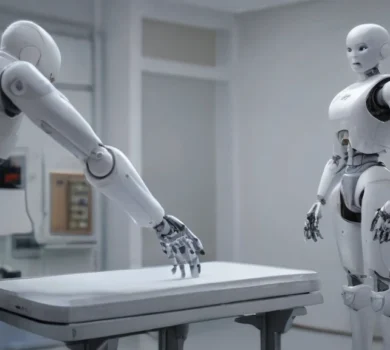
Tamim Asfour received the Greve Award for humanoid robotics.
Professor Tamim Asfour has received the Greve Award for humanoid robotics, which is awarded every two years by German.
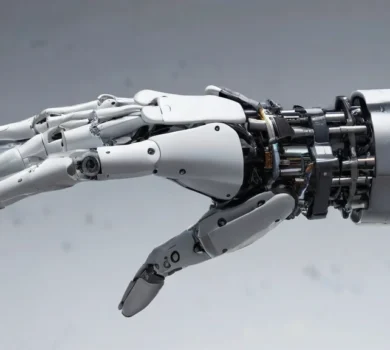
Autonomous needle insertion in a CT scanner chamber with breath control.
The system for integrating respiratory sensors and secure control enables autonomous needle injection in the CT scanner chamber.
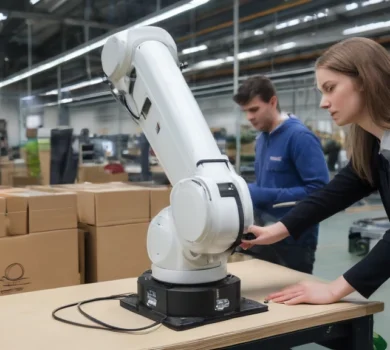
Swedish startup 120ft has built the first microfactories with humanoid robots.
Swedish startup 120ft emerged from stealth after raising €576,000 in angel investments.