
Discover the Best Automation Solutions for Your Industry and Application

Robotic Technology Selection Guide

Today's industrial robotics market offers an enormous variety of solutions, from assembly and handling robots through advanced collaborative robots, or cobots, to comprehensive systems for machine tending and quality control. This is why we created the Selection Guide, a collection of useful tips and tools designed to help you make an informed decision when choosing robotic technologies that best match your company's objectives.

On this page, you will find comparisons of different robot types as well as dedicated guides explaining how to match solutions to the specifics of particular industries and applications. Each section links to detailed pages where we discuss the advantages, limitations, and recommended deployment areas of individual robots. This helps you assess more quickly which technologies can deliver the best results for your company, whether by shortening production time, increasing precision, or improving workplace safety.

We developed the Selection Guide for people looking for comprehensive information about both technical capabilities and the financial or organizational aspects of robot deployment. Using our materials, you can go through the decision-making process step by step, saving time and minimizing the risk of unsuitable investments.

Learn the key factors that determine effective automation

How to Choose the Right Robotic Technology?

When selecting the right robot type, it is worth analyzing the key criteria that affect the achievement of business and technical objectives. Understanding these aspects will help you assess which solutions are best suited to your company and avoid potential problems caused by poorly matched equipment.

Performance and Speed of Operation

Precision and Repeatability

Payload and Reach

Safety and Work Environment

Integration with Infrastructure and IT Systems

Budget and Financial Support

Flexibility and Scalability

Service and After-sales Support

Organizational Culture and Human Resources

These key criteria provide a solid starting point for making an informed choice of robotic technology. Remember that the ideal solution varies depending on industry, production scale, and the company's long-term strategy. In the following sections and on dedicated Selection Guide pages, we will show you how to translate these criteria into specific robot types and technologies that can best support your business processes.

A Quick Overview of the Most Popular Solutions and Their Key Features

Match the Design to Your Goals

When considering an investment in industrial robots, one of the most important steps is comparing different design types. They differ in range of motion, payload, reach and the way they integrate with existing infrastructure. Much depends on the specifics of the industry, the nature of the processes and expectations regarding performance and flexibility. In the sections below, we present the most popular robot categories to make it easier to decide which solutions will work best in your facility.

They offer 4 to 6 rotary axes, providing high movement flexibility.
Excellent for welding, palletizing, machining, or assembly at different angles.

They are characterized by rigidity along the vertical axis and flexibility in the horizontal plane.
Ideal for fast pick & place operations and electronic component assembly.

They move along three perpendicular linear axes, offering structural simplicity and precise motion control.
Often selected for 3D printing, machining lightweight materials, or precise pick & place operations.

They feature a parallel structure and exceptionally high speed, useful for packaging and sorting small items.
Excellent when fast cycle time and motion repeatability are priorities.

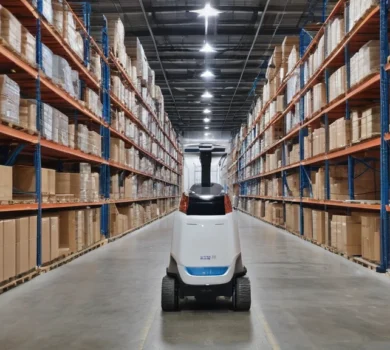
Autonomous, AMR, or route-guided, AGV, robots used for internal transport and logistics in warehouses or production halls.
They facilitate material flow management by integrating with WMS or MES class systems.

Designed to work safely side by side with people.
Recommended for tasks requiring frequent interaction with an operator, assembly of small components or flexible changes to the production line.

Based on a gantry structure, they cover large working areas and move heavy loads.
Used in horizontal transport, storage, or handling oversized components.

To explore the details of the solutions above, including their characteristics, benefits, and limitations, please visit the dedicated section:

It will show you how individual solutions perform in specific industries or applications, such as assembly, welding, or quality control, as well as how they compare in terms of costs, precision, and service requirements. In the following sections, we will also suggest how to adapt the selected robot type to the realities of your industry and optimal use scenarios.

Every industry has its own challenges - discover which robots will work in your facility

Find the Best Solutions for Your Sector

Every industrial sector places different requirements on automation, depending on process characteristics, safety standards, and even end-customer expectations. It is therefore important to adapt robotic solutions to the realities of a given industry, taking into account factors such as hygiene in food and pharmaceuticals, precision in electronics, or equipment durability in metalworking and chemicals. Below we present an overview of key sectors with dedicated subpages where you can find more details and implementation examples:

Specialized solutions for packaging, sorting, or palletizing food products, taking stringent hygiene standards into account.

Robots adapted to sterile conditions, precise substance dispensing, and quality control in rigorous environments.

High-performance robots for welding, assembly, and production line operation in the automotive industry, often requiring high payload capacity and long reach.

Solutions for precision component assembly, soldering, and PCB inspection using vision systems and cobots.

Robots with increased resistance to aggressive environments, adapted for dosing and handling substances under high safety standards.

Special applications for tending injection molding machines, forming parts or sorting plastic products, often taking high temperatures into account.

Robots designed for harsh conditions such as high temperatures and dust, ideal for cutting, welding, or processing heavy materials.

Mobile robot systems, including AMR and AGV, for pallet transport, automated order picking, and goods flow management.

Robotic lines for dosing and packaging cosmetics, ensuring precise and hygienic product handling.

Robots for forming, folding and packaging bulk or individual packaging, accelerating end-of-line processes.

Solutions for automated harvesting, sorting, and preliminary processing of agricultural produce, accounting for seasonality and product delicacy.

Robots for tasks requiring high strength and durability, such as mixing, handling heavy components, or prefabricating materials.

Precision assembly, inspection, and testing systems where maintaining high safety and accuracy standards is essential.

Automated lines for material cutting, sewing, pattern inspection, and labeling, supporting mass production and garment manufacturing.

Robots for woodworking and board processing, painting, coating, or component assembly, often combined with vision systems and adaptive grippers.

Would you like to learn more about a specific sector? Visit our dedicated subpages where we discuss challenges typical of individual industries and present recommended technologies and case studies. This makes it easier to match robots and equipment to your company's needs and maximize the benefits of automation.

Choose the best configuration of industrial robots for your planned tasks

Focus on Specific Processes

Industrial robots are used in a wide variety of areas, from precision soldering of microcomponents and mass palletizing of products to machine tending for heavy equipment and chemical tasks. The key, however, is to match the solution to the actual needs and conditions of a specific process. At NexaRob, we focus on analyzing concrete tasks so you can choose technology that increases your company's efficiency and profitability.

Below we present the most popular categories of robot applications, with links to dedicated pages. Each contains detailed information, implementation examples, and equipment recommendations:

Assembly

Automation of component and subassembly assembly, regardless of industry, from household appliances to precision electronics.

Welding

Robots specialized for MIG/MAG, TIG or laser welding processes, providing repeatability and high joint quality.

Packaging and Palletizing

Fast and efficient forming, arranging and securing of products, improving end-of-line logistics.

Handling Robots (Part Transfer)

Solutions for fast pick-and-place operations, designed for different payload ranges and part forms.

Surface Treatment (Grinding, Polishing)

Robots designed for leveling, smoothing, or polishing materials, ensuring consistent quality and minimizing human error.

Machine Tending (loading/unloading)

Integration with injection molding machines, presses or lathes, automating repetitive tasks involving raw-material loading and finished-part removal.

Quality Control (inspection, testing)

Use of vision systems and sensors to detect defects, perform dimensional measurements, or conduct functional tests in real time.

Handling Heavy Loads

Robots designed for high payloads, often supported by gantry structures or additional safety measures, used for example in the automotive or steel industries

Precision Robots (Microassembly, Delicate Components)

Dedicated robots and grippers enable work with small or sensitive materials where gentle handling and minimal applied force are essential.

Chemical Applications (Substance Handling, Dispensing)

Designs resistant to aggressive environments, used for example in laboratories or processes requiring sterile conditions.

Thermal Processes (Soldering, Heat Treatment)

Robots with advanced cooling systems and thermal insulation, designed for soldering, hardening and other high-temperature operations.

Multi-purpose (universal robots)

Universal modular designs that can be easily reconfigured for different production purposes, ideal in dynamic environments where the product range changes frequently.

Want to know more?

Open the page that interests you to view detailed technical data, recommended configurations, and examples of successful deployments in similar applications. NexaRob can support you from analysis and technology selection through final integration and robot service so that you can develop your operations safely and efficiently.

From the First Concept to After-Sales Service: Comprehensive Support in Automation

How We Work

At NexaRob, we know that successful automation depends not only on selecting the best technologies but also on a coherent implementation process carried out step by step. Below we present our cooperation methodology, combining detailed "Implementation Planning" with practical "How We Work" stages so that you can confidently move through every aspect of investing in industrial robots.

Consultation and Diagnosis

Process audit: At the beginning, we conduct a detailed analysis of your production, logistics, and inspection processes, identifying areas in which automation can deliver the greatest time savings, cost reductions, and quality improvements.

Defining Priorities: Together, we define the primary objective of the implementation, whether it is accelerating production, reducing errors, improving logistics, or increasing employee workplace safety.

Design and Technology Selection

Technical analysis: Based on the audit findings, we determine whether SCARA, articulated, Cartesian, mobile robots, or perhaps cobots are the optimal solution. We also consider requirements for payload, precision, reach, and compatibility with IT infrastructure such as PLC, MES, ERP, and IoT systems.

Solution optimization: We create a customized robotic workstation or line design to reduce downtime, avoid bottlenecks, and preserve the ability to expand in the future.

Financial Support and Funding

Identification of Financing Sources: Through cooperation with banking institutions and public funding experts, we help obtain loans, leasing, or grants from EU or national funds.

Budget planning: We present preliminary return-on-investment calculations, taking into account both equipment and integration costs and potential gains from automation.

Integration, Installation and Testing

Installation and configuration: Our engineers install robots in designated areas, ensuring maximum compatibility with the facility infrastructure and minimal disruption to ongoing operations. At the same time, they introduce the necessary workstation modifications, such as adding safety guards or vision systems.

Testing and acceptance phase: We test the stability and efficiency of the new system under conditions similar to actual production. We verify whether the robots achieve the intended parameters, from movement accuracy to line throughput.

Training and Implementation Handover

Team education: We organize training in robot operation, programming, and diagnostics. Operators, maintenance technicians, and process managers are prepared for independent operation and for resolving basic technical issues.

Commissioning Support: We help adapt new solutions by providing guidance on optimizing workstation operation and implementing good occupational safety practices in robotic environments.

Service, Development, and Optimization

After-sales support: We provide regular inspections and rapid response in the event of failures so your production line can remain in continuous operation. We work with a global network of parts and component suppliers, enabling efficient fault resolution.

Further modernization: If your needs grow over time or market requirements change, we support system expansion, for example by adding new workstations, integrating additional IoT modules, or introducing more robots with different parameters.

With such a well-planned and comprehensive cooperation path, NexaRob becomes your strategic partner in automation. Whether you need to improve a single workstation or modernize entire production lines, our team guides you through each stage, minimizing risk while maximizing results and return on investment.

Use available funding and financing options to implement modern technologies safely

How to Maximize Return on Investment

Implementing industrial robots is an investment that can pay back relatively quickly, but it requires proper budget planning. You do not have to cover all costs from your own funds. Various financing options are available that allow expenses to be spread over time and make it possible to use grants that can significantly accelerate the path to profitability.

Leasing and Loans

Funding from European Union and National Funds

R&D Tax Relief

Settlement Models (Pay-per-use, Robots-as-a-Service)

Return on Investment Planning

By using different forms of financial support and considering an individual settlement model, you can minimize the risks associated with introducing industrial robots and accelerate the point at which automation begins to generate tangible returns. This approach makes new technologies accessible even to companies with limited capital, while long-term effects contribute to growing competitiveness and business stability.

Have questions? Here you will find answers to the most frequently asked questions about selecting robots.

Frequently Asked Questions

Yes. There are currently many financing options, including loans, leasing, and grants, that enable even small companies to use industrial robots. A well-planned implementation often quickly improves efficiency and quality, allowing the investment to pay back in a relatively short period.

Start by analyzing key requirements such as expected payload, motion precision, working environment, and automation level. It is also worth visiting the Robot Type Comparisons section, where we describe the advantages and limitations of the most popular solutions.

Not necessarily. Many implementations are limited to integrating a robot with a selected stage of the process, without the need for a major infrastructure rebuild. However, proper workstation planning and synchronization with the other elements of the line are essential.

It depends on project complexity, the number of workstations to be automated, and the level of integration with existing IT systems (MES, ERP, IoT). Simple implementations can be completed within a few weeks, while more extensive ones may take several months.

In addition to the cost of the robots themselves, integration costs, additional accessories such as grippers and vision cameras, personnel training, service, and any required workstation modifications should be taken into account. We assist with financial analysis and selection of optimal financing options

No. In many cases, robots support personnel by taking over burdensome or dangerous tasks, while employees focus on more complex and creative activities. Robot implementation can also improve workplace safety and ergonomics.

Depending on requirements: vision systems (2D, 3D), force sensors, IoT integration or software for traffic management and data analysis. These solutions can significantly increase process efficiency and the level of automation.

Yes. NexaRob provides support at every stage of implementation, including service and regular operational inspections. We also offer training and the possibility of modernizing existing workstations if new needs arise in the future.

We recommend defining and monitoring key performance indicators (KPIs) such as cycle time, defect rate, line efficiency and workplace safety. Analyzing this data will help you assess deployment effectiveness and plan further improvements.

Do you have more questions?

We invite you to contact NexaRob experts directly. Our team will be happy to answer your questions, advise on robot selection, and help prepare a personalized cost-benefit analysis. This will make the decision-making process more efficient and help you begin benefiting from modern automation solutions.


Automate Your Business with NexaRob - Contact Us!

Global Presence, Local Precision, NexaRob Supports Companies Worldwide

We Operate Globally, Support Locally

NexaRob is an internationally active integrator of robotic technologies, working with partners in more than 100 countries. Our extensive network of experts and suppliers allows us not only to provide modern solutions, but also to adapt them to the specifics of local markets. This enables us to deliver efficient implementations, full regulatory compliance and ongoing service support to our customers.



Z NexaRob you can be confident that your automation is modern, efficient, and aligned with market requirements.

United States
China
Japan
Germany
India
United Kingdom
France
Italy
Canada
South Korea
Brazil
Australia
Spain
Mexico
Indonesia
Netherlands
Saudi Arabia
Turkey
Switzerland
Taiwan
Poland
Sweden
Belgium
Thailand
Ireland
Austria
Norway
Israel
United Arab Emirates
Argentina
South Africa
Denmark
Philippines
Singapore
Malaysia
Colombia
Bangladesh
Egypt
Chile
Finland
Vietnam
Portugal
Czech Republic
Romania
New Zealand
Peru
Greece
Ukraine
Slovakia
Hungary
Slovenia
Croatia
Serbia
Bulgaria
Estonia
Latvia
Lithuania
Iceland
Luxembourg
Malta
Cyprus
Morocco
Algeria
Tunisia
Nigeria
Kenya
Ethiopia
Ghana
Tanzania
Uganda
Angola
Senegal
Qatar
Kuwait
Oman
Pakistan
Sri Lanka
Nepal
Kazakhstan
Uzbekistan
Mongolia
Russia
Cambodia
Myanmar
Laos
Fiji
Papua New Guinea
Venezuela
Ecuador
Uruguay
Paraguay
Bolivia
Costa Rica
Panama
Dominican Republic
Guatemala
Cuba
Jordan
Lebanon
Iran

Together We Create the Future of Automation

Would you like to become our Partner?

At NexaRob, we believe innovation is born through cooperation. That is why we actively seek partners who want to create innovative robotics and automation solutions together with us. Our partnership offering is aimed at manufacturers of advanced components, system integrators, software suppliers, and ambitious technology startups.

Why Work with NexaRob?

Join the NexaRob Partner Network and Let's Shape the Future of Automation Together.

Contact us to discuss cooperation opportunities and begin a new era of technological innovation.

Interesting Facts from Around the World

Fraunhofer IPA presents robotics for the circular economy at the European Parliament.

On September 2, 2026, the Fraunhofer Institute for Manufacturing Engineering and Automation IPA (IPA)

New method helps people predict errors in self-driving cars

Researchers from MIT and the company Motional have developed a system that allows people to predict errors in self-driving cars.

How can intelligent memory coding save energy in autonomous vehicles?

A new method called MotiMem-Omega can reduce energy consumption in the memory interface of an autonomous vehicle by

KEENON presented KOM 3.0 at WRC 2026: robots think before acting

At the World Robot Conference 2026, KEENON Robotics unveiled KOM 3.0 - a new generation of AI architecture.

Who pays for the "data foundation" of humanoids? The restructuring in Beijing shows what really matters.

The humanoid robot training center in Shougang Park, Beijing, which had been operating since March 2025 as

EnglishEN