

Waterless recycling technology in practice
Atlas Building Composites, a spin-off from MIT, has demonstrated its capabilities in a real-world application: it supplied recycled plastic composites for the construction of a 40-meter bridge on wet terrain in Massachusetts. This is not a demonstration or pilot project - it is an actual implementation that confirms that the technology can function outside the laboratory and support public infrastructure. The project was carried out for U.S. Army Corps of Engineers, which highlights its confidence in the new method for producing construction materials.
The key to the scalability of this technology is its ability to process single-use plastic without the need for water - a process that traditionally requires large amounts of water and complex installations. Waterless recycling eliminates the barrier of access to water resources, which opens up the possibility of implementing the system even in regions with limited access to water, where traditional recycling methods are impossible.
From plastic to bridge: the production process
 Enlarged imageClose zoomPrevious image
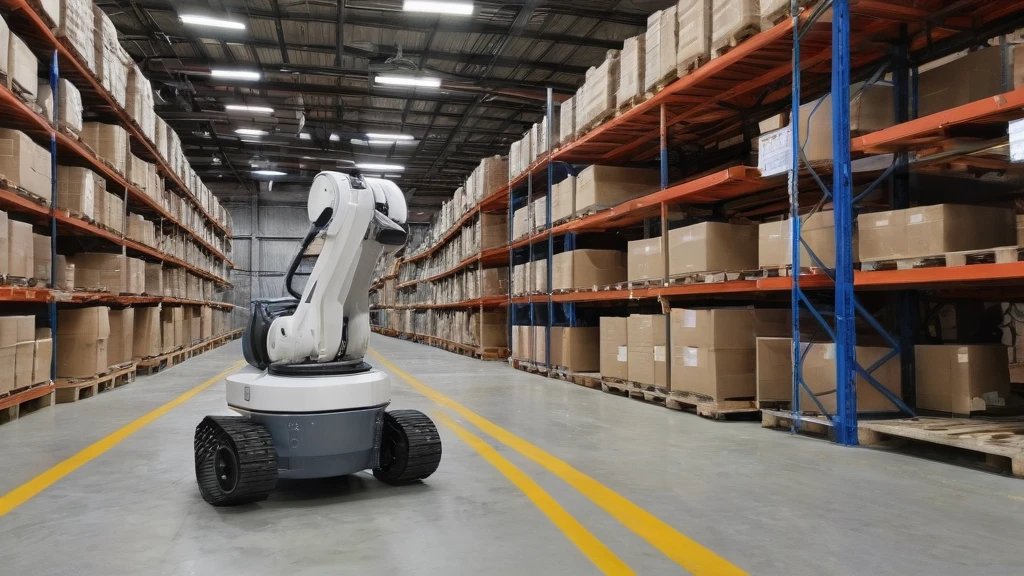
The process of transforming waste into building elements begins with grinding single-use plastics - mainly water bottles and other items. This material is then heated and combined with fiberglass, which gives it strength comparable to wood. The AI system then controls a large 3D printing machine that creates ready-made components - trusses, foundations, walls, roofs and even bridges.
The technology not only eliminates the need for heavy raw materials such as wood or concrete, but also reduces CO₂ emissions. Instead of cutting down forests or extracting raw materials, the company transforms waste that would otherwise end up in oceans or landfills. This is not just recycling - it is a transformation of the material's life cycle.
Company assumptions and goals
Co-founder of Atlas Building Composites., who is also a researcher at MIT, stated that the company’s goal is to transform 8 gigatons of plastic - the total amount produced globally since the beginning of the 20th century - into durable building materials. This is not just a statement of intent, but also a response to two crises: the excess of plastic waste and the pressure on natural resources in housing production.
Perez emphasizes that the company does not only want to recycle - it wants to change the way buildings are built. 'We cannot separate the problem of plastic from the problem of houses,' he says. The system is intended to be local: the more Atlas systems operate in a given region, the lower the costs and transport emissions. This is not just technology - it is an economic model based on location and sustainability.
Limitations and context
Although the bridge project is a real implementation, there is no information about scaling up to a larger number of objects or about the long-term durability of the material in extreme conditions. There is a lack of data on durability tests, resistance to moisture or climate change beyond one case. All information relates only to one project and does not confirm that the technology is ready for mass production.
In addition, although the company mentions AI in robotics, no details are given about how the control system works or what its parameters are. There is a lack of data on energy consumption, process efficiency or production costs. This limits the assessment of economic viability and comparability with traditional materials.
Significance for the future of construction
If the technology is confirmed over a longer period and on a larger scale, it may provide an alternative to traditional building materials. Transforming plastic waste into structural elements without using water is key to sustainable development - especially in countries with limited access to resources and infrastructure.
The company does not claim that its system will replace concrete or wood in all cases. But it shows that there is a real way to use waste as a raw material - without the need to burn, bury or dispose of it. This is not only a technological innovation, but also a shift in production culture: from disposable plastic to durability.
Significance for the future of construction
In the context of global climate challenges and resource crises, Atlas Building Composites technology can play a key role in transforming the construction sector. Transforming disposable plastic - a material that has so far been a major source of ocean pollution and landfills - into durable structural elements without using water is a breakthrough in the approach to recycling. This is not only a reduction in CO₂ emissions, but also a paradigm shift: from the life cycle of a disposable product to its long-term utility value. Compared to traditional building materials such as concrete or wood, the new technology offers lower transportation costs (due to localized production), less environmental impact and the possibility of using resources available in a given region. Although currently the data is limited to one bridge project, its success confirms that the system can work in real conditions - especially where access to water is limited.
In the future, if the technology is confirmed by long-term durability and moisture resistance tests, as well as climate change resilience, it may become a basic element of sustainable infrastructure. In countries with limited access to natural resources or in regions prone to drought, waterless recycling will become not only an alternative, but the only possible solution. In addition, local production systems can support the urban economy, create new jobs and increase society's resilience to logistical crises. This is not only a technological innovation - it is a shift in production culture: from disposable plastic to durability, from waste to buildings.