
Omnidirectional movement as the key to operational flexibility
TIAGo OMNI Base is not limited to simple movement along a line - its four mecanum wheels allow it to move in any direction, including sideways and diagonally. This means that the robot can easily navigate through narrow corridors, avoid obstacles and change direction without having to turn around. This solution is particularly useful in environments where space is limited and the duration of operations is critical.
The ability to have a full 360-degree view provided by two LiDAR sensors allows for continuous obstacle detection and dynamic route planning. This not only increases safety, but also enables smooth operation in environments with many people and moving objects, which is crucial in factories, hospitals or offices.
Integration and fleet management via web interface
Managing the robot does not require specialized technical knowledge. TIAGo OMNI Base supports fleet management through a simple, browser-based interface - which means that operations can be controlled from any device with internet access. The user can assign tasks, monitor the status of the robot and adjust its behavior in real time.
In addition, the ability to integrate with ERP systems allows for automatic synchronization of logistics tasks with production or warehouse processes. This means that when a new batch of goods arrives at the warehouse, the robot can automatically start transporting it without the need for manual data entry - which translates into greater efficiency and reduced risk of errors.
Customization to specific customer needs
TIAGo OMNI Base is not one of those standard solutions that need to be adapted to the environment. PAL Robotics offers the possibility of customizing the robot through add-ons - from RGB-D cameras to charging stations and additional batteries. It is also possible to design a custom version if specialized functions or construction are needed.
This makes it possible for the robot to be used not only in industry, but also in hospitals - where precise movement along corridors and avoidance of contact with surfaces exposed to contamination are required. In laboratories or offices, its hygienic design and precise navigation make it an ideal partner in everyday tasks.
Applications and limitations: where the robot works best
 Enlarged imageClose zoomPrevious image
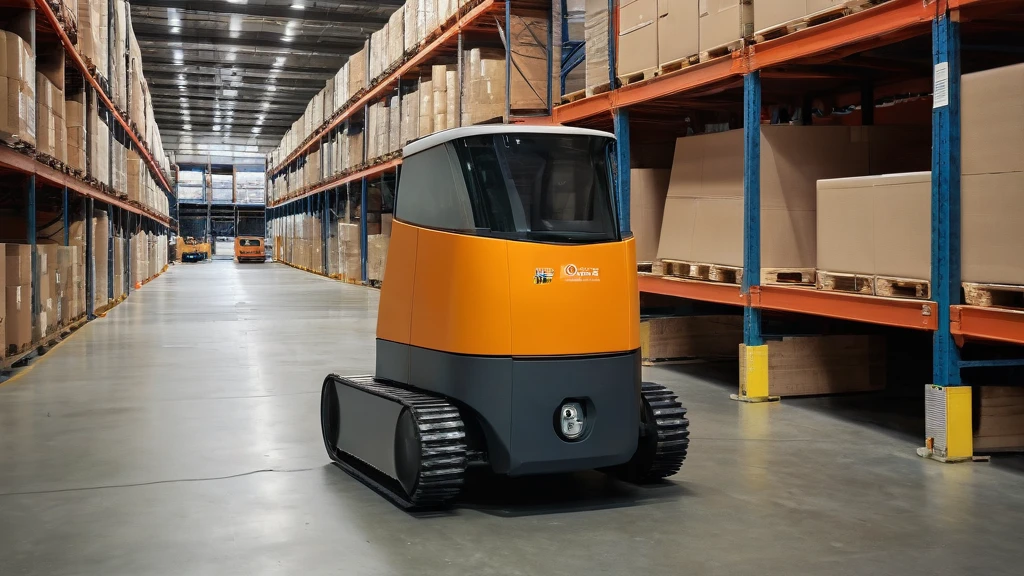
The solution is particularly effective in environments with a changing structure - for example, in factories with frequently changing production lines, hospitals with dynamic staff movement, or offices with many points of goods delivery. Wherever traditional transport systems are limited by physical obstacles or lack of flexibility, TIAGo OMNI Base can significantly improve the smoothness of processes.
However, its application has certain limitations. Although the robot operates on uneven surfaces thanks to high traction, it is not designed for operation in harsh outdoor conditions - for example, on streets or in areas with high dust or humidity. Furthermore, its functions are limited to those designed by the manufacturer - it is not an open system for any additions beyond those offered.
The future of logistics: from automation to intelligent collaboration
TIAGo OMNI Base is not only a transport tool - it is an element of a larger system that can support the development of smart factories and smart buildings. Thanks to the possibility of integration with ERP and web interfaces, the robot becomes part of a digital operational ecosystem in which data is transmitted automatically and decisions are made based on actual conditions.
In the future, such solutions may be supported by artificial intelligence - for example, to predict transport needs or optimize routes in real time. However, currently, although the robot offers advanced functions, its operation remains based on pre-programmed scenarios and does not exhibit autonomous learning.
In the future of internal logistics, it will be key not only automation but also the ability to cooperate between robots and people. TIAGo OMNI Base supports this trend thanks to a flexible system architecture that enables seamless integration with other elements of the digital operational ecosystem - from warehouse management systems to real-time monitoring platforms. Thanks to this, the robot does not operate independently, but as part of a larger team that responds to changing conditions using data from various sources. This translates into greater resilience of the system to disruptions and better task management in real time.
Although currently its operation is based on pre-programmed scenarios, the development of AI technology may in the future enable adaptation to new situations without the need for manual intervention - which means that TIAGo OMNI Base may become not only a transport tool but also an intelligent operational partner in dynamic industrial and service environments.