
Programming Adept Robots in V+
Precise Control of Adept Robots
Advanced programming in V+
Automation Process Optimization
Integration of Adept Robots with Production Systems
Flexible and Precise Control
Modern Technologies for Automation
V+ is an advanced programming environment for Adept robots that provides comprehensive control over industrial processes. NexaRob provides support for configuration, implementation and optimization of Adept robots, adapting them to specific production requirements.
Contact us Watch the videoLearn how V+, a continuation of Adept technology now developed under the Omron brand, supports advanced robot control and automation across many industries
Programming Adept/Omron Industrial Robots in V+
V+ is a dedicated programming language originating from Adept solutions, which are now developed by Omron. It provides precise robot control and versatile logic capabilities, making it suitable for both simple pick-and-place tasks and advanced assembly, welding, or packaging projects. At NexaRob, we use V+ to implement efficient and scalable solutions tailored to the fast pace of modern production.
Why V+?
- Clear, Modular Code Structure: V+ allows a program to be divided into procedures and functions, making it easier to maintain readability and introduce changes quickly.
- Precision and efficiency: Language commands support both point-to-point movements and trajectories defined with high accuracy, making them ideal for applications requiring a high level of precision.
- Easy Integration with Omron Systems: Thanks to the shared Adept-Omron ecosystem, robots can be efficiently connected with other automation devices to create a comprehensive and consistent working environment.
How Can NexaRob Help?
- Needs analysis: Together with the client, we define the project scope and requirements in order to select the optimal hardware set and programming approach.
- Code Creation and Optimization: Our team designs applications in V+, tests them in offline simulators, and fine-tunes them at the actual workstation to ensure maximum performance.
- Service Support and Training: We provide comprehensive operator training and service support so your team can independently modify and maintain the system during everyday operation.
See What Distinguishes V+ and the Processes in Which Adept/Omron Robots Play a Key Role
Key Functions and Application Examples in V+
Although many robot programming languages exist, V+ stands out for its flexibility and high precision, enabling Adept/Omron robots to perform diverse tasks across many industries. Below we present the key characteristics of the language and examples of situations in which it is particularly effective:
Versatile Motion Instructions
V+ supports point-to-point (PTP) motion and defined trajectories such as linear and circular paths. This gives the programmer freedom to shape paths and adapt them to specific process requirements.
Application: Assembly processes requiring multi-axis movements, arc welding or packaging products with unusual shapes.
Modular Code Structure
A program can be divided into separate procedures and functions, for example for operating a gripper, vision system, or feeder, making complex projects easier to manage.
Application: Production lines with multiple stations and variable stages, where part of the code is shared while certain tasks are specific to a given stage.
Integration with Vision Systems and Sensors
V+ enables dynamic data exchange with cameras (2D/3D), force sensors, and PLC controllers, allowing the robot to correct its trajectory on the fly.
Application: Tasks requiring ongoing quality inspection, correction of component position, or force control during assembly.
Advanced safety functions
Adept/Omron provides mechanisms that control robot motion zones and offers immediate responses when configured force or speed limits are exceeded.
Application: Industries where protecting workers and equipment is a priority, e.g. automotive, food, and medical.
Diversity of Applications
Description: Adept/Omron robots are known for their compact design and speed, making them ideal for limited spaces and varied tasks.
Application: Assembly of delicate electronic components, machine tending in the pharmaceutical industry, or palletizing lightweight products.
V+ Language provides robots with Adept/Omron flexible and efficient environment for programming advanced applications. NexaRob provides comprehensive support for the implementation process, from analysis through configuration and testing to maintenance and training. This enables your production line to operate efficiently, safely, and flexibly while keeping pace with modern market requirements.
Explore different ways to create code in V+ and choose the solution that best fits your needs
Main Programming Modes and Methods in Adept/Omron V+
The V+ language, originating from Adept solutions and now developed by Omron, enables various methods of robot programming, from direct editing on the operator panel to advanced offline simulation tools. At NexaRob, we help select the method that ensures fast, safe, and flexible implementation tailored to your facility. The main modes are presented below:
Teach Pendant (Online Programming)
- Direct control: The operator uses the panel at the robot to define the trajectory point by point and save it immediately in V+ code.
- Quick Corrections on the Line: Ideal when minor modifications are needed during operation without interrupting the entire process.
- Limitations: More complex applications (a large number of points, complex logic) can be more difficult to implement using the pendant alone.
Offline Programming (Simulation Environment)
- Working on a computer: V+ code is created in a dedicated simulation environment, allowing the application to be tested and refined without production downtime.
- Time savings: The line does not need to stop, and once testing is complete, the refined version of the code only needs to be uploaded to the robot.
- Application: Works particularly well for extensive or high-risk projects where robot-motion errors could be costly.
Remote Online Programming, Network-Based Control
- Remote access: With suitable infrastructure security, NexaRob engineers or your team can log in to the robot controller over the network and modify V+ code on an ongoing basis.
- Expert support: This makes it possible to respond quickly to problems and implement improvements without having to send a specialist on site.
Hybrid Approach
- Combining methods: Teach Pendant tools for simple corrections and calibration are often combined with offline tools for trajectory optimization and more complex functions.
- Gradual improvement: Once developed, the code can be improved iteratively by testing alternatives in a simulation environment and deploying final corrections without lengthy line downtime
Programming Methods in V+ are flexible and often combined, enabling robots to Adept/Omron efficient adaptation to demanding production. In the following sections, we will see how such robots work with vision systems and sensors, gaining greater intelligence and safety on the production line.
See how the Sysmac environment and Omron robots dynamically respond to camera and sensor data, adapting to changing conditions on the line
Integration with Vision Systems and Sensors in Adept/Omron V+
Adept/Omron robots controlled using the V+ language are not limited to replaying previously programmed paths. By working with vision systems and various sensors, they can actively respond to current information by correcting trajectories or adjusting gripping force. Below we explain how V+ supports this integration:
Vision Systems
- Protocols and libraries: V+ enables Adept/Omron robots to receive data on the position, shape and orientation of parts from 2D/3D cameras and adjust their trajectory in real time.
- Offset correction: When products are arranged chaotically, the robot can calculate an offset and instantly adapt its movements, increasing the speed of pick-and-place operations.
Force and Torque Sensors
- Pressure Control: In tasks requiring delicacy (assembly of sensitive components), the robot can monitor contact force and stop the operation if a defined threshold is exceeded.
- Collision Detection: When axis torque indicates an unexpected obstacle, V+ can stop movement to avoid damage to equipment or the product.
Integration with PLCs and Additional Axes
- Greater kinematic capabilities: The robot can coordinate its work with positioners, rotary tables, or other drives, enabling comprehensive operations in a multi-axis system.
- Application: Welding applications involving difficult shapes, precision assembly in electronics or palletizing products with a wide range of sizes.
Application Examples
Food Industry
A camera-equipped robot sorts fruit of different sizes on a conveyor, automatically adjusting its grip and movements according to shape and position.
Electronics
Assembly of small components, such as LED matrices or memory modules, where a force sensor prevents components from being crushed and a vision system verifies placement precision.
Logistics
The robot sorts parcels by barcode and adjusts its trajectory on the fly to place them in the correct warehouse area.
Thanks to integration with cameras and sensors, robots Adept/Omron working in V+ can dynamically adapt to changing conditions and maximize process speed. NexaRob supports the entire cycle, from analysis and equipment selection to writing, testing, and optimizing code, so that your production line can benefit from modern and flexible robotics solutions.
See How V+ Code Accelerated and Improved the Quality of Delicate Component Assembly in the Electronics Industry
Improving the Assembly of Precision Electronic Components with Adept/Omron V+
Below is an example implementation in the electronics sector, where Adept/Omron robots controlled in V+ helped achieve higher efficiency and better assembly quality. In electronics manufacturing, production speed matters, but so do precise component placement and avoiding damage to sensitive parts.
Context and Key Challenges
- Delicate components: Even a small amount of excessive force or incorrect positioning of a component could result in deformation or circuit interruption.
- Tight dimensional tolerances: Components had to be positioned with accuracy down to fractions of a millimeter to meet quality standards.
- Frequent Model Changes: Different types of devices were produced, which required rapid reconfiguration of the assembly sequence.
Solutions in Sysmac Code
Modular Assembly Logic
Each activity, such as applying a seal or connecting a connector, was separated into an individual procedure in the code. Simple parameter modifications, such as speed or contact force, were sufficient to adapt the robot to a different device model.
Integration with Vision-Based Verification
A camera checked whether components were positioned correctly. If a deviation occurred, the robot corrected the trajectory by calculating the movement offset on the fly. This reduced the number of defective assemblies and improved the work of operators, who previously had to manually inspect some stages.
Force Control and Collision Protection
Thanks to the force sensor, the robot immediately stopped moving whenever excessive resistance was detected, preventing damage to components. Most cases of accidental pressure on delicate boards were eliminated, reducing costs and waste.
Results and Benefits
- Efficiency increase of approximately 20%: An improved motion sequence and reduced errors increased production throughput.
- Fewer rejected parts: Precise force control and vision correction minimized the risk of damage, reducing costs associated with waste.
- Easy adaptation to new models: Operators were able to make minor changes to V+ parameters without having to substantially redesign the code.
The case study shows that Adept/Omron V+ is a flexible and effective tool in assembly applications with tight tolerances. NexaRob supported the entire process, from requirements analysis through code development and testing to operator training, helping the customer achieve higher assembly speed and better final product quality.
Learn how to maintain high application efficiency and safety in V+, even as production processes develop rapidly
Code Optimization and Safety Procedures in Adept/Omron V+
After implementing an application in V+, it is important to continuously analyze and optimize it so Adept/Omron robots can operate efficiently and safely. NexaRob recommends a set of practices that help ensure stability and compliance with applicable standards:
Cycle Time and Motion Analysis
- Collecting statistics: Controller software enables monitoring of cycle counts, errors, and downtime, making it easier to identify areas requiring improvement.
- Trajectory Refactoring: Small changes in speed, route shortcuts or better definition of points can significantly accelerate the process without reducing quality.
Code Structure and Modularity
- Eliminating Repetitions: Instead of copying motion sequences, it is worth creating shared procedures that reduce the risk of errors and shorten the time required to introduce corrections.
- Clear Naming: Logical and consistent descriptions of procedures, variables, and functions, such as nPressLimit and pHomePos, make teamwork and debugging easier
Safety and Emergency Systems
- Stop Conditions: V+ allows an operation to be interrupted at any time if the robot detects a collision or leaves the safety zone. We recommend periodic testing of this mechanism to maintain full compliance with occupational health and safety requirements.
- Current regulations: If industry standards change, for example through stricter safety requirements, the V+ logic should be updated accordingly and sensor operation verified.
Updates and scalability
- New firmware versions: Adept/Omron may provide controller improvements. Evaluating their usefulness makes it possible to benefit from new functions, such as faster communication
- Expansion of workstations: V+ code can be easily extended by adding new modules for additional devices, supporting rapid adaptation to growing production.
Thanks to regular code optimization and attention to procedures safety in V+, robots Adept/Omron maintain high efficiency with minimal risk of failure. NexaRob supports these activities through code audits, consultations, and modernization advice, allowing your team to focus on developing its core business and responding quickly to market changes.
Clear Up Your Questions About Creating and Maintaining Applications in Adept/Omron V+ and Learn About Our Support Model
Frequently Asked Questions
Below we provide answers to frequently asked questions about Adept/Omron robots operating in the V+ language. If you do not find an answer to your question here, contact NexaRob. We will be happy to discuss your project and propose specific solutions:
Not necessarily. V+ was designed so that people with a basic understanding of control logic can learn it quickly. We also offer training that helps teams master the principles of writing and optimizing code.
Adept/Omron robots, now developed by Omron, are known for compactness and precision, making them suitable for electronics, such as precision assembly, food processing, such as packaging and sorting, and automotive applications such as welding and testing. The versatility of V+ allows them to be used in many other sectors.
Yes. Simulation software allows code to be created and verified without stopping production. You can refine trajectories and logic and then transfer the finished version to the robot, minimizing downtime and errors.
Yes. Adept/Omron robots can receive data from 2D/3D cameras and various sensors, including force and torque sensors, and V+ code can implement dynamic motion correction mechanisms based on current readings.
Standard models are industrial robots that usually require guarding and safety systems such as light curtains. Collaborative models, or cobots, with a higher degree of human interaction are also available. In addition, V+ can implement emergency procedures, such as stops, if safety zones are breached.
It depends on the pace of production changes. With frequent changes in product range or expansion of the line, code modifications may be regular. If the process is stable, updates occur less often. The modular structure of V+ makes it easier to introduce changes quickly.
Yes. We cooperate with a broad network of suppliers, including Omron, and provide support in robot model selection, hardware configuration, V+ code development, and service support.
Most logic, especially motion sequences and sensor handling, can be transferred relatively easily. However, differences in robot parameters such as reach and payload must be taken into account. NexaRob assists with migration to reduce downtime and avoid complications.
Contact us by email or phone. NexaRob will gladly analyze your needs, advise on equipment selection, prepare V+ code, and conduct training. This will give your team efficient and flexible automation adapted to modern market challenges.

Do you have more questions?
Contact NexaRob. Our specialists will be happy to help design and implement V+ solutions tailored to the key requirements of your business. This can help your production line operate more efficiently and safely while meeting stringent industry standards.
Automate Your Business with NexaRob - Contact Us!
Interesting Facts from Around the World
A four-legged robot from ETH Zurich autonomously solves a giant Rubik’s Cube.
A four-legged robot from ETH Zurich has demonstrated a new level of precision and autonomy by solving a large Rubik's Cube.
Predicting lane changes as a key to higher comfort and safety in autonomous driving.
Research conducted in the CARLA simulation environment showed that predicting lane changes by an autonomous vehicle is possible.
Tamim Asfour received the Greve Award for humanoid robotics.
Professor Tamim Asfour has received the Greve Award for humanoid robotics, which is awarded every two years by German.
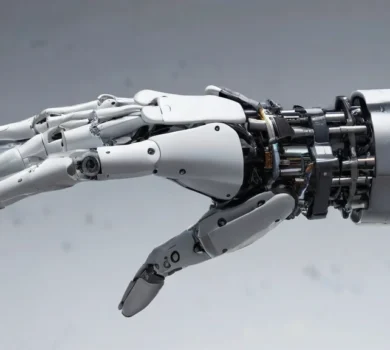
Autonomous needle insertion in a CT scanner chamber with breath control.
The system for integrating respiratory sensors and secure control enables autonomous needle injection in the CT scanner chamber.
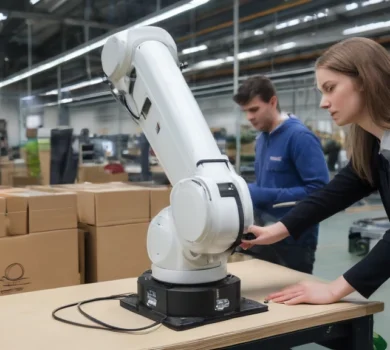
Swedish startup 120ft has built the first microfactories with humanoid robots.
Swedish startup 120ft emerged from stealth after raising €576,000 in angel investments.