

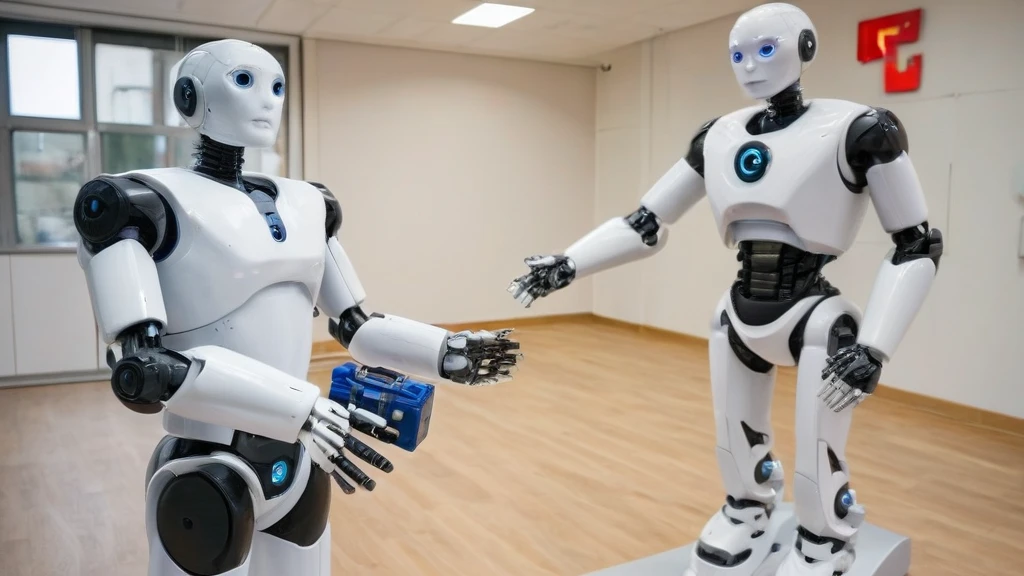
Relay - the first autonomous service robot in human environments
The IERA Award In 2017, the IERA award was given to Relay, a robot created by Savioke from California. The award, presented by the International Federation of Robotics (IFR) together with the IEEE Robotics and Automation Society, is one of the most important awards in the world of robotics. The jury's decision was unanimous - Relay was chosen as the best innovative solution in the field of service robotics.
The aim of the project was to create a device that not only delivers goods but also develops in a natural and user-friendly way. The robot is low in height and can move independently through hotel, hospital or office corridors. Its ability to avoid obstacles and react to people is based on advanced sensor technology and artificial intelligence.
How does Relay work in everyday operation?
Relay does not require constant supervision. After receiving an order, the robot independently selects a route, activates elevators and moves to its destination. All this happens without human intervention. Once the delivery is completed, the robot automatically returns to its docking station.
Communication with users takes place via a touch screen, sounds and simple facial expressions - which is designed to facilitate interaction and make contact friendly. The robot can carry various items: from drinks and towels to medicines and documents. All this in a safe way, regardless of whether it moves through a crowded corridor or near people.
Scale of deployment and development prospects
Since its first installations three years ago, Relay robots have already made over 100,000 deliveries in the United States, Asia and the Middle East. The first applications were for hotels, then expanded to apartments and industrial facilities. Currently, the company plans to introduce the system in Germany and France.
Although the IERA award does not yet mean mass deployment, it confirms the real functionality of the technology. However, it is worth emphasizing that the award was given for innovation, not for commercialization - which means that Relay is already in the testing and pilot phase in real-world operating conditions.
Can robots replace humans in services?
Relay is not intended to replace employees, but to support them. In hospitals, it can transport medicines, in hotels - luggage or drinks, allowing staff to focus on more complex tasks. Its role is not to eliminate work, but to optimize processes.
The ability to operate 24/7 in a human environment is a key achievement - previous solutions were limited to fixed routes or closed spaces. Relay shows that robots can to be not only functional, but also user-friendly and safe in interacting with people.