

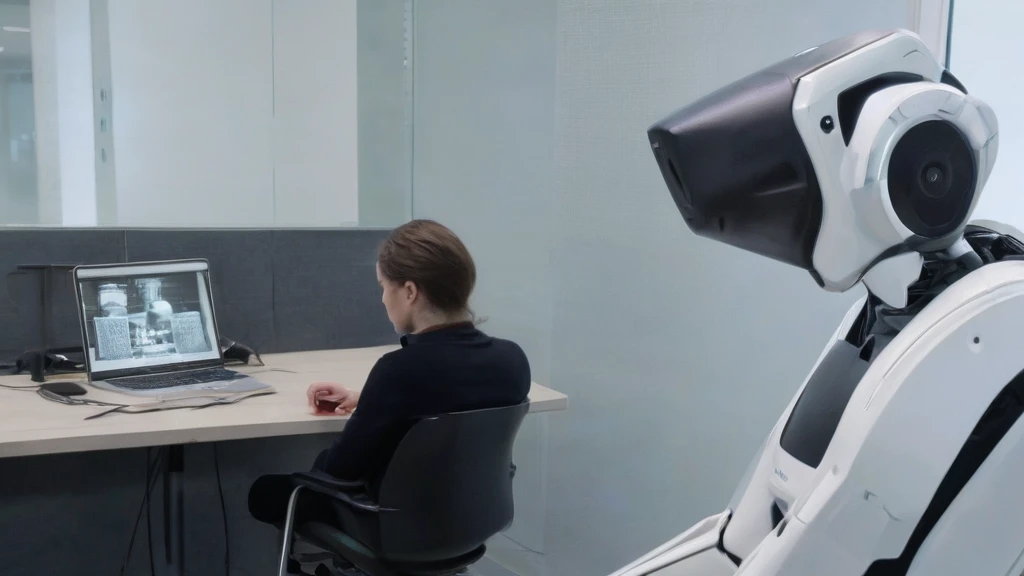
The end of an era: from evasions to liquidations.
In 2026, liquidation proceedings began. AI in robotics, one of the most hyped companies in the autonomous driving industry, has become a symbol of the long process of market decompression. The company, which was once part of the 'AI unicorn group' and exported products to more than ten countries, was placed under court supervision after its Shanghai and Changzhou units ceased operations. Earlier, in May 2026, the Pudong District Court announced the commencement of liquidation proceedings - the first step in a process that showed that even the most heavily invested companies were not immune to market changes.
The cessation of DeepBlue Technology's operations was not an isolated incident. In 2026, the company announced the closure of its loss-making production units - including traditional autonomous driving and robotics projects - in order to focus on large language models and intelligent agents. This was a strategic decision, but it did not lead to success: DeepBlue Technology's parent company was placed under liquidation proceedings. This indicates a deep financial crisis that has affected even companies with strong investment positions.
Why have so many companies failed?
An analysis of events since 2019 shows that the termination of operations was not due to a lack of technology, but rather to economic problems. Between 2019 and 2026, more than 40 companies - from LiDAR manufacturers to suppliers of ADAS solutions and delivery robots - ceased operations. The first bankruptcies included RoadStar and failures were often the result of internal conflicts or a lack of funding. In 2020, Starsky Robotics, the first company to test self-driving trucks, ceased operations after its investment chain was broken.
Between 2021 and 2022, a significant shift occurred: Argo AI and Apple shut down their autonomous driving projects. Investors began to lose patience. In 2023-2025, there was a major reorganization - HoloMatic ceased operations, and Zongmu underwent restructuring. Allride.ai it was ordered to be liquidated following an arbitration ruling. In 2026, terminations were no longer “surprises,” but rather strategic decisions - as in the case of DeepBlue Technology.
Common causes of bankruptcy: from lack of cash to flawed strategies.
 Enlarged imageClose zoomPrevious image
An analysis of 41 companies that ceased operations revealed common factors. The first - a lack of internal cash flow generation. Many companies invested in technological development but did not generate revenue. When capital dried up, the financial chain broke. The second - slow commercialization of technology. The transition from laboratory tests to scalable market offerings was too slow to keep pace with investor expectations.
The third problem is a mismatch between strategy and market reality. Companies were diversifying into many directions or focusing on one that did not yield short-term returns. The fourth - management errors: during periods of low liquidity, companies did not focus, and internal conflicts and leadership indecision consumed already limited resources. All of this led to a situation where the value of the companies was higher than their ability to generate revenue.
Is this the end of the autonomous driving industry?
No. The closure of over 40 companies does not mean the collapse of the entire industry, but rather its "deleveraging" - that is, removing excess and inefficient players. This process was inevitable: between 2019 and 2026, the market hype faded, and those remaining had to prove that their technology could work in the real world - and generate profits. In 2026, DeepBlue Technology decided to focus on large language models and intelligent agents - which suggests a change of direction, but does not mean success.
The future of the industry will depend on the ability to transform technology into products that can be delivered and monetized. Technological narratives have been replaced by commercial narratives. Only companies that can create closed business models will be able to survive.
What does this mean for investors and companies?
For investors, this process is a warning: it is no longer possible to rely on long-term projects without economic verification. A company's value cannot be based solely on technological potential if there is no path to monetization. For companies, the key becomes focusing on one area, generating liquidity, and quickly adapting to changing market conditions.
DeepBlue Technology may be an example of the future: the company did not disappear completely, but underwent a transformation. Its decision to withdraw from traditional autonomous driving projects and focus on large models shows that even in a crisis, there is a possibility of restructuring - but only for those who can recognize market signals.