

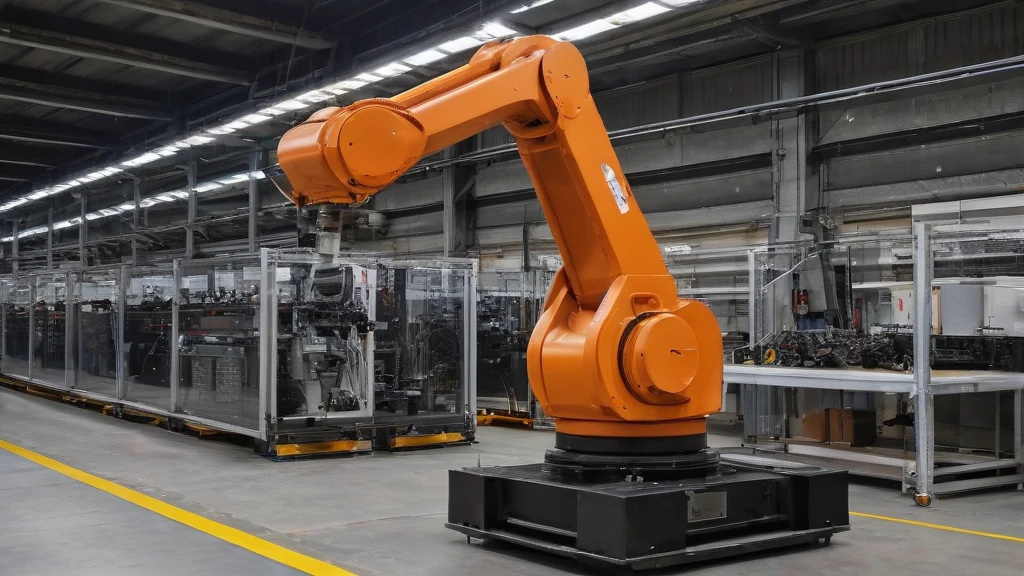
In 2021, sales of industrial robots reached a record number of 486,800 units - 27% more than the previous year. Asia and Australia recorded the largest increase in demand, but Europe and North America also regained momentum after two years of decline. This is not only a numerical record, but also a signal of deep conviction about automation in many industries.
Record number of installations - global sales growth of 27%
In 2021, the robotics industry recorded its most dynamic year in history. Global installations of industrial robots reached a record number of 486,800 units - 27% more than in 2020. This is not only a return to pre-pandemic levels, but also exceeding the previous peak from 2018, which was 422,000 units per year. According to Milton Guerry, President of the International Federation of Robotics (IFR), this is a year in which the industry "regained its strength and achieved the highest level in history." This growth was made possible by the ongoing trend of automation and technological innovations that have made robots
not only a tool for reducing costs, but also a key to increasing flexibility and resilience to supply shocks. The growth concerned all major regions - from Europe to Asia and America North - which suggests that automation has ceased to be an option for selected industries and has become a global strategy.
Asia continues to dominate, but Europe and North America are regaining sales momentum
Although Asia and Australia remain the largest market for industrial robots - 73% of newly installed units fell in this region - it was there that the largest increase in demand was observed: by 33%, giving 354,500 installations. Electronics was the main driver of this growth, but the automotive and metallurgy sectors also recorded significant increases. In Europe, the situation was different - after two years of decline, installations increased by 15%, reaching 78,000 units, which means exceeding the peak from 2018 (75,600). This is a signal that the industry in Europe has regained confidence and willingness to invest.
W In North America, the number of installations increased by 27%, reaching 49,400 units - the second-best result in history, after 2018. The USA was the main market in the region, with 33,800 units - which corresponds to a 68% market share. This shows that even in countries with a long tradition of automation, investments in robotics are still growing and are not limited to new markets.
 Enlarged imageClose zoomPrevious image
Electronics surpassed automotive as the main customer for industrial robots
One of the most significant changes in the structure of demand for industrial robots in 2021 was the role of the electronics sector. This year, its share amounted to 132,000 installations - 21% more than the previous year - and exceeded the automotive industry, which recorded 109,000 units (+37%). This is the first time that electronics has become the largest consumer of industrial robots.The reason for this was the growing need for precision, speed, and flexibility in the production of semiconductors and consumer devices. In Asia, where most electronic production takes place, this trend was particularly evident - there, electronics installed 123,800 robots
- which accounted for more than one third of all installations in the region. In Europe and North America, the automotive sector remained important, but its growing share was no longer dominant. This is a structural change - industrial robots are increasingly used where quick changes in production lines and high precision are needed, not just in mass production.
Automation as a strategy for development and survival in industries
The increase in sales of industrial robots is not only the result of the pandemic crisis but also a long-term transition to a new production reality. Companies have begun to see automation as a tool not only to reduce costs but also to build resilience to disruptive shocks in supply chains. In this context, robots have become an element of sustainable development strategy - both economic and environmental.
At the automatica 2022 trade fair in Munich, industry leaders emphasized that robots can support climate goals by optimizing energy and material consumption. Although these aspects are not directly reflected in the data from 2021, their growing importance suggests that the future of robotics will be closely linked to sustainable development. In this context, the increase in sales is not just a statistic - it is a signal of a change in approach to production worldwide.