

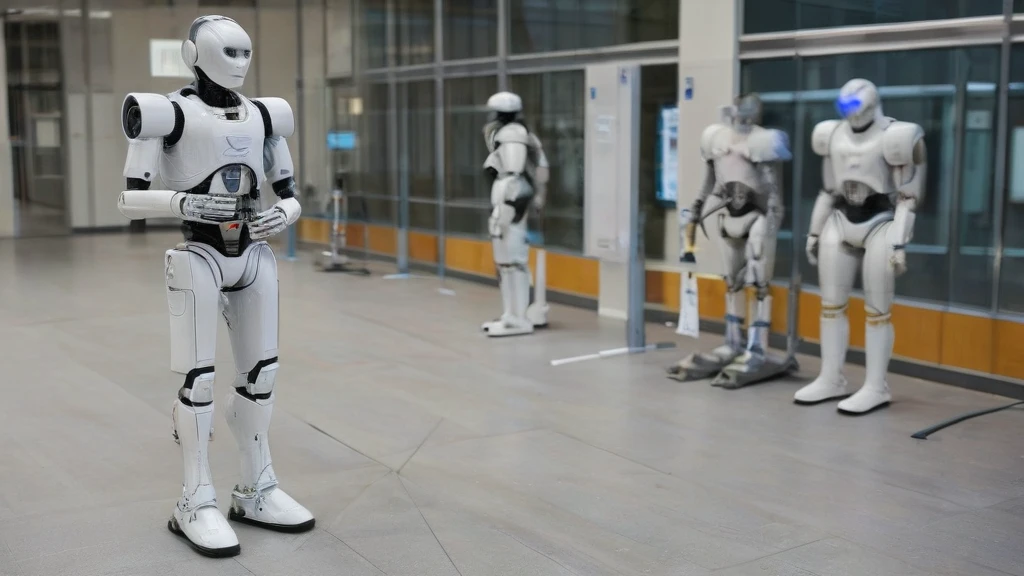
Robotics demonstration for the circular economy in Brussels
As part of the conclusion of the European euROBIN network conference, Fraunhofer IPA presented at the European Parliament how robotics supports the development of the circular economy. The demonstration focused on the use of artificial intelligence to optimize material recovery processes and reduce waste in industry. The presentation was part of a broader initiative supporting the competitiveness of the European manufacturing sector in the context of climate transformation.
According to the organizers, this show is intended to demonstrate that automation is not limited to mass production, but can be a key element of sustainable development. In particular, robotics supporting the cyclic processing of materials can significantly reduce the consumption of primary raw materials and CO₂ emissions in production.
Benchmark for humanoid robots - independent technology assessment
 Enlarged imageClose zoomPrevious image
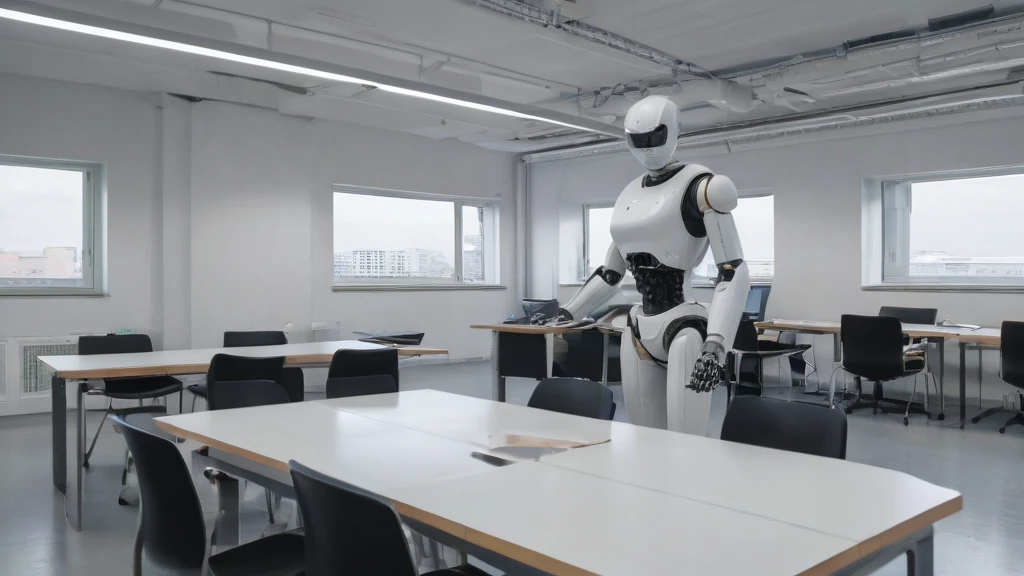
Fraunhofer IPA has developed a unique benchmark to evaluate humanoid robots in the context of their suitability in industrial environments. The benchmark includes criteria such as energy efficiency, compatibility with cleanrooms, data security and the ability to collaborate with humans. The introduction of this standard is intended to enable manufacturers and end users to independently analyze robot performance before deployment.
An important aspect is that the benchmark was created as an independent evaluation platform - which means that it is not tied to a specific product or brand. This allows it to serve as a reference point for the entire sector, supporting the development of standards in industrial robotics.
Technology transfer: from laboratory to market
One of Fraunhofer IPA's key achievements is the exclusive licensing of TissueGrinder technology - an automatic micro-mill for processing sensitive tissues. The device enables safe and precise extraction of live cells from biological samples, which is crucial for the development of personalized medicine.
The technology has been transferred to the start-up Fast Forward Discoveries GmbH. This is an example of a successful transfer of technology from a research institute to a company that can implement the innovation in real clinical settings. Fraunhofer IPA emphasizes that this approach is crucial for transforming scientific research into marketable products.
Driving innovation: people and machines in new collaboration
The new head of the Fraunhofer IPA research team, Jens Kober, focuses on construction robotics and improving human-machine interaction. His work focuses on ensuring that robots not only perform tasks but also understand user needs - through direct communication, learning, and adaptation to changing conditions.
This approach differs from traditional automation, where machines operate according to established programs. Kober emphasizes that the future of robotics lies in intelligently supporting people - not just replacing them. This approach may be crucial for sectors where flexibility and intuition are as important as precision.
In the context of the growing need for sustainable industrial development, Fraunhofer IPA's demonstration in Brussels is not only a technical experiment but also an expression of a strategic vision for the future of production. By integrating artificial intelligence with humanoid robotics, the institute shows how systems can not only optimize material recovery processes but also support people in difficult working conditions - e.g., in clean environments or when handling sensitive medical technologies. This approach confirms that robotics is not just a tool to replace employees but a key element of new collaboration between people and machines, where each side complements the other.
Collaboration with companies such as Fast Forward Discoveries GmbH - which has implemented the TissueGrinder technology - shows that research innovations can quickly be transferred to the market, transforming into products with a real impact on health and the environment. In the longer term, such initiatives may form the foundation for a new generation of industry that will be not only more efficient but also in line with the goals of the circular economy and the European Union's climate commitments.
In the context of increasing pressure on European industry to meet climate targets and sustainable production models, Fraunhofer IPA's demonstration in Brussels is not only a technological breakthrough but also an expression of a strategic approach to industrial transformation. By integrating humanoid robotics with artificial intelligence, the institute shows how systems can act as partners for people in difficult conditions - both in clean environments and when handling sensitive medical technologies.