
Record growth in China
In 2016, China achieved the highest-ever sales of new industrial robots - 87,000 units, representing a 27% increase compared to the previous year. This is not only a numerical record but also confirmation of China's position as a global leader in automation and the world's largest market for industrial robots. The data comes from a report by the International Federation of Robotics (IFR), which presented preliminary results before the publication of the World Robotics Report 2017.
It is worth noting that this growth is not accidental. Since 2011, the average annual growth rate in sales industrial robots in China has been 31% - making it the fastest-growing market in the world. At the same time, the number of active industrial robots in the country increased by 36%, reaching approximately 340,000 units, which puts China in first place globally in terms of deployment density.
Electronics as the main driver of automation
 Enlarged imageClose zoomPrevious image
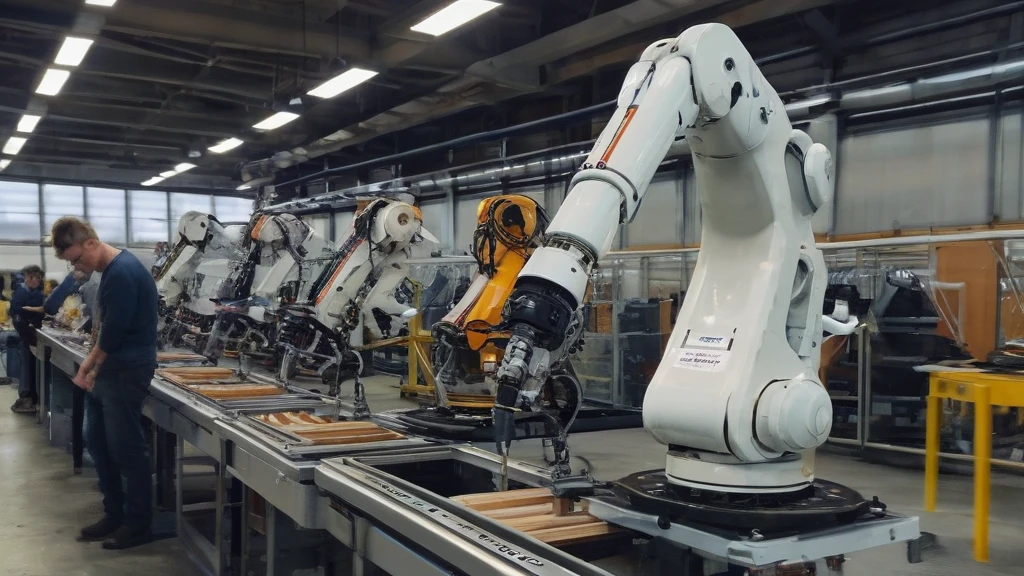
The largest increase in sales was recorded in the electrical and electronics industry - sales there industrial robots increased significantly compared to 2015. This is about 30,000 units, which accounts for 35% of total sales in China. The reason is the intensive automation of semiconductor, chip, and large battery production for electric vehicles.
In this sector, Chinese robot manufacturers have significantly increased their revenues, demonstrating their growing role in their domestic market. Although imported solutions from Japan, Korea, Europe, and North America still dominate, local companies are rapidly gaining market share - especially in low-specialization sectors where cost and availability are key.
It is worth noting that the growth dynamics in the electronics sector are not limited to semiconductor and battery production - it also extends to the assembly of consumer devices such as smartphones and IoT devices. Automation in this area allows for increased precision, reduced production errors, and faster deployment of new models. The growing demand for robots in this industry shows that China is not only the largest consumer market but also a key center for high-tech manufacturing. This translates into increasing demand for advanced integration systems that enable seamless collaboration between robots, humans, and other elements of production lines. In a global context, this means that China is becoming not only the largest consumer of robots but also one of the main centers of innovation in industrial automation.
Industrial automation and future plans
Although the automotive industry remains an important customer for robots, its share of sales has decreased from 30% to a level lower than that of electronics. However, it is still a significant factor - China is both the largest car market and the largest electric vehicle production center in the world.
According to the "Made in China 2025" plan, China aims to achieve a density of industrial robots 150 units per 10,000 employees by 2020 - which represents a significant increase compared to the current level. Currently, South Korea is the leader in this regard (531), followed by Germany (301) and the USA (176). This is a goal that requires further development of both local manufacturers and integration infrastructure.
What does this mean for the global robotics market?
China's growth is not just a local issue - it affects the structure of the entire robotics market. The increasing demand for automation solutions in electronics and energy accelerates innovation, and also forces international suppliers to develop local production in China. This may lead to changes in the supply chain and increased competition between companies.
At the same time, it should be remembered that the data only concerns the sales of new units and the density of operation. They do not indicate full technological autonomy for China or the dominance of its manufacturers in the global market - this is still a matter of investment, quality and system integration.