

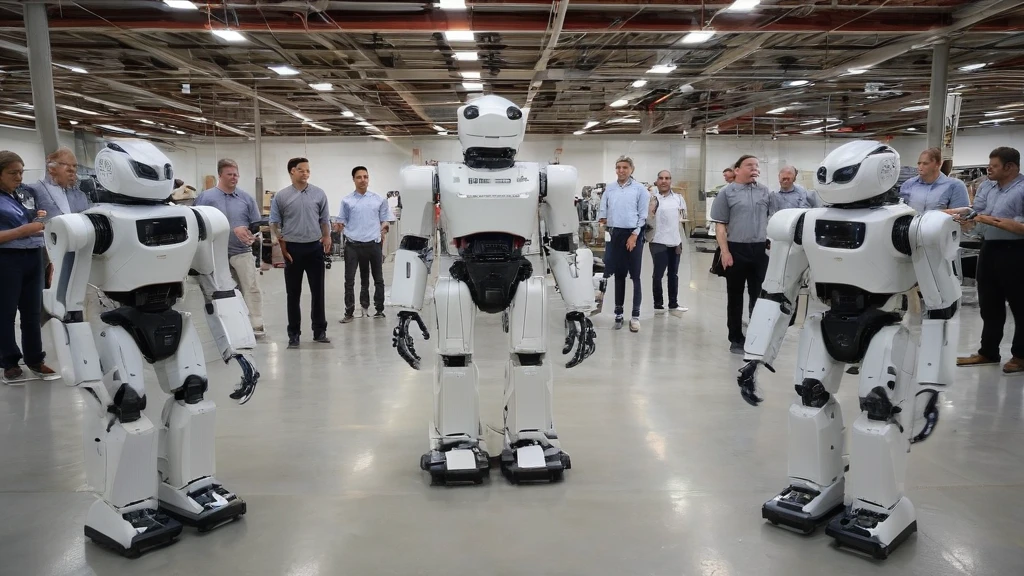
The Robotics Seminar Series at the University of Michigan in 2026 focused on new directions in robotics, including integration with additive manufacturing techniques and the application of foundation models in autonomous systems. The events take place weekly and attract experts from institutions such as NVIDIA, Stanford, and Carnegie Mellon.
Events at the University of Michigan: new directions in real-time robotics.
The Robotics Seminar Series organized by Michigan Robotics takes place weekly, usually on Mondays from 4:00 PM to 5:00 PM Eastern Time. The meeting location is room 2300 FMCRB on the campus of the University of Michigan in Ann Arbor, and additional broadcasts are available via Zoom. The events are intended for the scientific and engineering community, offering a platform for exchanging knowledge about the latest advances in robotics.
In 2026, the program included lectures from experts from various institutions. In March, Ankit Goyal from NVIDIA spoke about issues related to foundation models in robotics. His presentation focused on the possibilities of integrating AI models with physical systems, which is a key step in the development of autonomous robots.
Robotics and additive manufacturing: innovative solutions for industry.
In August 2026, Chinedum Okwudire, a professor of mechanical engineering and director of the U-M Advanced Manufacturing Institute (UMAMI), will deliver a presentation on the potential of robotics in additive manufacturing. In his presentation, he will discuss m.in- development of vibration compensation methods for work systems, optimization of scanning sequences in multi-robot processes, and automation of the depowdering operation - a critical step after additive manufacturing.
Okwudire emphasized the importance of collaboration between research and industry, mentioning the MI Fellows and Doctor of Engineering (DEng) programs, which aim to transfer research results into real-world applications. His presentation shows how robotics can not only support production but also transform its structure and efficiency.
Foundation models in autonomous systems: from theory to practice.
In February 2026, Daniele Gammelli, a doctoral student at Stanford University and researcher at the Autonomous Systems Lab, presented a lecture on the development of space autonomy using foundation models. His presentation focused on adapting techniques from the foundation models literature to autonomous systems in space, particularly in the areas of proximity maneuvers and close operations.
Gammelli emphasized that foundation models can serve as high-level reasoning modules, supporting automatic data management and decision-making under uncertainty. His presentation demonstrates how new AI approaches can be applied to complex physical systems that require high precision and reliability.
The future of robotics: integration of AI and new technological approaches
 Enlarged imageClose zoomPrevious image
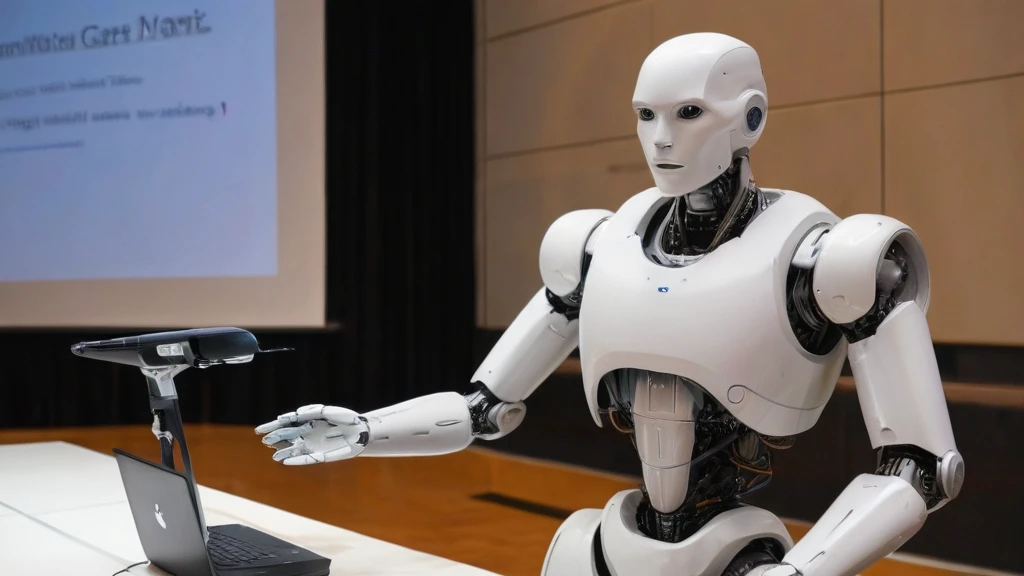
In November 2026, a lecture by Reid Simmons, Research Professor at Carnegie Mellon University, was expected. Although detailed information was not yet available, his participation in the series highlights the growing importance of collaboration between universities and research institutions in the field of autonomous robotics.
All lectures in the series show a common trend: robotics is no longer just about mechanics and control, but also about intelligence - both in the form of AI models and in how they are integrated with physical systems. This transforms the approach to robot design, which must be not only effective but also flexible and capable of learning.
Availability and importance for the scientific community
The lecture series is available both live and online, allowing a wide range of people - from students to industry engineers - to participate. The organizers encourage adding events to the Google calendar, and questions can be directed to Hitomi Katsumi at [email protected].
The significance of this initiative lies in creating a space for knowledge exchange between academia and industry. This allows research to move more quickly into applications, and new technologies to be tested in real-world conditions.
Events at the University of Michigan: new directions in real-time robotics.
As part of the Robotics Seminar Series, organized by Michigan Robotics, participants have the opportunity not only to listen to experts but also to actively participate in discussions after the lecture. Each event ends with a Q&A section where researchers and engineers can ask questions about the implementation of foundation models in robotic systems or vibration compensation techniques in additive manufacturing. This interactive format promotes a deeper understanding of the topics and supports the development of a highly critical scientific community.
In addition, all lectures are archived on the Michigan Robotics website and available as recorded videos. This allows people from other time zones to follow the content without time constraints. The archives provide a valuable knowledge base for students, researchers, and industry professionals who want to track the evolution of approaches to autonomous robotics and AI in robotics physical systems. Modern data transmission and storage technologies enable rapid sharing of materials after the event, which accelerates the transfer of knowledge from academia to industry.