Robot Deployment
Professional Industrial Robot Implementation
Process automation step by step
Comprehensive implementation support
Effective implementations for every industry
Integrating Robots with Your Production
Optimal solutions tailored to your needs
Robot implementation is a key stage of automation that requires precise planning and adaptation to production processes. We provide comprehensive support, from needs analysis through configuration and integration to operator training and system optimization.
Contact us Watch the videoDiscover How to Professionally Plan and Deploy Robots to Gain a Competitive Advantage
Your Path to Effective Robotization
Implementing industrial robots is a complex process that can radically improve efficiency, quality and safety in your company. To make full use of automation potential, however, a systematic approach is required, including precise needs analysis, selection of appropriate technologies and effective management of the entire project. On this page, we present the key elements and stages of "Robot Implementation", from initial concept and process analysis through integration and programming to testing and production line commissioning.
At NexaRob, we place great emphasis on partnership with the customer. Together, we define goals, priorities, and the work schedule so that the final result closely matches real business needs. Regardless of the industry, whether food, pharmaceutical, automotive, electronics, or another sector, our team has broad knowledge of the specifics of different industries, supporting effective and tailored deployments.
Discover Proven Methods for Process Assessment and Selection of Appropriate Robotic Solutions
Needs Analysis and Technology Selection
Effective implementation of industrial robots begins with a thorough analysis of your company's needs and expectations. This makes it possible to precisely identify the areas where automation will deliver the greatest value. During the "Needs Analysis and Technology Selection" stage, NexaRob focuses on several key tasks:
Process Audit and Priority Identification
- Observation of Production and Logistics Lines: Our engineers conduct a detailed review of workstations, machines, material flow, and environmental conditions.
- Defining key requirements: Together with the client, we establish criteria such as required speed, movement precision, payload, and occupational safety conditions in order to preliminarily define the project scope.
Determining Key Robotization Parameters
- Robot reach and payload: What weight needs to be transported? What distances do products cover? Are there spatial constraints?
- Degree of automation: We analyze whether 100% robotization of a given process is cost-effective or whether mixed systems (human + collaborative robot) should be considered.
Matching Solutions to Industry and Applications
- Construction Type: Depending on the nature of the tasks, such as welding, assembly, packaging or processing, we may recommend articulated, SCARA, Delta, collaborative or mobile robots.
- Environmental conditions: In industries requiring sterility, such as food and pharmaceuticals, or operation at high temperatures, such as metal and chemicals, we pay attention to construction materials, ingress protection ratings, and additional safeguards.
Report and Initial Project Assumptions
- Technology recommendations: We present proposals for specific robot models, vision systems, grippers, sensors, and controllers that best meet the requirements of the process.
- Benefit Estimation: We discuss the results robotization can deliver, such as fewer errors, faster production, and improved safety, as well as an initial return on investment, ROI, timeline.
A careful needs analysis helps you avoid unsuitable purchases and downtime caused by technology that does not match real operating conditions. Clearly defined goals and priorities also make it easier to plan subsequent implementation stages, such as workstation design, without the risk of sudden concept changes.
How to Design an Ergonomic and Safe Robot Working Environment Consistent with Your Production Line?
Workstation Design and Integration
After selecting the right technological solutions, the next step is practical robot implementation at your facility. A key stage is Workstation Design and Integration, which means creating a layout of lines, safety guards, and control systems so robots can operate under optimal conditions while people are provided with maximum protection and comfort.
System and Layout Concept
- Space analysis: Based on hall dimensions, machine locations, and transport routes, we create an initial layout for robots, buffer storage areas, and safety guarding.
- Ergonomics and Material Flow: We focus on smooth process flow, from raw-material feeding to finished-product collection, to reduce unnecessary movements and shorten cycle times.
Selecting the Right Workstations and Grippers
- Task adaptation: Depending on the process type (e.g. welding, assembly, packaging, processing), we design or select ready-made workstations adapted to the specific task, taking payload capacity and reach into account.
- Grippers and tools: We offer pneumatic, electromagnetic, adaptive, and specialized grippers, for example for hot materials or delicate electronics.
Integration with Devices and Control Systems
- Communication with Machines: Robots must work with upstream/downstream equipment such as presses, injection molding machines, or conveyor systems.
- Compatibility with IT infrastructure: We ensure compatibility with PLC, MES, and ERP systems, as well as the option to expand with IoT platforms or data analytics.
Safety and Standards
- Risk assessment: Before installation, we conduct a risk analysis and propose protective measures such as fencing, light curtains, or emergency stop buttons.
- Collaborative robots: If a process requires close human-machine cooperation, we consider cobots with built-in force and collision-detection sensors.
Documentation and Launch Plan
- Final design: We prepare detailed drawings, bills of materials and electrical diagrams to ensure a smooth installation.
- Implementation schedule: We establish the sequence of activities to limit the impact on daily production and ensure a smooth transition to the next stage.
Robotic workstations designed and integrated in this way create a solid foundation for moving on to programming and testing, where system performance, safety and quality parameters can be verified.
Set and verify all parameters so robots operate efficiently and according to project assumptions"
Programming and Acceptance Testing
Once the concept has been developed and the workstations designed, the next stage is Programming and Acceptance Testing, through which robots receive a specific motion sequence and operating logic. At NexaRob, we focus on carefully planned robot configuration and virtual simulations, allowing us to optimize cycle time fully and confirm that all automation elements work coherently together.
Software and Environment Preparation
- Programming language selection: Depending on the selected robots and customer preferences, we use ABB RAPID, FANUC Karel, KUKA KRL or other environments. The key is adapting to existing systems and personnel capabilities.
- Algorithm development: We define process logic, such as the sequence of component collection and conditions for moving to the next stage, taking into account responses to signals from sensors, vision systems, or PLC controllers.
Motion Simulations and Optimization
- Offline programming: Using simulation tools, we prepare robot trajectories in a virtual environment, reducing the time needed for debugging on the production floor.
- Cycle Analysis: During simulation, we check whether movement paths cause collisions with equipment and whether there are areas where travel time can be shortened without compromising quality or safety.
Installing software on physical robots
- Program transfer: Once the algorithms have been refined, we transfer the finished scripts to the controllers of physical robots. This is when the first live start-up takes place.
- Final Configuration: We calibrate coordinates, adjust tools (e.g. grippers) and operating parameters (speed, contact force). All of this is done in accordance with the guidelines defined in the integration project.
FAT and SAT Acceptance Tests
- FAT (Factory Acceptance Test): At NexaRob facilities or at a supplier's site, under conditions close to real operation, we verify whether robots meet the intended performance, accuracy, and safety targets.
- SAT (Site Acceptance Test): A subsequent testing phase conducted at the customer's target location. It makes it possible to verify robot operation in cooperation with other line components, including machines and IT systems.
Verification of Results and Corrections
- Data analysis: During tests, we measure cycle times, the number of rejects, and communication errors. We make any necessary code corrections or modify technical settings.
- Customer Acceptance: After confirming that all parameters have been met, including performance, quality and safety, we agree on a plan for moving to full production or further improvement.
Prepare your team for independent supervision and efficient day-to-day robot operation
Operator Training and Maintenance
Even the most advanced technology will not perform effectively if employees cannot use it properly. At NexaRob, we offer Operator and Maintenance Training that gives your team the practical skills required for daily robot operation and maintenance. This helps minimize the risk of unplanned downtime and makes automation an integral part of your company's working culture.
Training Scope
- Basic Operation and Occupational Safety: Operators learn to use the robot interface, manual and automatic control methods, and basic safety procedures such as emergency buttons and shutdown procedures.
- Programming and customization: When needed, we provide training in advanced programming languages (e.g. RAPID, KRL, Karel) so personnel can independently modify motion sequences or operating parameters.
Practical exercises at workstations
- Manual and Semi-Automatic Mode: Participants learn different levels of robot control as well as techniques for calibration and setting reference points.
- Troubleshooting: Through exercises involving simulated failures, staff gain confidence in stressful situations, accelerating the return to normal operation.
Maintenance and Servicing
- Diagnostics and inspections: Employees learn about typical wear parts, such as drive belts and cables, procedures for replacing lubricants or filters, and methods for detecting early signs of irregularities.
- Service Planning: We teach how to set maintenance schedules to avoid unnecessary downtime and ensure uninterrupted line operation.
Safety and Industry Standards
- Collision response rules: What should be done when the robot detects an obstacle in its working area or when an emergency stop occurs?
- Collaboration with robots: In industries using collaborative robots, operators must know the procedures and regulations governing close contact with machines, such as speed and pressure-force limits.
Certification and Skills Development
- Training certificate: After completing the course, participants can receive an internal NexaRob certificate highlighting their robot-operation skills.
- Expansion capability: As the line develops or additional robot types are introduced, we offer supplementary training to help keep knowledge up to date.
A well-trained team helps ensure that implemented robots operate reliably and that any incidents or changes are handled efficiently. By investing in training, you create a culture of innovation and shared responsibility for automation success within your company, resulting in long-term benefits and higher employee motivation.
Ensuring a Stable Start for the Robotic Line and Continuous Process Improvement
Launch, Optimization and Monitoring
After testing and training are complete, a key moment arrives: launching the target robotic system under real production conditions. At this stage, NexaRob focuses not only on smooth deployment, but also on parameter optimization and monitoring key performance indicators (KPIs). This allows us to respond quickly to potential disruptions and continue developing automation so it delivers increasing benefits.
Production Line Start-Up
- Final verification: A final check of motion sequence correctness, safety settings, and communication with neighboring machines.
- Transition to full-load mode: Robots begin regular operation at the target takt time, moving actual products and working with personnel and other equipment on the line.
Performance and Quality Monitoring
- KPI (Key Performance Indicators): We analyze cycle time, number of rejects, number of stoppages, and energy efficiency, among other indicators, to gain a clear picture of how robots affect process profitability.
- Data collection: Integrated IT systems such as MES and ERP, as well as IoT modules, enable robot operating information to be archived, making later trend analysis easier.
Parameter Optimization
- Speed and Trajectory Adjustment: If it turns out that the robot has spare cycle time, movement dynamics can be increased to shorten cycle time. In the opposite situation, we reduce speed to avoid excessive component wear.
- Customization of grippers and tools: Based on ongoing observations, we can modify gripping-force settings, rotation angles, or the way components are placed to reduce errors and speed up the process.
Identifying Development Opportunities
- Expansion Potential: As market demand grows, additional robots or modules, such as vision systems or force sensors, can be added to expand the scope of automation.
- Planning Further Deployments: If an implementation works well in one area, we analyze other processes in which similar solutions could provide benefits, such as packaging or internal transport.
Support and Service After Launch
- Ongoing consulting: We act as a consulting partner for ongoing improvement needs and the elimination of minor faults.
- Updates and upgrades: Periodic service inspections can extend robot service life, and hardware or software upgrades can be carried out when needed.
Launching a robotic line is only the beginning of the path toward full automation. Regular monitoring and parameter optimization make it possible to fully utilize robot capabilities and adapt to changing business requirements. Our engineering team supports this process at every stage, helping ensure that your investment is profitable and provides real competitive advantages.
Develop your automation as market needs and new technologies evolve
Further Development and Modernization
In today's industrial and service sectors, new challenges constantly arise: changes in product portfolios, increasing customer requirements, and new environmental or legal standards. To keep robots profitable and effective over the long term, NexaRob provides support for the further development and modernization of existing production lines. This ensures that your automation remains up to date and ready to meet changing needs.
Production Line Expansion and Addition of Further Workstations
- Scaling Up: If production volume increases, we can easily add more robots or integrate a new process stage, such as quality control at the end of the line.
- Integration with additional machines: When purchasing new equipment or vision systems, we ensure smooth communication with the existing environment and maintain an ergonomic layout.
Hardware and Software Modernization
- Controller upgrades: Older robot controllers can be replaced with newer models, providing higher computing speed and additional functions such as adaptive motion control.
- Software Updates: Introducing new versions of firmware, vision libraries, or AI algorithms that improve process efficiency.
Function Change and Flexibility
- Workstation redesign: When the product range changes or new product variants appear, we can modify grippers, motion sequences or the entire workstation so that the robot can take on a different role.
- Adaptation to new industries: The same devices can often be configured for completely different tasks, such as packaging, handling, or surface processing, which reduces investment costs.
Implementing Innovative Functions
- Integration with IoT and Big Data: If your robots have not previously been connected to an IoT system, we can enhance them with sensors and software that analyze data in real time.
- AI Solutions: Advanced machine learning algorithms enable autonomous trajectory correction and adjustment of robot operating parameters to changing conditions.
Profitability Assessment and Modernization Financing
- ROI Analysis: Together with the customer, we verify whether modernization will deliver satisfactory benefits relative to the required investment.
- Forms of support: We offer various financing options, such as leasing, investment loans and grants, as well as service agreements that help maintain operational continuity and minimize risk.
Further development and modernization are a natural part of the life cycle of robotic systems. With NexaRob support, you can respond flexibly to new market needs and technological progress while protecting the profitability of your investment. Use the potential of innovation so that your automation continues to stay ahead of customer expectations and supports success in a changing business environment.
Have questions about implementing robots? Check the answers below or contact us
Frequently Asked Questions
No. In many cases, a robot can be integrated with existing machines and processes through minor workstation adaptations. We always try to limit costs and installation work so that implementation is as smooth as possible.
It depends on project scale, number of robots, and level of integration with other systems. In simpler cases, implementation may take several weeks, while more complex deployments involving additional vision or transport modules can take several months.
Of course. Many solutions are versatile, enabling rapid transition from one process to another, for example from assembly to packaging. This provides flexibility when the product range or production requirements change.
Costs depend on many factors, including the robot model, additional accessories such as a gripper or vision system, integration with other machines, and the level of automation. As part of the project, we always aim to estimate expenses precisely and also propose various financing options, including loans, leasing, and grants.

Do you have more questions?
If you need further clarification or would like to discuss the robot-deployment process in your facility in detail, contact us. NexaRob provides comprehensive support, from the concept stage through long-term service care and development of automated solutions.
Automate Your Business with NexaRob - Contact Us!
Interesting Facts from Around the World
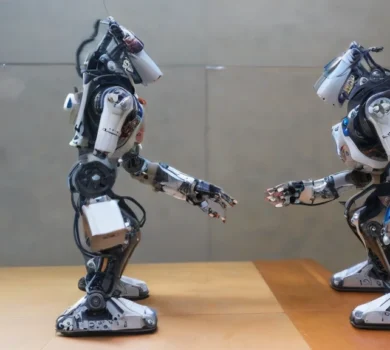
A four-legged robot from ETH Zurich autonomously solves a giant Rubik’s Cube.
A four-legged robot from ETH Zurich has demonstrated a new level of precision and autonomy by solving a large Rubik's Cube.
Predicting lane changes as a key to higher comfort and safety in autonomous driving.
Research conducted in the CARLA simulation environment showed that predicting lane changes by an autonomous vehicle is possible.
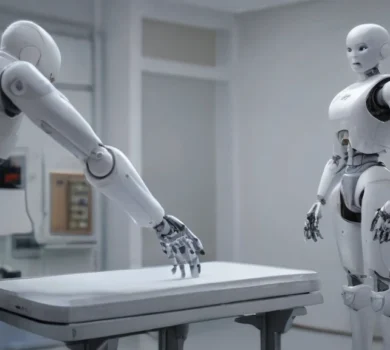
Tamim Asfour received the Greve Award for humanoid robotics.
Professor Tamim Asfour has received the Greve Award for humanoid robotics, which is awarded every two years by German.
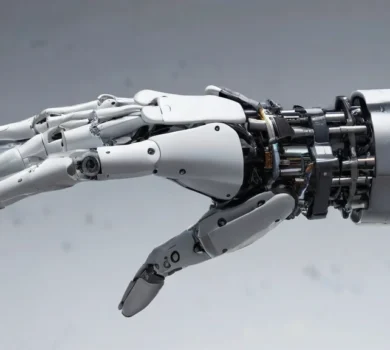
Autonomous needle insertion in a CT scanner chamber with breath control.
The system for integrating respiratory sensors and secure control enables autonomous needle injection in the CT scanner chamber.
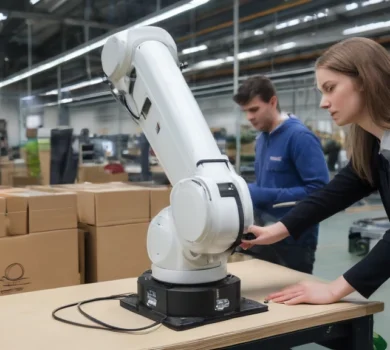
Swedish startup 120ft has built the first microfactories with humanoid robots.
Swedish startup 120ft emerged from stealth after raising €576,000 in angel investments.