
New generation of robots with infrastructure-level safety system
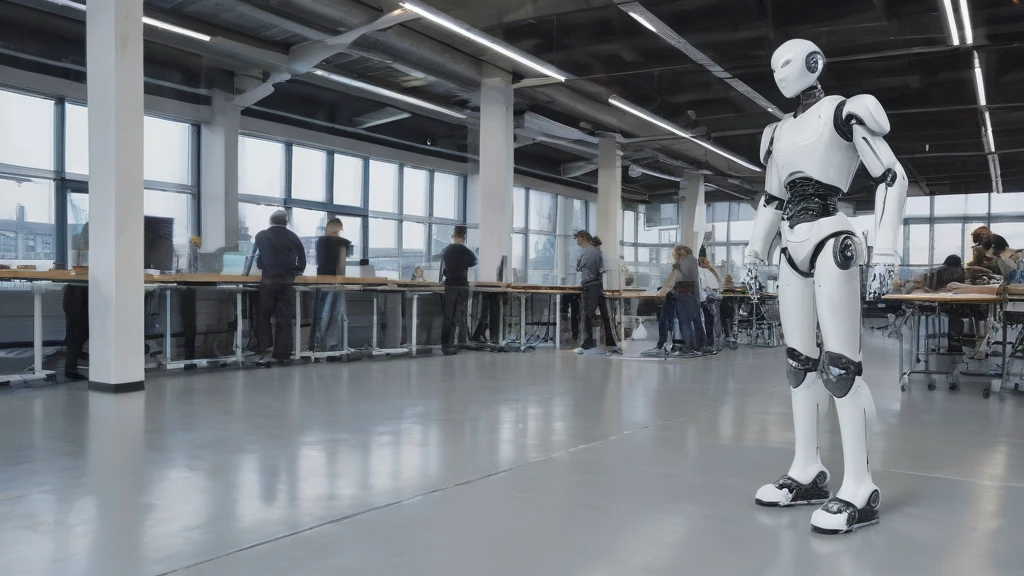
Agility Robotics and FORT Robotics have signed a strategic cooperation agreement that will transform the way humanoid robots are safe in human environments. The new version of the Digit robot 5 is intended to be the first device designed for safe collaboration with humans on an industrial scale. This is not just a technical improvement - it is a change of approach to safety, which moves from individual components to a full architecture that works both on robots and in their environment.
The cooperation includes three key elements: a safety pendant, robot communication, and a new external interface. The latter was jointly developed by both companies and is designed to extend the safety system beyond the device itself, enabling integration with external protection systems in warehouses or production halls. This allows the robot to react not only to signals from within itself but also to data from its surroundings - which is crucial for safe operation in dynamic conditions.
Safety as the foundation of human-machine collaboration
 Enlarged imageClose zoomPrevious image
The cooperation between Agility and FORT Robotics is not just about an additional component - it is a transition from supplier to strategic partner. Until now, FORT has mainly supplied safety pendants, but now it is entering into deeper cooperation covering design, engineering solutions, regulatory compliance, and support during implementations. This means that safety is no longer an add-on, but an integral part of the robot's entire life cycle.
The assumption that the robot can operate autonomously in normal mode, but still have the possibility of manual control via a safety pendant, ensures redundancy and continuity of protection. In case of configuration, service or unforeseen situations, the operator can take over control. This not only increases safety - it builds trust in technology that is designed to work near people.
Why is this important for the future of automation?
Safety is no longer just a technical issue - it is a prerequisite for deploying humanoids in environments where humans and machines work side by side. Previous versions of Digit, including Digit 4, have undergone over 65,000 hours of operation in real-world conditions - for example, with clients such as Schaeffler, GXO or Toyota Motor Manufacturing Canada. This provides a real basis for assessing the effectiveness of the system.
The new safety architecture is designed to enable scalability of deployments and the introduction of robots into more complex scenarios - from logistics to production. When a robot can operate safely in various conditions, its role transforms from a tool to a partner. This changes the way companies think about automation: not only in terms of efficiency, but also in terms of safety and trust.
What remains unclear?
Although the collaboration has been announced, no technical details of the external interface have been provided, nor is there any information on how it will be integrated with safety systems in the factory. It is also unknown whether the new architecture will be made available to other robot manufacturers or remain limited to the Agility platform.
Furthermore, although FORT Robotics mentions a "trust layer" for physical AI, there is no public data yet confirming the effectiveness of this architecture in real-world conditions. All of this remains in the realm of company declarations - and not confirmed facts.
In the context of increasing complexity of industrial environments, where robots interact with humans in real time, the new safety architecture becomes a key element, not only technical but also organizational. Integration with external protection systems allows for the creation of a safety network in which the robot does not operate in isolation, but as part of a larger ecosystem, responding to signals from sensors, cameras or production management systems. This opens the way for high-trust automation, where people can focus on strategic tasks and robots perform repetitive and physically demanding operations without risk to health.
Although detailed data on the performance of the new external interface is not yet available, its role in ensuring continuity of safety during configuration, service or failure is crucial - especially in large-scale deployments. The collaboration between Agility and FORT Robotics may serve as a model for future safety standards in humanoid robotics, where not only the device must be safe, but also its environment.