

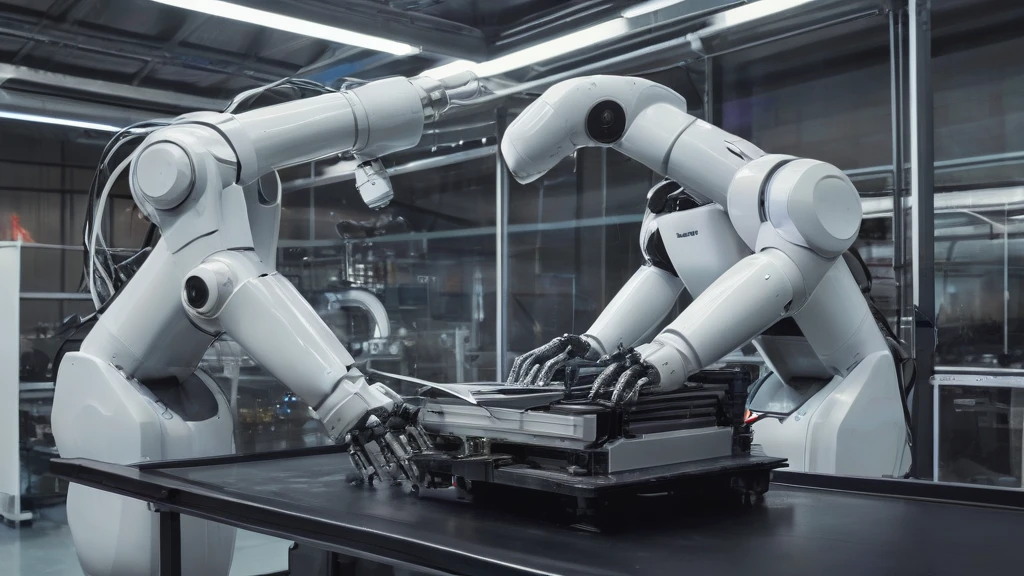
Growth in the global number of robots - forecast from 2017
The International Federation of Robotics (IFR) forecast for 2017 predicted that by the end of 2020, the number of operational industrial robots robots worldwide would increase from approximately 1.828 million units in 2016 to 3.053 million. This forecast was based on an analysis of trends in leading market countries, especially in Asia and North America.
An important factor was the increasing demand for production flexibility - companies needed systems that could quickly adapt to changing orders. Robots, thanks to their precision and ability to connect with new digital technologies, became a key tool in achieving this goal.
China as a dominant market for automation
 Enlarged imageClose zoomPrevious image
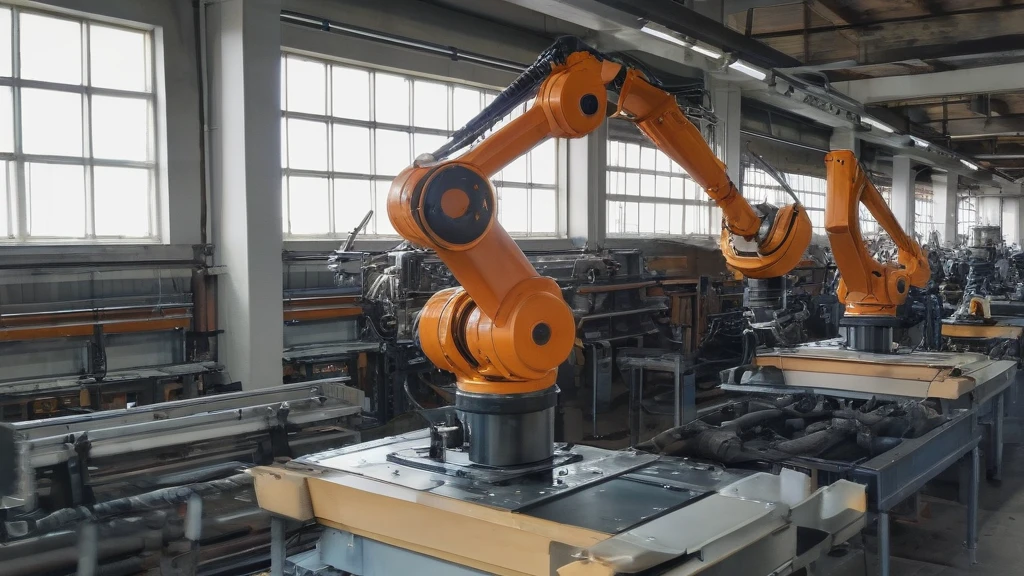
In 2020, according to the IFR forecast, there were approximately 950,300 industrial robots in operation in China - more than in Europe (611,700 units). This confirms the country's dominant position as the largest robot market in the world. In 2016, China already accounted for a significant share of global demand, and its manufacturers increased their share in the domestic market. The dynamic development of the electronics and automotive industries was the main driver of this growth.
At the same time, robot production in Japan reached 152,600 units in 2016 - which accounted for a significant part of global demand. Japanese industry was not only the largest producer but also a key supplier to Western markets, especially the USA.
USA and South Korea - leaders in automation density
Although China dominated in terms of the number of units, the USA and South Korea were leaders in terms of robot density in industry. In 2016, the density in the USA was 1,261 robots per 10,000 employees - second place in the world, after South Korea, where there were approximately 630 units for the same number of employees. This indicator shows how deeply automation has been integrated into the production structure in these countries.
In the USA, growth was related to the trend of recovering production from abroad and maintaining industrial competitiveness. In South Korea, the dynamic development of the electronics industry - especially LCD screen and memory production - was the main driver of investment in robots.
New automation models for small and medium-sized enterprises
IFR noted that technological developments are leading to the creation of simpler and more accessible solutions. In particular, there is a growing demand for leasing models and easy-to-use robots that can be easily integrated with existing production processes. This is especially important for small and medium-sized enterprises that do not have a large number of engineering specialists.
The development of robot clouds - where data from one device is compared with data from others - was intended to contribute to the optimization of operating parameters. Although these trends were in the development phase, IFR saw their potential to change the boundaries between hardware manufacturers and users.
What does the forecast confirm, and what remains unconfirmed?
The 2017 IFR forecast was based on data from 2016 and trends observed during that period. It is worth emphasizing that all figures - both for China, the USA, and Japan - are predictions, not confirmed data from 2020. Therefore, they cannot be treated as historical facts. Information about robot density in the USA and South Korea also applies only to 2016, not 2020.
It is also worth noting that although IFR predicted an increase in the number of robots, it did not provide data on specific models, their functionality, or precise locations for implementation. Therefore, the analysis concerns only the general trend and market structure, and not detailed technological solutions.
It should be emphasized that although the 2017 IFR forecast predicted an increase in the number of robots to 3.053 million units in 2020, its realization depended on many economic and technological factors. In reality, although the global number of industrial robots continues to grow, the rate of this growth has not reached the expected level - mainly due to economic crises, supply constraints, and changes in investment strategies during the pandemic. However, the trends that IFR identified - such as increasing production flexibility, the development of robot clouds, and the availability of leasing solutions - have been confirmed and have become key elements of modern industrial digital transformation. This means that although the number did not reach the forecasted level, the direction of change was correct and continues to shape the future of industry.