
Automation does not mean job losses - data confirms a different picture
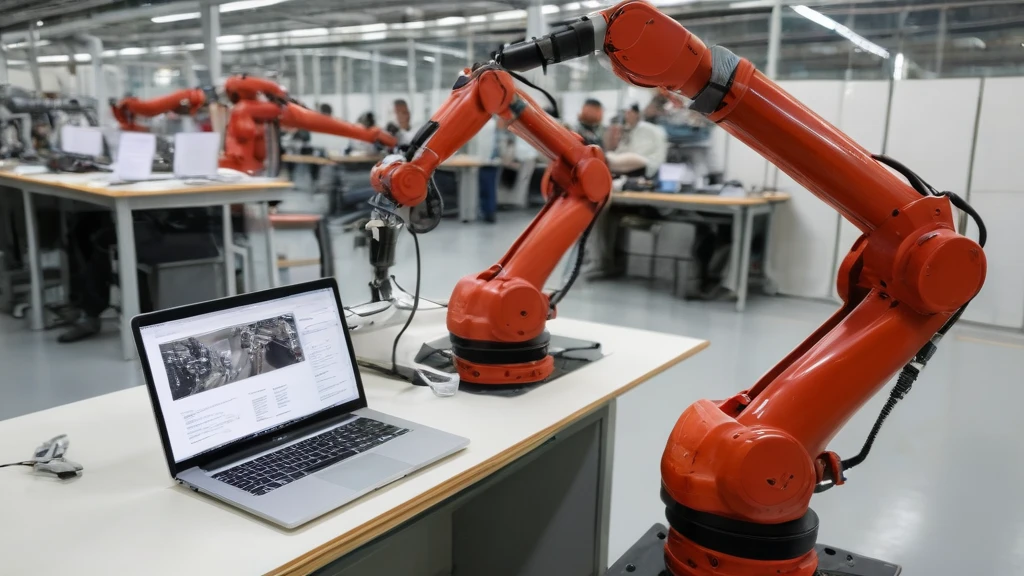
Growth in numbers industrial robots in the US was not accompanied by a decline in employment, as one might think. In 2016, the automotive sector installed a record approximately 17,500 robots - according to data from the International Federation of Robotics (IFR). This was not a one-time investment, but part of a long-term trend: over seven years from 2010, the number of installed robots increased by about 52 thousand units. During the same period, the number of employees in the automotive sector increased by 260,600 people, which is confirmed by data from the US Bureau of Labor Statistics.
This is not a coincidence. Research shows that automation contributes to increasing the competitiveness of production in the US, enabling it to maintain production within the country and even bring production back from abroad. In this context, robots are not "enemies" of employees, but a tool supporting the development of companies - especially small and medium-sized ones.
Small businesses cannot back down - automation is a condition for survival
For many small businesses in the US, automation is not an option, but a necessity. Professor Howie Choset from the Advanced Robotics Manufacturing Institute emphasized: "Small businesses - these are their words, not mine - either automate or they disappear." In the US, most industrial companies have fewer than 500 employees. For them, global competition means that without automation, it is difficult to maintain a position in the market.
An example is a company from Detroit - after closing in 2007 and being acquired in 2010. Thanks to investments in industrial robots, it currently has over 200 employees. This is not only an increase in employment, but also a restoration of activity to a level that was impossible without automation. Small businesses cannot back down - their survival depends on the ability to adapt quickly.
 Enlarged imageClose zoomPrevious image
New jobs appear where they need to be created
Amazon confirms that automation does not mean reducing employment. Jon Battles, Director of Advanced Technologies at Amazon, emphasized: "We intend to create 100,000 new full-time jobs in the US - even though we have previously installed 45,000 robotic systems." This is not just a declaration, but also proof that technology can be a strong driver of labor market development.
It is important to understand that new jobs are not the same as previous ones. They require different skills - from operating robots to analyzing data. Therefore, education and training are key. As Battles emphasized: 'We are approaching a labor shortage because 8 million baby boomers are leaving the workforce. We need to inspire the younger generation, train existing employees, and create real career prospects in the technology industry.'
Automation without education is just a meaningless tool.
Without proper education and training, automation will not bring benefits. IFR emphasizes that educational systems must adapt to new realities - both the public and private sectors share the responsibility for preparing workers for the future.
This is not only a matter of technology; it is a matter of social strategy. If a company invests in robots but does not train people to work with them, the investment may not pay off. On the other hand, if a company invests in both people and technology at the same time, it achieves maximum results. Automation is not an opponent of humans, but their partner - provided that humans are properly prepared.
Automation is not a one-time investment, but a continuous process of adaptation. For companies that want to remain competitive in the global market, new technologies are not only a tool for efficiency, but also a condition for survival. In the case of small and medium-sized enterprises, which make up the majority of the industrial sector in the USA, lack of access to modern solutions means the risk of disappearing from the market. Therefore, investments in robotics are not just technological - they are strategic. Modern production requires rapid response to changes in demand, flexibility of production lines, and minimization of human errors.
Industrial robots make it possible to achieve these goals while creating new types of employment - from system programmers to maintenance specialists. However, the key element of success is not only technology but also human capital: without proper education and training, investments in automation may not pay off. Therefore, joint actions by the government, educational institutions, and the private sector are necessary to ensure that future generations have the appropriate skills. Automation does not replace humans - on the contrary, when supported by a correct personnel policy.