

Phoenix Humanoid Robot
Phoenix, Human-Level Intelligence!
General-purpose robot for industry
Phoenix - Precision Manipulation and Dexterity
Humanoid Robot with Advanced Carbon™ AI
Phoenix, A Solution to the Labor Shortage
The robot of the future available today
Phoenix is a general-purpose humanoid robot created by Sanctuary AI. It is 170 cm tall, weighs 70 kg, moves at speeds of up to 5 km/h, and can lift loads weighing up to 25 kg. Equipped with highly dexterous 20-degree-of-freedom hands and the Carbon™ AI system, Phoenix was designed to perform a variety of tasks in industry and logistics, helping address labor shortages.
Contact us Watch the videoPhoenix - Sanctuary AI
Phoenix Humanoid Robot
The Phoenix robot from Sanctuary AI is a bipedal humanoid designed for versatile use in spaces intended for people. Sanctuary AI, based in Canada, aims to create solutions that support people in routine and repetitive tasks across industrial and service sectors as well as home environments. Phoenix is intended to combine free movement with extensive interaction capabilities, which over time could provide practical support in warehouse work, customer service, and even simple care tasks.
The manufacturer emphasizes that Robot Phoenix is intended to stand out through a human-friendly design, advanced artificial intelligence algorithms, and an efficient motion stabilization system. Subsequent project iterations focus on improving joint actuator performance and increasing gripper precision. This means Phoenix can serve as a platform not only for companies seeking versatile solutions for automating light processes but also for research centers wishing to develop human-robot collaboration algorithms in real environments.
History and Development
History of the Phoenix Humanoid Robot
Sanctuary AI's Phoenix project grew from the goal of developing a humanoid capable of natural interaction with people and performing tasks with a high degree of automation. Below is a brief introduction to the key stages in the robot's development.
The Concept of a Versatile Humanoid
- From the beginning, Sanctuary AI worked on the concept of a robot capable of adapting to different tasks rather than being limited to a single sector such as logistics or services. Initial research included experiments with lightweight manipulators and different bipedal-leg configurations.
- The company emphasized modularity so every element, from drives to sensors, could be replaced or updated easily, accelerating project development.
First Prototypes and Cooperation with Partners
- Early Phoenix models focused on improving walking stability and adapting the design to environments built for people, including doors, stairs and narrow corridors. Sanctuary AI partnered with organizations in the service and retail sectors to test the robots under conditions resembling real customer-facing work.
- During this period, engineers also developed prototype hands with a basic pressure-sensor system, enabling them to grasp small objects and use some tools designed for humans.
Functionality Expansion and AI Concept
- Sanctuary AI has placed strong emphasis on artificial-intelligence development, integrating machine-learning, image-recognition and speech-processing algorithms with the robot. Phoenix is intended to communicate naturally with its environment and recognize a wide range of objects in real time.
- Subsequent prototype versions incorporated improved damping mechanisms in the leg joints, enabling more stable walking as well as greater precision in arm movements.
Current Status and Development Directions
- Sanctuary AI continues to conduct tests in research environments and with selected pilot partners without publishing a full commercial specification. Official demonstrations of the robot attract the attention of the media and industry experts, who rate Phoenix highly for its ability to perform light assembly tasks or customer service activities.
- The manufacturer intends to increase the payload capacity of the upper limbs and the robot's autonomous operating time in the coming years, while also expanding the AI system with more advanced environmental perception and voice interaction functions. As a result, the Phoenix Robot could become a competitive humanoid platform capable of operating across diverse market areas.
Thanks to intensive development work and a focus on multitasking, Sanctuary AI progressively develops the project Phoenix, hoping to fill the automation gap in tasks requiring both mobility in human environments and subtle human interaction.
Technical Specifications
Technical Specifications of the Phoenix Humanoid Robot
The information below is based on official materials from the manufacturer, Sanctuary AI. Phoenix is a general-purpose humanoid robot designed to perform different tasks in work environments. It is powered by an AI system called Carbon™, enabling it to imitate human skills and reasoning.
| Parameter | Value | Notes |
|---|---|---|
| Height | 170 cm (5'7") | Similar to the height of an average person. |
| Weight | 70 kg (155 lbs) | Relatively lightweight for a humanoid robot. |
| Degrees of freedom (DOF) | 20 in the hands | High manipulation precision. |
| Maximum movement speed | 4.8 km/h (3 mph) | Speed Enabling Efficient Movement. |
| Arm Payload | 25 kg (55 lbs) | Can lift moderately heavy objects. |
| Hands | 20 DOF, haptic touch sensors | Enable precise manual operations. |
| Sensors | 3D cameras, tactile sensors | Provide spatial awareness and interaction capabilities. |
| Control System | Carbon™ AI | AI platform enabling logical action planning. |
According to the manufacturer's announcements, the Phoenix Robot is intended to stand out through relatively smooth movement and the ability to perform simple manipulation tasks, with a focus on real activities in human environments. Sanctuary AI plans to develop subsequent versions of the robot by increasing arm payload, extending autonomous operating time, and improving artificial intelligence algorithms.
Phoenix
Applications and Use Cases
Sanctuary AI promotes the Phoenix Robot as a versatile humanoid solution that may find applications in different sectors in the future. Although the project is still under development and commercial availability remains limited, the following examples illustrate tasks the robot could potentially perform:
Warehousing and Logistics
Handling lightweight loads: With arms and basic gripping capability, Robot Phoenix has the potential to perform tasks such as sorting small parcels, putting away goods, or unloading lightweight products.
Working Around People: A bipedal humanoid is suitable where standard AGV vehicles have difficulty handling stairs and uneven surfaces, while interaction with equipment designed for human operators is also required.
Customer Service and Services
Reception stations: The robot can welcome guests, provide directions inside a building or deliver small items such as leaflets or room keys in hotels and shopping centers.
Staff support: Its low payload and limited arm strength are unlikely to replace people in heavier work, but they can help with cleaning tasks, shelf handling, or minor service activities.
Education and Technology Demonstrations
Demonstrations at Science Centers: A humanoid robot attracts considerable interest, which can be used for outreach and educational purposes; in academic environments it can serve as a research platform for AI development.
Lectures and conferences: Demonstrations of natural walking and simple robot interactions can become an attraction at technology innovation events.
Laboratory Research and R&D
AI Testing Platform: Thanks to an open software architecture, with Sanctuary AI planning to provide an API, research units can develop algorithms for image recognition, speech recognition, or human-robot cooperation.
Ergonomics and Safety Analyses: Observing robot behavior in everyday environments helps improve occupational safety procedures and standards for humanoid use.
Potential Extensions in the Medical and Care Sectors
Assistance with Support Tasks: In the future, after suitable improvements in precision and safety, the Phoenix Robot could partially assist with simple care tasks such as bringing light objects.
Rehabilitation Support Project: The bipedal form and manipulators resembling human anatomy may be of interest to medical teams researching motor coordination and early forms of patient support during exercises.
Due to the early stage of development and the lack of a complete commercial specification, Robot Phoenix is not yet widely available on the market. Sanctuary AI treats the project as a flexible platform that can be adapted in future iterations to the requirements of specific industries. If development proceeds according to the manufacturer's assumptions, Phoenix can significantly influence how humanoid robotics is used in service, logistics, and educational environments.
Technology and Innovation, Safety
Phoenix
The Phoenix Robot by Sanctuary AI was created to harmoniously combine advanced bipedal mechanics with intelligent control and communication algorithms. The project is still under development, but based on information released so far by the manufacturer, several key elements can be identified that underpin its advanced technology and safety approach:
Bipedal Mechanics and Stabilization Systems
- Innovative Joints and Actuators: Sanctuary AI focuses on achieving the most natural and stable robot gait possible, which requires careful selection of actuators, bearings, and joints.
- Balance and Perception Sensors: The Phoenix Robot uses a set of gyroscopes, accelerometers, and cameras to correct its posture in real time and avoid losing balance when the ground conditions change or obstacles appear.
Artificial Intelligence and Data Processing
- Motion Planning and Machine Learning: The manufacturer is developing AI algorithms that allow the robot to adapt to new tasks and environments. As a result, the Phoenix Robot can independently modify its walking strategy, object grasping or interaction with users.
- Image and Speech Recognition (Prototype Stage): The company states that final versions of the robot may include functions for recognizing faces, basic gestures, and simple voice commands, making everyday collaboration with people easier.
Safe Coexistence with People
- Force Limiters and Collision Detection System: Sanctuary AI plans to integrate limiters into the joints that automatically reduce force when a collision with a person or another obstacle is detected. The robot is intended to stop or change its trajectory to avoid dangerous contact.
- E-Stop and Occupational Safety Standards: As with most modern robots, the Phoenix Robot is equipped, or is expected to be equipped, with an emergency drive shutoff button (E-Stop), which is fundamental to safety in environments shared with people.
Modularity and Future Improvements
- Replaceable Components: Sanctuary AI is developing a robot concept in which joint components or manipulators can be replaced according to need, for example with grippers of different designs that are more precise or more durable.
- Upgradeable Software: Future generations of controllers and AI algorithms are expected to be uploaded directly to the robot, enabling continuous improvements in functionality and performance.
Phoenix
Integration and Compatibility, Personalization and Solution Customization
The Phoenix Robot is intended to function as a flexible platform that can be adapted relatively quickly to different business scenarios and R&D environments. Sanctuary AI emphasizes several areas in which the robot's design and software can be customized:
Open Programming Interface (API)
- Application and Scenario Development: The manufacturer indicates that future versions are expected to include tools and libraries for creating custom algorithms for motion control, interaction, or cloud integration.
- Integration with Popular AI Frameworks: If the Phoenix Robot works with engines such as TensorFlow or PyTorch, R&D teams will be able to implement their own machine learning models without having to build everything from scratch.
Connectivity and Integration with IT Infrastructure
- Network Communication (Wi-Fi, Ethernet): A key aspect enabling remote management of robot tasks, maintenance, and real-time transmission of status and load data.
- Integration with Management Systems: The robot can be incorporated into existing production planning, warehouse management, or process analytics solutions to automatically retrieve task information and report progress.
Applications in the Service Sector and Logistics
- Configurable Grippers and Holders: Depending on the tasks, such as supplying goods or carrying delicate items, robot end effectors can be adapted to the shape and dimensions of the objects being handled.
- Visual Customization: In some marketing presentations, the robot can be color-customized and its housing branded with the company logo, strengthening an image of futuristic innovation.
Educational and Research Scenarios
- R&D Platform: Laboratories and universities can use the robot to experiment with new AI algorithms and analyze ergonomics and human-humanoid interaction in environments simulating workplace conditions.
- Ability to Program Specific Behaviors: Students and researchers can write their own scripts and motion sequences, opening the way to tests involving communication, gait planning, and development of robot movement patterns.
Ability to Expand Functionality
- Software Updates: Sanctuary AI plans to provide updates that improve movement stability, path planning, or enable deployment of newer machine learning models.
- Integration with New Sensors: Future iterations of Robot Phoenix may use advanced depth sensors, LiDAR scanners, or thermal sensors, expanding applications to environments with limited visibility, for example.
Thanks to the open hardware and software architecture, Robot Phoenix can become a platform ready for adaptation across different sectors, especially where bipedal locomotion and the ability to manipulate objects designed to human standards are required. Sanctuary AI intends to consistently develop these solutions in cooperation with partners and clients through pilot deployments.
Phoenix Robot
Benefits for Customers
Robot Phoenix, developed by Sanctuary AI, has the potential to bring significant improvements to a variety of processes in service, logistics, and education sectors. Although the project is still evolving, several potential benefits can already be identified for organizations choosing to cooperate with the manufacturer or planning future deployments:
- Bipedal Mobility in Human Environments Robot Phoenix can climb stairs, pass through narrow spaces, and overcome other obstacles that make it difficult for wheeled robots to operate. This may enable task automation in places previously inaccessible to conventional AGV systems. The ability to walk inside spaces designed for people simplifies adaptation to existing infrastructure and reduces remodeling costs.
- Light Automation of Handling Tasks With upper limbs providing basic grasping functions, the robot can carry lightweight objects, open doors, or operate simple devices such as control panels. Arm strength of several kilograms and flexible movement allow the robot to support employees with tedious or continuously repetitive activities.
- Integration with IT Systems and Data Analysis Sanctuary AI plans to provide tools for connecting the robot to warehouse management systems, production monitoring, and databases. This means Robot Phoenix will be able to automatically retrieve information about orders, goods locations, and tasks to be performed. Data from the robot's work, such as the number of handled items or distance traveled, can in turn feed process analytics, helping optimize logistics or services.
- Strengthening an Innovative Image Displaying a humanoid at a service point or during events is a clear signal that a company embraces modern solutions. The Phoenix robot can attract media and customer attention, building the organization's reputation as an automation leader. Cooperation with Sanctuary AI and testing the robot under pilot conditions can form part of a marketing strategy demonstrating openness to futuristic concepts.
- Educational and R&D Support The Phoenix robot can serve as a training platform supporting the study of programming and artificial intelligence at academic level and beyond. Organizations researching human-robot interaction, biomechanics or new motion-planning methods can use the humanoid as a base for developing innovative tools and algorithms.
FAQ, 9 Most Frequently Asked Questions
Phoenix Humanoid Robot
Below are brief answers to basic questions about Robot Phoenix. If you do not find the information you need here, please contact us or visit the full FAQ section, where additional guidance and materials are available.
Sanctuary AI offers limited availability to selected R&D partners and pilot customers. Larger-scale commercial deployments are still in the planning stage.
Sanctuary AI does not publish official prices, and the final cost depends on configuration, scope of support, and the number of units ordered. A quotation can be obtained by contacting the manufacturer or its partners directly.
Operating time depends on task intensity and battery configuration. Prototype versions operate for several hours under moderate load. The manufacturer states that subsequent iterations are intended to extend autonomous operating time.
Yes, the project takes cooperation between the humanoid and personnel into account. Force limiters, collision detection, and E-Stop are intended to ensure safety in human environments. However, the company is still developing occupational health and safety protocols and standards.
Current versions of the robot can handle light objects, usually a few kilograms, and operate typical elements such as door handles and buttons. Strong emphasis is placed on precision and gentle interaction with objects.
Sanctuary AI is developing AI modules that include speech recognition, although in the prototype phase the robot is focused primarily on locomotion and manipulation capabilities. Further functional extensions will be introduced gradually.
At a basic level, personnel should receive training in task configuration, basic safety, and control panel operation. More advanced software modifications and integration with IT systems require programming and AI expertise.
The robot was designed primarily for indoor environments built for people. In outdoor environments with uneven terrain or adverse weather conditions, effectiveness and stability may be limited.
Sanctuary AI plans to develop a technical support network covering software updates, remote assistance and mechanical repairs. As the project develops, service packages for end customers are also expected to become available.

More questions?
If you would like to learn more about humanoid robots, we invite you to browse our complete FAQ section. There you will find additional questions, detailed instructions, and useful tips.
Why NexaRob?
Your Trusted Partner in Humanoid Robotics - Knowledge, Passion, and Innovation
NexaRob has been following the latest trends and projects in humanoid robotics for years, including solutions such as the Phoenix Robot developed by Sanctuary AI. Thanks to extensive experience and a network of contacts in the technology community, we can offer professional support at every stage of robot implementation, from consultation and needs analysis through integration with IT systems to after-sales support.
- Expertise in Humanoid Robotics NexaRob cooperates with many manufacturers and startups, giving us a panoramic view of the market. We learn the advantages and limitations of individual projects, such as Robot Phoenix, and can advise whether a given humanoid will optimally meet your expectations.
- Individual Approach to Projects Every customer has unique requirements, from industry-specific needs to site conditions. We therefore conduct a thorough analysis of business processes and technical resources, then recommend the most effective ways to implement humanoid robotics.
- Comprehensive Support We provide not only pre-purchase consultation but also support with implementation and system integration. We organize training and service, and when needed we assist with software modifications and adaptation of the robot to changing market requirements.
- Innovation and Further Development NexaRob actively participates in research and development projects, continually expanding its knowledge of new AI algorithms, sensors and safety methods. This enables us to propose modern solutions that can support competitive advantage.
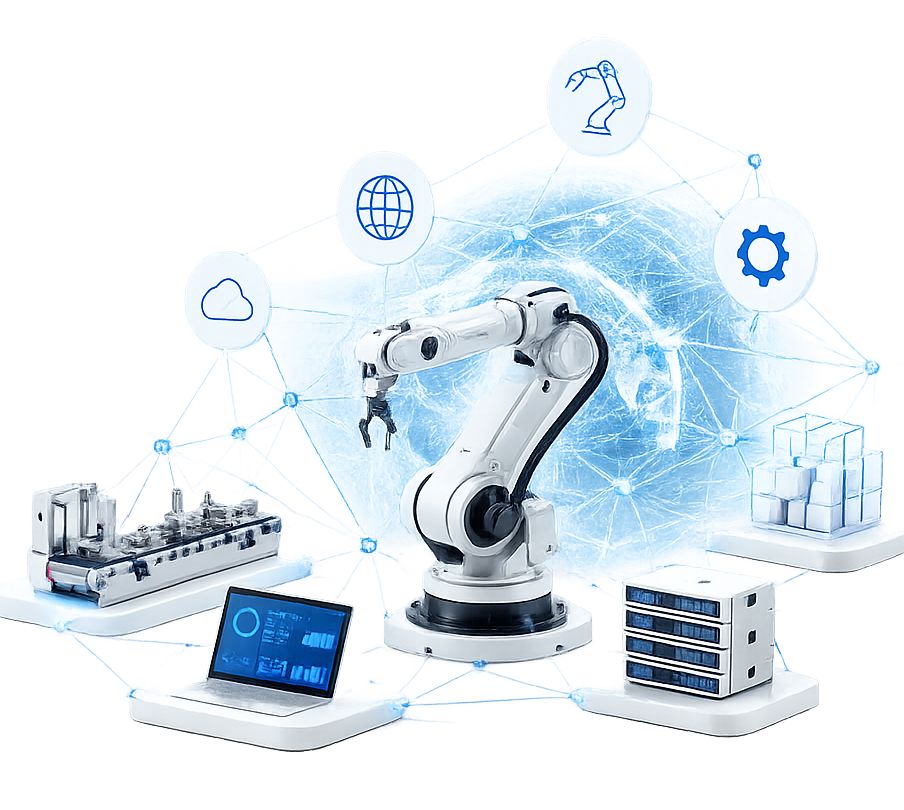
If you are considering deploying a Robot Phoenix-type robot in your company or are looking for consulting in automation and AI, contact us. We will be happy to discuss your needs, develop a deployment strategy, and help integrate modern robotics with existing processes, increasing efficiency and highlighting your company's innovative character.
Automate Your Business with NexaRob - Contact Us!
Join NexaRob and Let Us Develop Humanoid Robotics Together
Would you like to become our Partner?
NexaRob continues to expand cooperation with companies, scientific institutions, and robot manufacturers in order to accelerate humanoid implementations in business and the public sector. We believe that only through the synergy of expertise can we effectively transform process automation and shape a future in which robots cooperate with people naturally and safely.

United States

China

Japan

Germany

India

United Kingdom

France

Italy

Canada

South Korea

Brazil

Australia

Spain

Mexico

Indonesia

Netherlands

Saudi Arabia

Turkey

Switzerland

Taiwan

Poland

Sweden

Belgium

Thailand

Ireland

Austria

Norway

Israel

United Arab Emirates

Argentina

South Africa

Denmark

Philippines

Singapore

Malaysia

Colombia

Bangladesh

Egypt

Chile

Finland

Vietnam

Portugal

Czech Republic

Romania

New Zealand

Peru

Greece

Ukraine

Slovakia

Hungary

Slovenia

Croatia

Serbia

Bulgaria

Estonia

Latvia

Lithuania

Iceland

Luxembourg

Malta

Cyprus

Morocco

Algeria

Tunisia

Nigeria

Kenya

Ethiopia

Ghana

Tanzania

Uganda

Angola

Senegal

Qatar

Kuwait

Oman

Pakistan

Sri Lanka

Nepal

Kazakhstan

Uzbekistan

Mongolia

Russia

Cambodia

Myanmar

Laos

Fiji

Papua New Guinea

Venezuela

Ecuador

Uruguay

Paraguay

Bolivia

Costa Rica

Panama

Dominican Republic

Guatemala

Cuba

Jordan

Lebanon

Iran
Additional countries in Europe
These countries are hidden in reader mode so that the map is not overcrowded. Click a country to open contact details, email and a description of the cooperation area.
Additional Countries in Asia
These countries are hidden in reader mode so that the map is not overcrowded. Click a country to open contact details, email and a description of the cooperation area.
Additional Countries in the Americas
These countries are hidden in reader mode so that the map is not overcrowded. Click a country to open contact details, email and a description of the cooperation area.
Additional Countries in Africa
These countries are hidden in reader mode so that the map is not overcrowded. Click a country to open contact details, email and a description of the cooperation area.
Additional Countries in Oceania
These countries are hidden in reader mode so that the map is not overcrowded. Click a country to open contact details, email and a description of the cooperation area.
Albania
Andorra
Belarus
Bosnia and Herzegovina
Montenegro
Liechtenstein
North Macedonia
Monaco
Moldova
San Marino
Afghanistan
Armenia
Azerbaijan
Bahrain
Bhutan
Brunei
Georgia
Iraq
Yemen
Kyrgyzstan
North Korea
Maldives
Syria
Tajikistan
Timor-Leste
Turkmenistan
Antigua and Barbuda
Bahamas
Barbados
Belize
Dominica
Grenada
Guyana
Haiti
Honduras
Jamaica
Nicaragua
Saint Kitts and Nevis
Saint Lucia
Saint Vincent and the Grenadines
El Salvador
Suriname
Trinidad and Tobago
Benin
Botswana
Burkina Faso
Burundi
Cabo Verde
Chad
Democratic Republic of the Congo
Djibouti
Eritrea
Eswatini
Gabon
Gambia
Guinea
Guinea-Bissau
Equatorial Guinea
Cameroon
Chambers
Congo
Lesotho
Liberia
Libya
Madagascar
Malawi
Mali
Mauritania
Mauritius
Mozambique
Namibia
Niger
Central African Republic
Rwanda
Seychelles
Sierra Leone
Somalia
Sudan
South Sudan
Togo
Ivory Coast
São Tomé and Príncipe
Zambia
Zimbabwe
Kiribati
Micronesia
Nauru
Palau
Samoa
Tonga
Tuvalu
Vanuatu
Marshall Islands
Solomon Islands
Why Work with NexaRob?
Joint Investments in Innovation
We combine capital and expertise in artificial intelligence, mechanics, and management to jointly develop solutions that have a tangible impact on productivity and worker safety.
Synergy of Competencies
Our team consists of experts in programming, mechanical engineering, and business analytics. This allows us to develop tailor-made projects for customers from various sectors, from retail and services to education and healthcare.
Global Reach and New Markets
NexaRob aims to reach far beyond local borders. We support the expansion of robotic solutions into international markets and adapt technologies to specific legal and cultural requirements in different regions.
We Are Looking for Partners in the Following Areas:
- Production and Distribution of Humanoid Robots We create and develop implementation packages for end customers, combining hardware, software, and comprehensive service support.
- AI and IoT Technologies By working with providers of machine learning algorithms and networking solutions, we integrate humanoid robots with language processing, object recognition, and cloud analytics systems.
- Automation and Logistics Systems Together, we can create complete automation chains connecting humanoids with autonomous vehicles, production lines, and warehouse infrastructure, delivering measurable gains in process optimization.
Let's Join Forces
We invite you to discuss how we can jointly develop humanoid robotics and implement projects such as the Phoenix Robot. If you want to bring a new dimension of automation to your company or institution, NexaRob can be your technology partner for the implementation and integration of advanced robotic solutions. Together, we can build a future in which humanoids support people in everyday tasks around the world.
Interesting Facts from Around the World
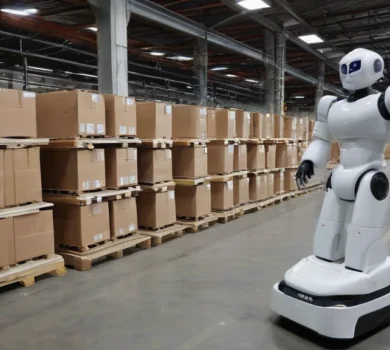
Teradyne Robotics and Sereact have implemented physical AI in Zalando’s logistics centers.
At Zalando’s logistics centers in Greven and Świebodzin, collaborative robots working with the Sereact Cortex platform operate automatically.
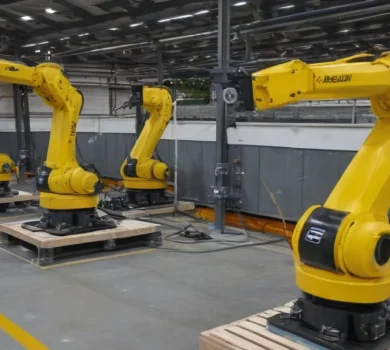
Full traceability in production thanks to robots and system integration
Atmus Filtration has implemented a modern robotic system for assembly and inspection, which ensures complete product traceability.
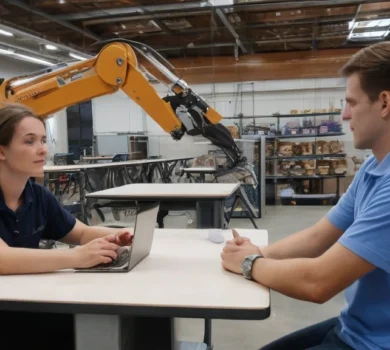
AGCO is testing a humanoid robot in production in Hesston, Kansas
AGCO and Agility Robotics will launch a pilot program featuring the Digit® humanoid robot at their manufacturing facility in Hesston.
How does the new diffusion model change the approach to autonomous driving?
The new QualiDrive model introduces an innovative approach to trajectory generation in autonomous vehicle guidance - instead of
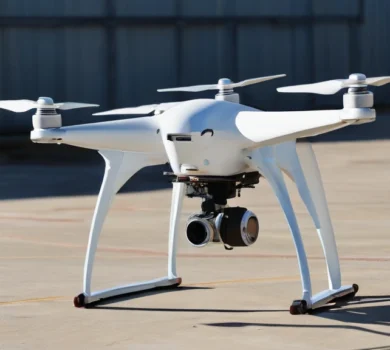
Combining data from drones and ground vehicles improves the continuity of tracking for autonomous cars.
A study conducted in a simulation showed that the combination of data from a drone (UAV) and a ground vehicle (UGV)