
Robots as the engine of China's new industrial strategy
As part of its 15th Five-Year Plan, the People's Republic of China has placed robotics at the center of the industrial system. This is not just another declaration - it is a new direction in economic policy that aims to shift the emphasis from traditional automation to advanced, intelligent robots supported by artificial intelligence. According to the report International Federation of Robots (IFR), this plan is becoming the main document guiding all other government and regional activities.
This stems from China's existing dominance in the market. industrial robotsIn 2025, Chinese people installed more than half of all new devices of this type in the world - 54%. This gives them a significant technological and economic advantage, especially in sectors such as electronics or machining, where Chinese companies are production leaders.
Domestic market versus global advantage: local solutions dominate
The Chinese strategy is not only about importing technology - it also develops a strong domestic supplier market. Over four years, from 2020 to 2024, the share of Chinese manufacturers in installations industrial robots increased from 30% to 57%. In the machinery and metallurgy sector, this figure reached as much as 85%, which shows deep integration of technology into the national production base.
This allows the Chinese not only to increase efficiency, but also to reduce dependence on imports. In the electronics sector, where 64% industrial robots operate in China, Chinese companies already supply 59% of global production - which suggests that automation and local production go hand in hand.
Humanoids: spectacular shows, but limited applications
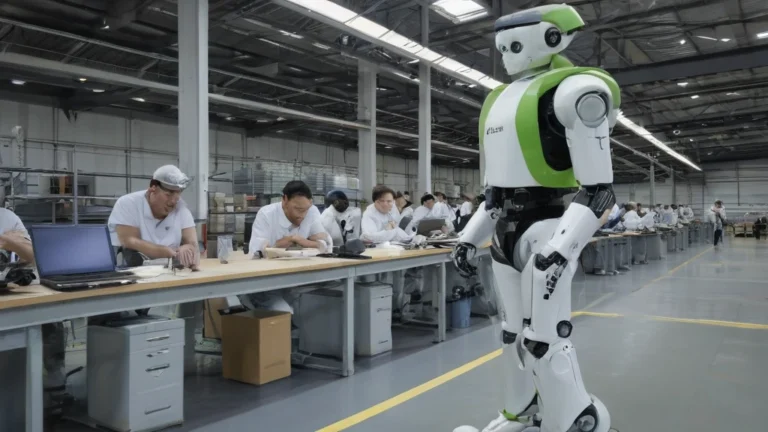
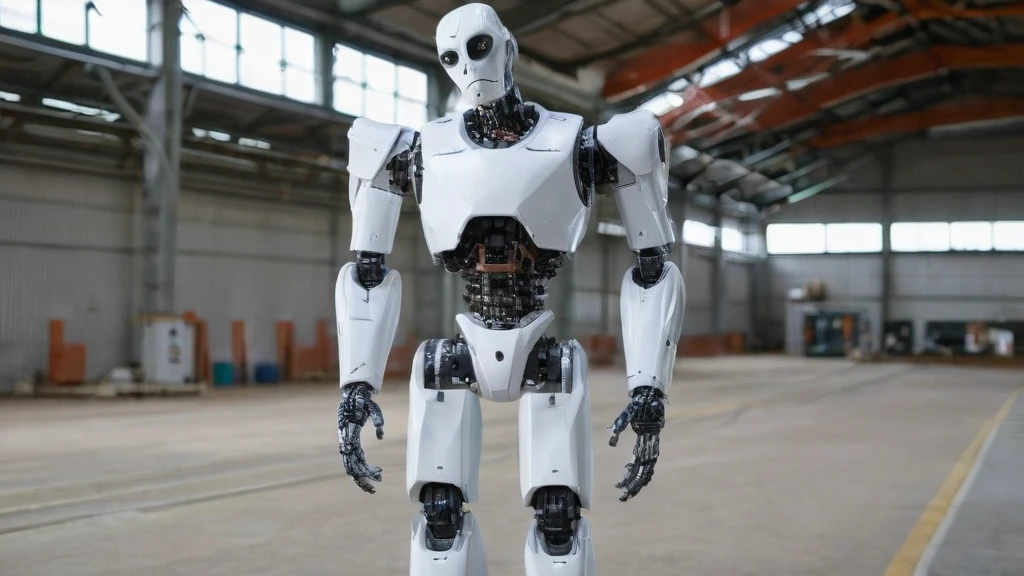
In global media, recordings of Chinese company humanoids dancing during the New Year's holiday and running a half-marathon in Beijing have appeared. These are not accidental performances - they are part of a strategic promotional campaign that aims to show China and the world their advancement in the field of "embodied intelligence".
However, these demonstrations do not reflect real capabilities in production conditions. In factories, where tasks are repetitive and require millimeter-level precision, industrial robots still dominate. Their design - with a smaller number of joints, optimized for specific tasks - makes them faster and more reliable than humanoids. In this class of tasks, the human form is not optimal.
The future: industrial robots in the center, humanoids further on
According to the plan, the commercialization of humanoids is only to take place at the end of the 15th period. This means that in the next five to ten years we do not expect a massive change in factories to humanoids.
During this period, rapid development of AI-supported industrial robotics is expected - especially in the context of automating processes that require flexibility and adaptation. These systems will be key to increasing efficiency in Chinese industry, rather than humanoid machines.