
How "eyes" for robots are transforming automation?
The MotionCam-3D system, awarded in 2020 by the International Federation of Robotics (IFR), is not only a new generation of 3D camera - it is a technological advantage in motion perception. The device can analyze objects moving at speeds of up to 140 kilometers per hour, which is crucial for dynamic production and logistics processes. Thanks to this, robots can react in real time to changing conditions in the environment, which significantly increases their flexibility and safety.
Photoneo's founder, Jan Zizka, emphasized that the system provides robots with "the highest resolution and accuracy in the world." This is not just a company statement - it is confirmed by the IERA award jury, which appreciated the innovative way of combining stereo vision techniques with structured light methods. The result is fast and precise spatial analysis, which enables robots to not only detect objects but also identify and assess their quality even at high speeds.
The MotionCam-3D system was recognized as an innovative way of combining concepts with entrepreneurship in the market. The IERA award was given for the device's unique ability to analyze objects moving at speeds of up to 140 kilometers per hour, which opens up new possibilities for automation in industry and logistics. The system, which integrates stereo and structured light techniques, was recognized as an innovative way of combining concepts with entrepreneurship in the market.
Applications in industry - from logistics to agriculture
 Enlarged imageClose zoomPrevious image
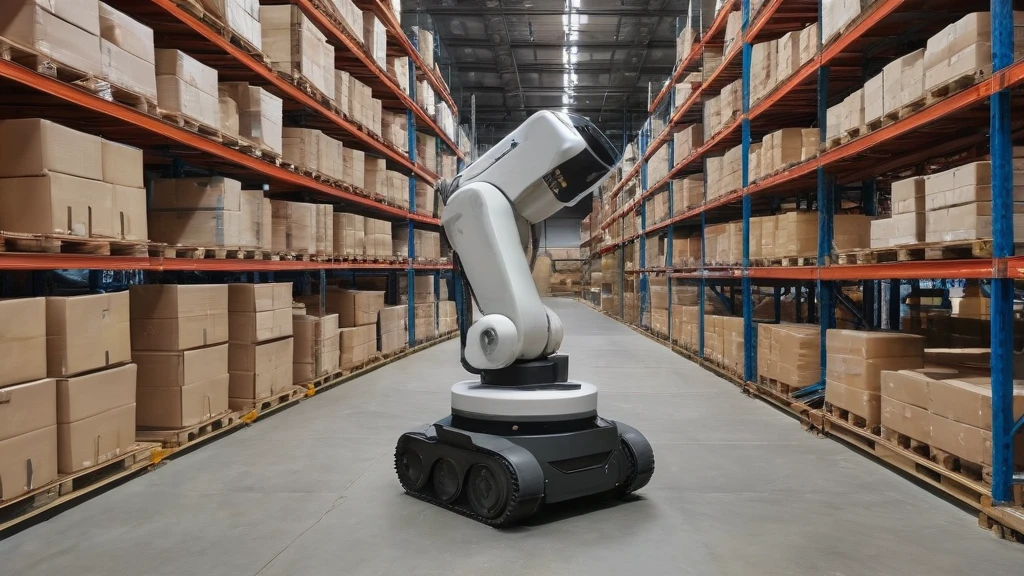
MotionCam-3D is not limited to one industry. Its application covers a wide range, from e-commerce and logistics to food processing and waste sorting. In warehouses, it can support autonomous transport and goods sorting systems, and in the food industry - quality control of products during fast flow on the production line.
In agriculture, the device can support harvesting robots by analyzing the condition and position of plants with high precision. For waste - it enables accurate recognition of materials, which speeds up the recycling process. These applications show that the innovation is not only technical but also practical: the system helps small and medium-sized enterprises (SMEs) implement robotics without the need to invest in complex systems.
Photoneo's founder, Jan Zizka, emphasized that the system provides robots with "the highest resolution and accuracy in the world." This is not just a company statement - it is confirmed by the IERA award jury, which appreciated the innovative way of combining stereo vision techniques with structured light methods. The result is fast and precise spatial analysis, which enables robots to not only detect objects but also identify and assess their quality even at high speeds.
Why is this not just a "camera" - but the future of robot perception?
MotionCam-3D is more than just an image recording device. It is a machine vision system that changes the way robots perceive the world. By integrating two techniques - stereo and structured light - the device not only sees, but also understands three-dimensional space with high accuracy, even while in motion.
Although the IERA award was given for technological innovation, its significance goes beyond the competition. It shows that the future of automation lies not in greater computing power, but in a better understanding of the environment. Systems like MotionCam-3D can become a standard for collaborative robots (cobots), especially in environments where speed and precision are critical.
The MotionCam-3D system was recognized as an innovative way of combining concepts with entrepreneurship in the market. The IERA award was given for the device's unique ability to analyze objects moving at speeds of up to 140 kilometers per hour, which opens up new possibilities for automation in industry and logistics. The system, which integrates stereo and structured light techniques, was recognized as an innovative way of combining concepts with entrepreneurship in the market.