

Robots for Mixing, Transport, and Finishing. Modern Technologies for the Construction Industry.
Robots for the Construction Industry
Innovation and Robustness in a Changing Landscape
Automation in Construction: New Opportunities and Increased Efficiency
Robots for the Construction Industry
The construction sector is a foundation of infrastructure and economic development, but it increasingly faces rising material costs, pressure to meet deadlines and shortages of skilled labor. In this environment, robotics and advanced automation systems are becoming an essential part of modern construction companies, enabling projects to be carried out with greater efficiency, precision and attention to safety. By combining experience with innovative technologies, NexaRob helps construction companies integrate robotic solutions tailored to a wide range of applications, from prefabrication and construction-site logistics to quality control and finishing work.
Application Characteristics
Key Areas of Automation in Construction
Automation in the construction industry covers the entire project lifecycle, from factory production of structural elements through masonry and assembly work to finishing and construction-site management. Below we present the main areas in which robots and intelligent systems improve processes, increase efficiency, and raise safety standards:
-
Prefabrication and Component Production: Manufacturing finished components such as walls, floor slabs, and beams under controlled factory conditions improves quality and shortens assembly time on the construction site. Robots support automated processing such as cutting, welding, and reinforcement work, reducing the risk of errors and material waste.
-
Construction Robots on Sites, Bricklaying, Block Placement, Cutting: Specialized devices can lay bricks or blocks according to programmed patterns, while advanced robots can cut concrete and other construction materials. Automation eliminates repetitive, heavy manual work and accelerates construction.
-
Logistics and Material Transport: Autonomous vehicles such as AGVs and AMRs, or other mobile robots, support delivery of materials such as cement, precast components, and reinforcement across large construction sites. This reduces forklift traffic and minimizes the risk of collisions and downtime.
-
Quality Control and Safety: Robots equipped with vision systems or inspection drones make it possible to continuously assess construction progress, detect potential structural defects, and monitor compliance with occupational safety standards. This also makes documentation of individual construction stages easier.
- Finishing and Assembly Work: Filling joints, applying plaster, or laying tiles can be automated using robots designed for precision tasks. This reduces time and provides a consistent final result.
By using robotics in these areas, construction companies can not only shorten project completion times and improve worker safety, but also reduce costs associated with material waste and workmanship errors.
Key Benefits
Why Automation in the Construction Industry Is Transforming Modern Construction
Implementing robots and advanced automation systems in the construction sector can significantly increase work efficiency, improve personnel safety, and raise project quality. Below we present six main advantages of automation that influence the long-term development and competitiveness of construction companies:
-
Increased Productivity and Work Speed: Robots can operate continuously, significantly shortening the time required for tasks such as bricklaying, cutting, or moving heavy components.
-
Precision and Repeatability: Automation avoids many human errors that are particularly costly in critical structural elements (e.g. incorrectly positioned reinforcement, inaccurate welds). Robots provide a consistent level of work quality, contributing to the durability and stability of structures.
-
Cost and Waste Reduction: Lower material consumption, for example through precise cutting, shorter project completion times, and fewer execution errors are factors that can significantly reduce the total cost of a project.
-
Improved Safety on Construction Sites: The most dangerous or physically demanding tasks, such as working at height or transporting heavy components, can be taken over by robots. As a result, the number of accidents decreases and personnel can focus on supervision and construction-quality control.
-
Flexibility and Scalability: Many automated systems can be easily adapted to different projects, for example by using interchangeable tools or cutting programs tailored to the requirements of a specific project.
- Better Process Control: Integration of robots with digital construction-management systems, including BIM and ERP, enables continuous progress monitoring, rapid detection of deviations from plan, and decisions based on actual field data.
Industries and Example Applications
Robotic Applications in Construction, Versatility and Reliable Execution
Automation increasingly covers the full range of construction work, from prefabrication and structural work to finishing and logistics handling. Solutions provided through NexaRob can be adapted to both small renovation projects and large-scale infrastructure or commercial investments. Below, we present six key segments in which robotization is playing an increasingly important role:
Manufacturing and Processing Prefabricated Components
Concrete, steel, or wooden prefabricated components are becoming more popular thanks to rapid assembly and guaranteed quality. Robots support forming, cutting, and welding of components, reducing production errors and material waste.
Applications:
- Cutting reinforcing steel and forming reinforcement meshes.
- Automatic forming and pouring of concrete into precise molds.
- Robotic welding stations for prefabricated steel structures.
Benefits:
- Repeatable component quality.
- Reduction of errors and material losses.
- Reduced time required to prepare prefabricated components.
Bricklaying and Wall Finishing
The construction industry increasingly uses robots for bricklaying and plaster application, shortening work time and ensuring better repeatability when laying bricks or blocks.
Applications:
- Bricklaying robots that automatically apply mortar and precisely place material.
- Mechanized application of plaster and finishing coats over larger surfaces.
- Ability to create advanced wall layouts from blocks, including non-standard patterns.
Benefits:
- Uniform and durable construction of walls.
- Faster construction without the need for constant checks with a spirit level.
- Lower risk of injuries associated with repeatedly lifting bricks.
Cutting, Grinding, and Processing Structural Components
Robots integrated with cutting tools such as lasers, water jets, or diamond saws, or with grinding tools, perform very well in fitting and finishing concrete, stone, or wooden components.
Applications:
- Automatic cutting and polishing of marble or granite slabs.
- Precision machining of wooden panel edges.
- Forging and grinding concrete in hard-to-reach areas.
Benefits:
- High-quality finishing and reduced material losses.
- Reduced employee exposure to noise and dust.
- Ability to perform tasks in hazardous construction zones.
Assembly of Structures and Finishing Elements
Articulated robots, as well as cobots, collaborative robots, can support assembly of structural segments such as steel beams and window panels and assist with finishing work, ensuring high quality while eliminating monotonous, physically demanding manual tasks.
Applications:
- Lifting and installing precast concrete components or facade panels.
- Installation of windows, doors, or other interior finishing components.
- Assembly of steel roof structures or ring beams.
Benefits:
- Increased safety during work at height or with heavy components.
- Reduction of errors in repetitive assembly tasks.
- Faster construction, resulting in shorter project completion times.
Logistics and Material Transport on Construction Sites
Large construction projects require efficient storage management and delivery of materials to the right locations. Mobile robots such as AMRs and AGVs, as well as transport drones, improve cargo movement while minimizing disruption and delays.
Applications:
- Delivering blocks, cement or reinforcement directly to the masonry team.
- Automatic management of pallets with tools and components.
- Handling transshipment areas at entrance gates and local storage areas.
Benefits:
- Faster material flow and reduced downtime for construction crews.
- Reducing the need to use large combustion-powered machines, such as forklifts, in hard-to-reach locations.
- Fewer collisions and hazardous incidents on construction sites.
Quality Control and Construction Progress Monitoring
Robots equipped with vision systems and sensors make it possible to continuously assess the precision of completed work, such as the positioning of structural elements, and remotely monitor construction site conditions, enabling rapid response to delays or errors.
Applications:
- Inspection drones with 3D mapping or laser scanning functions.
- Computer-vision systems detecting defects in welds, masonry or plaster.
- Integration with BIM software to compare actual construction progress with the plan.
Benefits:
- Minimizing costly rework through early fault detection.
- Additional safety for people inspecting construction sites (remote viewing capability).
- Faster schedule management through accurate data on the current stage of work.
Versatile Solutions for Diverse Projects
Robots for the Construction Sector
Selecting appropriate robotics technologies in construction depends on project specifics, site conditions, and scale of work. NexaRob, working with leading hardware and software suppliers, offers a broad range of solutions tailored to project needs, from prefabrication of structural components to finishing and construction-site logistics.
Articulated robots feature multi-axis kinematics and high movement flexibility, enabling highly complex tasks both in prefabrication factories and directly on construction sites.
Advantages:
- Multi-axis freedom of movement, facilitating assembly or welding work.
- High payload capacity, useful for lifting heavy steel or concrete components.
- Easy adaptation to changing project needs (for example, a different type of gripper or tool).
Applications:
Welding and cutting steel in structural steel production.
- Processing precast concrete components in factories.
- Assembly and loading of structural components, such as beams and facade panels.
Example:
An articulated robot working in a plant producing finished wall modules enabled faster welding and reduced errors, resulting in high component repeatability.
Cartesian robots move in straight lines along the X, Y, and Z axes, providing stable and repeatable operation within a defined workspace. They are particularly valued in prefabrication plants for cutting, drilling, or processing flat construction materials.
Advantages:
- Simple design, making programming and maintenance easier.
- High precision and repeatability in pick & place tasks.
- Easy integration with conveyor lines or rotary tables.
Applications:
- Automatic cutting and drilling of concrete, stone or wood-based panels.
- Arranging and sorting facade components in prefabrication plants.
- Processing finishing components, such as panels and moldings.
Example:
A wall panel factory implemented Cartesian robots for rapid cutting and arrangement of segments. This shortened order fulfillment times and reduced material waste.
Cobots are designed for safe collaboration with people, which is particularly important in construction tasks requiring precision and variety, such as manual finishing work, assembly of small components, or operations at height.
Advantages:
- Operation directly alongside people without massive safety enclosures.
- Simple and rapid configuration for different tasks, especially finishing operations.
Reduced employee workload from heavy, repetitive operations.
Applications:
- Assistance with laying bricks, installing tiles or applying mortar to smaller surfaces.
- Simultaneous, partially automated plastering or painting work (e.g. a robot applying paint while an operator prepares the surface).
- Supporting assembly work in lightweight structures, for example drywall and installation frames.
Example:
A cobot working alongside bricklayers during wall construction at an industrial facility helped accelerate the work and reduce the physical effort required from employees, who could focus on checking workmanship quality and details.
Autonomous mobile robots provide logistical support on large construction sites and in prefabrication halls by transporting raw materials (steel, concrete) and finished structural elements to the appropriate areas. This allows the team to focus on assembly and quality control.
Advantages:
- Autonomous navigation adapting to the changing construction-site environment.
- Integration with material management systems such as WMS for more efficient allocation of transport tasks.
- Reduced use of traditional combustion-powered vehicles in halls, resulting in less noise and exhaust emissions.
Applications:
- Delivering prefabricated components and reinforcement elements in production halls.
- Transporting tools, panels and construction modules on worksites.
- Handling transshipment zones in large infrastructure projects.
Example:
At a precast concrete factory, AMRs deliver finished components to packaging and loading zones, eliminating the need for forklifts over short distances and minimizing collision risk.
Specialized Construction Robots
In construction, demand is growing for equipment capable of operating under non-standard conditions. Such robots may include automated machines for wall chasing, laying installation cables, or laser measuring devices for determining levels.
Advantages:
- Dedicated designs adapted to dust, particulate matter, and changing weather conditions.
- Reduced need for manual work in hazardous or difficult-to-access areas.
- Easy integration with digital BIM models, helping keep implementation aligned with the design.
Applications:
- Automatic routing of electrical wiring in walls, for example chasing channels and installing conduits.
- Robots for pouring and leveling floors over large areas.
- Cutting holes in concrete and precise cutting of openings for installations.
Example:
A specialized robot for automatic wall chasing in multi-family buildings significantly shortened preparation time for electrical installations and improved cleanliness and precision of the work.
Professional Integration of Robotic Solutions and Comprehensive Technical Support for the Construction Industry
Integration and Support
Implementing automation in the construction sector requires an understanding of both the specifics of construction projects and robotic technologies adapted to the demanding conditions of construction sites. NexaRob provides a full range of services, from requirements analysis and design to deployment, service, and training, helping construction companies efficiently improve productivity and work quality.
Technology Implementation Process
-
Analysis and Consultation: Our team evaluates construction processes, performance expectations, and environmental conditions. Based on the information collected, we create a personalized automation concept.
-
Design and Simulations: We use digital simulation tools to plan and verify production line layouts, such as prefabrication lines, and work involving mobile robots on construction sites. We check whether the proposed solutions meet performance requirements and safety standards.
-
Installation and Programming: NexaRob specialists install selected equipment such as robots, sensors, and vision systems and configure it to ensure optimal operation under the conditions of a specific construction project. We work closely with the customer's engineering staff to guarantee full tool compatibility.
-
Tests and Training: After launching the automated system, we carry out a series of tests to verify performance parameters and compliance with design assumptions. We then train personnel in robot operation and maintenance, helping ensure smooth operation over the long term.
- After-Sales Support: NexaRob provides ongoing service, inspections and potential system modernization. We support production-line expansion, for example when the range of prefabricated products changes or new modules are added to mobile robots.
Main Support Services
-
Service and Maintenance: Regular inspections maintain robot performance in difficult construction conditions, minimizing downtime and losses.
-
Modernization and Updates: As new technologies emerge, we offer the possibility of expanding and adapting equipment to changing investment needs.
-
Crew Training: We organize courses and workshops that prepare operators and supervisors to use robotic solutions efficiently on construction sites and in prefabrication factories.
- Remote Diagnostics: With remote monitoring and data analysis tools, we can quickly detect and resolve faults, helping avoid delays in the construction schedule.
Wondering how to improve efficiency and safety in your construction projects? Contact NexaRob, and our specialists will develop an automation implementation plan tailored to your needs and construction site conditions!
Frequently Asked Questions
Key Questions About Robotization in the Construction Industry
We have prepared answers to key questions about construction automation, from prefabrication and material transport to robotic support on construction sites. See below how modern technologies can support your company.
Many robots intended for the construction sector feature reinforced enclosures and sealing systems that protect them from dust, moisture, and extreme temperatures. However, the parameters of each machine must always be checked against the specific operating conditions.
Robots take over the heaviest and riskiest tasks, such as moving heavy components or cutting concrete, reducing the likelihood of accidents and employee injuries. Improved ergonomics also supports better workforce efficiency.
Yes. Agile, compact robots, including cobots, and mobile devices can be adapted to the scale of the investment and tasks, such as precision cutting, assisting masonry, or applying plaster.
The degree of acceleration depends on implementation scale and the type of tasks taken over by robots, but in most cases significant reductions in completion times, even by several tens of percent, can be observed together with improved workflow continuity and predictability.
Robots can automate steel welding, profile cutting, concrete forming and pouring, as well as processing of prefabricated elements such as grinding and leveling. This helps maintain high quality and minimize material waste.
Yes. We offer various forms of financial support, including repayment plans and leasing, tailored to the needs of construction companies. We also help analyze investment profitability to make it easier to obtain external financing.
We begin with consultation and needs analysis, followed by design and simulation, then installation, hardware configuration, and testing. Finally, we train personnel and provide after-sales service and possible system modernization.
Modern robots and cobots are becoming increasingly easy to program and operate thanks to intuitive interfaces and graphical tools. Even so, staff training is necessary, and we make this significantly easier as part of NexaRob implementations.
This depends on the type of equipment and the scale of the investment. It is often necessary to prepare space for areas served by robots, such as AGV routes or prefabrication areas. However, many systems can be introduced without major reconstruction.
Payback time varies depending on project size and implementation scope. In many cases, faster operations, fewer errors, and improved safety can produce noticeable savings within a dozen or so months.

Do you have additional questions? Contact our team to learn more about automation in the construction industry. Also visit the FAQ section, where you will find answers to the most frequently asked questions and learn more about the possibilities of implementing modern solutions.
Why NexaRob?
Your Partner in Construction Industry Automation: Innovation and Quality Supporting the Success of Your Projects
NexaRob is a team passionate about advanced technologies and practical solutions, working with leading suppliers of robotic systems to help construction companies meet the industry's growing challenges. With solid experience and an individual approach to every customer, we provide high-quality process automation while improving the safety and efficiency of the work performed.
-
Experience Across Many Areas of Construction: We carry out projects across different areas, from prefabrication of concrete elements and general building construction to advanced steel structures. This translates into versatility and the ability to adapt solutions to every scale and type of project.
-
Flexible and Scalable Systems: The solutions we propose can be easily expanded and configured as your company grows or new types of projects emerge. We always take a long-term strategy into account so that you can continue to grow in a dynamic construction environment.
-
Global Contacts and the Latest Technologies: We cooperate with robot and software manufacturers with an international reach, allowing us to provide solutions aligned with current trends in automation and mechatronics. This can make your projects more competitive and efficient.
-
Comprehensive Consulting and Service Support: NexaRob provides assistance at every stage of deployment, from pre-investment consulting and design through installation to personnel training and after-sales service. We help solve ongoing challenges and support process optimization.
- Emphasis on Safety and Quality: The safety of people working on construction sites is a priority, and automation can reduce the number of accidents and lower insurance costs. By deploying robots and intelligent systems, you can also ensure high repeatability and consistency of work, contributing to a better reputation and the long-term durability of buildings and infrastructure.
Would you like to learn more about how NexaRob can improve processes in the construction industry, accelerate project delivery, and increase safety on construction sites? Contact us today!
Automate Your Business with NexaRob - Contact Us!
Global Reach
We Operate Globally, Support Locally
NexaRob operates internationally, offering companies in the construction sector advanced solutions tailored to conditions and requirements in different regions of the world. This enables companies building roads, bridges, industrial facilities, or residential complexes to rely on professional support in planning and implementing automation regardless of the investment location.
-
Operation in Diverse Climate Conditions: We have experience with projects carried out in different climate zones, allowing us to advise on the selection of devices resistant to extreme temperature, humidity, and dust conditions.
-
Compliance with Local Standards and Regulations: We take into account applicable safety standards and regulations in individual countries. We ensure robot compatibility with local requirements to facilitate certification and avoid legal issues.
-
Local Service Support: We cooperate with a network of technical partners, enabling rapid service interventions and support when robotic systems need expansion or modernization. This gives our customers confidence in operational continuity even at remote locations.
-
Flexible Configurations and Scalability: Systems delivered through NexaRob can be easily adapted to the specifics of projects in different countries, from small residential investments to large-scale infrastructure projects. Scalable solutions make it possible to expand as the project portfolio grows.
- Sharing Knowledge and Experience: By working across many global markets, we gain knowledge of the latest trends and innovations in construction. We share this information with customers, helping them introduce innovative solutions into their own projects.
Are you planning a construction investment in another country or want to introduce automation on construction sites in different regions of the world? Contact NexaRob. We will help you carry out projects effectively and in accordance with local regulations!

United States

China

Japan

Germany

India

United Kingdom

France

Italy

Canada

South Korea

Brazil

Australia

Spain

Mexico

Indonesia

Netherlands

Saudi Arabia

Turkey

Switzerland

Taiwan

Poland

Sweden

Belgium

Thailand

Ireland

Austria

Norway

Israel

United Arab Emirates

Argentina

South Africa

Denmark

Philippines

Singapore

Malaysia

Colombia

Bangladesh

Egypt

Chile

Finland

Vietnam

Portugal

Czech Republic

Romania

New Zealand

Peru

Greece

Ukraine

Slovakia

Hungary

Slovenia

Croatia

Serbia

Bulgaria

Estonia

Latvia

Lithuania

Iceland

Luxembourg

Malta

Cyprus

Morocco

Algeria

Tunisia

Nigeria

Kenya

Ethiopia

Ghana

Tanzania

Uganda

Angola

Senegal

Qatar

Kuwait

Oman

Pakistan

Sri Lanka

Nepal

Kazakhstan

Uzbekistan

Mongolia

Russia

Cambodia

Myanmar

Laos

Fiji

Papua New Guinea

Venezuela

Ecuador

Uruguay

Paraguay

Bolivia

Costa Rica

Panama

Dominican Republic

Guatemala

Cuba

Jordan

Lebanon

Iran
Additional countries in Europe
These countries are hidden in reader mode so that the map is not overcrowded. Click a country to open contact details, email and a description of the cooperation area.
Additional Countries in Asia
These countries are hidden in reader mode so that the map is not overcrowded. Click a country to open contact details, email and a description of the cooperation area.
Additional Countries in the Americas
These countries are hidden in reader mode so that the map is not overcrowded. Click a country to open contact details, email and a description of the cooperation area.
Additional Countries in Africa
These countries are hidden in reader mode so that the map is not overcrowded. Click a country to open contact details, email and a description of the cooperation area.
Additional Countries in Oceania
These countries are hidden in reader mode so that the map is not overcrowded. Click a country to open contact details, email and a description of the cooperation area.
Albania
Andorra
Belarus
Bosnia and Herzegovina
Montenegro
Liechtenstein
North Macedonia
Monaco
Moldova
San Marino
Afghanistan
Armenia
Azerbaijan
Bahrain
Bhutan
Brunei
Georgia
Iraq
Yemen
Kyrgyzstan
North Korea
Maldives
Syria
Tajikistan
Timor-Leste
Turkmenistan
Antigua and Barbuda
Bahamas
Barbados
Belize
Dominica
Grenada
Guyana
Haiti
Honduras
Jamaica
Nicaragua
Saint Kitts and Nevis
Saint Lucia
Saint Vincent and the Grenadines
El Salvador
Suriname
Trinidad and Tobago
Benin
Botswana
Burkina Faso
Burundi
Cabo Verde
Chad
Democratic Republic of the Congo
Djibouti
Eritrea
Eswatini
Gabon
Gambia
Guinea
Guinea-Bissau
Equatorial Guinea
Cameroon
Chambers
Congo
Lesotho
Liberia
Libya
Madagascar
Malawi
Mali
Mauritania
Mauritius
Mozambique
Namibia
Niger
Central African Republic
Rwanda
Seychelles
Sierra Leone
Somalia
Sudan
South Sudan
Togo
Ivory Coast
São Tomé and Príncipe
Zambia
Zimbabwe
Kiribati
Micronesia
Nauru
Palau
Samoa
Tonga
Tuvalu
Vanuatu
Marshall Islands
Solomon Islands
NexaRob
Would you like to become our Partner?
NexaRob actively supports the development of innovative technologies in the construction industry by seeking new ways to improve, optimize and introduce modern solutions into construction and finishing processes. To make full use of the potential offered by robots, autonomous machines and artificial intelligence, we are looking for partners who, like us, want to shape the future of construction with a focus on efficiency, safety and environmental responsibility.
Why Work with NexaRob in the Construction Industry?
Joint Investments in Innovation
We combine forces with construction machinery manufacturers, AI technology suppliers, companies offering robots for prefabrication, and mechanized assembly solutions. This allows us to jointly create projects that transform construction and finishing work.
Synergy of Knowledge and Experience
Each partner contributes unique competencies and resources. Together, we design solutions that address the real needs of modern construction sites, from concrete prefabrication automation and steel cutting and welding to intelligent material logistics systems.
Global Contact Network and New Markets
NexaRob operates in international markets, giving partners opportunities to expand their business, learn about global trends in construction robotics, and benefit from experience gained in regions with diverse conditions.
We Are Looking for Partners in the Following Areas:
-
Production of Construction Machinery and Equipment: Manufacturers of cranes, cutting machines, steel-processing equipment, or concrete mixing systems can increase the functionality of their solutions by integrating them with intelligent control and robotics.
-
AI and IoT Technologies: Developers of construction-site monitoring solutions, vision systems for weld-quality inspection or data-analysis tools such as BIM can work with us to develop robotic modules and platforms that enable even more precise management of construction work.
- Prefabrication Solution Providers: Companies producing prefabricated concrete, wooden, or steel components can introduce robotic and automated transport elements into their production lines, increasing processing efficiency and precision.
Let's Join Forces and Transform the Construction Industry Together with NexaRob
Contact us to learn more about cooperation and jointly develop projects that can set new standards in the construction industry, from precise reinforcement and material cutting to advanced prefabrication methods and automated logistics. Our partnership can help develop solutions that improve safety on construction sites, accelerate construction work, and raise the quality of project delivery.
Interesting Facts from Around the World
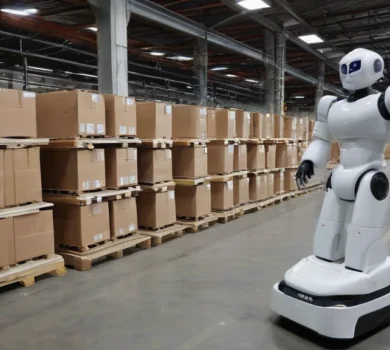
Teradyne Robotics and Sereact have implemented physical AI in Zalando’s logistics centers.
At Zalando’s logistics centers in Greven and Świebodzin, collaborative robots working with the Sereact Cortex platform operate automatically.
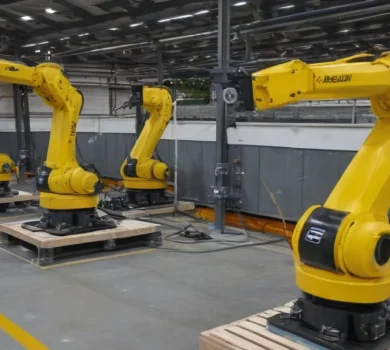
Full traceability in production thanks to robots and system integration
Atmus Filtration has implemented a modern robotic system for assembly and inspection, which ensures complete product traceability.
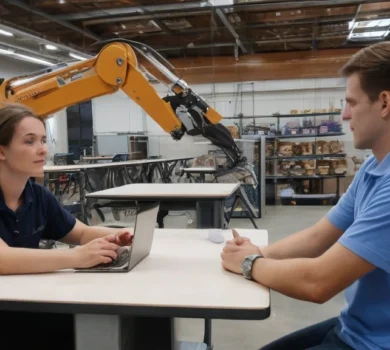
AGCO is testing a humanoid robot in production in Hesston, Kansas
AGCO and Agility Robotics will launch a pilot program featuring the Digit® humanoid robot at their manufacturing facility in Hesston.

How does the new diffusion model change the approach to autonomous driving?
The new QualiDrive model introduces an innovative approach to trajectory generation in autonomous vehicle guidance - instead of
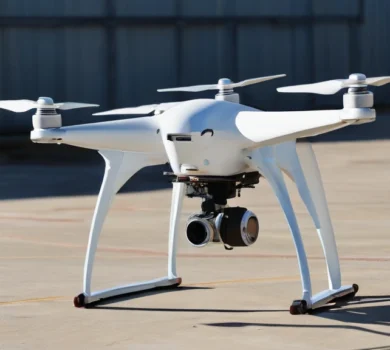
Combining data from drones and ground vehicles improves the continuity of tracking for autonomous cars.
A study conducted in a simulation showed that the combination of data from a drone (UAV) and a ground vehicle (UGV)