

Ameca Humanoid Robot
Ameca - Intelligence in Motion!
The Robot of the Future, Available Today
Ameca - A Technology Revolution
Humanoid precision and style
Ameca - Interaction and Innovation
Technology Closer to People
Discover the advanced capabilities of the Ameca humanoid robot. From support in everyday tasks to applications in industry and education, Ameca is redefining human interaction with technology!
Contact us Watch the videoAmeca - Engineered Arts
Ameca Humanoid Robot
Ameca is a humanoid robot created by the British company Engineered Arts, known for producing advanced machines and research platforms in entertainment robotics and human-robot interaction. The Ameca project is often described as the "most advanced humanoid in the world" in terms of facial expressions and expressiveness. The robot was presented to the public in December 2021 and soon attracted significant attention because of its exceptionally realistic movements, perception capabilities, and ability to interact with its surroundings in a remarkably human-like way.
The core idea behind the creation of Ameca was to provide a research and development platform for scientists, engineers and companies interested in implementing modern robotic technologies. The robot's design includes extensive facial expressions and modular limbs, allowing components to be easily replaced and the robot adapted to different tasks, from presentations and entertainment through education to specialized research applications. Strong emphasis was placed on safety and ergonomics so that the robot can work with people in public and laboratory spaces.
History of the Ameca Robot
Ameca Humanoid Robot
The history of the Ameca robot is a journey through years of innovation that have changed the face of humanoid robotics. From Engineered Arts' early work on entertainment robots to breakthroughs in realistic facial expressions and human-machine interaction, Ameca is the result of years of research, engineering precision, and a vision of the future that brought robotics to a new level.
Company Origins and Inspirations
- Founding of Engineered Arts (2005-2008): The company was founded in the United Kingdom in the mid-2000s. Initially, it focused on creating "entertainment robots" and animatronic platforms such as RoboThespian, combining elements of theater, engineering, and artificial intelligence.
- Development of RoboThespian (2009-2015): One of Engineered Arts' greatest engineering achievements was the development of a humanoid with advanced ability to imitate human movements and express emotions through facial expressions. This was the period in which the company built the technological foundations required for even more advanced projects in the future.
Early Ameca Concepts (2016-2020)
- Industry Needs Analysis: The market showed a growing demand for humanoid robots capable of interacting with people as realistically as possible. During this period, the Engineered Arts team began an in-depth analysis of actuator technologies, materials, and control algorithms that could raise the level of realism in robotics.
- Research on facial expression: During R&D work, the company focused on improving the mechanical components in the robot's head and neck. Prototypes were created that can reproduce a wide range of emotions, from surprise and joy to complex human facial microexpressions.
Ameca launch (late 2021)
- Official presentation: In December 2021, Engineered Arts publicly presented the first version of Ameca. Videos showing its realistic facial expressions quickly spread across social media and technology websites around the world. The robot generated strong interest and lively discussions about the future of human-machine interaction.
- Use of Mesmer Technology: The key to success proved to be a proprietary platform called Mesmer, which enables the reproduction of human anatomical proportions as well as precise control of microexpressions. As a result, Ameca can move and gesture in an exceptionally natural way.
Demonstration at CES (January 2022)
- Interest from Academia and Business: Just a few weeks after its premiere, Ameca was presented at the Consumer Electronics Show in Las Vegas, one of the largest consumer-electronics events. The robot attracted large numbers of visitors and gained recognition as one of the event's most innovative attractions.
- Potential applications: During demonstrations, the first specific information appeared about possible Ameca deployments, ranging from customer service at promotional events through education and entertainment to serious research projects on human-robot interaction.
Development and Subsequent Versions, 2022-2023
- Mechanical Improvements: After the presentation in Las Vegas, the engineering team began working on a more stable drive system so that the robot could move its lower limbs more smoothly. Over time, the hand design was also refined to enable gripping and precise manipulation of objects.
- AI and perception system integration: At the same time, Engineered Arts developed face and speech recognition functions and implemented advanced natural language processing algorithms. As a result, Ameca gained the ability to conduct short dialogues with users and respond to basic voice commands.
Academic Research and B2B Cooperation (2023-2024)
- Platform for Universities and Institutes: In 2023, the company began offering Ameca as a research platform for universities and R&D centers working in robotics and artificial intelligence. The robot was used, among other things, in projects related to facial-expression analysis and improving human-machine communication.
- Deployments in the Events and Entertainment Industry: At the same time, Engineered Arts signed a number of agreements with event companies and amusement parks, where Ameca served as an interactive guide, surprising visitors with human-like and sometimes even humorous reactions to its surroundings.
Current Development Directions and the Future
- Ambitions for Bipedal Movement: Although Ameca already impresses with realistic facial expressions, the company continues to work on better gait stabilization and more advanced whole-body motor skills. Ultimately, the robot is intended to move in human environments with the same fluidity it demonstrates in facial expression.
- Expanded Intelligence and Personalization: Engineered Arts plans further integration with artificial intelligence systems, enabling robot behavior to be personalized according to user preferences or specific industry tasks. This includes the possibility of implementing additional AI modules, for example for analyzing the emotions and moods of people in the surroundings.
History of Ameca shows how intensively the field of humanoid robotics is developing, from early animatronic concepts in the entertainment industry to advanced research and service platforms. By combining mechanical innovation, precise facial-expression control and growing artificial intelligence capabilities, this robot represents an important step toward more natural communication with machines. Further improvements can be expected in the coming years, enabling Ameca to perform even better in education, business and entertainment.
Technical Specifications
Technical Specifications of the Ameca Humanoid Robot
The information below is based on publicly available materials from the manufacturer, Engineered Arts, and other online sources. Ameca is an advanced humanoid robot designed for interaction with people and serves as a research platform for developing artificial-intelligence and robotics technologies.
| Parameter | Value | Notes |
|---|---|---|
| Height | 187 cm | Similar to the height of an average person. |
| Weight | 49 kg | Lightweight design that makes movement easier. |
| Degrees of freedom (DOF) | 61 | 27 for facial expressions, 5 for neck movements, 8 for arms, 10 for forearms, 8 for hands, and 3 for the torso. |
| Operating System | Tritium | Engineered Arts' proprietary operating system, supporting AI integration. |
| Sensors | 3D cameras, microphones | Enable environmental perception and interaction with users. |
| User interface | Support for GPT-3 and GPT-4 language models | Enables advanced conversational interactions. |
| Modularity | Modular design | Allows future upgrades and adaptation of both hardware and software. |
| Application | HRI research, front desk, conversations | Ideal for research on human-robot interaction and for applications in public spaces. |
Ameca is an advanced humanoid robot developed by Engineered Arts, serving as a platform for developing artificial intelligence technologies and researching human-robot interaction. With 61 degrees of freedom, including advanced facial expressions, Ameca is able to imitate human emotions and conduct natural conversations. Its modular design enables future upgrades, while integration with modern language models allows advanced interactions with users.
Ameca
Applications and Use Cases
Ameca has gained recognition primarily because of its unique ability to imitate human facial expressions. Below are the main areas in which this humanoid may be used. New modules and integration with artificial intelligence systems can expand the range of tasks in which the robot becomes a valuable support tool.
Entertainment Industry and Events
Interactive Guides:
Thanks to realistic reactions, Ameca attracts visitors' attention in museums, amusement parks, and trade fairs. It can answer simple questions, welcome guests, and present basic information.
Demonstrations and Presentations:
The robot is frequently used in technology demonstrations as an example of the latest trends in humanoid robotics. Its ability to express emotions and communicate nonverbally makes a strong impression on audiences.
Research and Education
Research Platform:
With a large number of degrees of freedom in the face and arms, Ameca is an excellent tool for experiments involving human-robot interaction, emotion recognition, and the simulation of social behavior.
Practical Student Projects:
Universities that want to introduce students to the world of modern robotics and AI can use Ameca to teach motion programming, interface design, or research in machine psychology and perception.
Marketing and Promotion
Robot Host:
At information points and welcome areas, Ameca can greet visitors, provide basic information about events or services, and serve as an eye-catching "host" at a trade fair booth.
Interaction with Social Media:
Thanks to built-in cameras and optional integration with social networks, the robot can react to comments or hashtags in real time, creating an unusual marketing attraction.
Service and Office Applications
Basic Customer Service:
In places such as reception areas, conference rooms and waiting rooms, Ameca can assist with simple informational tasks or support queue-management systems while providing a distinctive form of interaction with users.
Product Demonstration Assistant:
The robot can present the company's new solutions during internal presentations or customer meetings, further emphasizing the organization's innovative character.
Development of Robot Psychology and Social Interaction
Conversational Simulation:
Ameca, equipped with a speech recognition module and basic conversational algorithms, can be used to test various dialogue scenarios, including research on social acceptance of robots.
Supporting Therapy and Care:
Although testing is still ongoing, highly expressive humanoids may potentially be used in therapeutic interactions, for example to support older adults or in physical rehabilitation, provided the motion functions are appropriately adapted.
Home Applications
Home Assistants:
Humanoid robots can help with basic household tasks such as handing over objects or reminding residents about daily responsibilities, reducing household workload.
Support in Education:
Interactive robot functions enable learning through play, adapting the pace and level to children's needs, which makes them an effective educational tool.
Companionship for Older People:
Robots can provide medication reminders or support rehabilitation while also offering companionship and a greater sense of security.
Thanks to a wide range of applications Ameca is becoming an important point of reference for anyone interested in the development of humanoid robots. Its potential in social interaction and emotion recognition means that it may play a key role in further shaping human-machine relationships, both in commercial and research contexts.
Technology and Innovation, Safety
Ameca
Ameca attracts attention not only because of its highly realistic facial expressions, but also due to carefully designed technological solutions. In the section below, we examine key innovative aspects used in this humanoid as well as safety considerations.
Facial Mimicry and Mechanics
- Precision Actuators: Motors and actuators around the eyes, mouth, and eyebrows enable even subtle micro-expressions.
- Mesmer Technology: The platform developed by Engineered Arts reproduces the anatomical structure of human facial muscles, resulting in detailed and natural gestures.
Advanced Sensor Systems
- Cameras and Depth Sensors: Enable the robot to record three-dimensional images and accurately assess distances to objects or people.
- Speech and Face Recognition: Artificial intelligence modules integrating sound recognition and identification of key human facial features. They enable smoother interaction and responses to external stimuli.
Modular Design
- Interchangeable Limbs: The robot is designed to allow quick replacement or modernization of arms and hands depending on the intended applications, such as presentations, research, or prototyping.
- Motion Improvements: Further development work is intended to improve gait stability and make whole-body movements smoother, which is important from a safety and ergonomics perspective.
Safety and Force Limitations
- Collision Sensors: The robot has basic safeguards that can slow or stop movement if unexpected contact with a person is detected.
- Transmitter-Receiver Software: Emergency stop signals, E-Stop, and joint torque limits minimize the risk of accidents. This is particularly important in public places and during interaction with people who are not experienced in operating robots.
- Lack of Full Industrial Certifications: Ameca focuses primarily on expression, interaction, and research functions. As a result, not all design elements meet the standards required for strictly production-oriented applications.
Innovations in Social Interaction
- Dynamic Expression Model: Ameca can respond in real time to changes in its environment and signals from people, including speech, gestures and facial expressions, adjusting its facial expressions to the situation.
- Context Recognition: Work is underway to integrate algorithms that take into account tone of voice, the context of statements, and the number of people nearby so that the robot can behave in an even more "human-like" way.
By combining innovative mechanical and software solutions, Ameca offers unique capabilities in human-like expression. At the same time, the manufacturer aims to maximize user safety, which is essential in humanoid robotics projects intended for direct interaction.
Ameca
Integration and Compatibility, Personalization and Solution Customization
Thanks to its modular design and open interfaces, Ameca can be adapted in various ways to the needs of a specific environment. In this section, we examine how the robot can be integrated with external systems and how its functions can be personalized.
Integration with External Systems
- API and Network Communication: The manufacturer provides a software development kit (SDK) that enables robot control and data transmission over a network. This supports remote software updates and integration with IoT or cloud platforms.
- AI Software Compatibility: Ameca can work with external artificial intelligence systems, such as speech recognition platforms and image analysis algorithms, significantly expanding its range of applications.
Flexibility and Customization
- Custom Expression Modules: Users can modify facial movements or create their own sets of facial expressions using dedicated software.
- Physical Customization: Custom covers can be designed for the robot's face, for example in promotional colors or with logos, as well as special hand covers, allowing the robot to match the visual identity of a brand or event.
Multi-Language Support and Conversational Scenarios
- Speech Recognition Libraries: Integration with popular TTS, Text-to-Speech, and ASR, Automatic Speech Recognition, mechanisms enables communication in different languages.
- Dialogue Scenarios: The developed interface allows the robot to be programmed to respond to specific commands or questions, making it useful in customer service or during presentations.
Autonomy Levels:
- Semi-Autonomous Mode: In many applications, Ameca can be partly controlled by an operator, for example remotely, while some functions (such as detecting people or behavior) are performed autonomously by the robot.
- Full Autonomy (Experimental): Thanks to integration with advanced AI systems, the robot can independently make decisions about interactions with its environment. However, this mode requires thorough testing and often additional safeguards.
Manufacturer and Community Support
- Support Platform: Engineered Arts provides documentation, training, and technical support for organizations implementing Ameca.
- Research Community: Because Ameca is also a platform for scientific purposes, the academic community and engineers exchange experience, supporting the development of new functions and extensions.
Thanks to openness to cooperation with external software providers and diverse hardware integrations, Ameca can be effectively integrated into existing IT solutions. A high level of customization makes the robot suitable for many scenarios, from marketing activities and guest service to advanced scientific research.
Ameca
Benefits for Customers
In this section, we have gathered the most important benefits associated with implementing and using the Ameca robot in different environments. Thanks to its unique features and advanced facial expressions, this humanoid can become an important element in the development of business, education, or scientific research.
- Natural and Engaging Interaction: Ameca reproduces human emotions realistically enough to make users feel more intrigued and engaged. It is well suited to events, marketing, or use as an interactive guide.
- Increased Service Efficiency: In public spaces, Ameca can act as an assistant, providing information and directing visitors to the appropriate departments, allowing employees to focus on more demanding tasks.
- Innovative Company Image: Deploying a robot with advanced facial expressions emphasizes an organization's modern character, attracting the attention of investors, media and customers while building a positive brand image.
- Customization and Development Options: The modular design enables Ameca to be adapted to different tasks, from gripping end effectors to dedicated AI software, allowing functions to develop with user needs.
- Direct Research Support: Ameca is an excellent platform for universities and institutes to test AI algorithms, study emotions, and explore new methods of human-robot interaction.
- Reduction of Errors and Fatigue: The robot can operate continuously, minimizing errors caused by human factors and ensuring a consistent level of service.
- Strengthening Customer Relationships: A robot that responds to its surroundings and displays emotions builds a unique connection with recipients, enhancing their positive experience and impressions of the interaction.
FAQ, 9 Most Frequently Asked Questions
Ameca Humanoid Robot
Below you will find answers to the most frequently asked questions about the Ameca robot. If you have additional questions or would like to expand your knowledge, visit our full FAQ section, where we have collected more information and downloadable materials.
Yes. In most configurations, the robot uses a mains power supply, enabling stable operation and support for advanced facial expression and AI modules.
The manufacturer provides an SDK with open interfaces, APIs, enabling communication with IoT systems, databases, or cloud platforms.
It has facial recognition and image analysis modules, so to a limited extent it can identify returning individuals. Expanding this function, however, depends on additional AI algorithms and storage of personal data, which may be subject to legal regulations.
They depend on usage intensity and required servicing. Engineered Arts offers various support packages covering software updates, replacement of wear parts, and technical consulting.
Yes, but it should be remembered that Ameca does not have full industrial certifications. It was designed primarily for social interaction and events, which requires standard safety procedures to be followed.
In its basic version, the robot is usually stationary or has limited mobility, for example on a podium. Development work is underway on full bipedal movement, but versions focused on facial expressions and environmental interaction currently dominate the market.
Updates are usually delivered over the network, via Wi-Fi or Ethernet. This allows regular introduction of AI improvements, safety fixes, or new facial expression patterns.
Of course. Ameca is often used in workshops and scientific demonstrations. Its advanced facial expressions effectively attract students' attention, while the open development environment provides opportunities for learning and experimentation.
The main limitation is component heating and the need for cooling. In practice, continuous operation for several hours is possible, although exact duration depends on movement intensity and environmental conditions.

More questions?
If you would like to learn more about humanoid robots, we invite you to browse our complete FAQ section. There you will find additional questions, detailed instructions, and useful tips.
Why NexaRob?
Your Trusted Partner in Humanoid Robotics - Knowledge, Passion, and Innovation
At NexaRob, we believe that the future of automation and interaction with machines belongs to humanoid robots such as Ameca. Our mission is to support companies, institutions and technology enthusiasts in making full use of the potential of advanced robotic solutions. We combine industry expertise with an individual approach, providing support at every stage of implementation, from consulting and needs analysis to integration and further development.
- Expertise in Humanoid Robotics: By working with leading humanoid robot suppliers around the world, we stay informed about the latest trends and technologies. This allows us to recommend models ideally matched to diverse needs, from entertainment functions to advanced research projects.
- Adaptation to Your Needs: Every project is unique. We offer an individual analysis and audit that takes into account site conditions, business profile and business goals. Based on the information gathered, we select the optimal robot configuration, including facial expression modules or AI solutions.
- Comprehensive Support: We support our customers not only during purchase and deployment, but also with maintenance and upgrades. We provide technical support, operator training, and software development options, making the robot simple and effective to use.
- Innovation and Technology: We stay up to date with developments in artificial intelligence, sensing, and humanoid design. This allows us to deliver solutions that can genuinely improve competitiveness and create new growth opportunities for your organization.
Do you have questions about deploying Ameca or want to learn what specific benefits it could bring to your company? Contact us. We will be happy to help create a solution tailored to your needs!
Automate Your Business with NexaRob - Contact Us!
Join NexaRob and Let Us Develop Humanoid Robotics Together
Would you like to become our Partner?
NexaRob continuously seeks ambitious companies, research institutions, and robotics enthusiasts with whom we can develop future technologies. Through cooperation, we build an ecosystem based on the exchange of experience, knowledge, and innovative ideas. We believe that strong partnerships are essential to delivering breakthrough projects and implementations that will shape the world of humanoid robotics.

United States

China

Japan

Germany

India

United Kingdom

France

Italy

Canada

South Korea

Brazil

Australia

Spain

Mexico

Indonesia

Netherlands

Saudi Arabia

Turkey

Switzerland

Taiwan

Poland

Sweden

Belgium

Thailand

Ireland

Austria

Norway

Israel

United Arab Emirates

Argentina

South Africa

Denmark

Philippines

Singapore

Malaysia

Colombia

Bangladesh

Egypt

Chile

Finland

Vietnam

Portugal

Czech Republic

Romania

New Zealand

Peru

Greece

Ukraine

Slovakia

Hungary

Slovenia

Croatia

Serbia

Bulgaria

Estonia

Latvia

Lithuania

Iceland

Luxembourg

Malta

Cyprus

Morocco

Algeria

Tunisia

Nigeria

Kenya

Ethiopia

Ghana

Tanzania

Uganda

Angola

Senegal

Qatar

Kuwait

Oman

Pakistan

Sri Lanka

Nepal

Kazakhstan

Uzbekistan

Mongolia

Russia

Cambodia

Myanmar

Laos

Fiji

Papua New Guinea

Venezuela

Ecuador

Uruguay

Paraguay

Bolivia

Costa Rica

Panama

Dominican Republic

Guatemala

Cuba

Jordan

Lebanon

Iran
Additional countries in Europe
These countries are hidden in reader mode so that the map is not overcrowded. Click a country to open contact details, email and a description of the cooperation area.
Additional Countries in Asia
These countries are hidden in reader mode so that the map is not overcrowded. Click a country to open contact details, email and a description of the cooperation area.
Additional Countries in the Americas
These countries are hidden in reader mode so that the map is not overcrowded. Click a country to open contact details, email and a description of the cooperation area.
Additional Countries in Africa
These countries are hidden in reader mode so that the map is not overcrowded. Click a country to open contact details, email and a description of the cooperation area.
Additional Countries in Oceania
These countries are hidden in reader mode so that the map is not overcrowded. Click a country to open contact details, email and a description of the cooperation area.
Albania
Andorra
Belarus
Bosnia and Herzegovina
Montenegro
Liechtenstein
North Macedonia
Monaco
Moldova
San Marino
Afghanistan
Armenia
Azerbaijan
Bahrain
Bhutan
Brunei
Georgia
Iraq
Yemen
Kyrgyzstan
North Korea
Maldives
Syria
Tajikistan
Timor-Leste
Turkmenistan
Antigua and Barbuda
Bahamas
Barbados
Belize
Dominica
Grenada
Guyana
Haiti
Honduras
Jamaica
Nicaragua
Saint Kitts and Nevis
Saint Lucia
Saint Vincent and the Grenadines
El Salvador
Suriname
Trinidad and Tobago
Benin
Botswana
Burkina Faso
Burundi
Cabo Verde
Chad
Democratic Republic of the Congo
Djibouti
Eritrea
Eswatini
Gabon
Gambia
Guinea
Guinea-Bissau
Equatorial Guinea
Cameroon
Chambers
Congo
Lesotho
Liberia
Libya
Madagascar
Malawi
Mali
Mauritania
Mauritius
Mozambique
Namibia
Niger
Central African Republic
Rwanda
Seychelles
Sierra Leone
Somalia
Sudan
South Sudan
Togo
Ivory Coast
São Tomé and Príncipe
Zambia
Zimbabwe
Kiribati
Micronesia
Nauru
Palau
Samoa
Tonga
Tuvalu
Vanuatu
Marshall Islands
Solomon Islands
Why Work with NexaRob?
Joint Investments in Innovation
Together with our partners, we focus on developing solutions that address real market needs. We combine expertise in artificial intelligence, automation, humanoid design, and systems integration.
Synergy of Knowledge and Experience
Each partner contributes unique expertise, allowing us to create comprehensive, innovative proposals for different industries, from manufacturing and services to education and scientific and research projects.
Global Contact Network and New Markets
We are active internationally, allowing us to support partners in expanding into foreign markets by adapting robots to local requirements and standards.
We Are Looking for Partners in the Following Areas:
- Humanoid Robot Production and Distribution: Together, we develop solution packages and promote them on the market, using a broad customer base seeking modern technologies
- AI and IoT Technologies: If you develop data analytics systems, machine learning algorithms, or dedicated robot management software, we can integrate your solutions with NexaRob's humanoid offering.
- Automation and Logistics Solutions: We work with companies developing process automation systems to combine them with humanoid robotics, giving our customers unique, synergistic solutions.
Let's Join Forces
Contact us today and discover how NexaRob can work with you to advance the future of humanoid robotics. Together, we can introduce Ameca and other advanced technologies to new markets, transforming the way people interact with machines.
Interesting Facts from Around the World
Teradyne Robotics and Sereact have implemented physical AI in Zalando’s logistics centers.
At Zalando’s logistics centers in Greven and Świebodzin, collaborative robots working with the Sereact Cortex platform operate automatically.
Full traceability in production thanks to robots and system integration
Atmus Filtration has implemented a modern robotic system for assembly and inspection, which ensures complete product traceability.
AGCO is testing a humanoid robot in production in Hesston, Kansas
AGCO and Agility Robotics will launch a pilot program featuring the Digit® humanoid robot at their manufacturing facility in Hesston.
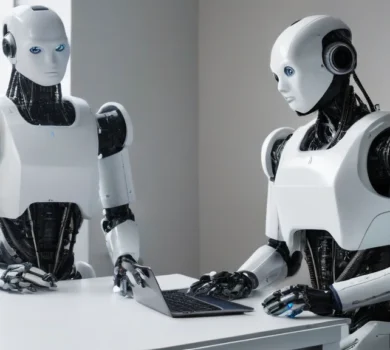
How does the new diffusion model change the approach to autonomous driving?
The new QualiDrive model introduces an innovative approach to trajectory generation in autonomous vehicle guidance - instead of
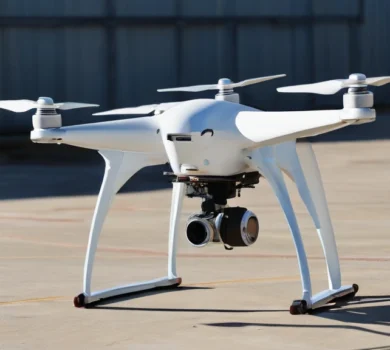
Combining data from drones and ground vehicles improves the continuity of tracking for autonomous cars.
A study conducted in a simulation showed that the combination of data from a drone (UAV) and a ground vehicle (UGV)