
Open platforms as the foundation of intelligent automation
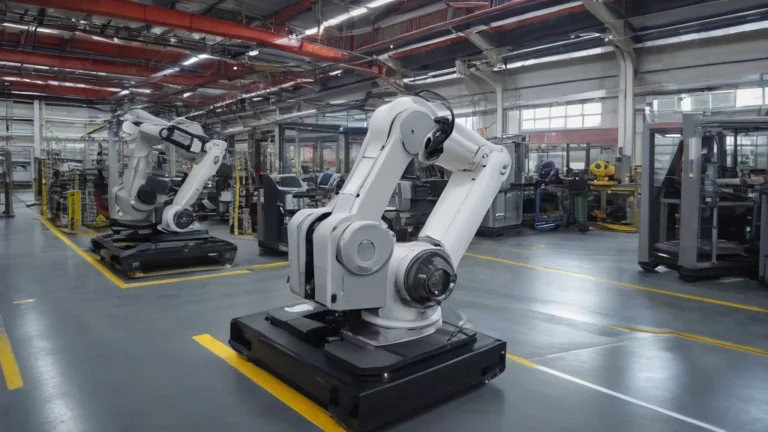
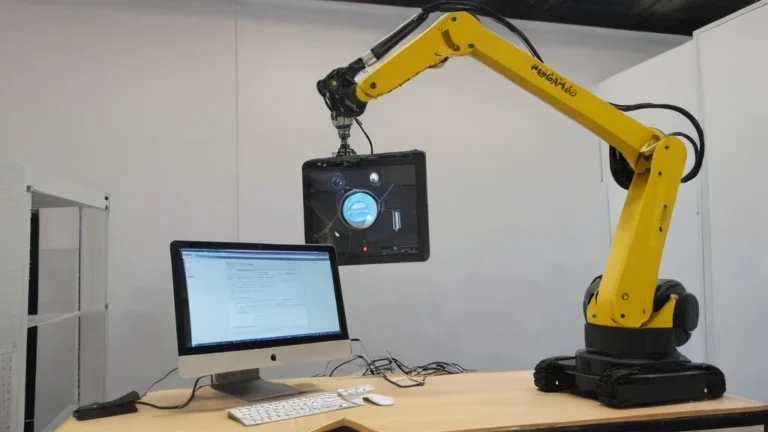
FANUC not only declares the development of Physical AI - it introduces specific technologies that enable its operation. The key is opening up the architecture. industrial robots. By supporting ROS 2, Python and the Stream Motion function, the company creates an environment in which programmers can integrate modern AI tools without hardware limitations. It's not just about the availability of tools - it's about the ability to build systems that learn, adapt and operate in dynamic production conditions.
Collaboration with NVIDIA and Google shows that FANUC is not acting alone. Through real-time simulation, similarity learning and generative language models, the company is building an ecosystem where robots can understand commands in natural language, predict changes on the production line and react without operator intervention. It's not just about faster programming - it's about a completely new approach to automation.
Robots learn in real time - from tracking moving parts to collaborating with two arms
One of the most specific examples of Physical AI is the ability of robots to track objects moving in three dimensions. FANUC shows how a robot can perform screw tightening on moving elements without the need for precise positioning - all that is needed is a 1-millisecond delay in communication and real-time control of the movement path. This changes the way assembly lines are designed, where previously special holders or stabilizers were required.
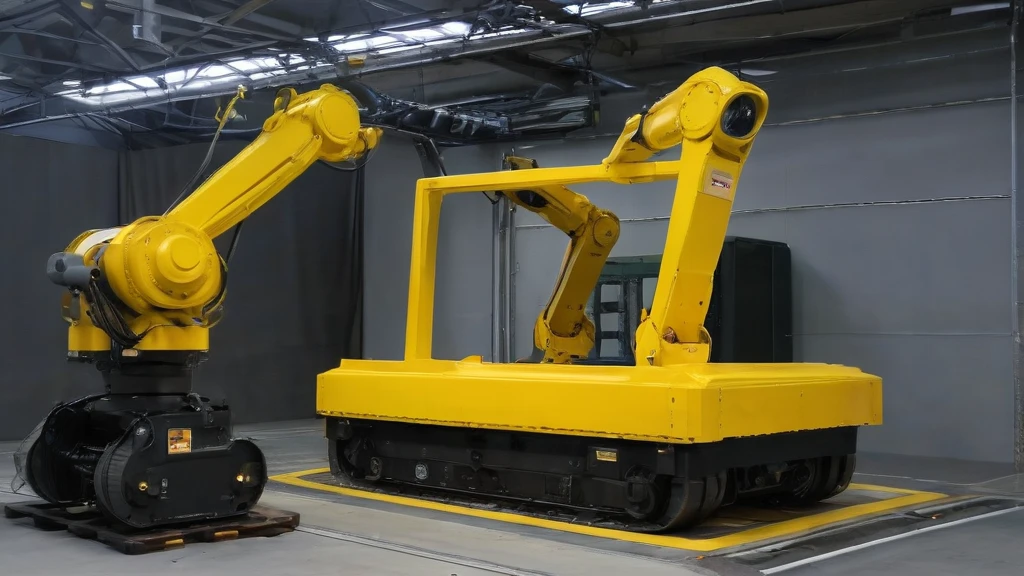
Another example is the collaboration of two robot arms when installing flexible cables. Using a language-visual model (VLA), robots can imitate human movements - e.g. folding a shirt or guiding a cable through a complex three-dimensional path. The system detects cable tension and adjusts the manipulation force, preventing damage. This is not just technology - it is a new form of collaboration between humans and machines in a production environment.
Safety and flexibility thanks to AI and real-time control
 Enlarged imageClose zoomPrevious image
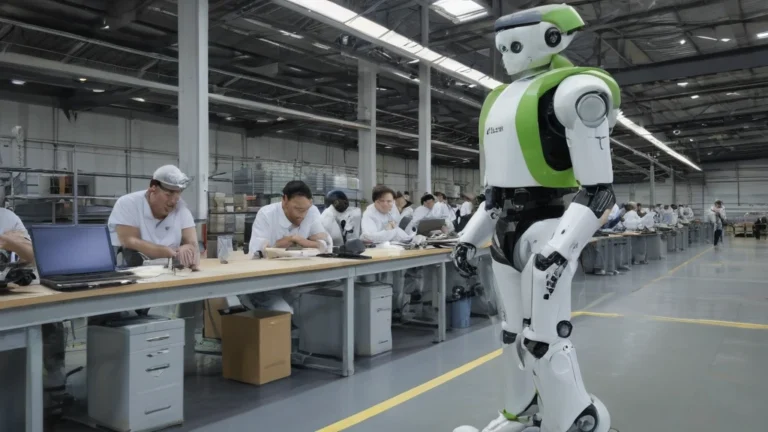
FANUC emphasizes that Physical AI does not only mean greater efficiency - it is also a new level of safety. Robots equipped with AI-based perception can detect the presence of people in the operating area and automatically adjust the movement path without stopping production. Thanks to the Stream Motion function, the force of the arm is limited to a safe range - if a person enters the working area, the robot changes its trajectory and returns to its previous state after they leave.
This opens the way to full human-machine collaboration without physical barriers. Previously, such scenarios required safety measures such as zone protection or speed grading. Now, the robot can operate in close proximity to humans, reacting to their presence and behavior - which significantly reduces configuration time and increases the flexibility of the production line.
What does this mean for industry? The future of automation is here today.
Physical AI is not just an experimental technology - it is a new automation strategy. With support for ROS 2, Python and open platforms, manufacturers can test new solutions faster, scale systems across lines and adapt robots to changing needs. Voice programming, object recognition based on text description or automatic trajectory generation are not the future - they already work.
However, it is worth remembering that these capabilities are limited to specific models of FANUC robots and require appropriate software. The introduction of Physical AI does not mean that all robots will automatically become intelligent - it is a new way of building systems that requires investment in infrastructure, training and integration. However, for companies ready to change their approach to automation, FANUC offers real tools to move from static production lines to dynamic, adaptive systems.
It is worth emphasizing that the implementation of Physical AI does not mean an automatic transformation of the entire production line. It still requires appropriate infrastructure, including a stable network connection, access to computing resources and training for operators and engineers. However, thanks to open platforms such as ROS 2 and support for programming in Python, FANUC enables the gradual introduction of new functions without the need for complete system modernization. This makes it possible to test solutions in real conditions and then scale them according to production needs. In the future, this approach may become a standard for smart factories, where robots not only perform tasks but also learn from experience and cooperate with people on a natural level.