
Global leader in industrial production.
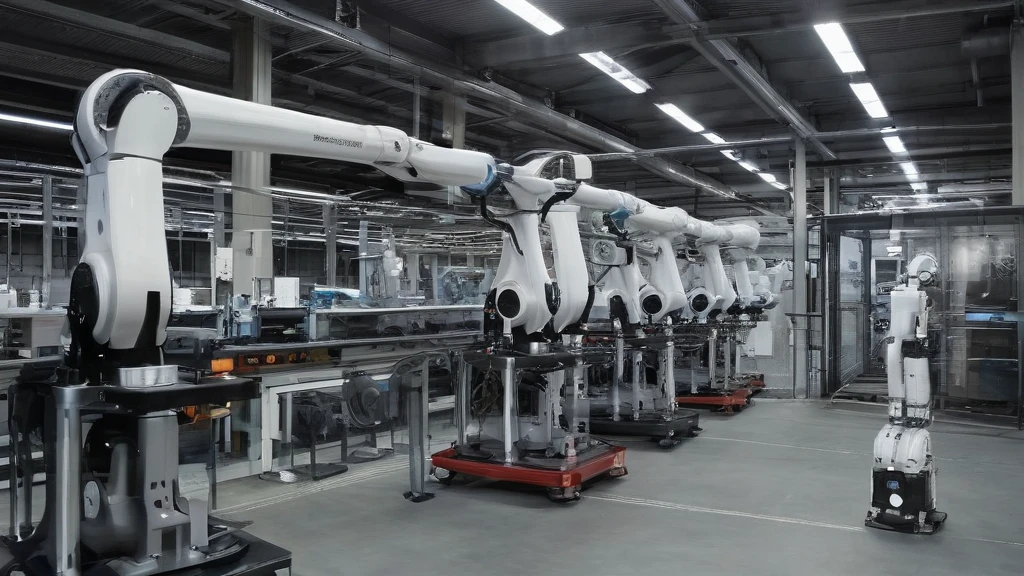
Japan is not only the largest producer of industrial robots in the world, but also one of the most advanced markets for their use. According to data from the International Federation of Robotics (IFR), in 2020 Japan supplied 45% of global demand for industrial robots - a figure that confirms its dominant position. This is not accidental: the country has been investing in the development of automation technology for years, and its companies are pioneers in designing precise industrial systems.
It is worth noting that exports of Japanese robots were extremely high - in 2020 they accounted for 78% of their production. This means that most of the devices produced in Japan go to foreign markets. In the same year, over 136 thousand units were shipped industrial robots, which confirms the enormous demand for Japanese technological solutions outside the country.
Advanced domestic market and strategic position in China.
Japan not only exports but also has one of the largest robot markets in the world - second in size after China. This means that the country not only produces for the world, but also intensively uses robotics in its own plants. The domestic market is strong and stable, which ensures a long-term competitive advantage.
An important factor in export growth was also Japan's position in the Chinese market - 36% of its exports of robotic and automation technology were directed to China. This is not only a large number, but also a strategic location: Japanese companies have factories in China, which allowed them to maintain supply continuity even during the pandemic crisis. When supply chains were disrupted, their local production in East Asia became a key asset.
This strong position in the Chinese market is not only the result of exports, but also the result of strategic investment in local factories. Japanese companies such as Fanuc, Yaskawa and Kawasaki have their production centers in China, which allows them to adapt more quickly to changing market needs and avoid delays caused by global crises. Thanks to this, they not only maintain a high rate of supply, but also build lasting relationships with Chinese industrial partners. In the context of increasing automation in the Chinese manufacturing sector, Japanese technological solutions are particularly valued for their reliability and precision - features that are crucial for modern 4.0 factories. This allows Japan to maintain its advantage even against growing competition from other countries, such as Germany or South Korea.
Minimal import and strong position in the global market.
 Enlarged imageClose zoomPrevious image
One of the most distinctive elements of the Japanese model is the low level of robot imports. In 2020, only 2% of robot installations in Japan came from abroad - which indicates a high degree of technological independence and an advanced production base. This is not a coincidence, but the result of systematic investments in the development of the local industrial technology base. robot installations in Japan originated from abroad - which demonstrates a high level of technological autonomy and an advanced production base. This is not a random occurrence, but the result of systematic investments in the development of the local industrial technology base.
Such low dependence on imports allows for greater control over quality, deliveries, and the production cycle. In the context of the global crisis of 2020 - when many countries experienced supply disruptions - Japanese companies were able to leverage their internal production capacity to meet the growing demand for automation in various sectors.
Robots in everyday life - the future beyond factories
The Japanese model of robotics is not limited to industry. According to Dr. Susanne Bieller, Secretary-General of the IFR, Japan is a highly robotized country and a leader in the use of robots in everyday situations. The IREX 2022 exhibition in Tokyo had the theme "Robots in Everyday Life" - which shows that the future of robotics is not only about automating production.
The exhibition focused on how to robots can improve the quality of life: from reducing CO₂ emissions and increasing access to products to providing better care for the elderly. This indicates a shift from a purely technological approach to robotics to a model that combines innovation with social and environmental needs.