
Membership as a knowledge transfer mechanism
Oxford Robotics Institute (ORI) is developing a model of cooperation with the industrial sector that aims not only to share research results, but also to actively involve companies in the innovation process. Industrial membership is not just access to reports or presentations - it is full integration with the research team. Partners can place their employees at the institute for up to seven days a week, which allows for direct contact with technologies and engineering teams.
As part of this model, ORI not only transfers knowledge but also enables companies to influence the direction of development of autonomous systems. This allows them companies can not only to assess the value of new technologies, but also to influence their development towards specific commercial applications. This is a key element of ORI's strategy - accelerating the transfer of knowledge from the institution to the market.
Access to infrastructure and testing
 Enlarged imageClose zoomPrevious image
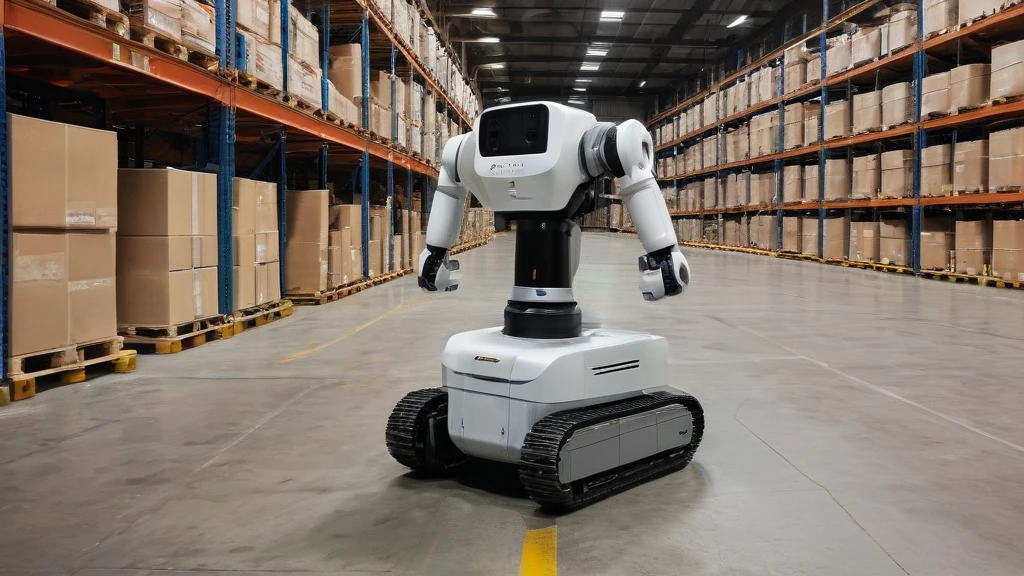
Full members have full access to all ORI resources: data, software, hardware - including robots - and computing facilities. This allows for real-world tests and experiments in conditions close to real-world applications. Members can participate in seminars, workshops and system trials, which gives them a unique opportunity to learn about the latest solutions before their commercialization.
This model of cooperation is particularly useful for companies working on automated systems in logistics, industry or transport. Thanks to direct integration with the research team, they can more quickly identify the potential of technologies and adapt them to their own needs, which reduces the risk of investing in untested solutions.
Significance for industry and the future of robotics
The ORI's collaboration model shows how research institutions can be effectively linked with the private sector. This is not about one-off projects or contracts - it is a long-term strategy for building shared technological capital. For companies, this is an opportunity to maintain a competitive advantage by accessing the latest solutions in the research phase.
At the same time, this model shows limitations: not all companies can realize full access to infrastructure, and cooperation requires significant commitment. However, there is no evidence that this model is scalable for a larger number of participants - its effectiveness depends on the quality and depth of cooperation, and not only on the number of members.
Membership as a knowledge transfer mechanism
This collaboration model not only accelerates knowledge transfer, but also creates conditions for its deep understanding and adaptation. Thanks to the continuous involvement of company employees in ORI's daily activities, partners can not only analyze research results, but also participate in shaping them from the very beginning. This allows for faster identification of potential technological limitations and development directions, which are crucial for specific industrial applications. In this way, the company not only gains access to new solutions, but also influences their development towards real market needs. Such involvement is particularly important in the context of the rapidly changing robotics sector, where technological advantage often depends on the ability to quickly adapt new systems to specific operating conditions. Cooperation with ORI is not limited to a one-off project - it is a long-term investment in
the growth of technological capital and the innovative capacity of the organization. Thanks to this, companies can not only stay ahead of the competition, but also shape the future of the autonomous systems industry on a global scale. It is worth emphasizing that such a model of knowledge transfer is possible thanks to the strong organizational structure of ORI, which combines fundamental research with practical industrial needs through dedicated knowledge exchange teams and impact coordinators.
This collaboration model not only supports technological development, but also builds lasting relationships between the institution and the industrial sector. Thanks to continuous involvement and joint design of solutions, companies can not only implement new technologies faster, but also influence their development direction in a strategic way. This is particularly important in the context of autonomous robotics, where applications are diverse - from logistics and industrial production to transport and infrastructure monitoring. Cooperation with ORI allows companies to identify potential technical limitations already in the research phase, which reduces the risk of investing in solutions that are not suitable for specific operating conditions.
In addition, access to technical training and workshops enables the development of internal competence, which translates into greater flexibility and faster response to market changes. In the long term, such a model of knowledge transfer can become a standard for other research institutions that want to increase the effectiveness of cooperation with industry. However, it is crucial that the effectiveness of this approach depends not only on the availability of resources, but also on the quality of dialogue and the willingness of partners to engage in