
The food industry faces the challenges of a new reality.
The food and beverage production sector faces constant pressure: growing customer expectations, greater product diversity, frequent changes in the production line, and difficulties in recruiting employees. In such an environment, traditional technological solutions - long projects, high investment costs, and the need for specialized programming skills - become ineffective, especially for small and medium-sized manufacturers. In this context, new opportunities are emerging: robotic systems designed as ready-to-deploy solutions that can be installed quickly and without extensive engineering.
Instead of building a custom system from scratch, manufacturers can now choose ready-made components - such as palletizers or packaging robots - that have already been tested in many plants. This changes the rules of the game: it is no longer about investing for years, but about quickly solving a specific problem - e.g., a lack of people for palletizing or difficulties with rapid product changes.
How does standard automation work in practice?
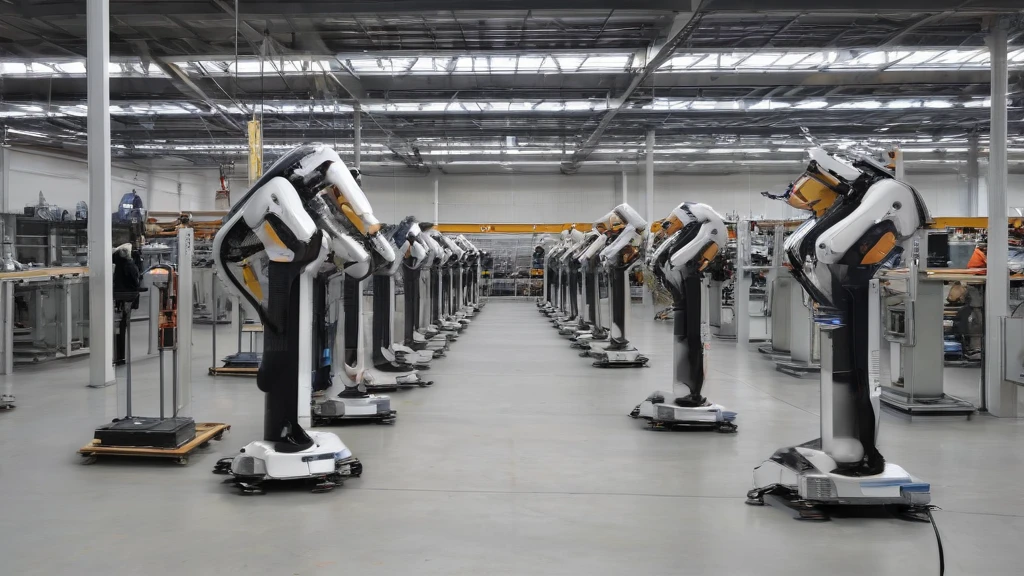
In the case of one of the family-owned food companies that produces snacks and sweets, the implementation of a robotic system was not a long project. Instead of months of engineering, the installation took only 10 days. The system used several typical robots: M-2iA/3SL for fast product placement, M-10iA/10MS for packaging, and M-410iB/700 for palletizing. The whole thing operated on a recipe basis - i.e., changing the product format required only selecting the appropriate "recipe" in the software, not reprogramming.
The result was obvious: the number of operational employees decreased from 12 to two or three. At the same time, the same production efficiency was maintained and even the quality of goods arrangement on pallets was improved. This was not just a cost reduction - it was a process transformation that allowed the company to react more quickly to changing demand and increase line flexibility.
Why is standardization more than just cost-effectiveness?
 Enlarged imageClose zoomPrevious image
Standard robotic systems are not only cheaper - they are also more predictable. Since they have already been implemented in many plants, their operation is well known, and operational problems are rare. This allows for faster operator training and easier maintenance by technical staff. In addition, thanks to ready-made components and software based on recipes, changes in production - e.g., the introduction of a new product - can be made without the need to involve engineers.
This is especially important in the food industry, where compliance with quality standards and food safety is crucial. Robotic systems not only speed up the process - they can also help maintain strict standards, which facilitates audits and ensures traceability.
Is this solution suitable for every manufacturer?
Not all processes are equally easy to automate. Standard systems work best where there are repetitive operations - such as palletizing, packaging or sorting. In the case of very complex, non-standard processes, custom engineering may be necessary. However, even then, standard components can form the foundation - for example, using a ready-made robot for manipulation and adapting it to a specialized device.
It is also important to understand that implementation does not mean automatic elimination of work. Instead, its nature changes: from physically demanding to operating and monitoring the system. This is a new role - but cheaper and more stable.
It is worth emphasizing that although standard robotic systems offer fast implementation and low investment costs, their effectiveness depends on proper selection for specific production conditions. In the case of plants that make intensive changes in the production line - e.g., when producing many different types of products in short cycles - rule-based systems are particularly beneficial, as they allow for quick switching between different formats without the need to change code or engineering. This means that the operator can select the appropriate "recipe" in the software, which will automatically adjust the robot's parameters to the new product.
This approach not only reduces downtime but also minimizes the risk of human error. In addition, thanks to integrated monitoring and data logging systems, each operation is tracked - which is crucial in the food industry, where traceability and audits are required by standards such as HACCP or ISO 22000. As a result, standard systems not only support production but also contribute to building customer trust and meeting regulatory requirements without additional costs.