
How do language and visual context help robots with disassembly?
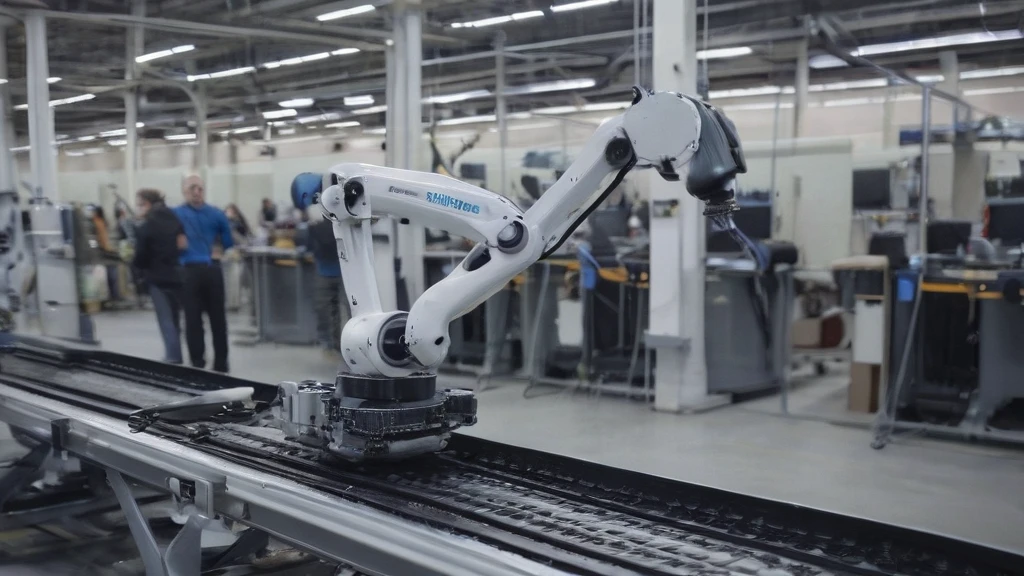
In real-world working conditions, disassembly is a long-horizon task that requires performing multiple sequences of manipulations on different parts in a single scene. The complexity increases with the diversity of assembly configurations and many possible task goals. Traditional imitation learning methods often fail when they cannot cover the combinatorial diversity of part geometry and layout in the scene. The new method solves this problem by integrating natural language with visual data - allowing the robot to understand what it needs to do, even if it has not seen exactly that configuration before.
Instead of relying solely on visual observations, the new system uses linguistic instructions to select the appropriate skill and assign it to a specific item in the scene. This allows it to better understand the task's intentions and act in a more flexible way, even with changes in joint geometry or part layout.
Effectiveness: 35 percentage points better than the baseline model.
The study shows that the new method achieved a significant improvement in effectiveness - 35 percentage points more than the baseline diffusion policy. This is not a small improvement: in the context of disassembly tasks, where even small differences in effectiveness can determine whether the robot performs the task without human intervention, such a difference has real significance. In addition, the method outperformed the previous version based on task context by 75 percentage points, indicating a significant step forward in solving the generalization problem.
These results were obtained without the need for explicit labeling of objects in the scene. This is a key advantage - it eliminates the need for time-consuming data labeling, which is a major challenge in robotics practice. The system learns directly from language and image, which greatly simplifies the preparation of training data.
 Enlarged imageClose zoomPrevious image
Generalization without explicit object labeling.
One of the biggest challenges in robotics is the ability of a system to operate in new, unknown configurations. The new method shows that it is possible to achieve high generalization even with changes in joint geometry and part layout - without the need for additional labeling or adaptation of the model to each new situation.
This is possible because the language not only specifies the goal, but also helps to assign it to the appropriate element in the scene. The system learns to associate words with specific visual areas, which allows it to operate in a more intelligent way than traditional approaches based solely on images.
Significance and limitations of this technology
The new method has the potential to significantly impact industrial disassembly and recycling, where robots must deal with diverse product configurations. The ability to operate without explicit object labeling can significantly reduce data preparation costs and accelerate deployment in real-world conditions.
However, it is worth noting that the results were obtained in a simulated environment. Although the method has been accepted for publication in the prestigious IEEE RA-L journal, there is no information about tests in real industrial conditions. This means that its effectiveness in the real world remains unconfirmed - and generalization from simulation to reality is one of the biggest challenges in robotics.
It is worth noting that although the method demonstrates high effectiveness in simulations, its practical application in industry may encounter difficulties related to the diversity of real-world conditions - such as unstable lighting, visual disturbances, or unpredictable changes in the structure of objects. These factors can affect the accuracy of language interpretation and the assignment of tasks to scene elements. However, the potential of this technology is enormous: if the barrier between simulation and reality can be overcome, it could become the foundation for autonomous disassembly systems in electronics recycling or industrial processing. In the future, it will be possible to combine this method with ARTiS-type solutions for precise tool manipulation during disassembly, which will enable comprehensive management of complex operations without the need for continuous human intervention. This approach not only increases efficiency but also contributes to the creation of more flexible and resilient robotic systems.