

Programming Reis Robots in RPL
Precise Control of Reis Robots
Advanced Programming in RPL
Production process optimization
Efficient Integration of Reis Robots
A Modern Approach to Automation
Flexibility and Precision in Control
RPL is a dedicated programming environment for Reis Robotics robots, providing full control and optimization of industrial processes. NexaRob offers comprehensive support with configuration, implementation, and integration of Reis robots, adapting the solution to specific operational requirements.
Contact us Watch the videoLearn why Reis Robotics RPL is a unique alternative for robot control and how it can accelerate your production line
Programming Reis Industrial Robots in RPL
RPL (Reis Programming Language) is a dedicated language created for Reis Robotics robots, providing high precision and flexibility when performing production tasks. Although many programming languages exist in robotics, RPL stands out through deep integration with the Reis controller, enabling full use of hardware capabilities and flexible definition of operating logic, from simple manipulation operations to advanced assembly or welding processes.
Why RPL?
- Advanced Motion Control: RPL gives programmers detailed control over robot paths, speeds, and accelerations, which is essential in applications requiring exceptional precision.
- Flexible approach to integration: The language supports communication with sensors, vision systems, and PLC controllers, making it easier to create comprehensive solutions.
- Optimization for Reis Robotics: Because RPL was developed specifically for Reis robots, the code is executed efficiently, resulting in stable and fast robot operation.
How Can NexaRob Help?
- Requirements analysis: We assess the needs of your line, determine whether RPL is the right choice, and select suitable Reis robot models.
- Code Creation and Optimization: We develop applications in RPL, test them in a simulation environment and then fine-tune them at the target production workstation.
- Service and training: We provide full support, from operator instruction to long-term consulting, so that your team can efficiently operate and develop the Reis Robotics system.
See what distinguishes Reis Robotics RPL and in which industries Reis robots achieve the best results
Key Functions and Application Examples in RPL
Although other languages exist, such as ABB RAPID or KUKA KRL, RPL stands out through its dedicated approach to Reis Robotics robots and deep integration with their controller. Below we present the key features of the language and the areas where Reis robots operating in RPL perform particularly well:
Precise motion commands
RPL provides both standard point-to-point movements, PTP, and smooth linear or arc trajectories, making it easier to adapt motion to process requirements.
Application: Assembly of delicate electronic components where accuracy is critical, and welding tasks requiring strictly defined paths.
Advanced Communication with Controllers
The language enables easy data exchange with PLCs, vision systems, and force or torque sensors, making it possible to correct movements dynamically.
Application: Industries automating lines with changing product ranges, such as food production, where the robot must adapt to product shape and position in real time.
Safety and Collision Control
RPL provides force and speed monitoring functions as well as emergency stop mechanisms if an unexpected obstacle is detected.
Application: Lines where worker safety is a priority, and industries with stringent occupational health and safety requirements (chemical, medical).
Modular Code Structure
The ability to divide a program into procedures and functions makes it easier to manage complex applications and shortens software update times.
Application: Complex production lines with different stages, where some tasks are shared, such as part handling, while others are specific, such as screwdriving or quality control.
Cross-industry applications
Reis robots can be used in many sectors, including automotive for welding and assembly, aerospace for composite structural components, food for packaging and sorting, and logistics for palletizing.
Application: A company seeking to modernize or scale up production while maintaining high quality standards and limiting costs.
Reis Robotics RPL is a reliable and flexible programming tool Reis robots, offering deep integration and smooth cooperation with controllers and vision systems. NexaRob supports your implementation comprehensively, from process analysis and code creation and optimization to long-term service. This allows your production line to reach a new level of efficiency and increase market competitiveness.
Explore Different Ways to Create RPL Code and Choose the Solution That Best Fits Your Production Needs
Main Programming Modes and Methods in RPL
Reis Robotics robots controlled using RPL can be programmed in several ways, from rapid code editing on the operator panel to work in a simulation environment. At NexaRob, we adapt these methods to the specifics of your facility so the entire implementation process is fast, safe and flexible. The main modes are presented below:
Teach Pendant (Online Programming)
- Direct editing: The operator sets motion points and creates sequences in RPL using a panel (teach pendant) connected to the robot.
- Rapid Adjustments on the Line: Ideal when minor adjustments or changes are required without a prolonged process shutdown.
- Limitations: More complex operations involving many points or complex logic may be harder to implement using only the pendant.
Offline Programming (Simulation Environment)
- Working on a computer: RPL code can be created and tested in a simulation environment, allowing trajectories to be refined and errors avoided without stopping the production line.
- Time savings: Once verified code is uploaded to the real robot, only minor corrections are needed, significantly reducing downtime.
- Application: Ideal for complex or high-risk projects where every robot motion error is costly and advanced collision and cycle-time analysis is required.
Remote Online Programming, Network-Based Control
- Remote access: If the IT infrastructure is properly secured, NexaRob engineers or your team can connect to the Reis robot over the network and make changes to the RPL code.
- Expert support: Enables rapid response to errors and implementation of optimizations without requiring a direct visit to the facility.
Hybrid Approach
- Combining methods: A Teach Pendant is often used for simple changes, combined with offline tools for designing complex logic and trajectories.
- Gradual improvement: Code can be developed iteratively by testing alternatives in a simulator and uploading final adjustments to the operating line with minimal downtime.
Programming Methods in RPL are flexible and can be combined depending on the scale and pace of production changes. This makes it possible to use Reis Robotics robots in various applications, from simple component handling to advanced assembly or welding processes. In the following sections, we will show how RPL integrates with vision systems and sensors, enabling even more intelligent and safer operation on the production line.
Learn how RPL enables Reis robots to use cameras and sensors to respond dynamically to changing conditions in the production process
Integration with Vision Systems and Sensors in Reis Robotics RPL
Reis Robotics robots controlled in RPL are not limited to reproducing static paths. Integration with vision systems and sensors (force, torque, or position) enables dynamic motion correction and responses to ongoing changes. Below we show how RPL supports this innovative approach:
Vision Systems
- Protocols and libraries: RPL supports communication with 2D/3D cameras, enabling a Reis robot to analyze images and correct its trajectory in real time.
- Offset correction: When products are arranged randomly, the robot automatically calculates the offset, adapting its movement and increasing speed in sorting or pick-and-place tasks.
Force and Torque Sensors
- Delicate Assembly: In demanding applications, such as assembling sensitive electronic modules, RPL can control force levels to avoid damaging parts.
- Collision Detection: When torque exceeds a defined threshold, the robot stops the operation, protecting equipment and operators from potential failures.
Additional Axes and Peripherals
- Expanded kinematic capabilities: A Reis robot can work with additional axes, such as rotary tables, while RPL synchronizes their motion in complex processes.
- Application: Welding large components, multi-stage assembly, or palletizing different product formats.
Application Examples
Food Industry
A robot equipped with a camera recognizes products of different shapes and sizes, while RPL corrects its movement in real time to sort them quickly and precisely on the conveyor.
Electronics
Delicate assembly of small components, where a force sensor prevents excessive pressure and minimizes the risk of breaking or deforming parts.
Logistics
Recognition and sorting of parcels based on barcodes, dynamically recalculating the offset for each type of shipment.
Through integration with vision systems and sensors, Reis robots in RPL become intelligent and adaptive, improving line efficiency and safety. NexaRob provides support in selecting suitable equipment, writing and optimizing code, and training personnel so your company can fully benefit from automation Reis Robotics.
See an example in which Reis robots programmed in RPL accelerated and improved key stages of electronic component assembly
Precise Assembly and Quality Control in the Electronics Industry with Reis RPL
In the electronics industry, high efficiency is not enough. Exceptional precision and attention to quality are equally important. Below we present a project in which Reis robots controlled using RPL significantly improved assembly efficiency and reduced the proportion of incorrectly assembled components.
Context and Key Challenges
- Delicate systems and small dimensions: Driving screws into PCBs or soldering precision connectors required repeatable accuracy on the order of tenths of a millimeter.
- Frequent product changes: Several device variants were produced on the line, differing in component layout and mounting points.
- Long Quality Control Time: Traditionally, operators had to verify assembled modules manually, delaying the introduction of new batches.
Solutions in RPL Code
Modular Assembly Sequences
Each stage, such as applying solder paste, tightening screws or connecting a connector, was stored in separate procedures, making it easy to switch quickly between product variants. Parameters such as speed, pressing force and point positions were moved to a configuration file, allowing engineers to make adjustments without modifying the entire code.
Vision Verification and Force Sensor
The camera checked whether the component was correctly positioned before assembly began. In the event of a slight displacement, the robot corrected its movement on the fly by calculating an offset. Force level was controlled when tightening screws and securing sensitive connectors, preventing deformation or cracking of PCB boards.
Automatic Quality Control
After assembly was completed, the robot performed test movements, checking the physical position of the assembled system and recording any errors, such as insufficient tightening or noncompliance with control points. This reduced the number of devices sent for manual inspection and accelerated the production cycle.
Results and Benefits
- Approximately 25% increase in efficiency: Automated assembly operations and shorter quality-control times made it possible to increase production speed.
- Reduction of assembly errors: Precise movements with dynamic vision correction and force control significantly reduced the number of defective modules.
- Flexible Adaptation to New Models: Modular procedures and configurable parameters enabled rapid switching to other product variants without having to rewrite the entire code.
Thanks to theRPL language and Reis Robotics robots fully utilized the potential of automation in the demanding electronics industry, improving efficiency and reducing assembly errors. NexaRob accompanied the customer at every stage of the project, from requirements analysis and code development through vision integration to operator training. As a result, the company achieved a higher production rate and better quality control.
How to Maintain High Performance and Safety in Applications Created in RPL, Even Amid Dynamic Production Changes
Code Optimization and Safety Procedures in Reis Robotics RPL
After deploying an application in RPL, continuous analysis and code improvement are important so that Reis robots operate reliably, efficiently, and in accordance with occupational health and safety standards. NexaRob recommends a set of proven practices that provide long-term benefits:
Cycle Time and Trajectory Analysis
- Data collection: The robot and controller can record the number of cycles, errors and duration of specific stages. Regular analysis of this information helps identify bottlenecks.
- Motion refactoring: Even a small reduction in path length or better task sequencing can accelerate the process without compromising quality.
Code Structure and Modularity
- Avoiding Repetition: Creating shared procedures and functions instead of copying code fragments reduces the risk of errors and shortens update time.
- Clear Names and Comments: A consistent naming style, for example pPickPoint and nMaxTorque, and thorough comments speed up code development and debugging.
Safety Procedures
- Emergency stop conditions: RPL allows responses to safety-zone violations, collisions or detection of excessive force to be defined. We recommend periodic testing of these functions.
- Current Occupational Safety Regulations: When industry standards change, such as in automotive or food production, code must be adapted to continue meeting high safety standards.
Updates and development
- New firmware versions: Reis Robotics occasionally releases software fixes and extensions. It is worth assessing whether they can provide benefits in your application.
- Workstation Expansion: If you plan to add more robots or devices, a modular approach to code will make it easier to integrate new components and shorten deployment time.
Through regular code optimization and careful attention to safety procedures in RPL, Reis Robotics robots maintain high efficiency and reliability. NexaRob supports companies with code audits, hardware modernization, and development consulting so that the production process can evolve dynamically and respond effectively to changing market requirements.
Get answers to your questions about developing and maintaining applications in Reis Robotics RPL and learn about our support model
Frequently Asked Questions
Below we answer the most frequently asked questions about Reis Robotics robots operating with RPL. If you do not find the topic you are looking for, contact NexaRob. We will be happy to discuss your project and provide specific recommendations.
No. Although RPL offers extensive motion control capabilities, a basic understanding of control logic is enough to get started. NexaRob also provides training that accelerates your team's adaptation to the new environment.
Reis robots programmed in RPL are popular in the automotive industry, for example for welding and quality control, as well as in aerospace, food processing for packaging and sorting, and electronics for precision assembly. Their flexibility allows them to be adapted to numerous processes
Yes. Simulation and robot motion design tools are available that allow RPL code to be verified and refined without stopping the line. Once testing is complete, the code can be uploaded to the robot with minimal adjustments.
RPL supports communication protocols that enable dynamic motion correction based on data from 2D/3D cameras or sensors. This allows the robot to adjust its trajectory to the object's position in real time or control contact force.
Standard models are usually industrial robots that require safety systems such as curtains or scanners. However, they can be equipped with advanced force sensors and speed limits to increase the level of human collaboration. It is important to match the equipment to occupational health and safety requirements and configure the software where necessary.
It depends on how quickly production changes. When new products or a changing assortment are introduced, modifications may be frequent. With a stable line, the code may be updated mainly for optimization or regulatory changes. The modular structure makes it easier to adapt quickly to new tasks.
Yes. We cooperate with a network of suppliers, including Reis Robotics, and support the selection of a suitable robot model, RPL code development, as well as long-term servicing and line expansion.
Thanks to the similar controller architecture, a significant portion of the programming logic can be transferred with minimal changes. NexaRob assists in this process by analyzing differences in robot parameters (reach, payload) and adapting the code to the new conditions.
Contact us by email or phone. NexaRob will be happy to analyze your needs, advise on equipment selection, prepare RPL code, and conduct training so that your production line can operate efficiently, safely, and flexibly in response to dynamic market requirements.

Do you have more questions?
Contact NexaRob. Our specialists provide comprehensive support for the design, implementation, and maintenance of systems based on Reis robots and the RPL language. Together, we will help ensure your automation operates efficiently, with minimized error risk and in accordance with safety and quality standards.
Automate Your Business with NexaRob - Contact Us!
Interesting Facts from Around the World

How does the new diffusion model change the approach to autonomous driving?
The new QualiDrive model introduces an innovative approach to trajectory generation in autonomous vehicle guidance - instead of
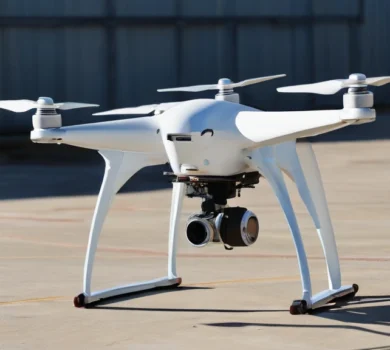
Combining data from drones and ground vehicles improves the continuity of tracking for autonomous cars.
A study conducted in a simulation showed that the combination of data from a drone (UAV) and a ground vehicle (UGV)
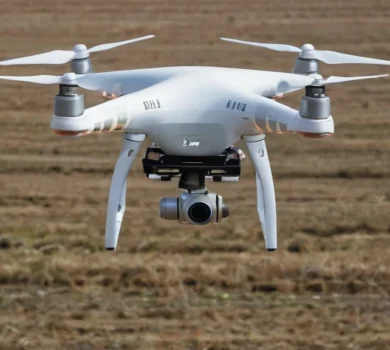
Vision-language models as aids for autonomous drones: balancing speed and precision.
A study conducted on autonomous drones showed that vision-language models, despite their potential for advanced semantic reasoning,
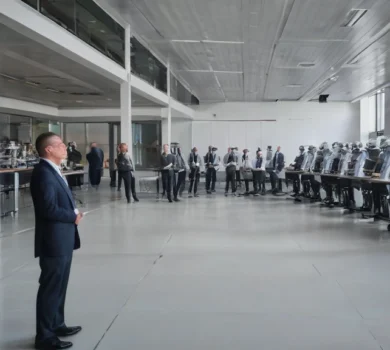
IRIM 2026 Seminar: How can robotics achieve seamless physical interaction with humans?
On October 21, 2026, the Institute for Robotics and Intelligent Machines will host a lecture.
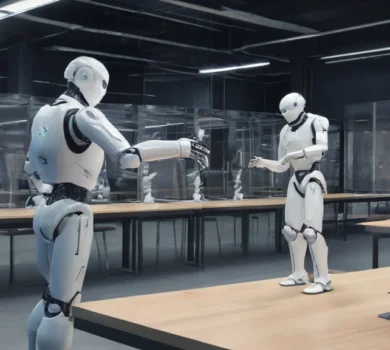
DriveWorld3D: a new generative simulation for safe autonomous driving
The new DriveWorld3D system, developed by the Robostreet team in Cambridge, is designed to help create safer models