

Reis Robot Programming in the RPL Language
Precise control of Reis robots
Advanced programming in the RPL language
Optimization of production processes
Efficient integration of Reis robots
Modern approach to automation
Flexibility and precision in control
The RPL language is a unique programming environment for Reis Robotics robots, providing full control and optimization of industrial processes. NexaRob offers comprehensive support in configuring, implementing, and integrating Reis robots, adapting them to specific operational requirements.
Contact us Watch the videoFind out why Reis Robotics RPL is a unique alternative for robot control and how it can accelerate your production line.
Programming Industrial Reis Robots in the RPL Language
RPL (Reis Programming Language) is a dedicated language created with Reis Robotics robots in mind, which ensures high precision and flexibility in performing production tasks. Although there are many programming languages in the world of robotics, RPL stands out due to its deep integration with the Reis controller, which enables full utilization of hardware capabilities and free definition of work logic - from simple manipulation operations to advanced assembly or welding processes.
Why RPL?
- Advanced motion control: RPL allows programmers to meticulously control robot paths, speeds, and accelerations, which is crucial in applications requiring exceptional precision.
- Flexible approach to integration: The language supports communication with sensors, vision systems, or PLCs, making it easier to create complex solutions.
- Optimized for Reis Robotics: Since RPL was created specifically for Reis robots, the code is executed efficiently, which translates into stable and fast robot operation.
How can NexaRob help?
- Requirements analysis: We assess the needs of your line, indicate whether RPL will be a suitable choice, and select appropriate Reis robot models.
- Code creation and optimization: We develop applications in RPL, test them in a simulation environment, and then fine-tune them on the target production line.
- Service and training: We provide full support - from operator training to long-term consulting, so that your team can efficiently operate and develop the Reis Robotics system.
See what distinguishes Reis Robotics RPL and in which industries Reis robots achieve the best results.
Key Features and Application Examples in RPL
Although there are other languages (such as ABB RAPID or KUKA KRL), RPL stands out due to its dedicated approach to Reis Robotics robots and deep integration with their controller. Below, we present the most important features of the language and areas where Reis robots operating in RPL perform particularly well:
Precise motion commands
RPL provides both standard point-to-point (PTP) motions and smooth linear or arc trajectories, making it easier to adapt to process requirements.
Application: Assembly of delicate components in electronics, where accuracy is key, and welding tasks requiring strictly defined paths.
Extensive communication with controllers
The language allows for easy data exchange with PLCs, vision systems, as well as force or torque sensors, providing the ability to dynamically correct movements.
Application: Industries automating lines with variable assortments (e.g., food industry), where the robot must adapt to the shape and position of the product in real time.
Safety and collision control
RPL offers functions for monitoring force and speed, as well as emergency stop mechanisms in case of detection of an unplanned obstacle.
Application: Lines where employee safety is a priority, and industries with high occupational health and safety requirements (chemical, medical).
Modular code structure
The ability to divide the program into procedures and functions makes it easier to manage complex applications and reduces software update time.
Application: Complex production lines with different stages, where some tasks are common (e.g., transferring parts), and others are specific (e.g., screwing, quality control).
Multi-industry application
Reis robots can be used in many sectors. m.in- automotive (welding, assembly), aerospace (composite structural components), food processing (packaging, sorting), or logistics (palletizing).
Application: A company wanting to modernize or increase production scale while maintaining high quality standards and reducing costs.
Reis Robotics RPL is a reliable and flexible tool for programming Reis robots, offering deep integration and seamless collaboration with controllers and vision systems. NexaRob supports your implementation in every aspect - from process analysis, through code creation and optimization, to long-term service. This allows your production line to reach a new level of efficiency and increase competitiveness in the market.
Discover the various ways to create code in the RPL language and choose the solution that best suits your production needs.
Main Modes and Programming Methods in RPL
Reis Robotics robots, controlled in the RPL language, can be programmed in several ways - from quick code editing on the operator panel to working in a simulation environment. At NexaRob, we adapt these methods to the specifics of your plant so that the entire implementation process is fast, safe and flexible. Below are the main modes:
Teach Pendant (Online Programming)
- Direct Editing: The operator sets motion points and creates sequences in RPL via a panel (pendant) connected to the robot.
- Quick fixes on the line: Ideal when minor corrections or changes are needed without requiring a lengthy process shutdown.
- Limitations: More complex operations (large number of points, complicated logic) may be more difficult to implement using only the pendant.
Offline Programming (Simulation Environment)
- Working on a computer: RPL code can be created and tested in a simulation environment, which allows you to refine trajectories and avoid errors without stopping the production line.
- Time saving: After uploading the verified code to the actual robot, only minor adjustments are needed, which significantly reduces downtime.
- Application: Ideal for complex or risky projects where any mistake in robot movement is costly and requires advanced collision analysis and cycle time analysis.
Online Remote Programming (Network Control)
- Remote access: If the IT infrastructure is properly secured, NexaRob engineers or your team can connect to the Reis robot over the network and make changes to the RPL code.
- Expert support: This allows for a quick response to errors and implementation of optimizations without the need for a direct visit to the plant.
Hybrid Approach
- Combining methods: Often, the Teach Pendant is used for simple changes in conjunction with offline tools for designing complex logic and trajectories.
- Gradual improvement: The code can be developed iteratively, testing alternatives in the simulator, and uploading final corrections to the running line with minimal downtime.
Programming methods in RPL are flexible and can be combined, depending on the scale and pace of changes in production. This allows for efficient use of Reis Robotics robots in various applications - from simple transfer of elements to advanced assembly or welding processes. In the following sections, we will show how it RPL integrates with vision systems and sensors, enabling even more intelligent and safer operation on the line.
Learn how the RPL language allows Reis robots to use cameras and sensors to dynamically respond to changing conditions in the production process.
Integration with Vision Systems and Sensors in Reis Robotics RPL
Reis Robotics robots, controlled in RPL, are not limited to simply replaying static paths. Integration with vision systems and sensors (force, torque or position) enables dynamic correction of movements and reaction to current changes. Below we present how RPL supports this innovative approach:
Vision Systems
- Protocols and libraries: RPL supports communication with 2D/3D cameras, allowing the Reis robot to analyze images and correct trajectories in real time.
- Offset correction: When products are arranged randomly, the robot automatically calculates the offset, adjusting the movement and increasing the speed in sorting or pick & place tasks.
Force and Moment Sensors
- Gentle assembly: In demanding applications (e.g., assembling sensitive electronic modules), RPL can control the force level to avoid damaging parts.
- Collision detection- When the torque exceeds a set threshold, the robot stops the operation, protecting devices and operators from potential failures.
Additional Axes and Peripherals
- Expanded Kinematic Capabilities: A Reis robot can work with additional axes (e.g., rotary tables), and RPL ensures their synchronized movement in complex processes.
- Application: Welding large-format elements, multi-stage assembly or palletizing different product formats.
Application examples
Food industry
A robot with a camera recognizes products of various shapes and sizes, and RPL corrects the movement on the fly to quickly and accurately sort them on the conveyor.
Electronics
Delicate assembly of small components, where the force sensor prevents excessive pressure and minimizes the risk of breakage or deformation of parts.
Logistics
Recognition and sorting of packages based on barcodes, dynamically calculating the offset for each type of shipment.
Through integration with vision systems and sensors, Reis robots in RPL become intelligent and adaptive, increasing the efficiency and safety of the line. NexaRob offers support in selecting appropriate devices, writing and optimizing code, as well as training personnel, so that your company can fully utilize the benefits of automation. Reis Robotics.
See an example where Reis robots, programmed in RPL, accelerated and improved key stages of electronic component assembly.
Precise Assembly and Quality Control in the Electronics Industry with Reis RPL
In the electronics industry, not only high performance but also exceptional precision and attention to quality are important. Below we present a project in which Reis robots - controlled in RPL - helped significantly improve assembly efficiency and reduce the percentage of incorrectly assembled components.
Context and Main Challenges
- Delicate circuits and small sizes: Screwing screws into PCBs or soldering precise connectors required repeatable accuracy on the order of tenths of a millimeter.
- Frequent product changes- Several variants of devices were produced on the line, differing in the arrangement of components and mounting points.
- Long quality control time: Traditionally, operators had to manually verify assembled modules, which delayed the introduction of new batches.
Solutions in RPL Code
Modular assembly sequences
Each stage (e.g., applying solder paste, screwing in screws, connecting a connector) was recorded in separate procedures, which made it easier to quickly switch between product variants. Parameters (speed, pressure force, point positions) were separated into a configuration file, allowing engineers to make corrections without modifying the entire code.
Visual inspection and force sensor
The camera checked whether the component was correctly positioned before assembly began. In case of a slight misalignment, the robot corrected its movement on the fly by calculating the offset. The level of force was controlled during screw insertion and when attaching sensitive connectors, preventing deformation or cracking of the PCB boards.
Automatic quality control
After the assembly was completed, the robot performed test movements, checking the physical position of the assembled unit and recording any errors (loose connections, deviations from control points). This reduced the number of units sent for manual inspection, accelerating the production cycle.
Effects and Benefits
- Approximately 25% increase in efficiency: Automated assembly operations and reduced quality control time have made it possible to increase production speed.
- Reduction of assembly errors: Precise movements with dynamic visual correction and force control significantly reduced the number of defective modules.
- Flexible adaptation to new models: Modular procedures and configurable parameters enabled quick switching to other product variants without having to rewrite the entire code.
Thanks to theRPL language and Reis Robotics robots, the full potential of automation has been utilized in the challenging electronics industry, improving efficiency and reducing assembly errors. NexaRob The company supported the client at every stage of the project - from requirements analysis and code writing, through visual integration, to operator training. As a result, the company achieved higher production rates and better quality control.
How to maintain high performance and safety of applications created in RPL, even in the face of dynamic changes in production?
Optimization of Codes and Safety Procedures in Reis Robotics RPL
After implementing applications in the RPL language, continuous analysis and improvement of the code is essential so that Reis robots operate stably, efficiently and in accordance with health and safety standards. NexaRob recommends a set of proven practices that ensure long-term benefits:
Cycle time and trajectory analysis
- Data collection: The robot and controller can record the number of cycles, errors, or the duration of specific stages. Regular analysis of this information helps identify bottlenecks.
- Refactoring of movements: Slightly shortening paths or better planning the sequence of tasks speeds up the process without sacrificing quality.
Code structure and modularity
- Avoiding repetitions: Creating common procedures and functions instead of copying code fragments reduces the risk of errors and shortens update time.
- Clear names and comments: Consistent naming style (e.g., pPickPoint, nMaxTorque) and comprehensive comments speed up work on the code and debugging.
Safety procedures
- Emergency stop conditions: RPL allows you to define reactions to exceeding safety zones, collisions, or detecting excessive force. We recommend periodic testing of these functions.
- Current health and safety regulations: If there are changes in industry standards (e.g., automotive, food), the code must be adapted to continue meeting the highest safety standards.
Updates and development
- New firmware versions: Reis Robotics sometimes publishes software updates and extensions. It is worth assessing whether they can bring benefits to your application.
- Workstation expansion: If you plan to add more robots or devices, a modular approach to the code will facilitate the integration of new elements and shorten the implementation time.
Thanks to regular code optimization and care for safety procedures in RPL, Reis Robotics robots maintain high efficiency and reliability. NexaRob supports companies in code audits, hardware upgrades, and consultations regarding development - so that the production process can dynamically develop and effectively respond to changes in market requirements.
Dispel your doubts related to creating and maintaining applications in Reis Robotics RPL, and also learn about our support model.
Frequently Asked Questions
Below are answers to frequently asked questions about Reis Robotics robots operating in the RPL language. If you do not find the issue you are interested in here, please contact NexaRob - we will be happy to discuss your project and provide specific recommendations.
No. Although the RPL offers extensive motion control capabilities, basic control logic is sufficient to get started. NexaRob also provides training that accelerates your team's adaptation to the new environment.
Reis robots (programmed in RPL) are popular in the automotive industry (e.g., welding, quality control), aerospace, food processing (packaging, sorting), and electronics (precision assembly). Their flexibility allows them to be adapted to numerous processes.
Yes. There are tools for simulating and designing robot motion that allow you to verify and refine the RPL code without stopping the production line. Once testing is complete, the code can be uploaded to the robot with minimal modifications.
RPL supports communication protocols that enable dynamic motion correction based on data from 2D/3D cameras or sensors. This allows the robot to adjust its trajectory in real time to the position of an object or control the pressing force.
Standard models are usually industrial robots that require safety systems (curtains, scanners). However, they can be equipped with advanced force sensors and speed limits to increase the level of collaboration with humans. It is important to adapt the equipment to occupational health and safety requirements and possibly configure the software.
Depending on the rate of change in production. When introducing new products or variable assortments, modifications may be frequent. In a stable production line, the code is usually updated mainly for optimization or changes in regulations. The modular design makes it easy to quickly adapt to new tasks.
Yes. We cooperate with a network of suppliers, including Reis Robotics, and provide support in selecting the appropriate robot model, writing RPL code, as well as long-term service and expansion of the production line.
Thanks to the similar architecture of the controllers, a significant part of the programming logic can be transferred with minimal changes. NexaRob assists in this process by analyzing the differences in robot parameters (reach, payload) and adapting the code to new conditions.
We invite you to contact us via email or telephone. NexaRob will gladly analyze your needs, advise on equipment selection, prepare RPL code, and conduct training - so that your production line operates efficiently, safely, and flexibly in the face of dynamic market demands.

Do you have more questions?
Contact NexaRob - our specialists provide comprehensive assistance in the design, implementation, and maintenance of systems based on Reis robots and the RPL language. Together, we will ensure that your automation runs with maximum efficiency, minimized risk of errors, and in accordance with safety and quality standards.
Automate Your Business with NexaRob - Contact Us!
Interesting facts from around the world

BubbleCBF: a new method for ensuring safety in autonomous robot navigation.
A new method called BubbleCBF enables safe navigation of autonomous robots in unknown environments, solving
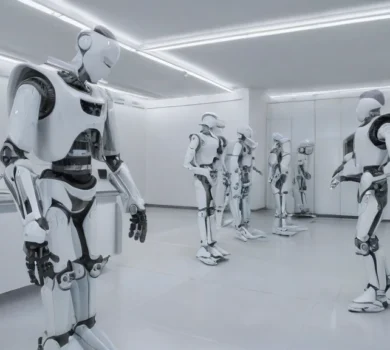
New ESA project with Oxford Robotics Institute and Autodiscovery for autonomous robot teams
In October 2026, the European Space Agency will fund a project under which the Oxford Robotics Institute
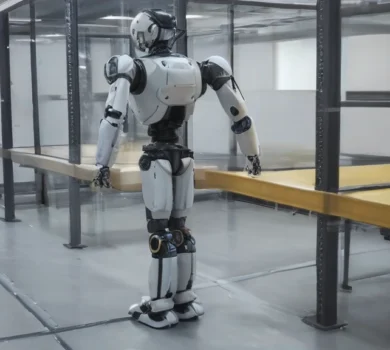
A vision-, language-, and action-based policy for an autonomous lunar rover operation.
Researchers have developed a vision-language-action system that enables an autonomous rover to dock on the Moon even in extreme lighting conditions.

The soft robotic fish swims quickly and performs complex three-dimensional maneuvers.
Researchers from the Institute of Automation of the Shenyang Academy of Sciences presented a new generation of soft underwater robots.
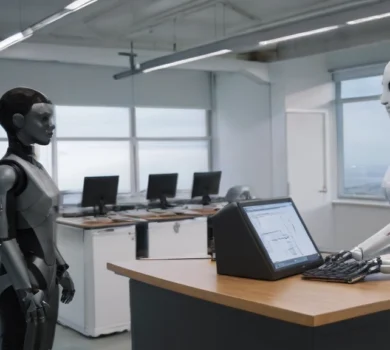
Gecko Robotics and NVIDIA are testing security measures for robots powered by AI.
Gecko Robotics announced a partnership with NVIDIA as part of the Open Agent Safety Platform, which is aimed at