
Technology Selection by Application
Technology Tailored to Your Processes
Choose robots for a specific application
Automation Tailored to Your Needs
Efficiency and precision in every operation
Industrial Robots for Different Processes
Innovative Solutions for Your Company
Every production process requires appropriately selected technology. See which robots work best for assembly, packaging, welding, or quality control to increase the efficiency and reliability of your operations.
Contact us Watch the videoDiscover Which Automation Technologies Work Best for Specific Processes
How to Match Robots to Specific Applications
Choosing the right type of robot depends not only on the industry but also on the specific tasks it must perform. Sometimes precision and repeatability are crucial, while in other cases high speed, payload, or operation under varied environmental conditions matters most. That is why we prepared the "Technology Selection by Application" guide, which explains how to match robots to processes such as assembly, welding, packaging, or handling heavy loads.
Whether you are interested in a versatile multi-purpose robot or a specialized design, such as a SCARA robot for high-speed operations, an articulated robot for welding, or a mobile robot for internal transport, here you will learn what to consider when planning a deployment and how to avoid common mistakes. We use an approach based on practical criteria such as component weight, working environment, and required motion precision so that you can easily assess which robot types can deliver optimal results in your processes.
Diverse Specializations and Functions - Choose Robots That Match Your Processes
Overview of Application Categories and Their Key Functions
Industrial robots can be classified not only by design type, such as articulated, Cartesian, or collaborative robots, but also by the specific processes and tasks they are intended to perform. Below is a list of 18 of the most popular robot application categories, prepared around common production and logistics challenges. Each section contains a brief description of typical activities and the key benefits automation provides in that area.
Assembly Robots
Assembly robots transform the product assembly process by providing high precision and repeatability. They are particularly effective in industries requiring accuracy, such as electronics, medicine and automotive.
Welding Robots
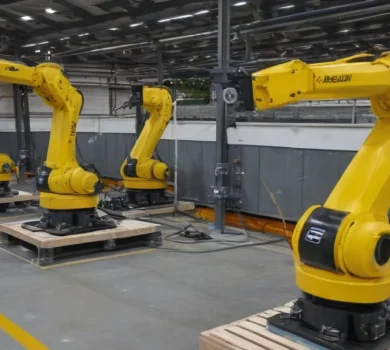
In the metal and automotive industries, welding robots provide high weld quality and repeatability. Arc, laser, or hybrid welding can be automated.
Packaging and Palletizing Robots
In the food, pharmaceutical, and e-commerce sectors, these robots facilitate rapid preparation of products for shipment and stable pallet placement.
Handling Robots (Robots with Arms)
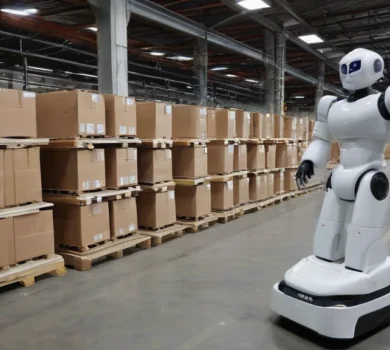
A universal solution for work across different industries, covering both delicate items and larger parts. Depending on requirements, this may include Cartesian, articulated or mobile robots such as AMRs.
Surface Treatment Robots
Indispensable in tasks requiring uniform smoothing or application of finishing coatings. In industries such as automotive, aerospace, or furniture, they help achieve high surface quality.
Robots for Machine Tending
They automate work at machines such as CNC equipment, hydraulic presses and injection molding machines, increasing efficiency and safety in both heavy and precision industries.
Quality Control Robots
Thanks to advanced vision systems and sensors, these robots automatically detect defects and perform tests, reducing waste and improving quality processes.
Robots for Handling Heavy Loads
Designed to handle large or heavy components safely and efficiently. Particularly useful in the metal and construction industries or for storing large pale
Precision Robots (Microassembly, Delicate Components)
Designed for operations requiring microscopic accuracy, for example in electronics, medicine, or optics. Their construction provides stability and minimal vibration.
Chemical Robots (substance handling, dosing)
They specialize in safe handling of hazardous substances, dosing, mixing, and monitoring chemical processes. They provide precise control of parameters in chemically aggressive environments.
Robots for Thermal Processes (Soldering, Heat Treatment)
They provide effective high-temperature control in tasks such as soldering, hardening, or annealing. Ideal for electronics, metallurgy, and other sectors requiring precise heat treatment.
Multi-purpose Robots, Universal
Modular and flexible designs that allow rapid switching between different operations, from assembly to transport and quality control. A good solution for companies with changing product ranges.
Robots for Polymerization and Curing
They provide controlled polymerization time and conditions (e.g. using UV radiation) in industries producing plastics, composites or resin products.
Sorting and Segregation Robots
They perform well in fast operations that separate products by shape, color, or size. They often use vision systems to detect differences between items.
Robots for Electronic Component Assembly
Designed for assembling delicate SMD parts, integrated circuits, or electronic modules. They require high precision and a stable gripper.
How to use the categories above?
- Consider the nature of your process, whether high speed is required for pick-and-place tasks or payload capacity for heavy components.
- Visit the dedicated page to discover detailed guidance and see which robot type best matches the requirements of your application.
- Contact us if you need a personalized analysis. NexaRob provides comprehensive consulting, from selecting structures and vision systems to financing and after-sales service.
In the following sections, we will show how to select technology in practice for specific requirements such as payload, precision, cycle time, and environmental conditions, as well as the financial and organizational benefits you can achieve by investing in the right robotic solutions.
Six Criteria That Will Help You Select the Robot Best Suited to Your Processes
Payload, Precision, Cycle Time, and Environmental Conditions
Once you have determined which tasks you want to automate, such as assembly, welding, packaging, or handling, it is time to analyze the technical requirements. Below we present six key criteria that will help you choose a robot suited to the specific parameters of your processes:
Payload and Reach
If you move heavy components (e.g. in the metal industry), choose a robot with a sufficiently high payload (e.g. an articulated robot with a reserve of several dozen kilograms).
In industries such as electronics or food, where products are lighter, Delta or SCARA robots with faster cycle times may be a better choice
Required Precision and Repeatability
In the electronics or cosmetics industry, where micrometer-level accuracy matters, robots providing high motion repeatability, such as SCARA robots or collaborative robots for small-part assembly, will be crucial.
High-payload articulated robots may have slightly greater deviation, which remains fully acceptable in most industrial applications.
Cycle Time and Motion Dynamics
On high-throughput production lines, such as packaging small food products, shorter cycle time means higher productivity.
Delta and SCARA robots often lead in the speed of pick and place operations, while welding applications may prioritize stability and continuity of articulated motion.
Working Environment (Temperature, Humidity, Dust)
In the metal or construction industry, a robot should be resistant to dust, high temperatures, and dusty environments, often requiring IP65-rated sealing or higher.
In pharmaceutical and food applications, anti-corrosion coatings that are easy to disinfect and resistant to chemicals may be required.
Compatibility with Machines and IT Systems
Check whether the robot has a controller with an open communication protocol, such as OPC UA or Profinet, to enable integration with MES, ERP, or WMS systems.
For assembly or machine-related tasks, such as operating presses or injection molding machines, robot movements must be synchronized with existing equipment.
Safety and Standards Requirements
Depending on the nature of the task, specific occupational safety, hygiene, or industry standards may apply, such as ATEX in potentially explosive environments.
If the robot is to work in direct contact with people, consider collaborative designs (cobots) equipped with force sensors and advanced collision detection systems.
These six criteria form the foundation for detailed analysis of technical requirements. Once they are defined, it becomes easier to select a robot type, such as articulated, SCARA, Delta, Cartesian, collaborative or mobile, and plan the next implementation steps. In the following sections, we will present a comparison table and discuss potential outcomes from selecting specific solutions without requiring detailed case studies.
See Which Robot Types Work Best Across 18 Different Processes, from Assembly to Laser Cutting
Which Robots Perform Best at Specific Tasks
Industrial robot applications are extremely broad, covering assembly, welding, packaging, coating, and machine tending. The comparison table below includes 18 of the most common application categories and indicates which robot types, such as articulated, SCARA, Delta, Cartesian, mobile, and collaborative robots, may deliver the greatest benefits. This allows you to quickly assess which robot type best fits your processes.
| Application | Best robot types | Notes and benefits |
|---|---|---|
| Assembly | SCARA, Delta, collaborative robots, cobots, articulated | Fast and precise assembly of components of different sizes. Cobots can work in the same area as the operator, making processes that require human involvement easier. |
| Welding | Articulated robotic arms, gantry systems for large components | Stable welding arc and long reach. Ideal for the metal and automotive industries. MIG/MAG, TIG, or laser welding requires resistance to high temperatures and a gas extraction system. |
| Packaging and palletizing | SCARA, Delta, articulated depending on product weight | Very short cycle times for lightweight products. Robotic arms are suitable for heavier or larger packages. They support the final stage of production, increasing efficiency and reducing errors. |
| Handling | Cartesian, articulated, mobile AMR/AGV | Cartesian robots work well for simple movements along the X, Y, and Z axes, while articulated robots are better suited to more flexible manipulation. Mobile robots facilitate transport between stations and reduce internal logistics costs. |
| Surface Processing | Articulated with force sensor, Cartesian | Force control in grinding and polishing processes. Cartesian robots provide stability along linear axes, while articulated robots perform well in hard-to-reach spaces. |
| Machine operation | Articulated, Cartesian, collaborative | Feeding and removing parts from machines such as injection molding machines, presses, or lathes. Synchronization with the machine cycle and a safe working zone are essential. |
| Quality Control | SCARA, Delta, collaborative robots with vision systems | Rapid defect recognition using 2D/3D cameras. Cobots can cooperate with an operator during precise manual tests, increasing accuracy and reducing losses. |
| Handling Heavy Loads | High-payload articulated robots, gantry robots and high-capacity mobile AMRs | Solutions used in the metal sector and large-item warehousing. Robust designs provide a wide reach and payload capacities of up to several hundred kilograms. |
| Precise | SCARA, collaborative, Delta | Minimized vibration and high movement accuracy. Suitable for electronics, integrated circuits and the medical sector, where micro-precision is required. |
| Chemical | Chemically protected articulated robots, corrosion-resistant Cartesian robots | Robots resistant to aggressive substances and corrosion. Appropriate seals, stainless steel, safety systems, and dispensing precision are important. |
| Thermal | Articulated, gantry, SCARA depending on weight and temperature | High resistance to temperatures and movement stability. Applications include soldering in electronics and heat treatment of metal components. |
| Multipurpose | Articulated, modular collaborative, Cartesian | Configuration flexibility and the ability to quickly change tooling. A good option for companies that frequently change their product range or need a universal workstation. |
| Polymerization and curing | Cartesian, articulated at higher temperatures | Resistance to chemicals and precise control of exposure or curing time are important, especially for resins and UV coatings. |
| Sorting and Segregation | Delta, SCARA, mobile AMRs with grippers | Very short cycle time and high object-recognition precision thanks to vision systems. Used in the food, cosmetics, and recycling industries. |
| Assembly of electronic components | SCARA, Delta, collaborative robots with vision systems | High accuracy and handling of delicate objects. Cobots enable easy product changeovers, while SCARA and Delta robots provide short cycle times. |
| Applying Coatings and Paints | Articulated, gantry, collaborative for small batches | Even distribution of coatings requires constant speed and precise position control. Robots should be resistant to chemicals contained in paints. |
| Painting and finishing | Articulated, Cartesian, or possibly cobots | Stable trajectory when painting large surfaces or components. Collaborative robots can support small batches and frequent color changes. |
| Cutting and forming | Reinforced articulated robots, gantry, Cartesian robots | Laser, waterjet, and plasma processes require resistance to dust, high angular precision, and mechanical durability. They are used in the metal, plastics, and composites industries. |
How to Read the Table:
- Application, indicates the main category of tasks, often used in a specific industry.
- Best Robot Types, suggesting designs that usually handle a particular operation most effectively depending on weight, precision, temperature, and other factors.
- Notes and Benefits, highlights key features and advantages as well as potential challenges that should be considered during deployment.
Using industrial robots across different processes, from assembly and welding to specialized chemical and thermal tasks, requires adapting both the robot design and additional accessories such as grippers, vision systems, and force sensors. The table above allows you to make an initial assessment of which robot types may work best in your case, significantly accelerating the selection and automation planning process.
Seven Key Benefits You Can Achieve by Matching Robots to Tasks
What You Can Gain by Choosing the Right Technologies
Each of the task categories listed above can significantly improve your company's operations if you choose the right robot types and plan the implementation properly. Here are seven key results you can expect:
Higher Productivity and Shorter Cycle Time
- High-speed SCARA and Delta robots can perform hundreds of pick & place operations per minute, significantly accelerating packaging and sorting processes.
- Articulated robotic arms increase the speed of welding, assembly, or coating operations while reducing downtime.
Better Quality and Fewer Errors
- Automation eliminates fatigue and human error in repetitive activities such as assembly and substance dispensing.
- Integration with a vision system makes it possible to detect nonconformities in real time, preventing the production of large batches of defective products.
Reduction of Operating Costs
- Fewer employees required for monotonous and hazardous work, helping reduce labor and insurance costs.
- Lower losses resulting from insufficient precision, for example in chemical or pharmaceutical applications where precise dispensing reduces consumption of expensive raw materials.
Improving Safety and Ergonomics
- Robots take over tasks requiring heavy lifting or work in high temperatures or toxic conditions.
- The risk of injuries and occupational diseases is reduced, resulting in lower absenteeism and better employee motivation.
Flexibility and Scalability
- If production demand increases, additional robots can be purchased or the existing workstation expanded without the need to build an entirely new line.
- Collaborative robots enable rapid adaptation to changing product ranges and short production runs.
Internal Logistics Optimization
- Mobile AMR/AGV solutions improve material transport between workstations, reducing waiting times and queues.
- Automatic segregation and sorting make it easier to manage semi-finished and finished products in a warehouse.
Building the Brand of a Modern Enterprise
- Companies using advanced robotic systems are perceived as leaders in innovation and quality.
- Such a reputation helps attract new customers and business partners, as well as recruit specialists who value working with modern technologies.
Selecting robots for specific applications such as welding, packaging, assembly, or surface processing can transform the way your company operates in a short time. Proper implementation planning, including needs analysis, testing, and training, further increases the chances of success and rapid return on investment, strengthening your market position over the longer term.
Here are seven stages that will help you move from an idea for robotization to effective implementation in practice
Step by Step to Effective Automation
Using the right technologies depending on the type of task (assembly, welding, packaging, processing, quality control) is only half the battle. It is equally important to plan implementation thoughtfully in order to minimize the risk of delays or costly mistakes. Below are seven key steps that will help you move through the automation process without unnecessary complications:
Define Goals and Priorities
- Consider the primary objective of automation. Is it to increase efficiency, reduce labor costs or improve quality?
- Set priorities. It is best to focus first on areas with the greatest growth potential or those most vulnerable to human error.
Analyze Technical Requirements
- Determine the payload, precision level, and cycle time required for the selected process.
- Check whether the robots need to withstand high temperatures, humidity or contact with chemicals, and whether you require special certifications such as food-grade or ATEX certifications.
Consult Experts or an Integrator
- Benefit from the experience of companies specializing in robot supply and integration.
- Together, you will assess which robot design, SCARA, articulated, Delta, Cartesian, collaborative, or mobile, best matches the needs of your line.
Choose a Financing Model
- Explore leasing, investment loans, or funding from EU programs.
- Verify projected return on investment (ROI) and plan the budget so that the investment can begin delivering benefits quickly.
Plan Integration and Testing
- Prepare an implementation schedule that takes into account the possibility of short downtime during installation.
- Make sure the robot will be compatible with the existing control system, such as PLC, MES, or ERP, as well as equipment on the line, such as injection molding machines, presses, and assembly stations.
Arrange Training and Commissioning
- Provide training for operators and maintenance teams so that they can independently operate and program robots.
- Perform acceptance tests (FAT, SAT) and launch the new system under production conditions, correcting any shortcomings.
Monitor, Improve, and Develop
- Regularly collect data on performance, defects and downtime. Use it as a basis for implementing improvements.
- Consider extending robotization to additional processes in the company if you observe growing demand or changing market needs.
Applying these seven steps will help you avoid common pitfalls and ensure that the implementation of robotic technologies proceeds smoothly and efficiently. If you need assistance at any stage, we encourage you to contact us. NexaRob provides comprehensive support, from initial analysis through after-sales service.
Unsure which robots to choose? See the answers below or contact us
Frequently Asked Questions
Many companies considering technology selection based on the type of task, such as assembly, welding, packaging, processing or quality control, have similar questions and concerns. Here are some of them:
Sometimes yes, particularly for collaborative robots (cobots) or articulated robots, which are versatile and easy to reconfigure. In other situations, however, using different robot types in individual zones may be more efficient.
Not always. Sometimes it is enough to integrate the robot with existing machines, add suitable grippers, and provide communication with control systems. However, it is important to discuss this with an integrator in advance.
It depends on process complexity and the number of workstations. A simpler integration can be completed within several weeks, while more extensive projects may take several months.
In addition to purchase and installation, service inspections, replacement of wear parts such as cables and grippers, and possible software updates should be taken into account. In practice, however, robots are significantly less expensive to operate than manual labor.
It is not required. Many suppliers and integrators offer operator training and after-sales support. There are also robots with user-friendly interfaces that simplify everyday operation.
Practically any industry, from food and pharmaceuticals to automotive and electronics. The key is to match the technology correctly to the specific tasks and requirements of the industry.
Yes. We cooperate with financial institutions and EU funding advisors, enabling clients to conveniently spread costs and accelerate return on investment.
Contact our team and tell us about your processes and challenges. We will prepare an analysis and a preliminary implementation concept, including a cost estimate and ROI forecast.
Do you have more questions?
Contact our experts, who will be happy to advise you on robot selection and help design optimal automation solutions. Together, we will ensure that your company effectively uses modern technologies and gains a competitive advantage in the market
How We Work: Learn About Our Implementation Methodology from Consultation to Long-Term Development
We Guarantee Comprehensive Support
At NexaRob, we believe automation success depends on two main factors: selecting the right technology and maintaining a coherent implementation process. Thanks to our established "How We Work" methodology, we can guide clients through every stage, from analyzing potential benefits to service and possible system expansion. Below we describe the most important steps in this journey:
Consultation and Diagnosis
Process audit: We analyze your production, logistics, and inspection processes in detail to identify tasks in which industrial robots can deliver the greatest improvements.
Defining Priorities: We define investment objectives such as increasing efficiency, improving quality, reducing costs, or enhancing employee safety.
Design and Technology Selection
Technical analysis: Based on the audit findings, we recommend specific robot types (for example, SCARA, articulated, cobots, Cartesian, mobile), matching them to the required payload, precision, and environmental conditions.
Solution optimization: We design workstations, production lines, and tools (e.g. grippers, vision systems) to eliminate potential bottlenecks and enable future system expansion.
Financial Support and Funding
Identification of Financing Sources: We help obtain loans, leasing or grants from EU, national or regional funds.
Budget and ROI Planning: We provide preliminary return-on-investment (ROI) calculations, taking into account equipment and service costs as well as potential production savings.
Integration, Installation and Testing
Installation and configuration: Our engineers install robots at your facility, ensuring compatibility with IT infrastructure (PLC, MES, ERP) and minimizing production downtime.
Testing Phase: We verify the performance and stability of new solutions by monitoring movement precision, cycle times and operational safety.
Training and Implementation Handover
Team education: We organize training in robot operation, basic programming, and diagnostics. This helps your employees work confidently with the new system.
Commissioning Support: We help optimize settings by making adjustments based on actual production needs and industry requirements.
Service, Development, and Optimization
After-sales support: We provide periodic inspections, fast access to spare parts and advice on resolving potential problems.
Further modernization: If new needs emerge as your company grows, we will help expand the system by adding further robots or modules (IoT, vision) that increase the scope of automation.

Thanks to NexaRob's comprehensive support, our customers can focus confidently on their core business while seeing how automation translates into real savings and greater competitiveness.
Automate Your Business with NexaRob - Contact Us!
We Operate Globally While Adapting to Local Conditions and Regulations
We Operate Globally, Support Locally
NexaRob is an internationally active industrial-robotics integrator working with partners in more than 100 countries. Thanks to a broad network of experts and suppliers, we can not only provide modern technologies, but also adapt them to the specifics of local markets. This combination of global know-how and local expertise enables us to carry out automation projects while maintaining high standards of quality and regulatory compliance.
- Local Expert Support We have regional offices and work with qualified teams on every continent, enabling us to provide consulting and training in the customer's native language. We take applicable regulations and standards into account, including HACCP, GMP, occupational health and safety requirements and environmental standards.
- Extensive service infrastructure We provide service support and maintenance inspections quickly regardless of location. Access to spare parts and experienced engineers minimizes the risk of downtime and helps maintain a high level of performance.

- Access to the Latest Solutions We follow global trends in robotics and implement proven innovations that can facilitate and accelerate automation across industries. Through cooperation with market leaders, including manufacturers of robots, software, and equipment, we provide customers with comprehensive solutions that meet the needs of both small companies and large corporations.
- Flexibility and Adaptation Each market has its own characteristics, such as different legal regulations, work culture, or access to technical staff. NexaRob can adapt to them by proposing optimal technologies and implementation models. Whether you operate in Europe, Asia, Africa, or the Americas, you can count on expert NexaRob support backed by many years of experience and a global network of contacts.
By choosing NexaRob as your partner, you gain confidence that local realities will be properly taken into account and every robot installation, from design and software to service, will be adapted to your needs. In this way, we combine the power of innovation and global reach with precision and understanding of your local market.
United States
China
Japan
Germany
India
United Kingdom
France
Italy
Canada
South Korea
Brazil
Australia
Spain
Mexico
Indonesia
Netherlands
Saudi Arabia
Turkey
Switzerland
Taiwan
Poland
Sweden
Belgium
Thailand
Ireland
Austria
Norway
Israel
United Arab Emirates
Argentina
South Africa
Denmark
Philippines
Singapore
Malaysia
Colombia
Bangladesh
Egypt
Chile
Finland
Vietnam
Portugal
Czech Republic
Romania
New Zealand
Peru
Greece
Ukraine
Slovakia
Hungary
Slovenia
Croatia
Serbia
Bulgaria
Estonia
Latvia
Lithuania
Iceland
Luxembourg
Malta
Cyprus
Morocco
Algeria
Tunisia
Nigeria
Kenya
Ethiopia
Ghana
Tanzania
Uganda
Angola
Senegal
Qatar
Kuwait
Oman
Pakistan
Sri Lanka
Nepal
Kazakhstan
Uzbekistan
Mongolia
Russia
Cambodia
Myanmar
Laos
Fiji
Papua New Guinea
Venezuela
Ecuador
Uruguay
Paraguay
Bolivia
Costa Rica
Panama
Dominican Republic
Guatemala
Cuba
Jordan
Lebanon
Iran
Additional countries in Europe
These countries are hidden in reader mode so that the map is not overcrowded. Click a country to open contact details, email and a description of the cooperation area.
Additional Countries in Asia
These countries are hidden in reader mode so that the map is not overcrowded. Click a country to open contact details, email and a description of the cooperation area.
Additional Countries in the Americas
These countries are hidden in reader mode so that the map is not overcrowded. Click a country to open contact details, email and a description of the cooperation area.
Additional Countries in Africa
These countries are hidden in reader mode so that the map is not overcrowded. Click a country to open contact details, email and a description of the cooperation area.
Additional Countries in Oceania
These countries are hidden in reader mode so that the map is not overcrowded. Click a country to open contact details, email and a description of the cooperation area.
Albania
Andorra
Belarus
Bosnia and Herzegovina
Montenegro
Liechtenstein
North Macedonia
Monaco
Moldova
San Marino
Afghanistan
Armenia
Azerbaijan
Bahrain
Bhutan
Brunei
Georgia
Iraq
Yemen
Kyrgyzstan
North Korea
Maldives
Syria
Tajikistan
Timor-Leste
Turkmenistan
Antigua and Barbuda
Bahamas
Barbados
Belize
Dominica
Grenada
Guyana
Haiti
Honduras
Jamaica
Nicaragua
Saint Kitts and Nevis
Saint Lucia
Saint Vincent and the Grenadines
El Salvador
Suriname
Trinidad and Tobago
Benin
Botswana
Burkina Faso
Burundi
Cabo Verde
Chad
Democratic Republic of the Congo
Djibouti
Eritrea
Eswatini
Gabon
Gambia
Guinea
Guinea-Bissau
Equatorial Guinea
Cameroon
Chambers
Congo
Lesotho
Liberia
Libya
Madagascar
Malawi
Mali
Mauritania
Mauritius
Mozambique
Namibia
Niger
Central African Republic
Rwanda
Seychelles
Sierra Leone
Somalia
Sudan
South Sudan
Togo
Ivory Coast
São Tomé and Príncipe
Zambia
Zimbabwe
Kiribati
Micronesia
Nauru
Palau
Samoa
Tonga
Tuvalu
Vanuatu
Marshall Islands
Solomon Islands
Join NexaRob and together let us bring the industry into a new era of industrial robotics
Would you like to become our Partner?
At NexaRob, we believe that the most interesting innovations arise through cooperation and the exchange of ideas. We are open to working with companies producing robot components, software developers, providers of specialized technological solutions, and young start-ups. Together, we can create a new level of quality in the automation of production, logistics, and inspection processes.
- Joint Innovation Our R&D centers, located in different parts of the world, develop modern solutions in robotics, AI, and vision systems. NexaRob partners gain access to a global network of experts and clients, accelerating the introduction of new products to market.
- Technical and Business Support We provide substantive training, marketing materials, and consulting for developing joint projects. Together, we participate in industry events, trade fairs, and conferences, promoting the solutions being developed and increasing their market visibility.
- Global Reach and Local Expertise Thanks to a presence in more than 100 countries and extensive service infrastructure, we can help scale your ideas quickly even if you operate in a niche or local market. NexaRob takes local regulations and industry realities into account, helping our partners establish a presence in many regions around the world.
- Flexible Forms of Cooperation We are open to various business models, from one-off integration projects to long-term contracts and joint ventures. We value the contribution of companies of every size, believing that the true strength of the industry comes from combining global leaders with innovative start-ups.
Would You Like to Create the Future of Automation with Us?
Join NexaRob and together we can make industrial process automation even more efficient, accessible, and safe. Use our global network and experience to introduce new solutions internationally. Together, we can accelerate the development of robotics and help many companies achieve success at a new, higher level
Interesting Facts from Around the World
New multimodal dataset for analyzing engagement in human-robot interaction.

Researchers from Seoul University have developed a new protocol for collecting data to build a dynamic, multimodal dataset.

New ARTiS gripper for precise tool manipulation in disassembly processes.

The new robot gripper called ARTiS has been accepted for publication in the TASE journal and can
FANUC presents Physical AI and digital twins at IMTS 2026
At IMTS 2026, FANUC America presented new solutions based on Physical AI that are designed to change
GAM: a new base model for robotic manipulation in industry
Amazon has introduced the Generalized Action Model (GAM) - an advanced foundational model for robotic manipulation that can
Fraunhofer IPA presents robotics for the circular economy at the European Parliament.
On September 2, 2026, the Fraunhofer Institute for Manufacturing Engineering and Automation IPA (IPA)