Programming Epson Robots in SPEL+
Precise Control of Epson Robots
Advanced Programming in SPEL+
Process Optimization in Automation
Effective Integration of SCARA and 6-Axis Robots
Modern Epson Control Technologies
Automation Tailored to Your Production
SPEL+ is an advanced programming tool for Epson SCARA and 6-axis robots, providing precise control and process optimization. NexaRob offers comprehensive support with configuration, deployment and integration of Epson robots, adapting them to specific production requirements.
Contact us Watch the videoDiscover why SPEL+ is the foundation of precise Epson robot control and supports automation across many industrial sectors
Programming Epson Industrial Robots in SPEL+
SPEL+, Epson SPEL Plus, is a dedicated programming language for Epson industrial robots, designed for intuitive operation and high flexibility. It enables engineers to create applications for tasks requiring both precision and rapid adaptation to changing processes. At NexaRob, we use SPEL+ across a broad range of applications, from simple pick and place operations through complex assembly and testing tasks to advanced projects integrating robots with vision systems.
Why SPEL+?
- User-friendly syntax: The language was designed so that teams with limited programming experience can quickly understand and create robot control code.
- Extensive Motion Instructions: SPEL+ supports various operating modes, including point-to-point, linear, and arc modes, enabling efficient programming of complex motion sequences.
- Easy integration: Robots equipped with SPEL+ can be smoothly connected with other automation systems, sensors, or vision solutions, providing a consistent and comprehensive working environment.
How Can NexaRob Help?
- Requirements analysis: Together with the client, we define the project objective and process characteristics to select the appropriate hardware and software solutions.
- Code Creation and Optimization: We design applications in SPEL+, test them in a simulation environment, and then fine-tune them at the actual production workstation.
- Training and service support: We provide complete training in Epson robot operation and servicing, enabling your team to independently make minor adjustments and respond quickly to changing production-line needs.
See What Distinguishes SPEL+ and Which Processes Epson Robots Perform Best In
Key Functions and Application Examples in SPEL+
Although every robotics language is intended to enable control of robot motion and logic, SPEL+ stands out for its coding simplicity, task execution efficiency, and ease of integration with external systems. Below we present the most important elements and examples of industries in which Epson robots are particularly well regarded:
Versatile Motion Instructions
SPEL+ enables the definition of point-to-point (PTP) movements as well as linear and arc paths. This variety of commands makes it possible to create smooth, precise trajectories tailored to process requirements.
Application: Assembly and handling of small components in electronics, precise packaging in the food industry.
Modular Code Structure
Code can be divided into procedures, blocks, and functions handling different tasks, such as welding, palletizing, or quality control. This makes complex applications easier to manage.
Application: Production lines where a robot performs several process stages, for example picking components, assembling them, and placing them at the destination.
Simple Integration with Vision Systems
Epson robots and the SPEL+ language are designed for easy communication with cameras, force sensors and PLC systems. This enables dynamic motion correction based on current conditions.
Application: Pick-and-place tasks with randomly distributed parts and vision inspection for checking product quality.
Safety and emergency procedures
SPEL+ provides mechanisms for configuring force and speed limits and defining emergency stop conditions, which are important when operating near personnel.
Application: Sectors where operator and equipment protection is critical, such as automotive and pharmaceuticals.
Diversity of Applications
Epson robots are valued for their compact dimensions and high precision, opening opportunities for work in industries with limited workspace and demanding accuracy requirements.
Application: Assembly of microelectronics, handling delicate medical products, and packaging cosmetics under sterile conditions.
SPEL+ is a language that provides Epson robots with flexibility, efficiency and easy integration with other automation systems. NexaRob supports implementation of this solution, from consulting and code development to training and long-term service. This allows your production line to operate efficiently while handling multiple tasks and maintaining high standards of quality and safety.
Explore Different Ways to Create Code for Epson Robots and Choose the Solution Best Suited to Your Process
Main Programming Modes and Methods in SPEL+
Online, Offline, Teach Pendant and More
Epson robots controlled using SPEL+ can be programmed in several ways, from editing code directly on the operator panel to offline and remote solutions. At NexaRob, we help select the methods that are most effective for your production line so that application implementation and maintenance are fast, safe and tailored to your team's needs. Key programming modes include:
Teach Pendant (Online Programming)
- Direct control: The operator can set motion points directly on the pendant, which are then saved in SPEL+ code.
- Rapid Adjustments on the Line: Ideal for minor changes that do not require a full shutdown or complex offline editing.
- Limitations: More complex operations may require a careful approach, as managing a large number of points and advanced logic can be time-consuming.
Offline Programming (Simulation Environment)
- Working on a computer: SPEL+ code can be created and tested in a simulation environment such as Epson RC+ to reduce the risk of errors on the physical line.
- Time savings: Production can continue in parallel while engineers develop and improve the code. After uploading it to the robot, only minor adjustment is required.
- Application: Large projects where trajectory optimization and downtime reduction are priorities.
Remote Online Programming, Network-Based Control
- Remote access: If the infrastructure is properly secured, the NexaRob team or operators can log in to the Epson controller over the network and make code changes remotely.
- Expert support: Enables fast troubleshooting and optimization without the need to send an engineer on site.
Hybrid Approach
- Combining methods: In practice, Teach Pendant is often used for simple changes and offline programming for deeper optimization.
- Gradual improvement: Code can be developed iteratively by testing modified versions in a simulator and making final adjustments directly on the robot.
Thanks to flexible programming modes in SPEL+, the way of working with can be adapted Epson robots to specific requirements and the frequency of changes on the line. In the next sections, we will see how these robots integrate with vision systems and sensors, increasing intelligence and safety in the production process.
Learn how Epson robots can use cameras and sensors to respond actively to changing production line conditions
Integration with Vision Systems and Sensors in SPEL+
Epson robots programmed in SPEL+ are not limited to reproducing statically programmed movements. By working with external devices such as vision systems and force sensors, they gain the ability to adapt in real time. Below we show how SPEL+ supports such integrations:
Vision Systems
- Protocols and libraries: Epson provides solutions for communication with 2D/3D cameras; SPEL+ enables receiving data on component position and size.
- Trajectory Correction: When products are arranged randomly, the robot can calculate motion offsets in real time, significantly reducing the time needed for sorting or pick & place.
Force and Torque Sensors
- Precision Assembly: When assembling delicate components, the robot can limit contact force to avoid damage.
- Collision Detection: When the defined load level is exceeded, SPEL+ code can immediately stop movement and initiate emergency procedures.
Additional Axes and Peripherals
- Extended functionality: Epson robots can control additional axes such as rotary tables, while SPEL+ provides smooth coordination with movements of the main arm.
- Flexible Approach: Ease of programming is useful when modernizing a line. It is enough to add modules supporting new devices to integrate them with the existing code.
Application Examples
Food Industry
Robots sort products according to shape and size recognized by a camera, moving them gently with force control to a designated location on the conveyor.
Electronics
Assembly of integrated circuits with vision verification of pin alignment and a force sensor preventing excessive pressure on the component.
Logistics
Scanning barcodes, dynamically calculating package position, and placing it in the appropriate zone, thereby increasing warehouse throughput.
Thanks to integration with vision systems, force sensors and other peripheral devices, robots Epson w SPEL+ environment can adapt to unexpected changes on the line. NexaRob supports the entire process, from equipment selection and code development through commissioning and training, so that your company can make the most of the potential of automation with Epson robots.
See How SPEL+ Code Improved Key Stages in the Assembly of Delicate Electronic Components
Precision Assembly Automation in the Electronics Industry with Epson SPEL+
Here is an example of an implementation in the electronics sector where Epson robots programmed in SPEL+ significantly accelerated and improved the quality of the assembly process. In manufacturing precision components, not only accuracy matters, but also the ability to adapt quickly to changing models and variants.
Context and Key Challenges
- Delicate components: Even a slight excess of force or inaccurate positioning could lead to deformation and losses in the form of rejected components.
- Variable product range: The line handled different device models, requiring rapid switching to new assembly sequences.
- Limited Cycle Time: Production had to achieve a specific throughput while maintaining low error rates.
Solutions in SPEL+ Code
Modular Assembly Structure
Each key operation, such as tightening screws or fitting a connector, had its own procedure in SPEL+, making code management and adaptation to new product variants easier. Movement parameters, such as speed and gripping force, were configurable in an external file, allowing operators to change settings quickly.
Vision Verification and Force Sensors
The camera recognized correct component positioning, and when a deviation was detected, the robot automatically corrected the trajectory based on the calculated offset. The force sensor prevented component damage during fitting. When the specified pressure level was exceeded, movement was stopped.
Cycle Time Optimization
Thanks to offline simulations in Epson RC+, engineers were able to shorten robot paths and avoid unnecessary travel. Increasing movement speed on straight sections and slowing down where precision was required helped improve the entire process.
Results and Benefits
- Fewer Rejected Components: Precise force control and vision correction reduced the number of incorrectly assembled components by approximately 25%.
- Reduced cycle time: Smooth speed adjustment, optimally designed trajectories and a modular approach made it possible to achieve up to a 15-20% improvement in assembly speed.
- Ease of Code Modification: Operators were able to make minor changes to settings and sequences themselves, shortening adaptation time for new production orders.
SPEL+ Implementation in this project demonstrated that Epson robots can effectively perform even the most demanding assembly tasks in the electronics industry. NexaRob supported the investor at every stage, from planning and writing the code to training and after-sales support. As a result, the company achieved higher assembly quality and a faster production rate.
How to Maintain High Performance and Reliability of SPEL+ Applications While Meeting Safety and Quality Requirements
Code Optimization and Safety Procedures in Epson SPEL+
After deploying an application in SPEL+, ongoing improvement and operational safety should be maintained. NexaRob recommends a set of practices that help Epson robots operate efficiently and reliably:
Cycle Time and Motion Analysis
- Statistics and logs: The robot can record the number of cycles, duration of individual operations, or errors, helping engineers identify areas that require improvement.
- Trajectory Refactoring: Often, a small reduction in travel distance or increase in movement speed, while staying within safe limits, can accelerate the process without reducing quality.
Code Structure and Readability
- Modularity: Removing repeated code by creating shared functions reduces the risk of errors and makes changes easier to implement.
- Documentation and naming: Consistent, descriptive variable names such as pPickOffset and nForceLimit speed up debugging and facilitate teamwork.
Safety and Emergency Systems
- Robot stopping conditions: PacScript enables immediate interruption of motion when a collision, safety zone violation, or excessive axis torque is detected.
- Regular OHS Testing: We recommend periodically checking the proper operation of light curtains, scanners, and other protective systems, as well as updating code in line with new industry requirements
Updates and scalability
- New firmware versions: DENSO occasionally releases improvements or additional controller functions. It is worth assessing whether they will provide real improvements in your application.
- Workstation Expansion: If you plan to increase the number of robots or add more devices (e.g. grippers, positioners), PacScript can be easily extended with new control modules.
Regular code optimization and attention to safety in SPEL+ enable Epson robots operate with maximum efficiency and reliability. NexaRob helps companies assess performance, review code, and integrate new solutions so that the entire production process can evolve with market needs.
Find answers to your questions about developing and maintaining applications in Epson SPEL+, and learn about our support model
Frequently Asked Questions
Below you will find answers to frequently asked questions about programming Epson robots in SPEL+. If your issue is not covered here, contact NexaRob. We will be happy to discuss your project details and present individual solution proposals.
Not necessarily. SPEL+ was designed so that people familiar with the basics of control logic can quickly become comfortable with it. NexaRob also provides training to help your team efficiently learn to write and modify code.
Epson robots are valued in electronics assembly due to their precision, in the food industry for sorting and packaging, and in the pharmaceutical and cosmetics industries for handling delicate products. The versatility of SPEL+ also makes them an excellent choice for other sectors requiring compact, efficient solutions.
Yes. Simulation software such as Epson RC+ enables SPEL+ code to be created and initially verified outside the production environment. This helps avoid errors and reduce downtime when launching new solutions.
SPEL+ provides functions for communication with cameras, 2D and 3D, and for reading force sensors. The robot can correct its motion trajectory in real time, which is useful in precision assembly tasks or sorting objects in different positions.
Most standard Epson models are industrial robots requiring fencing and safety systems such as light curtains and scanners. However, cobot models with human-collaboration functions are also available. In addition, SPEL+ can implement emergency stop procedures or motion force limits.
This depends on how variable your production is. When the product range changes frequently, code may be updated regularly to adjust motion parameters or sequences. If the process is stable, changes may be less frequent. A modular code structure makes it easier to adapt quickly to new tasks.
Yes, we work with a global network of suppliers, including Epson. We help select the appropriate model and hardware configuration, write SPEL+ code, and provide service support and future line development.
Most logic, such as pick & place modules, can be transferred while accounting for differences in reach or payload. NexaRob assists with code migration, helping you avoid downtime and compatibility problems.
Contact us by email or phone. NexaRob will be happy to analyze your needs, advise on equipment selection, write and optimize SPEL+ code, and provide appropriate training so your production line operates efficiently and safely.

Do you have more questions?
Contact NexaRob. Our specialists will be happy to discuss your production process and develop an effective, scalable, and safe application in Epson SPEL+, perfectly tailored to the challenges of your business.
Automate Your Business with NexaRob - Contact Us!
Interesting Facts from Around the World
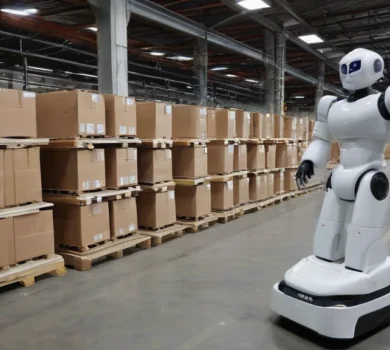
Teradyne Robotics and Sereact have implemented physical AI in Zalando’s logistics centers.
At Zalando’s logistics centers in Greven and Świebodzin, collaborative robots working with the Sereact Cortex platform operate automatically.
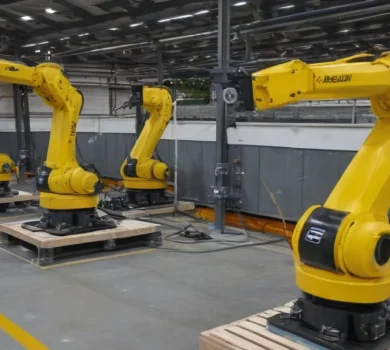
Full traceability in production thanks to robots and system integration
Atmus Filtration has implemented a modern robotic system for assembly and inspection, which ensures complete product traceability.
AGCO is testing a humanoid robot in production in Hesston, Kansas
AGCO and Agility Robotics will launch a pilot program featuring the Digit® humanoid robot at their manufacturing facility in Hesston.
How does the new diffusion model change the approach to autonomous driving?
The new QualiDrive model introduces an innovative approach to trajectory generation in autonomous vehicle guidance - instead of
Combining data from drones and ground vehicles improves the continuity of tracking for autonomous cars.
A study conducted in a simulation showed that the combination of data from a drone (UAV) and a ground vehicle (UGV)