
USA - a leader in automation in the automotive industry, but not in industry as a whole
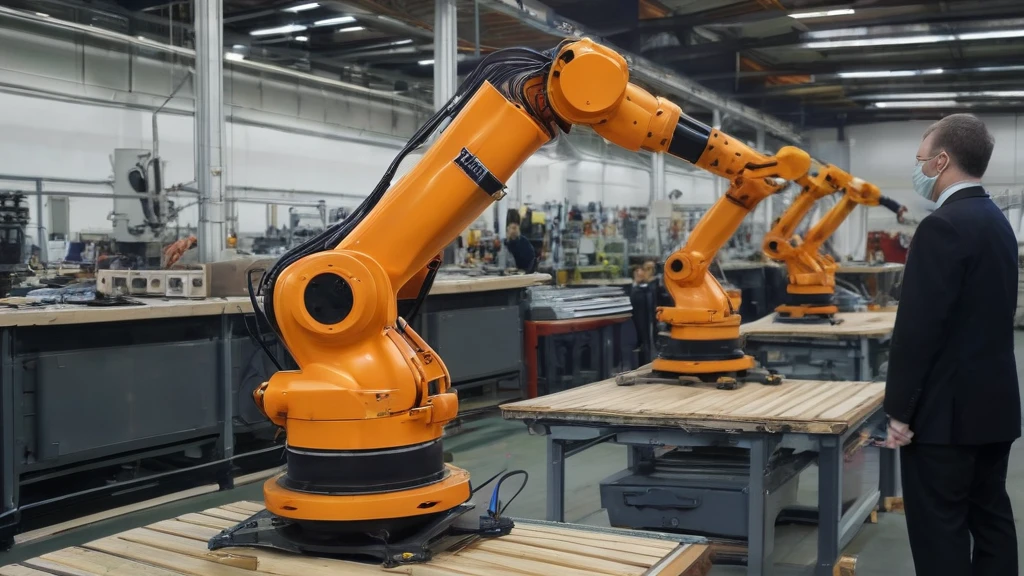
IFR data from 2024 shows that the US automotive sector is one of the most automated in the world. This year, 13,700 were installed industrial robots in this industry - 10.7% more than the previous year. This allows the USA to rank fifth in terms of the ratio of robots to employees in industry, as well as Japan and Germany. However, this dominance mainly concerns the automotive industry - in other industrial sectors, the US lags behind.
In 2024, only 40% of new installations of industrial robots in the USA were for the automotive sector. The rest was distributed among the metal and machinery industry (3,800 units) and the electrical and electronics industry (2,900 units). This suggests that automation in the US is focused on one industry, rather than spread across entire industrial ecosystems.
Dependence on imports and the global robot market
 Enlarged imageClose zoomPrevious image
The USA does not have many manufacturers industrial robots - most of the installed devices come from abroad. Globally, 70% of industrial robot installations are carried out by four countries: Japan, China, Germany and South Korea. Among them, China is the fastest growing - its production for the domestic market has more than tripled in the years 2019-2023.
In 2024, robot density in the automotive sector in the USA was one of the highest in the world - at the level of fifth place, equal to Japan and Germany, and higher than in China. In the USA, this indicator is 295, which means that despite leadership in one industry, overall industrial automation is lower than in other countries.
Automation as part of a development strategy - but with limitations
Growth in installations of robots in the USA does not mean that the country has achieved full technological dominance. IFR emphasizes that despite success in the automotive industry, the US lags behind in other key areas of industrial automation. This suggests that investments are focused on one sector, rather than on transforming the entire production system.
Dependence on imports of robots from China and Japan shows a lack of strategic local production. Although the USA has strong technology companies, their integration ecosystems - such as NexaRob - are key to implementations that do not require its own production of robots, but focus on optimizing their operation in real production conditions.
Prospects and challenges for the US industry
The 2024 data shows that automation in the USA is strong, but asymmetrical. A 10.7% increase in the automotive sector is a success, but it does not indicate global leadership. The future depends on expanding investments beyond the automotive sector and increasing local robot production or integrating with new technologies.
The value of IFR data lies in the fact that it shows the real situation - not just declarations. In 2025, at the Automate trade fair in Detroit, complete data for the North American market will be presented. This will be an opportunity to assess whether the trend of increasing robot installations in the USA continues and whether the industry is starting to expand more beyond automotive.
It is worth emphasizing that despite the high density of robots in the automotive sector, the USA does not show equivalent transformation in other sectors of the industry. The lack of diversification of automation means that the production system is still vulnerable to market shocks - for example, in the event of a crisis in the automotive sector, which may quickly affect the entire economy. In addition, dependence on robot imports from China and Japan makes it difficult to adapt quickly to new technological and geopolitical conditions. In the future, it will be crucial to develop a local integration base - such as the NexaRob ecosystem - that allows for optimizing the operation of robots without the need for in-house production. This will allow the USA to increase its technological independence and accelerate transformation in other industries, which is necessary to achieve long-term competitiveness.