
Discover which automation technologies work best in your industrial sector

How to Match Robots to Specific Industries

Every industry, from food processing and chemicals to aerospace, has specific requirements regarding quality, hygiene, safety, and process precision. That is why Technology Selection by Industry is a key stage in automation planning. On this page, we present practical guidance and application examples to help you understand which type of robot, such as articulated, SCARA, mobile, or cobot, will be most effective in a given field.

We work with companies across different sectors, from the food industry, which requires high hygiene standards, to the metal industry, where resistance to harsh conditions and high payload are important. This allows us to propose diverse solutions matched to your circumstances. Whether you plan to improve assembly processes, introduce welding robots, or automate packaging, you will find guidance here to support the best decision.

Explore the Characteristics of Fifteen Sectors and Identify Key Areas for Automation

Key Challenges in 15 Major Industries

Every industry presents specific challenges, including different quality and safety standards, varying environmental conditions, and different end-customer requirements. Below we present fifteen key sectors, with a brief overview of the main challenges and areas where industrial robots usually deliver the greatest benefits. This makes it easier to determine the direction in which to develop automation in your company.

Key challenges: Maintaining high standards of hygiene and food safety and rapidly packaging products with different shapes and delicate structures.

Key Areas of Automation: Sorting and palletizing, real-time vision inspection, delicate product handling.

Key challenges: Working in sterile conditions, precise dosing and labeling of medicines, and strict regulatory standards such as GMP.

Key Areas of Automation: Robotic filling and packaging lines, cobots for handling aseptic processes, and vision systems for quality inspection of ampoules and vials.

Key challenges: Large-scale production, frequent welding and component assembly processes, and the need to maintain high repeatability.

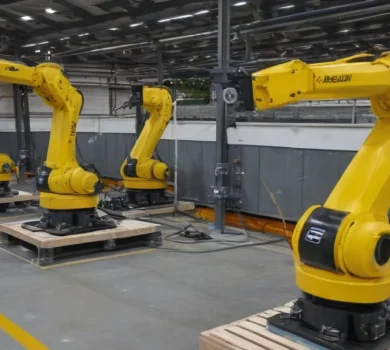
Key Areas of Automation: Articulated robots for vehicle body welding, automated assembly stations on the main line, heavy-duty palletizing systems

Key challenges: Assembly of small and damage-sensitive components, high soldering precision, and a diverse product range.

Key Areas of Automation: SCARA and Delta robots for fast pick-and-place operations, cobots for delicate PCB assembly, and camera-based inspection lines for defect detection

Key challenges: Aggressive substances, possible explosive or toxic hazards, and the need to ensure operator safety.

Key Areas of Automation: Robots resistant to corrosion and chemicals, including stainless steel and IP sealing, robotic dispensing and mixing of ingredients, and vision systems monitoring the reaction process.

Key challenges: Operation of injection molding machines, high mold temperatures and a variety of materials with different properties.

Key Areas of Automation: Cartesian systems for fast and repeatable mold handling, articulated robots with grippers designed for hot parts, and finished product sorting.

Key challenges: High temperatures, dust, heavy and awkward components, and the need for welding precision.

Key Areas of Automation: High-payload articulated robots for handling sheet metal, automation of arc or laser welding, and gantry systems for transporting oversized loads.

Key challenges: Effective management of goods movement, growing requirements for order-picking speed and optimization of storage space.

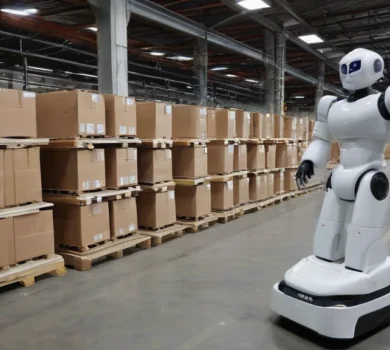
Key Areas of Automation: Mobile robots (AGV, AMR) for pallet transport, automatic sorters and packaging lines, integration with WMS and ERP systems.

Key challenges: Delicate products in glass or plastic packaging, labeling, and dispensing creams or liquids.

Key Areas of Automation: Delta robots for high-speed bottle packaging, cobots for dosing and capping bottles, and vision inspection of caps and labels.

Key challenges: Various box and carton formats, high order variability, need for rapid forming of outer packaging.

Key Areas of Automation: SCARA or articulated robots for folding and gluing cartons, Cartesian robots at linear packaging stations, palletizing robots with grippers adapted to package size.

Key challenges: Seasonal harvesting, processing agricultural products of different shapes and sizes, and growing demand for efficient food production.

Key Areas of Automation: Machines for automated fruit and vegetable harvesting, robots with vision systems for quality sorting, and washing and packaging lines.

Key challenges: Transporting and mixing heavy raw materials, prefabricating concrete elements, and working in dusty and humid conditions.

Key Areas of Automation: Articulated or Gantry robots for moving blocks and pallets, robotic systems for wood cutting, and prefabricated-component design using 3D printing.

Key challenges: Very high assembly precision, for example for jet engine components, and work with composites and metals with special properties.

Key Areas of Automation: Articulated robots with force-control systems, robotic milling and drilling systems, and handling of delicate components such as photovoltaic panels and fuselage structures.

Key challenges: Cutting fabrics of different thicknesses, sewing components, high level of pattern customization.

Key Areas of Automation: Robots with rotary blades for precise fabric cutting, systems for automatic embroidery and sewing, and cobots supporting the assembly of small garment components.

Key challenges: Processing wood, MDF boards, or laminates, assembling bodies and components of various sizes, often irregular in shape.

Key Areas of Automation: Cartesian robots for cutting and milling panels, articulated robots for painting and grinding, and vision systems for component alignment.

Six main aspects that influence automation decisions in a given industry

Factors Determining Technology Selection in Individual Industries

Understanding industry specifics is the first step in selecting optimal robotics solutions. But industry alone is not enough. A range of factors determines how implementation should be planned and which robots should be selected. We identify six key areas worth considering when analyzing the needs of a sector and a specific company:

Health and safety standards

Sectors such as food, pharmaceutical, and chemical industries are subject to strict standards for cleanliness, substance control, and operator safety.
It is worth checking whether robots selected for these tasks have appropriate certifications, such as IP or ATEX, and whether their surfaces are easy to clean.

Required Accuracy and Repeatability

Industries such as electronics, aerospace, and medical technology often require robots with extremely high motion precision, down to the micrometer range.
For general tasks, such as palletizing in the packaging industry, stability and speed are usually more important than extreme accuracy.

Type of materials and environmental conditions

Metal and steel applications require resistance to heat and dust, while the cosmetics industry requires gentle handling of glass or plastic packaging.
In the plastics industry, waste management (e.g. in recycling processes) or work with hot molds may be important.

Production Scale and Flexibility

If your company mainly produces long runs of uniform products, for example in automotive, more efficient and faster articulated or SCARA robots may be the better choice.
Where the product range changes frequently, for example in fashion or custom furniture projects, ease of reprogramming and the ability to change grippers quickly are extremely important.

Costs and Return on Investment (ROI)

In some industries, such as agriculture or construction, margins may be lower, making it essential to find a balance between the robot's price and the improvements achieved.
Grants, leasing, or cooperation with banking institutions can spread investment costs over time and accelerate the point at which automation begins generating returns.

Development and Scalability Options

Some sectors, such as warehousing and logistics, are subject to very dynamic changes, including e-commerce growth and seasonal order peaks.
The choice of design, such as mobile robots, and deployment model, such as modular production lines, should take into account the system's potential for future expansion.

Considering the factors listed above gives you a more complete view of your sector's requirements and helps identify which technologies will be most important for improving efficiency. In the following sections, we will present an Industry Comparison Table so you can easily see which robot types, such as articulated, SCARA, Delta and cobots, are most commonly found in your industry and why. This will help you make an informed decision about the direction of automation for the benefit of your company.

See How Individual Robot Designs Perform Across 15 Key Industries

Which Robot Types Are Most Commonly Used in Your Sector

In the previous sections, we discussed the specifics of fifteen industries and the most important factors affecting technology selection. We now present an industry comparison table assigning the most popular robot types, such as articulated, SCARA, Delta, Cartesian, collaborative and mobile robots, to specific sectors. This allows you to quickly assess which solutions are commonly used and why.

Industry Most Commonly Used Robot Types Why These Designs?
Food Industry Delta, SCARA, collaborative robots (cobots) High packaging speed, hygienic coatings, handling delicate products
Pharmaceutical Cartesian, collaborative cobots, articulated with enhanced sterility Precise dosing, aseptic environment, need for real-time quality control
Automotive Articulated Arms, Gantry and Cartesian High payload, multi-axis motion, resistance to demanding welding and assembly conditions
Electronics SCARA, Delta, collaborative (cobots) Precise PCB assembly, fast pick and place, low component payloads
Chemical Corrosion-resistant articulated robots, reinforced Cartesian robots Handling aggressive substances, chemical dosing, operation in a sealed environment
Plastics Cartesian robots at injection molding machines, articulated robots for sorting, SCARA in pick & place Automated mold handling, rapid movement of lightweight components, resistance to high temperatures
Metal and Steel High-payload articulated robots, gantry robots, Delta robots occasionally Welding heavy parts, handling sheet metal, cutting, and grinding under difficult industrial conditions
Warehousing Mobile AGV/AMR, SCARA for fast sorting, cobots in order picking Automation of pallet transport, reduced manual handling of goods, easy system scaling
Cosmetics Delta, SCARA, collaborative robots (cobots) Gentle dispensing and packaging, packaging appearance control, fast operation of packaging lines
Packaging Articulated robots for palletizing, SCARA for carton forming, Cartesian robots in the line Forming and folding packaging, fast multipack packaging, flexibility with changing product ranges
Agriculture Mobile AMRs for harvesting, Delta robots for sorting, articulated robots for raw material processing Operation in variable conditions, sorting by quality, automatic washing and packaging
Construction Gantry robots for handling blocks, articulated robots in prefabrication, SCARA less often Handling heavy construction components, resistance to dust and moisture, support for mortar mixing
Aerospace and Space Articulated robots for precision processing, Cartesian robots for milling, cobots in assembly Very high precision, work with expensive components, ability to perform force-controlled tasks
Textile and Apparel Cartesian robots for material cutting, collaborative robots (cobots) for sewing, SCARA Automatic fabric cutting, application placement, support for sewing components with unusual shapes
Furniture Cartesian robots for panel processing, articulated robots for painting, gantry systems for large components Precision milling of fronts, fast cabinet assembly, processing wood and MDF boards

How to Read the Table:

Considering the factors listed above gives you a more complete view of your sector's requirements and helps identify which technologies will be most important for improving efficiency. In the following sections, we will present an Industry Comparison Table so you can easily see which robot types, such as articulated, SCARA, Delta and cobots, are most commonly found in your industry and why. This will help you make an informed decision about the direction of automation for the benefit of your company.

See What Results Robots Can Deliver in Your Industry, Without Specific Implementation Examples

What Results Can You Achieve Without Detailed Deployments

Many companies considering automation wonder what results can be achieved by implementing robots in specific industries. Below is an overview of potential benefits without reference to particular implementations. This approach helps illustrate the general potential of robotization in your sector:

Shorter Production Time

Quality Improvement and Maintenance

Cost Optimization and Reduced Downtime

Improved Employee Safety and Comfort

Flexibility and Adaptation to Different Products

Compliance with Standards and Regulations

Increasing Competitiveness and Building an Innovative Brand

Regardless of your sector, industrial robots can support many areas, from improving quality and efficiency to increasing safety and reducing operating costs. Final results, of course, depend on carefully matching technology to processes, which we describe in detail in the previous sections. If you are unsure what benefits companies in your industry can achieve, contact us. We will be happy to analyze your needs and propose the most effective solutions.

Seven Steps to Help You Successfully Implement Robots in Your Industry

How to Move Smoothly from Plans to Implementation

Even if you already know which robots are best for your industry, one question remains: how do you move from analysis and technology selection to practical implementation? Below are seven key tips that will help you carry out this process step by step, minimizing risk and enabling business benefits to be achieved quickly.

Define Goals and Expectations

Conduct a Detailed Audit

Consult the Experts

Choose the Right Financing Model

Ensure Integration with Infrastructure

Plan Tests and Training

Monitor, Improve, and Expand

Robot implementation does not have to be complicated, provided you move through these steps carefully and with support from experienced experts. If you have questions or are looking for more detailed guidance, contact us. Together, we will identify the most suitable path for implementing robotics in your industry.

Have additional questions? Check the answers below and contact us if you have any doubts

Frequently Asked Questions

Many companies considering robotization in a given industry have similar questions and concerns. We have collected the most common ones to help you make a decision and show that the entire process can be simpler than you think.

It is best to start where you can achieve the greatest savings in time or cost. These are often repetitive, monotonous tasks or areas with a high level of manual errors.

Yes. In industries with highly variable product ranges, universal robots, such as collaborative robots, and solutions with interchangeable grippers work very well. They can be easily reprogrammed to handle new products.

In most cases, robot suppliers provide integration modules and standard communication protocols such as OPC UA, Profinet, and EtherNet/IP. This can make implementation much simpler than it may appear.
It depends on process specifications and required hygiene certifications. However, as technology develops, robot prices are steadily decreasing and financing options such as leasing are becoming more widely available.

Yes. Many processes already successfully combine robots, such as articulated robots, with presses, lathes, milling machines, or assembly lines. The key is careful planning of interfaces and synchronization.

Basic knowledge of programming and mechanics is useful, but suppliers often provide training and after-sales support. Thanks to user-friendly software, you do not need to employ many additional specialists.

Traditional designs require safety zones such as guarding and scanners, but if you plan human-machine collaboration, consider cobots with built-in safety systems and perform a risk assessment.

Yes. NexaRob and our partners help customers obtain EU grants, preferential loans, or leasing. We also support customers in calculating return on investment, taking costs, performance, and potential benefits into account.
It is best to contact an advisor who can conduct an initial audit and help set priorities. You can also browse the Industry Offering, Applications or Robot Types to understand the available options.

Do you have more questions?

Contact our team of experts for personalized consulting, from process analysis and robot selection to implementation and service. Automating your processes may become simpler and more profitable than you expect!

Discover Our Cooperation Methodology, from Implementation Planning to After-Sales Support

Comprehensive Automation Support

At NexaRob, we know that effective automation is not only about selecting the right technologies but also about a coherent process covering needs analysis, solution design, and long-term service. Below we present our approach, which helps companies safely move through every stage of investing in industrial robots.

Consultation and Diagnosis

Process audit: We begin by conducting a detailed analysis of your production, logistics, or inspection lines, identifying areas where robotization will deliver real benefits, such as time savings, improved quality, and fewer errors.

Defining Priorities: We define the main objective, which may be accelerating production, improving logistics, or increasing employee safety.

Design and Technology Selection

Technical analysis: Based on the collected data, we propose the most suitable robot types, including SCARA, articulated, mobile, Cartesian or cobots, taking into account payload, precision, reach and compatibility with your infrastructure.

Solution optimization: We create a concept for a robotic workstation or line, aiming to eliminate bottlenecks and ensure the possibility of future expansion.

Financial Support and Funding

Identification of Financing Sources: Thanks to our network of contacts with banking institutions and EU funding specialists, we help obtain loans, leasing and grants.

Budget planning: We calculate the preliminary return on investment (ROI), taking into account not only the cost of equipment and integration but also potential savings and productivity gains.

Integration, Installation and Testing

Installation and configuration: Our engineers install robots and make the necessary workstation modifications while minimizing disruption to ongoing processes.

Testing and acceptance phase: We test system performance and stability under conditions as close as possible to everyday production, verifying that the intended parameters have been achieved.

Training and Implementation Handover

Team education: We organize training in robot operation and programming, as well as basic fault diagnostics, so that your employees can work confidently with the new technology.

Commissioning Support: We assist with final system tuning and process optimization so fully efficient production can be launched as quickly as possible.

Service, Development, and Optimization

After-sales support: We provide regular inspections, fast access to spare parts, and technical support, helping maintain uninterrupted robot operation.

Further modernization: When needed, we expand existing workstations by adding new IoT modules or additional robots with different parameters.


Through this process, NexaRob becomes a strategic partner for your company, while investment in automation delivers long-term benefits, from higher productivity and lower costs to greater employee satisfaction.

Automate Your Business with NexaRob - Contact Us!

We Operate Globally, Providing Support Tailored to Local Needs and Regulations

We Operate Globally, Support Locally

NexaRob is an internationally active robotics technology integrator working with partners in more than 100 countries. Our broad network of experts and suppliers provides not only access to the latest solutions, but also adaptation to the requirements of different markets. This enables companies to implement robots effectively regardless of region or applicable regulations.



Operating across different time zones and cultures, NexaRob provides universal and effective solutions while remaining flexible in adapting to local conditions. Whether you operate a facility in Europe, Asia, Africa, or the Americas, you can rely on professional support and expert knowledge that will help your company compete in the global market.

United States
China
Japan
Germany
India
United Kingdom
France
Italy
Canada
South Korea
Brazil
Australia
Spain
Mexico
Indonesia
Netherlands
Saudi Arabia
Turkey
Switzerland
Taiwan
Poland
Sweden
Belgium
Thailand
Ireland
Austria
Norway
Israel
United Arab Emirates
Argentina
South Africa
Denmark
Philippines
Singapore
Malaysia
Colombia
Bangladesh
Egypt
Chile
Finland
Vietnam
Portugal
Czech Republic
Romania
New Zealand
Peru
Greece
Ukraine
Slovakia
Hungary
Slovenia
Croatia
Serbia
Bulgaria
Estonia
Latvia
Lithuania
Iceland
Luxembourg
Malta
Cyprus
Morocco
Algeria
Tunisia
Nigeria
Kenya
Ethiopia
Ghana
Tanzania
Uganda
Angola
Senegal
Qatar
Kuwait
Oman
Pakistan
Sri Lanka
Nepal
Kazakhstan
Uzbekistan
Mongolia
Russia
Cambodia
Myanmar
Laos
Fiji
Papua New Guinea
Venezuela
Ecuador
Uruguay
Paraguay
Bolivia
Costa Rica
Panama
Dominican Republic
Guatemala
Cuba
Jordan
Lebanon
Iran

We believe in innovation created through cooperation. Join us!

Would you like to become our Partner?

At NexaRob, we focus on jointly creating innovative robotic solutions that can transform industrial operations worldwide. We therefore continually seek partners, both established manufacturers of components and systems and innovative start-ups that want to develop their automation ideas.

Why Work with NexaRob?

Would You Like to Create the Future of Automation with Us?

Contact us to discuss cooperation details and see how joining forces can transform the operation of many companies. NexaRob is a place where passion for technology meets real market needs and innovation delivers measurable business results.

Interesting Facts from Around the World

Vision-based navigation for quadruped robots: mapless, precise, and with deep control.

Researchers at Amazon Science have developed a new approach to navigation for four-legged robots that allows them to move safely.

New multimodal dataset for analyzing engagement in human-robot interaction.

Researchers from Seoul University have developed a new protocol for collecting data to build a dynamic, multimodal dataset.

New ARTiS gripper for precise tool manipulation in disassembly processes.

The new robot gripper called ARTiS has been accepted for publication in the TASE journal and can

FANUC presents Physical AI and digital twins at IMTS 2026

At IMTS 2026, FANUC America presented new solutions based on Physical AI that are designed to change

GAM: a new base model for robotic manipulation in industry

Amazon has introduced the Generalized Action Model (GAM) - an advanced foundational model for robotic manipulation that can

EnglishEN