

Booster T1 Humanoid Robot
Innovation in humanoid robotics
Advanced Open-Source Platform for Developers
Flexibility and precision in a compact form
A Robot Capable of Dynamic Movements and Tasks
A New Era of Automation with Booster T1
Unlock New Possibilities with the Booster T1 Humanoid Robot
Booster T1 is a humanoid robot developed by Booster Robotics and designed for developers and researchers. It is 1.2 meters tall and weighs 30 kg, making it lightweight and flexible. Thanks to an advanced motion control system, it can perform complex tasks such as playing football or executing kung fu movements. Its design is durable and resistant to falls, enabling operation in dynamic environments. Booster T1 supports software development through an open SDK and the ability to connect to mobile applications via Bluetooth, allowing the robot to be adapted to different applications.
Contact us Watch the videoBooster T1 - Booster Robotics
Booster T1 Humanoid Robot
The Booster Robotics T1 Humanoid Robot, often referred to as "Booster T1," is the latest offering from Booster Robotics, combining a compact design with efficient electronics and advanced artificial intelligence functions. The T1 model was designed for flexible deployment in environments where human-like mobility and precise manipulation are important, such as offices, warehouses, service facilities and educational settings.
The robot measures 118 x 47 x 23 cm and weighs approximately 30 kg, making it relatively lightweight while still durable. With 23 degrees of freedom throughout the body, including 6 degrees of freedom in each leg, T1 can perform complex movements and maneuver precisely in confined spaces. In addition, an optional gripper enables the robot to carry objects, expanding its range of applications.
Powered by a 14-core processor and an NVIDIA AGX Orin GPU (with up to 200 TOPS of AI performance), Booster T1 has substantial computing power, enabling real-time data processing and execution of machine learning algorithms. Equipped with a depth camera, a 9-axis IMU and modern connectivity (Wi-Fi 6, Bluetooth 5.2, optional 5G), the robot supports autonomous navigation, precise object recognition and user interaction. Battery life is approximately 2 hours while walking and up to 4 hours in stand-by mode, enabling effective operation in typical use environments.
History and Development
Booster Humanoid Robot
Booster Robotics, a company focused on developing multifunctional humanoid solutions, continues to advance its technologies by combining experience from wheeled robots with modern artificial intelligence and advanced mechatronics. The Booster T1 project began with work on motion stabilization and limited manipulation functions, with early prototypes focusing primarily on ensuring smooth locomotion under controlled conditions.
Evolution of the Project from Prototype to Commercial Humanoid
- In 2021-2022, Booster Robotics engineers intensively tested different drive and stabilization-system configurations, introducing more precise actuators and modular manipulation solutions. The first demonstration versions focused on stable locomotion and basic gripping functions, providing a solid foundation for further development. - In 2022, the company officially presented Booster T1, demonstrating the robot's ability to climb stairs, maneuver in narrow spaces, and perform simple manipulation tasks. Integration of the NVIDIA AGX Orin GPU significantly increased computing power, which was essential for autonomous navigation and real-time image processing.
Official Presentation and Development Directions
- After its presentation in 2022, Booster Robotics continued work on improving Booster T1, focusing on optimizing stabilization algorithms and expanding AI functions. The company plans further integration with cloud services and development of modular manipulators to increase precision and payload. Current development work, through 2024, focuses on expanding autonomous navigation capabilities, improving energy efficiency, and compatibility with resource management systems such as WMS and ERP. Booster Robotics states that Booster T1 will become a foundation for subsequent models with even more advanced manipulation and AI interaction functions.
Through continuous development and systematic updates, Booster T1 is becoming a versatile and competitive platform that can be used across many sectors, from education and research to logistics and industrial services.
Technical Specifications
Technical Specification of the YAOGUANG Humanoid Robot
The information below is based on the latest data you provided regarding the Booster T1 robot, referred to in some materials as "Booster T1." It constitutes a more detailed specification than the materials presented previously. However, it should be remembered that some items in the table contain only example or optional values, while some parameters have not been fully specified by the manufacturer.
| Parameter | Value | Notes |
|---|---|---|
| Size | 118 x 47 x 23 cm | Refers to the robot's overall dimensions. |
| Lower-Leg + Thigh Length | 45 cm | Leg segment length (estimated). |
| Arm span | 57 cm | Distance between the ends of the arms with the upper limbs fully extended. |
| Weight | Approximately 30 kg | Relatively low weight facilitating transport and robot mobility. |
| Total Degrees of Freedom (DoF) | 23 | Declared number of active motion axes across the entire body. |
| DoF of a single leg | 6 | Each leg has 6 degrees of freedom. |
| Waist DoF | 1 (not fully confirmed) | The waist joint may offer 1 axis of rotation (±58°). |
| DoF of a single arm | Undisclosed / to be completed | The manufacturer did not specify directly, possibly ~5-6. |
| Head DoF | Undisclosed / to be completed | No detailed data on head mobility. |
| Maximum knee joint torque | 130 Nm (unconfirmed) | A value of 130 Nm appears, but there is no full context, so it may refer to another joint. |
| Joint Range of Motion | - Waist: ±58° - Hip (Pitch +/-118°, Roll -21°+88°, Yaw +/-58°) - Knee: -11°+123° - Ankle (Pitch -50°~+20°, Roll ±25°) |
Declared maximum range of motion angles in individual joints of the lower limbs and waist. |
| Joint encoders | Dual encoder | Provides more accurate control and monitoring of joint movement. |
| End effector | Gripper (optional) | Can be equipped with a gripper for object manipulation. |
| Processor (CPU) | 14-core high-performance processor | No details on clock frequency or architecture. |
| GPU | NVIDIA AGX Orin, ~200 TOPS AI | High computing power for real-time data processing and AI algorithms. |
| Vision Module | Depth camera | Enables 3D perception, object recognition, and navigation. |
| IMU | 9-axis | Provides spatial orientation, stabilization, and motion detection. |
| Voice module | Microphone array, speaker | Enables voice interaction and processing of audio commands. |
| Battery | 10.5 Ah (voltage not disclosed) | Declared operating time: ~2 h while walking, ~4 h while standing. |
| Connectivity | Wi-Fi 6, Bluetooth 5.2, 5G (optional) | Enables remote control, integration with IoT systems, and transmission of large volumes of data. |
| Interfaces | USB, Ethernet | Enable connection of additional devices, firmware updates, etc. |
| Edge LLM | MiniCPM (optional) | Ability to run a simplified language model at the edge. |
| Simulation Support | Isaac Sim, Mujoco, Webots | The robot can be tested in popular simulation environments. |
| ROS | ROS2 compatibility | Makes it easier to create and deploy robotic applications within the ROS ecosystem. |
| Secondary Development | Yes | Ability to modify software, integrate proprietary AI algorithms, etc. |
| Warranty period | 1 rok | The manufacturer's standard warranty period. |
Booster T1 (also called "T1 Amplifier") is a humanoid robot with 23 degrees of freedom, a mass of approximately 30 kg, and dimensions of 118 × 47 × 23 cm. It is powered by a 14-core processor and an NVIDIA AGX Orin GPU, providing up to 200 TOPS of computing power for AI tasks. The robot is equipped with a depth camera, a 9-axis IMU, and an optional gripper. Declared operating time is approximately 2 hours while walking and 4 hours while standing. With built-in connectivity (Wi-Fi 6, Bluetooth 5.2, optional 5G), ROS2 support, and compatibility with popular simulation environments (Isaac Sim, Mujoco, Webots), Booster T1 has the potential to become a flexible platform for education, scientific research, and a variety of industrial applications.
Booster T1
Applications and Use Cases
With 23 degrees of freedom, the ability to walk on two legs, and object manipulation capabilities, Booster T1 is a versatile platform that can be deployed in a variety of environments, from education and research through services to light warehouse processes or marketing demonstrations.
Education and R&D Projects
Platform for Learning Programming and AI: ROS2 support, compatibility with simulations such as Isaac Sim, Mujoco and Webots, and extensive vision capabilities make the robot an attractive tool for university laboratories and research institutions.
Demonstrations and Presentations: A bipedal humanoid naturally attracts attention at scientific conferences and technology fairs, promoting robotics topics and algorithm
Customer Service and Services
Reception and Information: The robot can greet guests in hotels and shopping centers, help them find their way, or distribute promotional materials, attracting customer attention and strengthening the company's image.
Event Assistant: Booster T1 can participate in trade fairs, conferences or marketing demonstrations, actively presenting products or indicating their location.
Support for Light Logistics and Routine Office Tasks
Transport of Documents and Small Parcels: With 6 DoF in its legs, the robot can move confidently even through complex room layouts, while arms with 7 DoF and an optional gripper allow it to lift and carry lightweight objects.
Integration with WMS or ERP: When connected to management systems, it can automatically execute logistics orders, streamlining the flow of documents or smaller packages between company departments.
Demonstration and Marketing Tasks
Corporate Events: The bipedal humanoid platform attracts attention, generates curiosity, and can engage in simple interactions with event participants.
Advertising Presentations: The robot can serve as a mobile multimedia platform, displaying content on external screens or delivering programmed messages.
Further Development Opportunities
Software Updates: Thanks to its open architecture and expansion options, the robot can gain additional AI functions, improved grippers or speech support, for example LLM-based models, over time.
Hardware Development: The manufacturer indicates that drive modules, manipulator end effectors, or additional sensors can be replaced or upgraded, extending the robot's service life and versatility.
All of this means that Booster T1 is a humanoid that is easier to transport due to its relatively low weight and compact dimensions, while also being technologically advanced with powerful CPU/GPU resources, AI support, and full ROS2 compatibility. For companies looking for a bipedal robot with advanced yet compact capabilities, it is an option worth considering.
Technology and Innovation, Safety
Robotics T1
Booster Robotics T1 combines compact dimensions, low weight, and an advanced electric drive system. The result is a humanoid with a complex architecture designed for office, service, and research environments. Modern onboard electronics and computing power, including a 14-core CPU and an NVIDIA AGX Orin GPU delivering up to 200 TOPS of AI performance, allow the robot to process data from multiple sensors in real time, supporting smooth movement and adaptation in dynamic environments.
Advanced Drive System and Motion Precision
- Electric Actuators: Each robot joint is equipped with an electric drive, providing relatively quiet operation and easier maintenance compared with hydraulic systems.
- Precise Control: Dual encoders in the joints enable highly accurate positioning control, allowing the robot to perform complex limb movements for both locomotion and manipulation.
Perception and Navigation Systems
- Depth Camera and IMU: The robot can create a three-dimensional map of its surroundings, recognize objects, and detect changes in position using a 9-axis IMU, supporting autonomous navigation and stabilization while moving.
- Optional LIDAR: Although the manufacturer does not provide full details, the use of a laser scanner could extend the obstacle detection range and contribute to even more precise robot locomotion.
Manipulation Capability and Innovative Grippers
- Dexterous Hands: Depending on the configuration, each arm is equipped with a manipulation end effector, or gripper, enabling precise handling of objects weighing up to several kilograms, document sorting and participation in interactive demonstrations.
- Compact Arms: With 7 DoF in the legs, the robot has a declared total of 23 degrees of freedom across the body, some of which are assigned to the upper limbs. Precise force and position control supports tasks requiring delicate handling of objects.
Safe Collaboration with People
- Joint Force Limits: If a collision with a person occurs, the robot automatically reduces torque, protecting people and equipment from excessive pressure or impact.
- Optional E-Stop: An emergency stop button, E-Stop, allows the drives to be shut down immediately when necessary, providing an additional layer of safety in areas where the robot shares space with personnel.
Booster Robotics T1
Integration and Compatibility, Personalization and Solution Customization
Booster Robotics T1 was designed as an open platform offering considerable flexibility in hardware and software configuration. The robot is compatible with the ROS2 ecosystem, supports popular simulation environments such as Isaac Sim, Mujoco and Webots, and can be expanded with additional sensors or manipulators.
Open Programming Interface (API)
- ROS2 Support: The robot can be fully integrated with the ROS (Robot Operating System) ecosystem, making it easier to create, deploy, and share applications supporting autonomy or AI components.
- Software Updates: Manufacturers anticipate the possibility of remotely downloading and installing firmware fixes, extending equipment life cycles and enabling continuous development of robot functions.
Communication and Integration with IT Systems
- Wi-Fi 6, Bluetooth 5.2 and optional 5G connectivity: The humanoid can be controlled or monitored in the cloud while simultaneously transmitting large amounts of data (e.g. from cameras) to AI analysis systems.
- WMS/ERP Compatibility: Integration with management systems, including warehouse and office process systems, allows logistics tasks to be assigned to the robot automatically, status to be reported, and movement paths to be planned.
Customization of Limbs and Sensors
- Modular Manipulators: Potential gripper variants adapted to specific industries and needs, such as handling delicate electronic components or moving small packages.
- Optional Sensors: In addition to the depth camera, other modules such as thermal or ultrasonic sensors can be added to improve robot performance in specialized conditions such as inspections or scientific experiments.
Aesthetic Customization
- Color Scheme and Enclosure: The robot can be customized to match an organization's visual identity or serve a marketing role at events, attracting attention with its distinctive design.
- Interactive Panels: A screen, for example around the chest area, can display information, animations, or advertisements, which is important in service applications and brand-promotion events.
Training and Service
- Implementation Support: The manufacturer provides assistance with robot configuration, installation and testing, including training for operators and IT teams.
- Service and Development: Regular updates, periodic repairs, and hardware modifications enable long-term use and expansion of the robot's capabilities as customer needs evolve.
This open architecture means that Booster T1 can operate in diverse environments and tasks, supporting everyday operations while also serving as a research and development tool. Its relatively compact dimensions and weight, combined with a strong computing platform and extensive sensor set, make it a humanoid solution worth considering for companies focused on modern automation or institutions oriented toward education and R&D.
Booster T1 Humanoid Robot
Benefits for Customers
The Booster T1 humanoid robot has the potential to significantly support various organizational processes, from education and research through marketing to light logistics tasks. Its high movement precision, extensive perception capabilities, and compatibility with popular ecosystems (ROS2, simulation environments) make it an attractive platform for companies, universities, and institutions seeking modern automation and AI solutions.
Increased Efficiency and Reduced Employee Workload
- Booster T1 can take over tasks involving the transfer of small items between departments, document delivery, or simple warehouse activities, allowing people to focus on more complex challenges.
- Its relatively low weight of about 30 kg and compact dimensions allow the robot to work in narrow corridors or fully equipped offices without major changes to the infrastructure.
Better Customer Service and Event Support
- In service environments such as reception desks and information points, the robot can welcome guests, provide directions, distribute promotional materials and present information about the offer, attracting visitors' attention.
- Thanks to multimedia presentation capabilities and simple voice interaction, provided integration with AI services is implemented, Booster T1 can significantly enhance events, marketing campaigns, and trade fair stands.
Educational and Research Platform
- The robot's advanced architecture, ROS2 support, and compatibility with popular simulation environments such as Isaac Sim, Mujoco, and Webots make it a useful tool for learning motion programming, vision algorithms, and AI.
- The ability to add extra sensors and AI modules makes it an ideal R&D platform for laboratories and universities, where students and researchers can create new solutions and test experimental applications.
Support for Simple Logistics Tasks
- In confined warehouse or office spaces, the robot can automate small transport tasks, improving the flow of objects and reducing staff workload.
- Thanks to integration with a WMS or ERP system through an open API, the robot can execute tasks autonomously and report progress in real time.
Safe Coexistence with People
- Joint torque limiters, a dual encoder in the drive, and an E-Stop button provide additional levels of protection when the robot works with personnel.
- Low walking speed and compact size make operation easier in environments occupied by people, minimizing the risk of collisions or accidents.
FAQ - Frequently Asked Questions
Booster T1 Humanoid Robot
Below are brief answers to the most common questions about the implementation and use of the Booster T1 Humanoid Robot.
The manufacturer offers the platform as part of selected deployments and projects. The scale of availability depends on demand, the configuration of selected modules, and the scope of support required by the customer.
Prices depend on the ordered configuration, such as an optional gripper and the number and type of sensors, as well as the implementation support package and service options. For a quotation, it is best to consult Booster Robotics directly.
According to the manufacturer, the installed 10.5 Ah battery provides approximately 2 hours of operation while walking and up to 4 hours while standing. Actual operating time will depend on task intensity and how frequently the manipulators are used.
The basic configuration allows lightweight objects to be handled, mainly in office or service applications. The strength of the arms and hands can be increased by replacing grippers or introducing hardware modifications, subject to mechanical and energy limitations.
The robot is equipped with collision-detection mechanisms and joint force limiters. The manufacturer also provides an E-Stop button for immediately disabling the drives when necessary.
The design is intended mainly for indoor use and locations with relatively level surfaces. It can walk over small irregularities, but this is not its primary application area.
The manufacturer states that the robot can be integrated with cloud AI services, including LLM models such as MiniCPM. Voice functions, including speech interpretation and generation, will depend on the installed software and computing power.
The robot was created for education and R&D, with support for ROS2 and simulation, as well as light logistics tasks, services such as receptions and events, marketing demonstrations, and staff assistance with simple activities.
Yes, housing modifications (colors, logo), additional sensor or manipulator modules, and full software support are available, allowing the software to be extended with additional AI algorithms.

More questions?
If you would like to learn more about humanoid robots, we invite you to browse our complete FAQ section. There you will find additional questions, detailed instructions, and useful tips.
Why NexaRob?
Your Trusted Partner in Humanoid Robotics - Knowledge, Passion, and Innovation
NexaRob is committed to supporting companies and institutions throughout the comprehensive process of selecting, implementing, and developing humanoids such as Booster T1. Our goal is to provide tailored solutions that deliver real business benefits, increase efficiency, and improve the quality and attractiveness of customer service. We combine extensive experience in AI, robotics, project management, and IT integration to help ensure that every implementation project proceeds smoothly and safely.
- Expertise in Humanoid Robotics NexaRob cooperates with leading humanoid manufacturers such as Booster Robotics. We evaluate and select solutions based on key parameters including dimensions, payload and computing power, then recommend robots suited to the specific needs of a given environment, from education and services to light logistics.
- Individual Approach to Projects We begin cooperation with an in-depth analysis of the customer's objectives and conditions. This allows us to create a personalized T1 implementation plan that takes into account infrastructure characteristics, task types, and the required level of interaction with employees. Our team supports the entire process, from purchasing and installation to configuration and training.
- Implementation Support and Service NexaRob provides comprehensive support at every stage of a humanoid robot's lifecycle. We provide installation, integration with IT systems such as WMS and ERP, as well as ongoing service and software updates. We also offer workshops and training that enable personnel to adapt quickly to working with the robot.
- Innovation and Further Development Our team actively participates in R&D projects and continuously monitors the latest trends in robotics. This helps ensure that implemented solutions evolve with technological progress and remain competitive over the long term. We can also support expansion of the robot with new functions, sensors, and AI modules as needs emerge.
If you are considering introducing the Booster T1 Humanoid Robot into your organization, NexaRob invites you to cooperate with us. We will help select the right robot configuration and develop an implementation plan so that the humanoid becomes effective support in everyday processes, whether in a warehouse, office, customer service location, or educational laboratory. Our priorities are safety, efficiency, and customer satisfaction.
Automate Your Business with NexaRob - Contact Us!
Join NexaRob and Let Us Develop Humanoid Robotics Together
Would you like to become our Partner?
NexaRob actively implements and develops bipedal humanoid robots, viewing them as a forward-looking solution for task automation and human-machine collaboration. Cooperation with manufacturers such as Booster Robotics enables us to provide technology matched to diverse market requirements, from educational projects and marketing events to light-sector logistics and customer service.

United States

China

Japan

Germany

India

United Kingdom

France

Italy

Canada

South Korea

Brazil

Australia

Spain

Mexico

Indonesia

Netherlands

Saudi Arabia

Turkey

Switzerland

Taiwan

Poland

Sweden

Belgium

Thailand

Ireland

Austria

Norway

Israel

United Arab Emirates

Argentina

South Africa

Denmark

Philippines

Singapore

Malaysia

Colombia

Bangladesh

Egypt

Chile

Finland

Vietnam

Portugal

Czech Republic

Romania

New Zealand

Peru

Greece

Ukraine

Slovakia

Hungary

Slovenia

Croatia

Serbia

Bulgaria

Estonia

Latvia

Lithuania

Iceland

Luxembourg

Malta

Cyprus

Morocco

Algeria

Tunisia

Nigeria

Kenya

Ethiopia

Ghana

Tanzania

Uganda

Angola

Senegal

Qatar

Kuwait

Oman

Pakistan

Sri Lanka

Nepal

Kazakhstan

Uzbekistan

Mongolia

Russia

Cambodia

Myanmar

Laos

Fiji

Papua New Guinea

Venezuela

Ecuador

Uruguay

Paraguay

Bolivia

Costa Rica

Panama

Dominican Republic

Guatemala

Cuba

Jordan

Lebanon

Iran
Additional countries in Europe
These countries are hidden in reader mode so that the map is not overcrowded. Click a country to open contact details, email and a description of the cooperation area.
Additional Countries in Asia
These countries are hidden in reader mode so that the map is not overcrowded. Click a country to open contact details, email and a description of the cooperation area.
Additional Countries in the Americas
These countries are hidden in reader mode so that the map is not overcrowded. Click a country to open contact details, email and a description of the cooperation area.
Additional Countries in Africa
These countries are hidden in reader mode so that the map is not overcrowded. Click a country to open contact details, email and a description of the cooperation area.
Additional Countries in Oceania
These countries are hidden in reader mode so that the map is not overcrowded. Click a country to open contact details, email and a description of the cooperation area.
Albania
Andorra
Belarus
Bosnia and Herzegovina
Montenegro
Liechtenstein
North Macedonia
Monaco
Moldova
San Marino
Afghanistan
Armenia
Azerbaijan
Bahrain
Bhutan
Brunei
Georgia
Iraq
Yemen
Kyrgyzstan
North Korea
Maldives
Syria
Tajikistan
Timor-Leste
Turkmenistan
Antigua and Barbuda
Bahamas
Barbados
Belize
Dominica
Grenada
Guyana
Haiti
Honduras
Jamaica
Nicaragua
Saint Kitts and Nevis
Saint Lucia
Saint Vincent and the Grenadines
El Salvador
Suriname
Trinidad and Tobago
Benin
Botswana
Burkina Faso
Burundi
Cabo Verde
Chad
Democratic Republic of the Congo
Djibouti
Eritrea
Eswatini
Gabon
Gambia
Guinea
Guinea-Bissau
Equatorial Guinea
Cameroon
Chambers
Congo
Lesotho
Liberia
Libya
Madagascar
Malawi
Mali
Mauritania
Mauritius
Mozambique
Namibia
Niger
Central African Republic
Rwanda
Seychelles
Sierra Leone
Somalia
Sudan
South Sudan
Togo
Ivory Coast
São Tomé and Príncipe
Zambia
Zimbabwe
Kiribati
Micronesia
Nauru
Palau
Samoa
Tonga
Tuvalu
Vanuatu
Marshall Islands
Solomon Islands
Why Work with NexaRob?
Joint Investments in Innovation
Together with humanoid manufacturers, we create complementary solutions combining hardware, installation support, training, and service. We always focus on practical results and user safety.
Synergy of Competencies
NexaRob is a team of AI experts, robotics engineers, IT systems integrators, and project managers. This allows us to provide a complete range of implementation support, including deployment and development of robot functionality.
Global Reach and Flexibility
We support customers and manufacturers from different countries, allowing us to adapt robots to local requirements and regulations. We can also help scale projects and provide service even in an international environment.
We Are Looking for Partners in the Following Areas:
- Production and Distribution of Humanoid Robots We combine our experience in humanoid deployment with manufacturers' capabilities to deliver integrated and complete turnkey solutions to customers.
- AI and IoT Technologies We integrate cloud systems and AI algorithms with bipedal robots to continually expand their ability to understand the environment and operate autonomously.
- Automation and Logistics Systems A bipedal robot can flexibly complement conventional automation methods such as AGVs or conveyor systems, operating effectively in areas with varied terrain.
Let's Join Forces
If you are considering practical use of Booster T1 in services, education, light logistics, or research, NexaRob is ready to support the project. Together, we can design the implementation process, select appropriate modules and training, and provide service and continued development so the humanoid becomes a practical resource for your organization. We invite you to cooperate and help shape the future of humanoid robotics.
Interesting Facts from Around the World
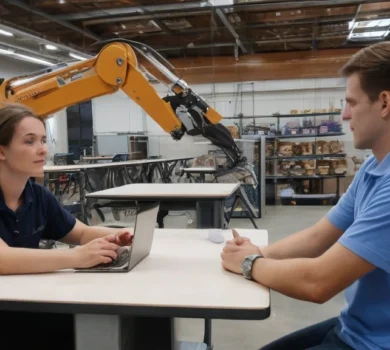
AGCO is testing a humanoid robot in production in Hesston, Kansas
AGCO and Agility Robotics will launch a pilot program featuring the Digit® humanoid robot at their manufacturing facility in Hesston.

How does the new diffusion model change the approach to autonomous driving?
The new QualiDrive model introduces an innovative approach to trajectory generation in autonomous vehicle guidance - instead of
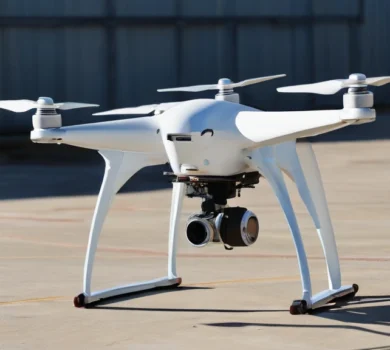
Combining data from drones and ground vehicles improves the continuity of tracking for autonomous cars.
A study conducted in a simulation showed that the combination of data from a drone (UAV) and a ground vehicle (UGV)
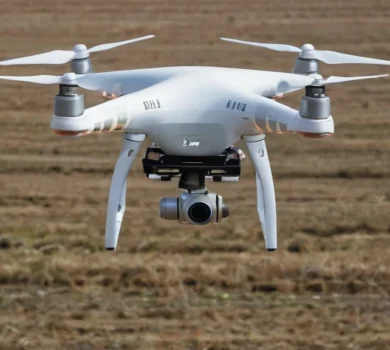
Vision-language models as aids for autonomous drones: balancing speed and precision.
A study conducted on autonomous drones showed that vision-language models, despite their potential for advanced semantic reasoning,

IRIM 2026 Seminar: How can robotics achieve seamless physical interaction with humans?
On October 21, 2026, the Institute for Robotics and Intelligent Machines will host a lecture.