

Record market value - what does it mean for the industry?
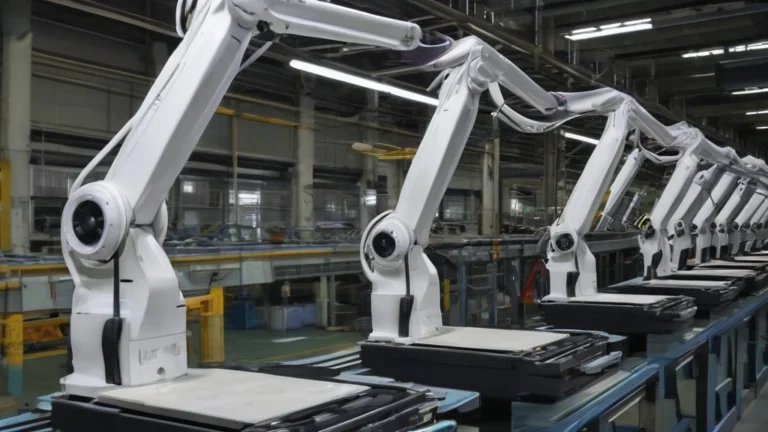
Value of the global installation market industrial robots reached a record value of $16.5 billion in 2025. This is not just a number - it is a signal that automation has ceased to be an experiment and has become the foundation of modern production. This growth is due to the increasing demand for precision, scalability and resilience to crises in supply chains. The industry is not only investing in robots - it is investing in stability.
It should be noted that this growth is not uniform. There are still barriers for small and medium-sized enterprises (SMEs) who fear high initial costs. Therefore, the emergence of new business models that change the rules of the game becomes key - such as Robot-as-a-Service.
Artificial intelligence: from data analysis to autonomous decisions
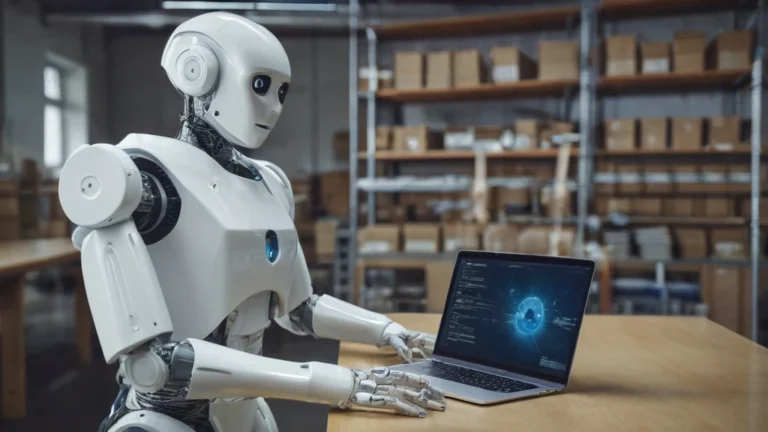
The artificial intelligence technologies mentioned in robotics include analytical, physical and generative AI. Analytical AI allows robots to process data from sensors, which is crucial in productions with high variability - for example, in low-volume conditions. Robots with vision systems analyze previous tasks to optimize performance.
Physical AI is the new generation: robots learn in digital simulations as if they were "experiencing" reality. This approach avoids costly errors in production and accelerates the development of new features. Although we haven't reached the "ChatGPT moment" for robotics yet, it is already clear that simulations are key to faster testing and implementation.
Physical AI, i.e., robots learning in digital simulations, not only speeds up the development of new features but also enables safe testing of solutions in conditions that would be too risky or costly in the real world. Thanks to this, companies can experiment with different scenarios, e.g., reactions to failures or changes in the production process, without the risk of downtime. This is key to faster innovation and greater flexibility in variable-structure production. In the future, such simulations may become standard, enabling not only optimization of operation but also predictive maintenance - when the robot itself predicts the need for service based on data from previous work cycles.
Humanoid robots - are they the future or just a media hype?
 Enlarged imageClose zoomPrevious image
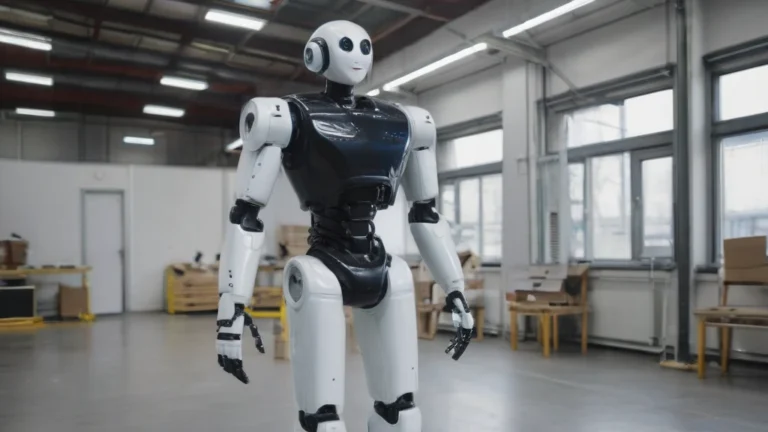
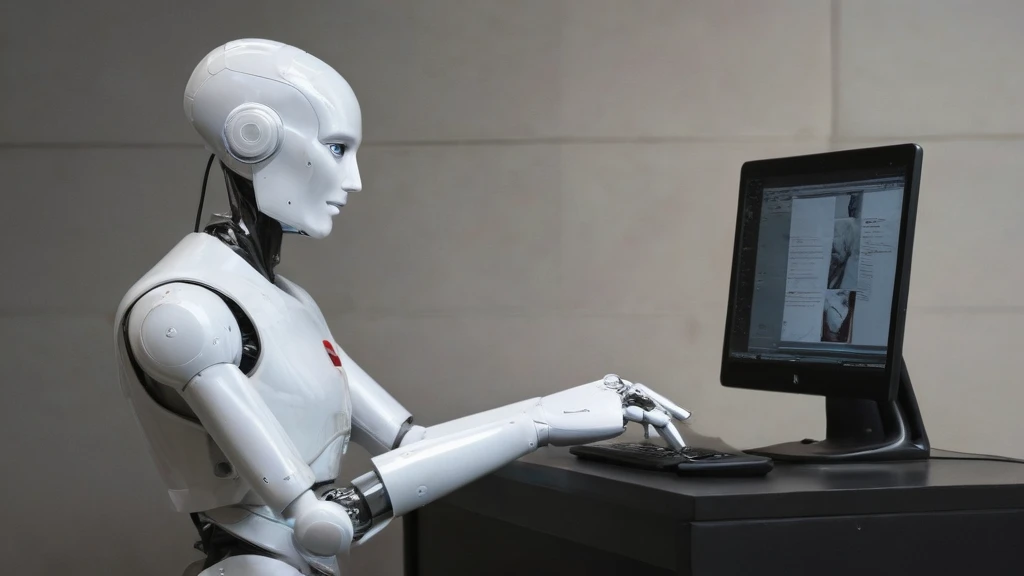
Humanoid robots are gaining enormous media attention, but their role in industry remains limited. Currently, projects are mainly carried out in the automotive and logistics sectors - where the human form may be beneficial, e.g., when operating devices designed for humans.
However, the issue of economic viability remains open. Compared to specialized industrial robots or mobile manipulators, humanoid robots are more expensive and less efficient in typical tasks. Their potential lies rather in applications where flexibility and interaction with the human environment are key - but this does not yet mean mass implementation.
Robots for the future: green production and new industries
Robots play a key role in achieving sustainable development goals. In the production of green technologies - such as solar panels, batteries for electric vehicles, or recycling devices - robots are essential for scaling up production without losing quality.
On the other hand, the development of robot technology itself focuses on energy efficiency: lightweight designs, power-saving modes, and even bionic grippers that operate without consuming energy. This is not only about ecology - it's also about reducing operating costs in the long term.
New business models: RaaS and accessibility for small businesses
The Robot-as-a-Service (RaaS) model allows companies to use automation without capital investment. This is especially important for small and medium-sized enterprises that previously could not afford it. industrial robots.
RaaS offers flexibility: the company pays for usage, and the provider takes care of service, updates, and scaling. Additionally, low-cost robots meet the needs of the “good enough” segment - where high precision or long lifespan are not required. New markets include:, laboratories, and logistics.