

ToraOne Humanoid Robot
Precision and adaptability in action
Advanced humanoid technology
47 degrees of freedom for maximum mobility
ToraOne - Intelligent automation
Energy efficiency and precision of movement
Robot ready for complex tasks
ToraOne is a humanoid robot developed by Paxini, offering 47 degrees of freedom and a payload capacity of up to 6 kg. Thanks to advanced tactile sensors and intelligent AI algorithms, it can precisely manipulate objects and adapt to different environments, proving useful in industry, services, and research.
Contact us Watch the videoToraOne - Paxini
ToraOne Humanoid Robot
ToraOne is a humanoid robot developed by Paxini, which combines advanced tactile, visual, and language perception functions within the VTLA (Visual-Tactile-Language-Action) concept. This allows it to serve as a versatile robotic platform in industrial, service, educational environments, or in the healthcare sector. According to official information from the manufacturer, ToraOne offers a height of 1.46 m (folded) to 1.86 m (fully unfolded), allowing it to adapt its silhouette to specific tasks and spaces.
Key parameters include: has 47 degrees of freedom (DoF) throughout its body, 13 DoF in its hands (enabling precise manipulation), and a multimodal sensor system that includes 5 HD cameras, 2 depth cameras, and up to 1956 tactile sensors (processing 7824 tactile signals). This gives the robot the ability to perform advanced object grasping, autonomous navigation (laser SLAM), and interact with its environment in a way similar to human reflexes. The goal of ToraOne is to provide innovative solutions in logistics, business services, and other areas where humanoid robots can effectively collaborate with staff or customers.
History and Development
ToraOne Humanoid Robot
Paxini has focused on intelligent perception systems and collaborative robotics so far, and the work on the ToraOne humanoid robot represents an extension of this philosophy to multimodal robots, combining different senses - vision, touch, and language processing - into one advanced solution.
The concept of VTLA multimodality
- Paxini realized that the future of humanoid robots is not limited to walking or grasping abilities. Hence, a vision for a platform emerged that would understand objects and actions not only through vision but also through touch, and in the future - through language interpretation.
- An extensive tactile system (1956 sensors, 7824 signal channels) combined with high force generation sensitivity on the fingertips (0.01 N) indicates that ToraOne was designed for tasks requiring precision and subtle manipulation.
Integration with market needs
- The robot is ultimately intended for use in logistics (handling and sorting goods up to 6 kg per arm), healthcare (assisting with lighter tasks involving patients), business services (e.g., as an assistant in offices or reception areas), and the home environment (as a companion and helper in daily activities).
- Paxini is also developing a modular design and "garments" - external elements of the robot - which allow for customization of appearance and functionality to meet customer needs. The goal is maximum versatility, so that ToraOne can perform various functions, providing innovation and automation in many areas.
Technical Specifications
Technical Specifications of the ToraOne Humanoid Robot
The ToraOne robot from Paxini has been designed as a versatile humanoid platform, focusing on the integration of tactile, visual, and language processing (the VTLA concept - Visual-Tactile-Language-Action).
| Parameter | Value | Notes |
|---|---|---|
| Model | ToraOne | Advanced multi-tasking humanoid robot from Paxini. |
| Height | 1.46 m (folded) - 1.86 m (unfolded) | Dynamic height thanks to the folding waist structure. |
| Degrees of Freedom (DoF) | 47 | Total number of degrees of freedom in the entire body. |
| Degrees of freedom of the arms (without hands). | 21 | Range of motion of the arms themselves. |
| Degrees of freedom of the hand. | 13 | Advanced hand design enabling precise manipulation. |
| Number of fingers on each hand. | 4 | Provides ergonomic and functional object manipulation. |
| Hand drive mode. | Powered by rotary motors. | Enables precise and smooth finger movements. |
| Tactile sensors. | 1956 units of multidimensional ITPU sensing. | Proprietary, high-sensitivity sensors. |
| Tactile signal channels. | 7824 | Number of signals processed in real time. |
| Force controlled on the fingertips. | 0.01 N. | High precision force control. |
| Visual capabilities. | 5 HD cameras + 2 depth cameras. | Full perception of the environment and object detection. |
| Arm positioning accuracy. | ±0.05 mm. | High precision movements and task repeatability. |
| Single arm lifting capacity | 6 kg | Ability to lift moderately heavy objects. |
| Maximum arm length | 850 mm | Reach ensuring effective manipulation operations. |
| Maximum travel speed | 1 m/s | Optimal speed in the working environment. |
| Navigation method | Autonomous laser SLAM navigation | Precise orientation and environment detection. |
| Battery capacity | 40 Ah | High-performance, high-capacity battery. |
| Charging time | 6 h | Full battery charge in 6 hours. |
| Battery life | 8 h | Average operating time under typical load. |
| Multimodal perception model | VTLA (Visual-Tactile-Language-Action) | Advanced perceptual analysis for interaction with the environment. |
| Applications | Logistics, healthcare, industry, home services | Versatile platform for automation and human work support. |
ToraOne is an innovative humanoid robot from Paxini, designed for versatile applications in various sectors. Its unique tactile, visual, and language perception capabilities enable interaction with the environment at an advanced level. With 47 degrees of freedom, precise hands, and an autonomous navigation system SLAM, ToraOne it is one of the most advanced solutions in the field of humanoid robotics.
ToraOne
Applications and Examples of Use
ToraOne is designed as a comprehensive humanoid platform, capable of versatile operation in environments where people expect smooth and safe technical support. Paxini directs its solutions to many industries.
Logistics and Industry
Handling Lighter Loads: With a lifting capacity of 6 kg per arm and precise hand movements, the robot can transport smaller packages or components, supporting personnel in monotonous tasks.
Autonomous Navigation: Laser SLAM enables the robot to find optimal routes in warehouses, which improves goods transportation and speeds up inventory management.
Business and Marketing Services
Reception and Service Points: A bipedal robot capable of distributing leaflets, giving directions, or engaging in simple voice interaction can significantly improve guest service and generate customer interest.
Events and Presentations: ToraOne attracts attention at promotional locations, trade fairs, or conferences, increasing the attractiveness of the booth and showcasing the company's modern approach to automation.
Healthcare and Home Care
Support for Seniors: Hands with precise tactile sensing can gently hand over small objects, and the multimodal system allows the robot to respond to basic commands and signals in everyday situations.
Auxiliary Tasks: Monitoring the patient's condition (e.g., through integration with medical devices), assisting in transporting light objects, and providing other assistance in places where safety and responsible handling are important.
Education and R&D
Research Platform: Thanks to its advanced drive architecture, tactile sensors, and vision systems, the robot is perfectly suited for testing machine learning algorithms or researching embodied intelligence concepts.
Learning Programming and AI: Schools and universities can use ToraOne as part of robotics classes, developing skills in motion programming and multimodal perception integration.
Application of the concept VTLA w ToraOne shows that Paxini aims to place robots in the role of collaborators who not only respond to commands but also experience tactile and visual stimuli in a way similar to humans. Thanks to this, the humanoid can effectively move in environments designed for humans, supporting various forms of interaction in service, industrial, and educational applications.
Technology and Innovation, Safety
ToraOne
ToraOne is a humanoid platform that integrates various technologies aimed at improving interaction capabilities and safety in collaboration with humans. Thanks to Paxini's proprietary solutions in the field of multimodal perception (touch, vision, language interpretation), the robot can effectively operate in service or industrial environments and precisely manipulate objects.
Multimodal Perception System
- VTLA (Visual-Tactile-Language-Action): The combination of tactile sensors, visual systems, and language processing allows the robot to have a broader understanding of its surroundings and the tasks it performs.
- High Density of Tactile Sensors: Up to 1956 detection points provide the robot with an accurate assessment of finger pressure (up to 0.01 N), which facilitates operations requiring delicacy and precision.
Efficient Drive Control and Stability
- 13 DoF in Hands: Each hand is equipped with a sophisticated drive mechanism, enabling a wide range of finger movements, making it easier to handle various objects.
- Robot with Adaptive Height: ToraOne can dynamically change its height from 1.46 m to 1.86 m, allowing it to adapt to various tasks and levels of interaction with people.
Safe Collaboration and Intelligent Locomotion
- Laser SLAM: This provides the robot with autonomous navigation and obstacle detection. Thanks to this, ToraOne moves smoothly at a speed of up to 1 m/s, without exposing the surroundings to collisions.
- User Protection: Torque limitation mechanisms and precise finger control allow the robot to work close to people in a natural way, without the need for safety barriers.
ToraOne Robot
Integration and Compatibility, Personalization and Customization of Solutions
The design of ToraOne allows it to be adapted to many industries, including logistics, services, education, or industry. Paxini focuses on modularity, which translates into easier implementation and the possibility of expanding the system in the future. The robot can be customized both in terms of hardware (external casings and sensor modules) and software (AI algorithms, cloud services).
Open Development Platform
- Flexible SDK: The manufacturer assumes support for low-level software and simulation tools, which allows for the creation of specialized applications in the field of control, computer vision or speech processing.
- AI Expandability: The robot can use cloud services.m.in- image analysis, speech recognition), integrating them with local reinforcement learning algorithms (DRL) or other AI methods.
Integration with Management Systems
- Logistics and Warehousing: The ability to cooperate with WMS/ERP enables automatic assignment of tasks to the robot (e.g., moving components weighing up to 6 kg), bringing efficiency to daily operations.
- Service Support: In reception or information point settings, ToraOne can connect to CRM systems or office calendars to better manage guests and support the team with repetitive tasks.
Personalization of Appearance and Functionality
- Interchangeable "Garments": The robot can adopt various external coverings (changing appearance and style), adapting to the character of the brand or industry in which it operates.
- Grippers and Tools: The manufacturer provides various end-of-arm tooling adapted to specific tasks (distributing leaflets, moving documents, small packages, etc.).
Educational and Research Capabilities
- Compatibility with Popular Frameworks: The robot can work with simulation platforms and AI libraries, allowing scientists and students to create, test, and implement innovative control or perception algorithms.
- Development in Collaboration with the User: Thanks to open documentation and available tools, it is possible to introduce innovative ideas without the need for deep hardware modifications.
ToraOne attracts attention due to the combination of advanced tactile perception with the ability to process visual and linguistic data. This integration strengthens the robot's position as a flexible humanoid platform that can perform tasks of increasing complexity in the future - both in service industries and in scientific or semi-industrial contexts.
Humanoid Robot ToraOne
Benefits for Customers
ToraOne from Paxini is a humanoid robot designed to combine tactile, visual, and linguistic senses into one platform (VTLA - Visual-Tactile-Language-Action). This allows it to perform tasks that go beyond standard manipulation and locomotion operations, which brings tangible benefits to companies and various types of institutions.
Increased Efficiency and Reduced Employee Workload
- The ability to lift up to 6 kg per arm and a highly developed tactile sensor system enable the performance of lighter logistics tasks in warehouses and offices, such as sorting and moving small shipments or documents.
- Reducing monotonous and time-consuming tasks allows the team to focus on more creative and demanding activities.
Support in Customer Service and the Service Sector
- The robot can function as a reception assistant or event guide, indicating directions, distributing materials, or even supporting marketing interactions.
- Equipping it with speech recognition or image analysis tools (optional) makes it a flexible tool for direct contact with visitors.
Advanced Applications in Education and Research
- Thanks to its open software architecture and rich set of sensors (5 HD cameras, 2 depth cameras, multi-dimensional touch), the robot can serve as a platform for developing new artificial intelligence algorithms or designing complex human-robot interactions.
- Students and researchers have the opportunity to practically explore the integration of machine learning, tactile perception, and visual intelligence in a humanoid environment.
Flexibility in Semi-Industrial and Domestic Work
- The ability to work for up to 8 hours on battery power and autonomous laser SLAM navigation allows it to function effectively in environments of various types: from halls and offices to homes and care centers.
- Precise hand operations (13 DoF in each) facilitate tasks requiring delicate handling of objects, e.g., in the field of elderly care or minor support activities.
Adaptive Capabilities and Personalization
- Interchangeable external "garments" allow the robot to adapt its appearance (colors, logos, visual identification elements) to the image of a given organization.
- Flexibility in integrating cloud services and SDKs means that ToraOne can be enriched with new speech recognition, image recognition or other specialized functions over time.
FAQ - frequently asked questions
ToraOne Humanoid Robot
Below is a summary of the most common questions and answers related to the practical use of the ToraOne humanoid robot.
The platform is mainly offered in the form of projects tailored to customer needs. The manufacturer also mentions an open SDK and integration support, which allows it to be implemented in various industries.
The price and delivery time depend on the selected modules (e.g., touch sensors, advanced grippers, AI cloud services) and the level of integration (WMS, ERP). After analyzing the needs, a "turnkey" offer is presented.
The manufacturer states that the lifting capacity is up to 6 kg per arm, which allows for performing lighter logistics and service tasks. Heavier loads may require modifications to the design.
The battery (40 Ah) provides approximately 8 hours of operation under typical load. Factors such as the intensity of manipulation and the level of network communication affect the operating time.
The primary application area for ToraOne is indoor work, where laser SLAM and stable surfaces facilitate autonomous movement. Use in outdoor environments is not the manufacturer's main goal.
According to Paxini, ToraOne can be connected to resource management systems (WMS, ERP) to automatically perform transport tasks and report progress.
Language interpretation functions are part of the VTLA model, but in most scenarios, they require additional implementation of AI cloud services for full voice interaction.
ToraOne can be expanded with reinforcement (DRL) or imitation algorithms. The final learning capabilities depend on the software configuration and data processing services in the cloud.
The robot is designed for logistics, healthcare, business services, and as an assistant in a home environment. Thanks to multimodal perception and programming flexibility, it can also be a research tool in scientific institutes and universities.

More questions?
If you would like to learn more about humanoid robots, we invite you to browse our complete FAQ section. You will find additional questions, detailed instructions, and helpful tips there.
Why NexaRob?
Your Partner in Innovative Humanoid Robotics Solutions
NexaRob supports organizations interested in implementing humanoid robots for various applications - from logistics and production processes, through customer service, to education and scientific research. Thanks to our experience in integrating robotic technologies and extensive cooperation with suppliers, we help customers choose, configure and implement platforms such as ToraOne from Paxini, so that they can maximize their potential in a given work environment.
- Expertise in Humanoid Robot Integration As a company specializing in automation and robotics, NexaRob analyzes customer needs and selects technological solutions that best fit their specific requirements. Thanks to cooperation with many suppliers around the world, we can offer the latest humanoids, adapted to various industries - from the service sector, through education, to light logistics.
- Individual Approach to Implementations We do not use a single implementation model - we adapt each solution to the customer's requirements. We offer a complete needs analysis, advice on configuration (e.g., selection of manipulators, sensors or AI systems), as well as support in integration with existing management systems, such as ERP or WMS.
- Technical Support and Service NexaRob not only delivers robots, but also ensures their proper implementation and use. We offer training for personnel, technical support, as well as service and software updates, so that the robots are constantly adapted to changing needs. We can also expand their capabilities through additional sensors, AI modules or integration with cloud services.
- Innovation and Development NexaRob actively monitors and implements the latest achievements in the field of humanoid robotics. Our goal is not only to deliver humanoids, but also to develop their functionality, so that they become an even more effective support in work, customer service or science.
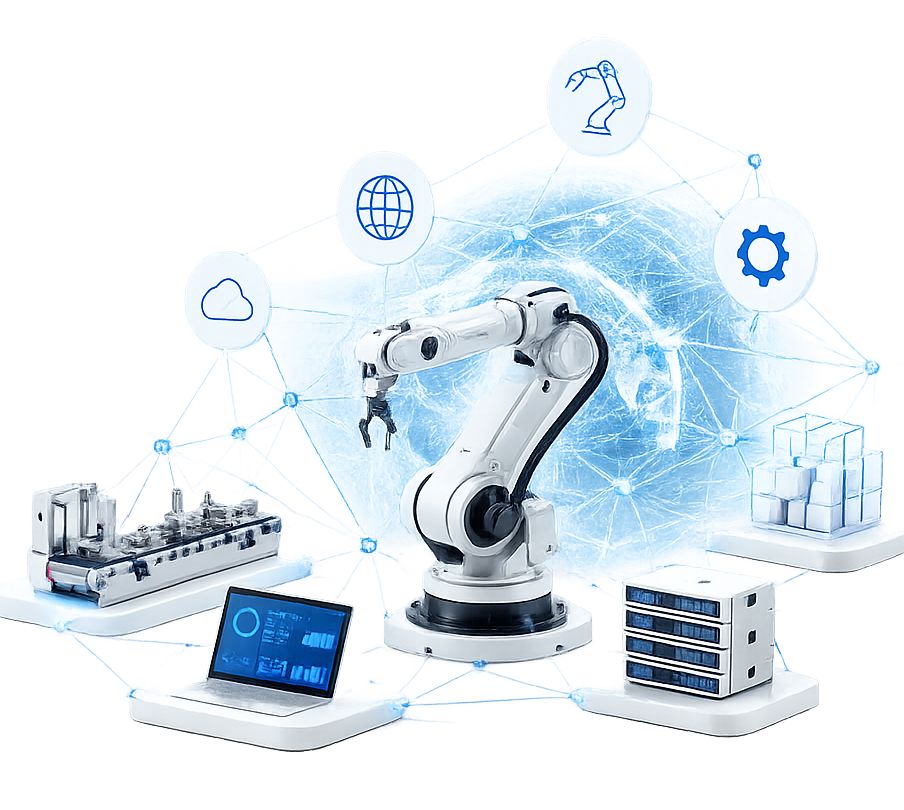
Would you like to know how the ToraOne humanoid robot can support your company or institution? NexaRob will help you with the entire implementation process - from selecting the appropriate model, through configuration, to full operational support. Contact us and see how we can help integrate humanoid robots into your work environment.
Automate Your Business with NexaRob - Contact Us!
Join NexaRob and Together Let's Develop Humanoid Robotics
Do you want to become our Partner?
At NexaRob, we believe that humanoid robots are a key element of the future of automation. Thanks to their mobility, ability to interact, and integration with AI systems, they can bring significant value to various industries - from industry and services to education and scientific research. We invite companies, institutions, and technology providers who want to shape modern robotic solutions together with us to cooperate.

United States

China

Japan

Germany

India

United Kingdom

France

Italy

Canada

South Korea

Brazil

Australia

Spain

Mexico

Indonesia

Netherlands

Saudi Arabia

Turkey

Switzerland

Taiwan

Poland

Sweden

Belgium

Thailand

Ireland

Austria

Norway

Israel

United Arab Emirates

Argentina

South Africa

Denmark

Philippines

Singapore

Malaysia

Colombia

Bangladesh

Egypt

Chile

Finland

Vietnam

Portugal

Czech Republic

Romania

New Zealand

Peru

Greece

Ukraine

Slovakia

Hungary

Slovenia

Croatia

Serbia

Bulgaria

Estonia

Latvia

Lithuania

Iceland

Luxembourg

Malta

Cyprus

Morocco

Algeria

Tunisia

Nigeria

Kenya

Ethiopia

Ghana

Tanzania

Uganda

Angola

Senegal

Qatar

Kuwait

Oman

Pakistan

Sri Lanka

Nepal

Kazakhstan

Uzbekistan

Mongolia

Russia

Cambodia

Myanmar

Laos

Fiji

Papua New Guinea

Venezuela

Ecuador

Uruguay

Paraguay

Bolivia

Costa Rica

Panama

Dominican Republic

Guatemala

Cuba

Jordan

Lebanon

Iran
Additional countries in Europe
These countries are hidden in readable mode so that the map is not cluttered. Click on a country to open contact information, email, and a description of the area of cooperation.
Additional countries in Asia
These countries are hidden in readable mode so that the map is not cluttered. Click on a country to open contact information, email, and a description of the area of cooperation.
Additional countries in the Americas
These countries are hidden in readable mode so that the map is not cluttered. Click on a country to open contact information, email, and a description of the area of cooperation.
Additional countries in Africa
These countries are hidden in readable mode so that the map is not cluttered. Click on a country to open contact information, email, and a description of the area of cooperation.
Additional countries in Oceania
These countries are hidden in readable mode so that the map is not cluttered. Click on a country to open contact information, email, and a description of the area of cooperation.
Albania
Andorra
Belarus
Bosnia and Herzegovina
Montenegro
Liechtenstein
North Macedonia
Monaco
Moldova
San Marino
Afghanistan
Armenia
Azerbaijan
Bahrain
Bhutan
Brunei
Georgia
Iraq
Yemen
Kyrgyzstan
North Korea
Maldives
Syria
Tajikistan
East Timor
Turkmenistan
Antigua and Barbuda
Bahamas
Barbados
Belize
Dominica
Grenada
Guyana
Haiti
Honduras
Jamaica
Nicaragua
Saint Kitts and Nevis
Saint Lucia
Saint Vincent and the Grenadines
El Salvador
Suriname
Trinidad and Tobago
Benin
Botswana
Burkina Faso
Burundi
Cape Verde
Chad
Democratic Republic of the Congo
Djibouti
Eritrea
Eswatini
Gabon
Gambia
Guinea
Guinea-Bissau
Equatorial Guinea
Cameroon
Comoros
Congo
Lesotho
Liberia
Libya
Madagascar
Malawi
Mali
Mauritania
Mauritius
Mozambique
Namibia
Niger
Central African Republic
Rwanda
Seychelles
Sierra Leone
Somalia
Sudan
South Sudan
Togo
Ivory Coast
Sao Tome and Principe
Zambia
Zimbabwe
Kiribati
Micronesia
Nauru
Palau
Samoa
Tonga
Tuvalu
Vanuatu
Marshall Islands
Solomon Islands
Why Partner with NexaRob?
Joint Investments in Innovation
NexaRob operates as an integrator that connects hardware manufacturers, software providers, and implementation companies. Our goal is to provide comprehensive solutions that meet the real needs of customers and are ready for practical application.
Synergy of Competencies
We combine experience in robotics, artificial intelligence, and automation to create effective implementation systems. Our technical knowledge and market expertise allow us to effectively implement humanoid robots in various sectors.
Global Reach
We cooperate with technology providers around the world, which allows us to offer solutions tailored to the specifics of local markets. We are open to scaling implementations and adapting humanoid robots to individual customer requirements.
We are Looking for Partners in the Following Areas:
- Production and Distribution of Humanoid Robots We would like to establish cooperation with manufacturers and distributors of humanoids in order to jointly provide technologically advanced solutions for various industries.
- AI and IoT Technologies We implement solutions based on artificial intelligence and integrate robots with cloud services and machine learning algorithms to maximize their autonomy and functionality.
- Automation and Logistics Systems Humanoid robots can support existing logistics and industrial processes, expanding the capabilities of traditional automation systems. We cooperate with companies involved in process automation to effectively deploy humanoids to work in environments designed for humans.
Let's Join Forces
If you are a robotics manufacturer, an AI technology provider, a systems integrator, or looking for an advanced solution for your organization, NexaRob offers the opportunity for strategic collaboration. Together we can develop and implement humanoid robots that will provide real support to people in their daily work.
Contact us and let's shape the future of humanoid robotics together!
Interesting facts from around the world
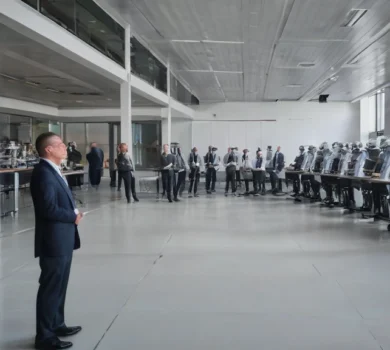
IRIM 2026 Seminar: How can robotics achieve seamless physical interaction with humans?
On October 21, 2026, the Institute for Robotics and Intelligent Machines will host a lecture.
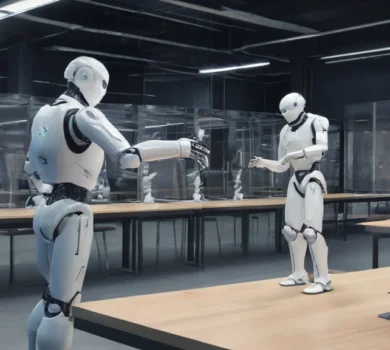
DriveWorld3D: a new generative simulation for safe autonomous driving
The new DriveWorld3D system, developed by the Robostreet team in Cambridge, is designed to help create safer models.
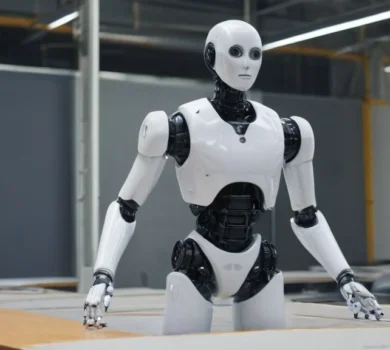
Microlocalization: precise positioning of mobile robots based on microscopic textures of the ground
Researchers have presented a new method for locating mobile robots with an accuracy of tens of micrometers, using microscopic textures.
Robotics as a space for creativity and diversity: experiences of researchers from the Oxford Robotics Institute
As part of the International Women in Engineering Day 2026, researchers from the Oxford Robotics Institute (ORI) shared
How does a solar-powered autonomous vessel decide on the most important places to explore?
Researchers from academic and other institutions have developed a new method for mission planning for autonomous ships