

Robots for cutting, assembly and surface treatment. NexaRob - innovations for the furniture industry.
Robots for the Furniture Industry
Precise solutions for furniture manufacturing
Automation in the Furniture Industry - A Balance Between Tradition and Technology
Robots for the Furniture Industry
The furniture sector, combining craftsmanship traditions and modern design, is increasingly turning to innovative technological solutions to meet the demands of a dynamic market. The growing demand for diverse, personalized products, while maintaining high standards of quality and timeliness, poses challenges for furniture manufacturers in terms of efficiency, safety and cost optimization. Thanks to robotics and intelligent automation systems, the furniture industry can significantly improve production processes - from wood or composite processing, through precise milling and painting, to logistics and packaging of finished components. NexaRob, in cooperation with a global network of technology suppliers, offers comprehensive support in implementing solutions that enable furniture companies to improve product quality, shorten lead times and maintain the flexibility necessary in a competitive market.
Application Characteristics
Key Areas of Automation in the Furniture Industry
Robots in the furniture industry can be used at every stage of production, including raw material processing, assembly, surface finishing and packaging. Below are the most important areas where automation translates into tangible benefits and increased added value of manufactured furniture:
- Raw Material Processing and Board Formatting: Advanced cutting and milling machines, integrated with robots, enable precise cutting and shaping of wood or composite elements. They also reduce waste and speed up the preparation of semi-finished products.
- Assembly and Component Joining: The robotization of activities related to joining components (e.g. screwing, stapling) ensures repeatable quality and enables faster switching of production to different furniture models.
- Sanding, Painting and Surface Finishing: Automated sanding processes allow for achieving perfectly smooth surfaces without tedious manual labor, and painting and coating robots enable uniform application of coatings on large formats.
- Logistics and Warehousing: The transport of heavy and bulky components (e.g., countertops, carcasses) can be automated using mobile robots (AMR, AGV), which reduces the number of accidents and product damage.
- Packaging and Assembly: Preparing assembly kits (screws, accessories) and automating product packaging allows for faster order fulfillment and eliminates errors in deliveries.
- Quality Control and Personalization: Robots with vision systems detect defects in wood structure or finishing flaws on the production line, and thanks to quick configuration changes, it is possible to personalize selected furniture details according to individual orders.
Thanks to properly designed automation, furniture manufacturers can reduce operational costs, avoid quality defects, and reduce the impact of long production cycles on delivery time. This is especially important in an industry where customers increasingly expect personalized designs, excellent finishes, and short lead times.
Key Benefits
Why Automation in the Furniture Industry Ensures Higher Quality and Flexibility
The implementation of robotic systems and advanced manufacturing technologies in the furniture sector allows companies to meet growing customer expectations regarding design, quality, and order fulfillment speed. Below are six key benefits of automation in this industry:
- Increased Efficiency and Timeliness: Robots and automated production lines can operate without interruption, ensuring a stable production rate - especially important during periods of high demand or increased orders.
- Improved Quality of Execution: Precise cutting, milling, or joining of furniture components minimizes the number of defects and the need for corrections, which translates into better aesthetics and durability of finished products.
- Reduction of Material Losses: Advanced programming and cutting optimization systems reduce the amount of waste. In addition, automatic application of coatings or adhesives allows for controlling the consumption of raw materials.
- Increased Safety and Ergonomics: Eliminating heavy or repetitive physical tasks from employees' daily duties reduces the risk of injuries and improves working conditions, which can increase team satisfaction and engagement.
- Production Flexibility: The ease of changing robot configurations and the rapid adaptation of machines to new projects allow furniture companies to offer a variety of models, color variations or personalized elements in a short time.
- Compatibility with Environmental Trends: Precise processing of raw materials and reduction of losses contribute to energy and material savings, which is becoming an important asset in the context of increasing environmental awareness among customers and legal regulations.
Industries and Example Applications
Robotic Applications in Furniture Manufacturing - Modern Methods of Processing, Assembly and Finishing
Automation in the furniture sector covers a wide range of processes - from the initial stages of raw material processing, through assembly and finishing of elements, to warehousing and distribution. Solutions offered by NexaRob effectively support furniture manufacturers, helping them achieve higher quality, shorten production cycles and better manage resources. Below we present six main areas where automation brings measurable benefits:
Wood and Composite Board Processing
Furniture production often begins with cutting, milling and drilling in raw materials (e.g., MDF, HDF, solid wood). Robots and automatic machines ensure precise cutting and shaping.
Applications:
- Virtual simulations optimizing board layout (CAD/CAM).
- Advanced machining centers with Cartesian robots for cutting non-standard shapes.
- Vision systems for detecting knots or defects in wood to avoid faulty fragments.
Benefits:
- Minimizing material waste and reducing scraps.
- Faster execution of repetitive milling and drilling operations.
- Uniform quality of components, which facilitates further assembly.
Varnishing, Painting and Surface Finishing
Furniture must not only be functional but also aesthetically finished. Varnishing and painting robots, integrated with vision and dispensing systems, allow for the creation of uniform coatings and reduce the consumption of paints and varnishes.
Applications:
- Robotic painting booths with precise spraying tools.
- Automatic application of stains and protective oils to the surface of solid wood components.
- Monitoring of coating drying and curing by monitoring temperature and humidity.
Benefits:
- Consistent finishing quality, even for large furniture (e.g., wardrobes, chests of drawers).
- Reduction of paint waste and minimization of errors in the form of streaks or unfinished areas.
- Improved working conditions (reduced exposure of personnel to chemical fumes).
Assembly and Joining of Components
Many pieces of furniture are designed in a modular form (e.g., bodies, fronts, shelves), which requires efficient joining of components while maintaining the correct angle and fastening. Automation of these stages helps avoid discrepancies and speeds up the production cycle.
Applications:
- Articulated robots or cobots screwing hinges, handles, guides.
- Automated assembly tables, facilitating the joining of boards or insertion of screws.
- Intelligent vision systems detecting errors in the position of parts.
Benefits:
- Consistent assembly quality in serial production.
- Elimination of tiring manual operations and increased personnel safety.
- Reducing waste and complaints caused by inaccurate fitting.
Transport and Logistics of Components in Plants
Furniture production lines often occupy a large area, and the transport of heavy and bulky components generates a high risk of errors or damage. Mobile robots (AGV, AMR) and automated storage systems improve the flow of materials and products.
Applications:
- Delivery of boards, fronts, and furniture accessories to assembly areas.
- Handling packing and picking areas for assembly kits (e.g., drawers, countertops).
- Sorting and preparing shipments of finished furniture to customers.
Benefits:
- Reducing the risk of accidents, collisions, and damage to products.
- Shortening order processing time and optimizing warehouse space.
- Increased production flow and on-time delivery.
Cutting and Additional Processing (e.g., upholstery)
The manufacture of upholstered furniture (sofas, armchairs, chairs) requires precise cutting of fabrics and foam, as well as careful assembly. Robotic cutting plotters and assisted upholstery installations allow for a faster transition from design to final product.
Applications:
- Automatic cutting of upholstery materials (fabrics, leather) and furniture foam.
- Collaborative robots assisting in the assembly of upholstered components, helping to maintain fabric tension.
- Vision systems checking the quality and pattern of fabrics, avoiding mismatched pieces.
Benefits:
- Precision in cutting, which translates into a consistent visual effect of the furniture.
- Reducing errors and losses of valuable upholstery materials.
- Faster fulfillment of orders for customized furniture (different fabrics, colors).
Quality Control and Packaging of Finished Products
The packaging and final inspection stage is crucial for customer satisfaction and reducing returns. Automation can include verifying the final assembly, detecting any defects, and securing the product in protective packaging.
Applications:
- Robotic stations testing the stability and functionality of furniture (e.g., drawer extension).
- Vision systems for detecting surface damage (scratches, dents).
- Automatic pick & place system for assembling accessories, instructions, and mounting hardware.
Benefits:
- Maintaining a high level of customer satisfaction through consistent quality and complete sets.
- Improved furniture packaging, which significantly affects transport logistics and warehousing.
- Reduction of complaints and better control over multiple product variants (different dimensions, finishes).
The Key to Precise, Flexible, and Efficient Production
Robots for the Furniture Industry
The furniture industry, using both traditional wood materials and modern composites, requires automation solutions that guarantee high processing quality and rapid adaptation to changing trends and designs. NexaRob, thanks to cooperation with experienced suppliers of robotic technology, offers a wide range of robots adapted to various tasks in the furniture production process.
Articulated robots are characterized by multi-axis kinematics, which gives them great freedom of movement and allows them to perform complex tasks in a limited space. In furniture factories, they can be used in processing elements with irregular shapes, assembling fittings, or polishing.
Advantages:
- Flexible motion configuration in multiple planes.
- Different lifting capacities, adapted to the lightness of boards, but also heavier tops or bodies.
- Easy adaptation of tools (e.g., milling cutters, polishers) during rapid product changes.
Applications:
- Precise drilling and milling of parts in MDF boards or solid wood.
- Assembly and screwing of hinges, handles or other furniture fittings.
- Painting of elements with complex geometry (e.g., table legs, chairs) using spray nozzles.
Example:
A manufacturer of garden furniture used articulated robots for polishing and sanding rounded edges. As a result, the process became faster and much more repeatable than manual work.
Cartesian construction (movement in the X, Y, Z axes) ensures stable and predictable operations in an area with a rectangular range. In the furniture industry, these robots are often used for processing and cutting panels with regular dimensions or for pick & place tasks.
Advantages:
- Easy integration with lines for cutting and processing flat materials (e.g., cabinet fronts, bodies).
- Stable kinematics facilitating precise reproduction of working paths.
- Relatively simple construction, which translates into a lower risk of failure and lower operating costs.
Applications:
- Automatic cutting of composite panels and their placement on assembly stations.
- Stacking and sorting of elements in the furniture packaging area (e.g., shelves, fronts).
- Drilling and milling surfaces in tasks requiring linear movements.
Example:
A cabinet factory introduced Cartesian robots for fast cutting of fronts to size. After uploading CAD/CAM drawings, the system automatically creates an optimal layout, which significantly reduces waste and time between successive production stages.
In many furniture factories, the transport of large and heavy elements (e.g., countertops, cabinet bodies) causes bottlenecks and generates safety hazards. Autonomous mobile robots - AGVs (Automated Guided Vehicles) and AMRs (Autonomous Mobile Robots) - improve the flow of products within the hall, reducing downtime.
Advantages:
- Autonomous navigation in variable conditions, anti-collision sensors increasing safety.
- Possibility of integration with production management systems (MES, ERP).
- Reduction of forklift traffic, reducing the risk of damage and accidents.
Applications:
- Delivery of panels, bodies or finished elements to assembly stations.
- Handling of packing and order picking areas (e.g., desk modules, chests of drawers).
- Transport on the sanding-painting-shipping warehouse line.
Example:
A furniture factory producing office furniture used AMR robots to transport components within a multi-stage line, reducing order processing time and improving work efficiency.
Articulated robots are characterized by their multi-axis motion system, which enables them to work in diverse, often confined production spaces. Thanks to their high flexibility and freedom of movement, they are particularly suitable for tasks requiring the manipulation of irregular shapes or delicate textiles.
Advantages:
- Multi-axis kinematics enabling complex operations (e.g., partially automated sewing, transferring non-standard fabric packages).
- Easy retooling and adaptation to new tasks (e.g., gripper replacement).
- Availability of models with different lifting capacities, allowing for the handling of both light and heavier rolls of material.
Applications:
- Stacking and sorting of finished garments intended for further packaging.
- Automated application of accessories (buttons, labels) to clothing items.
- Precise transfer and positioning of fabric elements in sewing or ironing lines.
Example:
A garment factory used articulated robots to assist in the pocket and button attachment process. As a result, the consistency of detail placement on thousands of garments improved in a short time.
Gantry robots built on a frame structure (movement along tracks in two or three linear axes) are characterized by high stability and the ability to handle elements with significant dimensions. In the furniture industry, they work perfectly in processes where a large working area and solid element mounting are needed.
Advantages:
- Ability to work on a large working surface, which is important for large formats of furniture panels.
- Stability of kinematics ensuring high repeatability even with large-format elements.
- Wide lifting range and optimal load distribution.
Applications:
- Automatic transfer and stacking of large boards or countertops with non-standard dimensions.
- Formatting, milling, and drilling of boards placed on special work tables.
- Operation of cutting lines requiring simultaneous control of multiple axes.
Example:
A conference table manufacturer used a Gantry robot to transfer large tabletops (2 x 3 m) between milling and boring stations, which reduced the number of personnel needed to operate these processes and eliminated the risk of damage during manual transport.
Professional Robotic Solutions Integration and Comprehensive Technical Support in the Furniture Industry
Integration and Support
The implementation of automation in the furniture sector requires consideration of the diversity of materials (wood, composite boards, glass, metal fittings) and frequent changes in designs. NexaRob offers a full range of services, from initial analysis of production processes, through robot design and installation, to service and training, making it easier for furniture companies to effectively use the latest technologies and maintain flexibility in producing diverse product lines.
Technology Implementation Process
- Analysis and Consultation: The NexaRob team analyzes the customer's current infrastructure and business goals (e.g., reducing production time, increasing product personalization). Together, we select the appropriate type of robots (articulated, Gantry, mobile, etc.) and define automation tasks.
- Design and Simulations: We create a detailed plan for the layout of the line, tools, and robot movement paths. We use computer simulations to verify that the design guarantees the expected performance, safety, and maintenance of quality standards in furniture production.
- Installation and Programming: Our engineers install robots and integrate them with machines (e.g., CNC milling machines, painting booths). Then, we calibrate and program individual operations (cutting, assembly, packaging). We strive to minimize downtime.
- Testing and Training: After commissioning, we check the stability and precision of the line's operation under conditions similar to real-world scenarios, making any necessary adjustments. At the same time, we train operators and maintenance teams, preparing them for the effective use of new tools.
- Support and Service: NexaRob provides continuous service and potential system upgrades, so that customers can respond to market changes and expand their furniture portfolio. We offer remote diagnostics and periodic inspections to keep the robots in excellent condition.
Main Support Services
- Regular Inspections and Maintenance: Thanks to scheduled inspections and replacement of worn components, production lines operate stably and without unplanned downtime.
- Modernization and Expansion: As the factory grows or new furniture collections are introduced, NexaRob advises on tool replacement and adapting robots to new tasks.
- Training and Courses: We organize workshops for operators, engineers and foremen, so that personnel gain the necessary knowledge for efficient management and optimization of robot operation.
- Remote Diagnostics: NexaRob solutions enable quick detection of the causes of potential failures or performance drops without the need for service visits, which reduces downtime and improves on-time order fulfillment.
Are you looking to speed up the furniture production process, improve processing quality and minimize costs? Contact us. NexaRob - we will advise you on how robotics can help your furniture company compete successfully!
Frequently Asked Questions
The Most Important Questions about Robotics and Automation in the Furniture Industry
Are you wondering how robotics can improve processes in the furniture industry? We have prepared answers to the most important questions about automation - from precise material processing and furniture assembly to logistics and packaging of finished products. See below how modern technologies support production in this dynamic industry.
Yes, there are specialized solutions, including robots with grippers with adjustable clamping force or vacuum suction cups, which enable manipulation of even very delicate materials without damaging them.
Robotic solutions are characterized by high flexibility. Simply modify the control software and/or replace tools (e.g., milling cutters, painting tips) to handle a new project. This allows you to quickly respond to changing trends and customer needs.
Yes. Many systems, such as cobots or compact Cartesian robots, have small dimensions and affordable operating costs. They offer the possibility of improving processes (e.g., polishing, grinding) without requiring a large area or significant investment capital.
Gantry robots offer stable operation over large working areas, which facilitates the processing of large-format panels or the transport of heavy countertops. They also ensure high repeatability of movements and safety when handling oversized components.
Automation takes over repetitive and tedious tasks, such as cutting, painting, or transporting components. However, the final effect, especially in artistic or luxury furniture, still requires craftsmanship and quality control from experienced employees.
The key is to adapt the installation to meet safety configured enclosures, anti-collision systems in mobile robots), and training for personnel on the operation and maintenance of equipment.
Yes. Robots and CAD/CAM systems enable quick switching of production lines to new dimensions or shapes of furniture components. Automatic nesting and machine programming shorten the time it takes to implement changes in designs.
This depends on the scale and complexity of the project. However, thanks to reduced production time, waste reduction, and improved quality, the return on investment may occur within a few months to several dozen months. NexaRob also offers various financing options and profitability analysis.
Yes. Thanks to vision sensors and anti-collision systems, mobile robots can safely transport oversized or irregular components in production halls, reducing the use of forklifts and minimizing the risk of damage.
The first step is to analyze bottlenecks and processes that consume the most time or generate errors. NexaRob offers consultations and audits, helping to determine priorities and develop a plan for introducing robots in a gradual and cost-effective manner.

Contact our team to learn about the best automation solutions for the furniture industry. Also, visit the FAQ section where you will find answers to frequently asked questions and learn how robotics can increase the efficiency and quality of your production.
Why NexaRob?
Your Trusted Partner in Furniture Industry Automation - Efficiency, Precision and Modern Design
At NexaRob, we understand that competition in the furniture industry is growing, and customers are increasingly expecting high-quality products, personalization, and short order fulfillment times. Our mission is to support furniture companies in achieving these goals by providing integrated automation solutions. Thanks to our experience and passion for innovation, we offer support at every stage of robot implementation and systems supporting production and logistics.
- Extensive Industry Experience: Our team consists of experts in robotics, automation, and manufacturing engineering who have worked on numerous projects in the furniture sector - from plants specializing in wood processing to complex lines producing upholstered furniture.
- Flexible and Scalable Solutions: We provide robotic systems that can be easily adapted to changing needs - both for the production of small series of custom-made furniture and for mass production.
- Comprehensive Consulting: NexaRob provides support in selecting appropriate robots (articulated, Cartesian, gantry or mobile), as well as integrating new and existing machines and training personnel. Our holistic approach minimizes the risk of errors during modernization.
- Focus on Quality and Design: In the furniture industry, design and finishing are key to market success. Automation allows you to increase repeatability and shorten the time it takes to introduce new designs, while maintaining the highest aesthetic and technical standards.
- Collaboration with a Global Network of Partners: We utilize the latest solutions from renowned manufacturers of robots, vision systems, and software, which enables us to offer clients technologies that exceed industry standards.
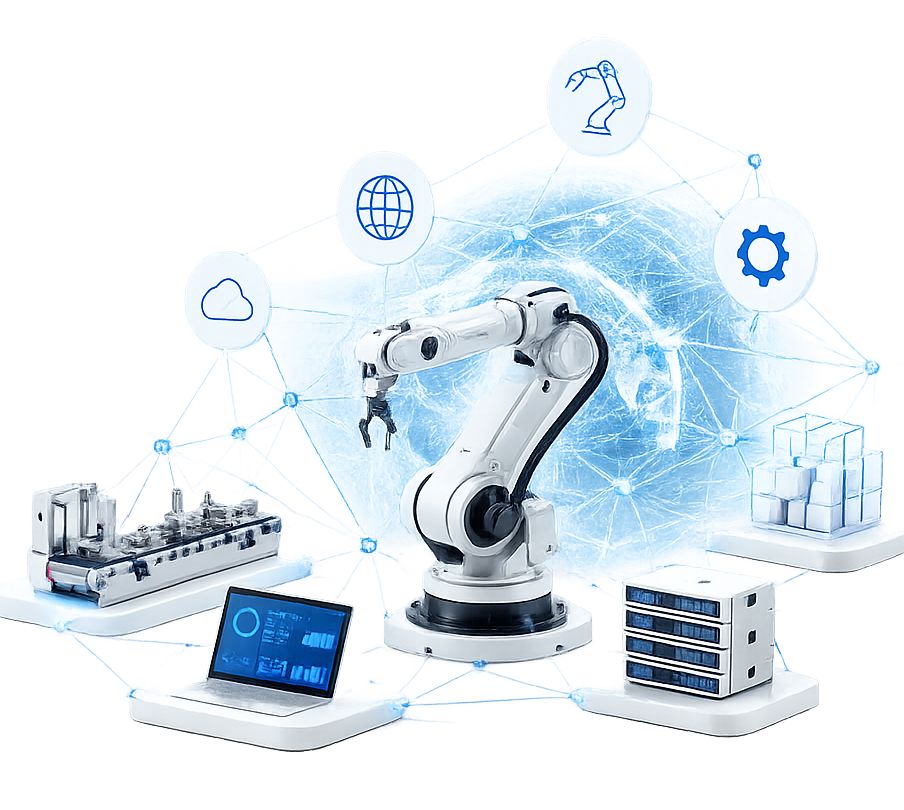
Would you like to learn how NexaRob can help your furniture company achieve a higher level of efficiency and quality? Contact us today!
Automate Your Business with NexaRob - Contact Us!
Global Reach
We operate globally, support locally
NexaRob supports furniture and interior design component manufacturers in various parts of the world. Whether you specialize in wooden, upholstered, or metal structures, we will adapt our solutions to local regulations, safety standards, and market trends, helping you expand into new regions and maintain competitiveness in the global market.
- Presence in Key Furniture Regions: We collaborate with facilities in Europe, Asia, and both Americas, where furniture production is a significant element of the economy. Our experience includes projects of various scales - from family-owned workshops to large factories producing hundreds of thousands of units annually.
- Adaptation to Local Standards and Regulations: The furniture industry in each country may be subject to different quality standards, certifications (e.g., FSC, PEFC), or safety regulations. Our solutions take these requirements into account, enabling implementations that comply with the law and meet consumer expectations.
- Local Technical Support and Service: We provide local service teams and remote diagnostics capabilities in various time zones. Thanks to this, our clients can count on rapid intervention, minimizing the risk of downtime in production halls.
- Flexible Configurations and Scalability: NexaRob systems can be adapted for both small workshops and large-scale factories. We offer a modular approach that allows for gradual expansion and modernization of lines in response to increased orders or the need to introduce new furniture models.
- Exchange of Knowledge and Best Practices: Operating in many countries, NexaRob gathers experience from various markets - from Scandinavian design to highly industrial approaches in Asia. We share this knowledge with our clients, helping them develop and improve their production processes.
Are you interested in automating furniture production on a global scale or expanding your business into new regions? Contact us and leverage our international experience to improve processes and enhance the quality of furniture products! NexaRob and utilize our international experience to streamline processes and improve the quality of furniture products!

United States

China

Japan

Germany

India

United Kingdom

France

Italy

Canada

South Korea

Brazil

Australia

Spain

Mexico

Indonesia

Netherlands

Saudi Arabia

Turkey

Switzerland

Taiwan

Poland

Sweden

Belgium

Thailand

Ireland

Austria

Norway

Israel

United Arab Emirates

Argentina

South Africa

Denmark

Philippines

Singapore

Malaysia

Colombia

Bangladesh

Egypt

Chile

Finland

Vietnam

Portugal

Czech Republic

Romania

New Zealand

Peru

Greece

Ukraine

Slovakia

Hungary

Slovenia

Croatia

Serbia

Bulgaria

Estonia

Latvia

Lithuania

Iceland

Luxembourg

Malta

Cyprus

Morocco

Algeria

Tunisia

Nigeria

Kenya

Ethiopia

Ghana

Tanzania

Uganda

Angola

Senegal

Qatar

Kuwait

Oman

Pakistan

Sri Lanka

Nepal

Kazakhstan

Uzbekistan

Mongolia

Russia

Cambodia

Myanmar

Laos

Fiji

Papua New Guinea

Venezuela

Ecuador

Uruguay

Paraguay

Bolivia

Costa Rica

Panama

Dominican Republic

Guatemala

Cuba

Jordan

Lebanon

Iran
Additional countries in Europe
These countries are hidden in readable mode so that the map is not cluttered. Click on a country to open contact information, email, and a description of the area of cooperation.
Additional countries in Asia
These countries are hidden in readable mode so that the map is not cluttered. Click on a country to open contact information, email, and a description of the area of cooperation.
Additional countries in the Americas
These countries are hidden in readable mode so that the map is not cluttered. Click on a country to open contact information, email, and a description of the area of cooperation.
Additional countries in Africa
These countries are hidden in readable mode so that the map is not cluttered. Click on a country to open contact information, email, and a description of the area of cooperation.
Additional countries in Oceania
These countries are hidden in readable mode so that the map is not cluttered. Click on a country to open contact information, email, and a description of the area of cooperation.
Albania
Andorra
Belarus
Bosnia and Herzegovina
Montenegro
Liechtenstein
North Macedonia
Monaco
Moldova
San Marino
Afghanistan
Armenia
Azerbaijan
Bahrain
Bhutan
Brunei
Georgia
Iraq
Yemen
Kyrgyzstan
North Korea
Maldives
Syria
Tajikistan
East Timor
Turkmenistan
Antigua and Barbuda
Bahamas
Barbados
Belize
Dominica
Grenada
Guyana
Haiti
Honduras
Jamaica
Nicaragua
Saint Kitts and Nevis
Saint Lucia
Saint Vincent and the Grenadines
El Salvador
Suriname
Trinidad and Tobago
Benin
Botswana
Burkina Faso
Burundi
Cape Verde
Chad
Democratic Republic of the Congo
Djibouti
Eritrea
Eswatini
Gabon
Gambia
Guinea
Guinea-Bissau
Equatorial Guinea
Cameroon
Comoros
Congo
Lesotho
Liberia
Libya
Madagascar
Malawi
Mali
Mauritania
Mauritius
Mozambique
Namibia
Niger
Central African Republic
Rwanda
Seychelles
Sierra Leone
Somalia
Sudan
South Sudan
Togo
Ivory Coast
Sao Tome and Principe
Zambia
Zimbabwe
Kiribati
Micronesia
Nauru
Palau
Samoa
Tonga
Tuvalu
Vanuatu
Marshall Islands
Solomon Islands
NexaRob
Do you want to become our Partner?
NexaRob is passionate about supporting automation in the furniture industry, seeking new ways to improve and modernize the design, production, and logistics processes for furniture components. To fully harness the potential of robots, autonomous machines, and artificial intelligence, we are looking for partners who share our commitment to developing the future of furniture manufacturing.
Why Partner with NexaRob in the Furniture Sector?
Joint Investments in Innovation
We collaborate with manufacturers of woodworking machinery, AI technology providers, companies offering cut optimization systems, and vision solutions for quality control. Together, we develop projects that are transforming the furniture industry.
Synergy of Knowledge and Experience
Each partner brings unique expertise and resources. Together, we create projects that realistically meet the needs of modern furniture factories: from early processing of raw materials to automatic packaging and shipping of finished products.
Global Network of Contacts and New Markets
NexaRob operates in international markets, enabling partners to expand their business and learn about the latest trends in furniture automation - both in terms of design and environmentally friendly production solutions.
We are looking for Partners in the Following Areas:
- Production of Furniture Machines and Specialized Equipment: Manufacturers of CNC milling machines, panel saws, painting lines, or upholstery machines can increase the value of their products by integrating them with intelligent robotic control.
- AI and IoT Technologies: Creators of data analysis systems (e.g., raw material consumption, quality control) or sensors that monitor the condition of wood, paints, or adhesives, seeking integration with robots and autonomous vehicles in furniture factories.
- Providers of Logistics and Warehouse Solutions: Companies creating lines for transporting and storing components (veneer rolls, MDF boards) and solutions to support warehouse management, aiming to introduce robotic elements to improve efficiency.
Let's join forces and transform the furniture industry together with NexaRob
Contact us to learn more about potential collaborations and work together on projects that will help you achieve success in the increasingly competitive furniture market. Our partnership can enable the development of innovative solutions that contribute to higher productivity, quality, and a more environmentally friendly approach to furniture production.
Interesting facts from around the world
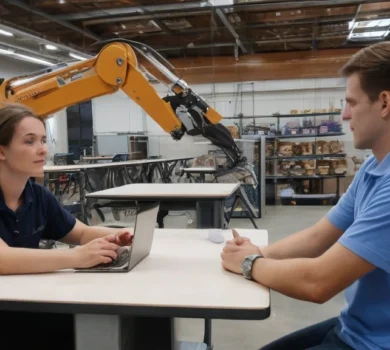
AGCO tests humanoid robot in production in Hesston, Kansas
AGCO and Agility Robotics will launch a pilot program featuring the Digit® humanoid robot at their manufacturing facility in Hesston.

How does the new diffusion model change the approach to autonomous driving?
The new QualiDrive model introduces an innovative approach to trajectory generation in autonomous vehicle guidance - instead of
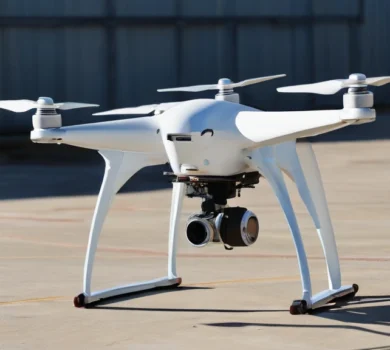
The fusion of drone and ground vehicle data improves the continuity of tracking autonomous vehicles.
A study conducted in a simulation showed that the combination of data from a drone (UAV) and a ground vehicle (UGV)
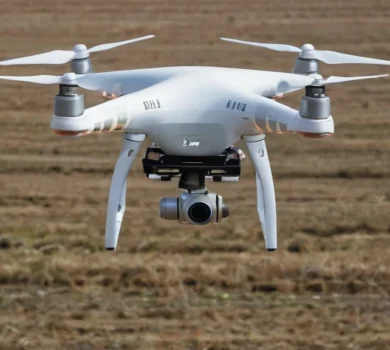
Vision-language models as aids for autonomous drones: balancing speed and precision.
A study conducted on autonomous drones showed that vision-language models, despite their potential for advanced semantic reasoning,
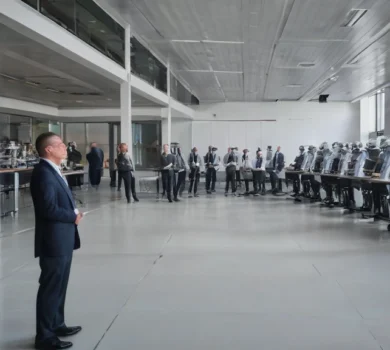
IRIM 2026 Seminar: How can robotics achieve seamless physical interaction with humans?
On October 21, 2026, the Institute for Robotics and Intelligent Machines will host a lecture.