
Yaskawa Robot Programming in the INFORM Language
Advanced Control of Yaskawa Robots
Precise Automation in the INFORM Language
Process optimization in industry
Yaskawa Robot Programming for Efficiency
Modern control technologies
Integration of Yaskawa Robots with Your Production Line
The INFORM language is a key tool for programming Yaskawa robots, enabling precise control and optimization of industrial processes. NexaRob offers comprehensive support in configuring, implementing, and integrating Yaskawa robots, adapting them to the specific needs of customers.
Contact us Watch the videoLearn why Yaskawa INFORM is an essential tool in many industries and how it supports precise control of Yaskawa robots.
Programming Industrial Robots - Yaskawa in the INFORM Language
Yaskawa INFORM is a dedicated programming language for industrial robots from the Yaskawa (Motoman) brand. Thanks to its clear structure and flexible motion management capabilities, INFORM makes it easy to create precise and efficient applications for various production processes - from simple palletizing, through advanced welding operations, to complex assembly tasks in the electronics industry.
Why Yaskawa INFORM?
- Programmer-Friendly Syntax: INFORM is designed so that teams with basic knowledge of control logic can quickly write and modify robot code.
- Flexible Motion Instructions: It supports both point-to-point (PTP) motions and more complex trajectories (e.g., arcs), ensuring versatility in applications.
- Integration with Other Systems: Thanks to built-in communication functions, Yaskawa robots can seamlessly interact with external PLC controllers, vision systems, or force sensors.
How can NexaRob help?
- Requirements analysis: At the beginning, we jointly define the goal and working conditions of your Yaskawa robot in order to develop an optimal programming approach.
- Code creation and optimization: The NexaRob team designs applications in the INFORM language, tests them in simulation mode, and fine-tunes them on a real workstation to ensure maximum smoothness.
- Operator training and service support: We teach teams the basics of programming in INFORM, which makes it easier to independently introduce corrections and quickly respond to changing needs within the plant.
See what distinguishes Yaskawa INFORM and in which industries Yaskawa robots are particularly appreciated.
Key Features and Application Examples in INFORM
Although robotic languages have similar goals, INFORM offers a set of functions that streamline and simplify the programming of Yaskawa robots. Below we present the most important elements of the language and examples of industries in which these robots show significant advantages:
Rich motion instructions
INFORM provides commands to control the robot in various modes (e.g., PTP, LINE, CIRC), enabling the creation of smooth and precise trajectories.
Application: Multi-axis welding, palletizing products in warehouses, servicing machines requiring accurate positioning of parts.
Modular code structure
The program can be divided into modules corresponding to individual tasks (e.g., assembly, transfer, quality control), which makes the code easier to read and modify quickly.
Application: Production lines where the robot performs several stages of the process, e.g., picking up a part from one machine and placing it in another section.
Integration with control systems
Yaskawa INFORM enables communication with PLC controllers, vision systems or force sensors using network protocols.
Application: Automotive industry (complex welding and testing), electronics (precise assembly of components with visual verification).
Application in many industries
Yaskawa robots are characterized by a wide variety of models - from small, fast robots handling small objects to heavy-duty manipulators with a large payload.
Application: Food (packaging), metal (machining and welding), pharmaceutical (quality control), logistics (sorting and palletizing).
Safety and scalability
Thanks to built-in mechanisms for monitoring work areas and defining emergency procedures, the robot can quickly react to unforeseen events and minimize the risk of failure.
Application: Lines requiring a high level of operator protection (e.g., the chemical industry or operating high-power machines).
Yaskawa INFORM provides Yaskawa robots with a versatile and intuitive environment for creating complex, dynamic applications. NexaRob It supports implementations at every stage - from needs analysis to optimizing performance in daily production. Thanks to this, your company can benefit from high-quality automation and reduce costs associated with downtime or errors in the process.
Discover the various ways to create code for Yaskawa robots and choose the solution that best suits your needs.
Main Modes and Programming Methods in Yaskawa INFORM
Online, Offline, Freedrive, and More
Programming Yaskawa robots in the INFORM language can be done in several modes - from creating code directly on the robot panel, to advanced solutions operating remotely or in a simulation environment. At NexaRob, we help you choose the optimal method so that the process of writing and implementing applications is as quick, safe, and flexible as possible. Below are the key modes:
Teach Pendant (Online Programming)
- Direct Editing: The operator uses a pendant to define movements point by point, saving them immediately in the INFORM code.
- Quick adjustments on the line: Ideal for situations where minor changes need to be made without interrupting work for an extended period.
- Limitations: For more complex sequences, programming requires caution and is more time-consuming than working in an offline environment.
Offline Programming (Simulation Environment)
- Working on a computer: Creating and testing code in simulation tools, such as Yaskawa software (MotoSim), allows you to eliminate errors even before launching on the workstation.
- Time saving: The line can continue to operate while engineers prepare the next version of the application. After uploading to the controller, only a small correction is needed.
- Application: Large projects or processes with high safety requirements, where any mistake during live programming would be costly.
Online Remote Programming (Network Control)
- Remote access: If the network infrastructure is properly secured, the NexaRob team or your specialists can connect to the Yaskawa robot over the network and make changes to the INFORM code.
- Expert support: Quickly resolve unusual problems or improve performance without having to send an engineer on-site.
Hybrid Approach
- Combining methods: It most often combines a Teach Pendant (for initial calibration and setting motion points) with simulation software (to optimize trajectories and logic).
- Gradual Improvement: Already written code can be iteratively improved by testing different variants in the simulator, and final corrections can be made online.
The choice of programming method depends on the specifics of the plant and the frequency of process modifications. Often, several approaches are used in parallel within one company: Teach Pendant for quick corrections, offline for advanced optimization, and remote control for ongoing expert support. In the following sections, we will describe the integration of Yaskawa robots with vision systems and sensors, enabling even more intelligent automation.
Learn how Yaskawa robots can use cameras and sensors to dynamically respond to changing conditions on the production line.
Integration with Vision Systems and Sensors in INFORM
Yaskawa robots controlled by the INFORM language are not limited to replaying predefined paths - they can also react in real time to information from external devices, such as cameras or force sensors. Below we show how this integration improves process efficiency and safety:
Vision Systems
- Protocols and libraries: Yaskawa provides tools for communicating with 2D/3D cameras, allowing data on the position, size, or shape of objects to be transmitted directly to the INFORM code.
- Trajectory correction: If the products are arranged in a disorganized manner, the robot can calculate the offset and adjust the motion to the current position of the part, reducing the time of the pick & place operation.
Force and Moment Sensors
- Pressure control: In assembly applications or when handling delicate goods, the robot checks the force level to avoid damage.
- Collision detection- When the torque on an axis exceeds a defined value, INFORM can stop the robot's operation and trigger emergency procedures, protecting equipment and operators.
Peripheral and Additional Axis Support
- Extended capabilities: Often, a single Yaskawa controller is responsible for several axes (e.g., a rotary table), and the INFORM code ensures their synchronous movement during complex welding or machining operations.
- Unified platform: Thanks to a consistent control environment (PLC, HMI, robot), the production process is easier to manage and expand.
Application examples
Food industry
The robot recognizes the position of irregularly shaped fruits and gently transfers them to the packaging belt.
Electronics
PCB assembly, in which the vision system verifies the accuracy of microchip placement, and a force sensor protects components from crushing.
Logistics
Sorting shipments based on size and barcodes, which the camera transmits to the INFORM code, allowing them to be automatically separated into different sections of the warehouse.
Thanks to integration of the INFORM code with vision systems and sensors, Yaskawa robots can intelligently respond to current conditions on the production line - adjusting positions, force, and movement sequences. NexaRob helps to fully utilize these functions: from selecting devices, through writing and testing code, to training and service support, guaranteeing intelligent and safe automation.
A practical example illustrating how the code in Yaskawa INFORM improves key welding stages and enhances quality in the demanding automotive industry.
Case Study: Optimization of the Steel Component Welding Process in the Automotive Industry
In the automotive industry, where repeatability and perfect weld quality are essential, Yaskawa robots have long been trusted by manufacturers. Below is a case study showing how the INFORM language has improved the complex process of welding steel components produced in large volumes:
Context and Main Challenges
- Complex part shapes: Multi-plane and multi-axis welds, often on curved surfaces.
- High repeatability: A slight deviation in the welding seam could reduce the strength of the component or require rework.
- Production rate: The line's efficiency could not be significantly reduced due to high volumes and short delivery times.
Solutions in Yaskawa INFORM Code
Division of the program into welding modules
Each welding process (e.g., horizontal, vertical, or arc welding) has its own set of procedures, which makes it easier to modify parameters if the requirements change. Adjusting the wire feed speed and welding current was possible on the fly, thanks to the flexible code structure.
Use of sensors and a vision system
When the camera detected a slight deviation in the element’s position, INFORM calculated the trajectory offset to maintain stitch accuracy. Force and torque sensors ensured the stability of the welding tool holder, minimizing vibrations and accidental movements.
Application of an additional axis (positioner)
For hard-to-reach welds, the robot used a rotary table that was controlled in conjunction with the arm. The INFORM system coordinated the simultaneous movement of both axes, maintaining the optimal angle of inclination of the welding torch throughout the entire cycle.
Effects and Benefits
- Approximately 20% increase in quality: Fewer defective welds and less need for rework.
- Shorter Cycle Time: Precise trajectory control and the ability to make corrections during the process helped speed up the welding operation.
- Easy adaptation to new components: The modular structure of the code and welding parameterization enabled quick switching to other parts on the same line.
This case shows how Yaskawa INFORM can bring measurable benefits in welding applications, where both repeatability and flexibility are important. NexaRob supported the customer at every stage - from process analysis, through code implementation and testing, to staff training. As a result, the welding line achieved higher efficiency and quality, while reducing rework costs.
How to maintain high performance and reliability of applications in INFORM without sacrificing health and safety standards and production quality?
Optimizing Codes and Safety Procedures in Yaskawa INFORM
After implementing the INFORM code, it is worth ensuring its continuous optimization. NexaRob recommends a set of practices that ensure Yaskawa robots operate efficiently, stably, and safely for a long time:
Cycle time and motion analysis
- Monitoring statistics: Recording the number of cycles, errors, or downtime makes it easier to identify bottlenecks.
- Trajectory refactoring: Often, you can slightly shorten robot travel distances, adjust speed, or reduce unnecessary movements, which significantly speeds up production.
Code structure and readability
- Modularity: Removing repetitive fragments by creating common procedures and functions minimizes errors and improves project management.
- Consistent naming: Clearly naming variables (e.g., pStartPos, nWeldSpeed) speeds up finding the logic in the code and reduces the time for any modifications.
Safety and emergency systems
- Emergency stop conditions: INFORM can immediately stop movement in case of collisions, violation of safety zones, or excessive axis load.
- Current health and safety regulations: Regular verification of the code for new standards (e.g., increasing safety zones) guarantees compliance and operator protection.
Updates and extensions
- New firmware versions: Yaskawa may release improvements to the controller; it is worth checking whether an update introduces useful functions that speed up robot operation.
- Line expansion: The INFORM code can be easily expanded by adding more devices, modules, or axes, which increases the scalability of the entire system.
Thanks to regular code optimization and care for safety procedures, Yaskawa robots they can maintain high performance and reliability. NexaRob supports companies in this process by offering code audits, consulting in the field of automation, and long-term service support. This cooperation model allows your team to focus on developing production while leaving robotics issues in experienced hands.
Dispel your doubts related to creating and maintaining applications in Yaskawa INFORM, and learn about our support model.
Frequently Asked Questions
Below we have provided answers to frequently asked questions regarding the programming of Yaskawa robots in the INFORM language. If you cannot find an answer to your own questions here, please contact NexaRob - we will be happy to present you with a personalized cooperation proposal and solutions.
No. The INFORM language is designed to be user-friendly for engineers with basic control logic knowledge. People with experience in other robotic or PLC languages usually adapt to it quickly. NexaRob also provides training courses to accelerate the adaptation process.
Yaskawa robots are widely used in the automotive industry (e.g., welding, painting), electronics (precision assembly), food processing (packaging, sorting), and logistics (palletizing, warehouse management). The versatility of INFORM allows you to adapt the code to a wide variety of processes.
Yes. Software such as MotoSim allows you to create and verify applications without stopping production. This is a great solution when you want to minimize downtime and errors associated with live programming.
Yes. Yaskawa robots can receive data from cameras (2D/3D) and various types of sensors. In the INFORM code, instructions are added to correct the trajectory of movement, which allows for dynamic response to unforeseen deviations in the position of parts or changing conditions on the line.
Most standard Yaskawa models require safety systems and sensors (e.g., light curtains, scanners). There are also models with increased human interaction capabilities. In addition, in INFORM, you can implement additional emergency stop procedures or limit speeds in critical areas.
It depends on the dynamics of your production. If new product variants appear from time to time, the code must be adapted and tested regularly. If the process is stable, occasional corrections are sufficient in case of firmware updates or new safety requirements.
Yes. We cooperate with a global network of suppliers, including Yaskawa. We offer comprehensive support - from selecting the right model and accessories, through configuration and code writing, to service support and line expansion in the future.
Most of the logic (e.g., pick & place modules) behaves similarly, but parameters related to the robot's reach, payload, or various axis configurations need to be adjusted. NexaRob can assist with migration, ensuring that the process runs smoothly and safely.
We invite you to contact us - by email or phone. NexaRob will conduct a preliminary analysis of your needs and propose dedicated solutions in INFORM, as well as provide full support from the concept stage, through implementation, to long-term service and training.

Do you have more questions?
Contact NexaRob - our specialists will be happy to discuss your production process and develop an efficient, safe, and scalable application in Yaskawa INFORM, tailored to the constantly changing requirements and challenges of your industry.
Automate Your Business with NexaRob - Contact Us!
Interesting facts from around the world
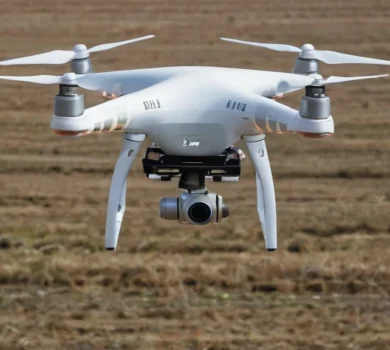
Vision-language models as aids for autonomous drones: balancing speed and precision.
A study conducted on autonomous drones showed that vision-language models, despite their potential for advanced semantic reasoning,
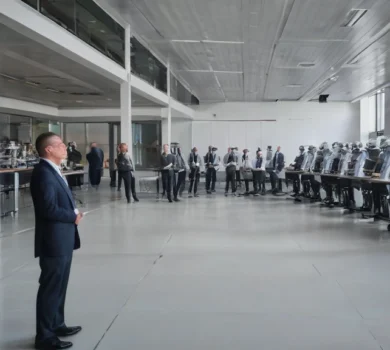
IRIM 2026 Seminar: How can robotics achieve seamless physical interaction with humans?
On October 21, 2026, the Institute for Robotics and Intelligent Machines will host a lecture.
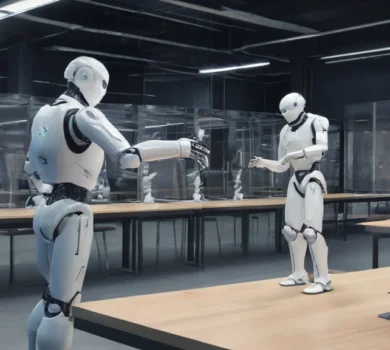
DriveWorld3D: a new generative simulation for safe autonomous driving
The new DriveWorld3D system, developed by the Robostreet team in Cambridge, is designed to help create safer models.
Microlocalization: precise positioning of mobile robots based on microscopic textures of the ground
Researchers have presented a new method for locating mobile robots with an accuracy of tens of micrometers, using microscopic textures.
Robotics as a space for creativity and diversity: experiences of researchers from the Oxford Robotics Institute
As part of the International Women in Engineering Day 2026, researchers from the Oxford Robotics Institute (ORI) shared