
Robot Programming in C++
C++ - Performance in Robot Control
Foundation of Modern Robotics
Advanced Control Algorithms
Precision and Process Optimization
Integration of C++ with ROS and AI
Stability and Speed in Automation
C++ is a key programming language in robot control systems, valued for its high performance and precision. NexaRob offers support in programming, integration, and optimization of robotic systems based on C++, adapting them to the requirements of modern automation.
Contact us Watch the videoDiscover the Key Advantages and Capabilities of C++ - The Foundation of Robot Control Systems, Valued for Its Performance
Programming industrial robots and controllers in C++
C++ is a language known for its high performance, memory safety, and direct access to hardware resources. In robotics, these features are crucial - from computationally demanding motion planning algorithms to advanced real-time systems. Thanks to the ability to control low-level operations, C++ is ideal for implementing critical machine control functions, as well as building solid foundations for environments such as ROS (Robot Operating System).
C++ in Robotics - Why Is It Worth It?
- Real-Time Performance: The ability to optimize code for specific architectures and minimize delays in control applications - e.g., in manipulators, mobile robots, or production lines.
- Stability and Reliability: Well-written C++ code can run for years without the need for frequent updates or service interventions, which translates into continuous production and lower maintenance costs.
- Versatile ecosystem- Toolsets for analysis, debugging, and Studio, GCC, and Clang, as well as specialized libraries (such as Eigen, Boost, and libuv), support virtually every stage of the development process - from creating nodes in ROS to integrating with vision systems and machine learning algorithms.
Capabilities of C++ in the world of automation-
- Motion controllers and PLC drivers- Many industrial controllers use C++ extensions or libraries that offer real-time hardware access, providing high control precision.-
- Artificial intelligence and signal processing algorithms- C++ is useful for implementing tasks requiring high computing power, e.g., in image recognition or online sensor data analysis.-
- Critical applications- Systems that monitor the operation of autonomous robots, which must operate stably even in changing conditions, often rely on C++ due to deterministic resource and memory management.-
Why C++ and how NexaRob supports its use in automation projects-
Collaboration model and scope of services related to C++-
NexaRob combines knowledge from the fields of robotics, vision systems, and industrial controllers to fully utilize the potential of C++. Our approach includes support at every stage - from initial planning, through software architecture design, to operator training and long-term service. As an integrator, we use technologies from trusted partners, adapting them to the requirements and expectations of specific companies.-
Requirements analysis and concept creation-
- Identifying customer processes and goals- We analyze the specifics of the industry, the type of machines, and the level of complexity of operations in order to develop a proposal for optimal solutions in C++.-
- Selection of tools and libraries- We select environments (IDEs, compilers), frameworks (e.g., ROS), and libraries that best meet performance and reliability requirements.
Code implementation and optimization
- Writing control modules: We develop key logic components in C++, from communication protocols to motion calculations and sensor integration.
- Performance and safety testing: We profile the code under production-like conditions, improve any potential "bottlenecks," and ensure compliance with safety standards.
Training and team support
- Courses and workshops: We share knowledge about best practices in C++, including memory management, multithreading, and ROS node implementation.
- Post-implementation support: We remain in contact with the client, assisting with any updates, feature enhancements, or troubleshooting of issues that may arise.
Long-term development strategy
- Monitoring and updates: As new C++ standards (e.g., C++20, C++23) and libraries emerge, we recommend potential code migrations or improvements to maintain competitiveness.
- Scalability and integration: If a company decides to deploy additional robots, cloud systems, or AI modules, NexaRob ensures that all elements work together at the highest level of performance.
Focusing on C++ in control systems and robotics, companies gain a stable and fast platform that remains flexible in the face of future challenges. NexaRob helps translate this technology into tangible business benefits by offering comprehensive support in implementing projects of varying scale and complexity.
Methods and tools - from low-level drivers to advanced algorithms in C++.
How does C++ ensure stability and performance at different layers of automation systems?
C++ is considered the foundation of many robotic applications because it enables a wide range of control over hardware - from direct handling of registers and interrupts to creating complex data structures using modern libraries. As a result, this language serves as a link between computationally demanding tasks and the reliability required in industrial applications.
Low-level drivers and motion controllers.
- Real-time support: Libraries and frameworks in C++ (e.g., in combination with RTOS) help write programs that respond almost instantly to events in the robotic environment.
- Optimization of operations on hardware: Thanks to broad support for SIMD (Single Instruction Multiple Data) instructions and inline mechanisms in compilers, it is possible to further accelerate calculations crucial for control algorithms.
Architecture of ROS (Robot Operating System) systems.
- ROS nodes in C++: The Robot Operating System supports C++ as the main language for writing nodes responsible for communication between robots, sensors, and peripheral devices. This allows for the creation of highly efficient modules with low latency.
- Access to a rich ecosystem: ROS nodes in C++ can use a wide range of packages and libraries (e.g., MoveIt!), which simplifies the implementation of functions such as motion planning, navigation, or computer vision.
Algorithms and data analysis
- Mathematical libraries: Solutions such as Eigen or Boost facilitate advanced data processing (matrices, vectors, numerical functions), which is crucial in projects requiring precise calculations (e.g., kinematics or dynamics analysis).
- AI integration: Although Python dominates the machine learning field, there are AI libraries in C++ (e.g., Caffe, ONNX Runtime), which allows deploying deep neural network models in systems with limited resources (edge devices).
DevOps practices and security
- Code quality control: C++ compilers generate detailed warnings that help detect potential errors (e.g., unsafe pointer operations). Additionally, integration with CI/CD (Continuous Integration/Continuous Deployment) tools enables automatic testing and static code analysis.
- Architecture selection: Depending on the needs (real-time, distributed computing, edge computing), NexaRob helps decide which C++ mechanisms (e.g., co-routines, multi-threading in std::thread) will work best in a given industrial scenario.
Thanks to its wide range of optimization possibilities and full control over the structure of the code, C++ is the foundation for latency-sensitive and computationally intensive control systems. NexaRob supports companies in selecting programming methods and tools so that the designed solutions are not only fast but also easy to maintain and develop in the future.
Case studies and example implementations (general scenarios)
How does C++ solve typical challenges in robot control and automation?
Although each implementation in the field of robotics and automation has its own specifics, many companies face similar challenges - such as the need to achieve deterministic response times, integration with existing systems, or management of an extensive sensor infrastructure. C++ combined with the experience of NexaRob experts can help meet these needs.
Precise control of a manipulator in the automotive industry.
Challenge: Assembly of precise components with diverse shapes in short time intervals, without the risk of collisions with other robots on the line.
C++ solution:
Implementation of inverse kinematics and motion planning in ROS using nodes written in C++, providing high computational performance.
Communication between individual robots via a fast protocol, which minimizes latency and improves task synchronization.
Optimization of mobile robots in the logistics industry.
Challenge: Autonomous guided vehicles (AGVs) must move in real-time within the warehouse, avoiding collisions with people and other AGVs.
C++ solution:
Advanced navigation algorithms (SLAM, trajectory planning) written in C++, operating within the ROS environment on a low-level real-time operating system (RTOS).
A module for rapid analysis of data from LiDAR sensors and 3D cameras, enabling obstacle detection and dynamic route modifications.
Measurement systems in the chemical industry.
Challenge: Control over a large number of sensors (temperature, pressure, pH), which must be queried at short intervals to maintain the stability of the production process.
C++ solution:
Dedicated drivers written in C++ and monitoring scripts that connect to sensor modules via industrial buses (e.g., Modbus, EtherCAT).
The system can be expanded with a Machine Learning module (e.g., using ONNX Runtime) that detects custom patterns in the data and sends alerts to operators.
Visual recognition in the food industry.
Challenge: Rapid quality control on the production line (e.g., shape, color, and size of fruits) to remove defective products or direct them to a different packaging line.
C++ solution:
Efficient image analysis implementation in the OpenCV library, running on high-performance CPU or GPU cores.
Integration with sorting robots controlled using real-time protocols, so that the vision system can instantly transmit a decision to reject a product.
In each of these scenarios, C++ forms the core of calculations and communication, and NexaRob supports companies at the stage of needs analysis, solution selection, and final implementation. This allows companies to benefit from the reliability and performance of C++, minimizing downtime, improving production quality, and utilizing the full potential of modern robotic technologies.
Tools and Best Practices - efficient and safe implementation of C++ in a robotics environment.
How to effectively leverage the potential of C++ and ensure application stability.
Even the best-designed code requires appropriate tools and project management methods to fully unleash the potential of C++. In robotics, where deterministic response time and low latency are critical, proper Best Practices determine the reliability of the entire system. NexaRob helps companies develop a proven process for creating and maintaining C++ software, tailored to the specifics of industrial applications.
Selecting the right environment and compiler
- Compliance with the latest standards: C++11, C++14, C++17, or C++20 offer numerous improvements in memory management and multithreading. It is worth using modern features that improve code readability and security.
- Optimization and profiling: Tools such as GCC and Clang (with built-in profilers) or Visual Studio allow you to track performance in real time, identify bottlenecks, and eliminate unnecessary operations.
Modular architecture and quality verification
- Division into components: Using design patterns (e.g., producer-consumer pattern) facilitates later modifications and scaling of the application.
- Unit and integration tests: In C++, various testing frameworks are available (Catch2, Google Test), which allows you to continuously monitor the stability of functionality and eliminate errors in the early stages of development.
Memory management and security
- Avoiding raw pointers: Using smart pointers (std::unique_ptr, std::shared_ptr) reduces the risk of memory leaks and leads to more readable code, which is very important in applications that run non-stop.
- Access control to resources: Multithreading requires the use of appropriate synchronization mechanisms (mutex, condition_variable) so that robots and processes do not interfere with each other's work.
Using specialized libraries and industry standards.
- Real-time libraries: For real-time (RT) requirements, it is worth using libraries based on embedded systems that provide precise timing and low latency.
- Collaboration with ROS: ROS packages in C++ allow you to easily create nodes that support various sensors, drivers, and communication protocols, unifying the way data is exchanged in the system.
We support implementations C++ from the perspective of software architecture and tools. DevOps., testing, and integration with existing systems. This allows companies using robotics and automation to fully benefit from the performance and reliability of C++, developing applications in a way that ensures their long-term stability.
How conscious design decisions affect efficiency and ecology in industry?
Cost optimization and sustainable development thanks to C++.
By choosing C++ as the foundation for controlling robots or industrial machines, companies can gain not only higher performance but also have a real impact on reducing operational and implementation costs. In an era of increasing environmental awareness and the need for sustainable resource management, well-thought-out C++ solutions become a competitive advantage.
Energy and hardware resource savings.
- Reduced system load: Highly optimized C++ applications run more efficiently on the same components, so there is no need to frequently upgrade hardware or add redundant computing power.
- Extending the life cycle of machines. Stable software controlling the movement of robots or PLCs reduces the risk of failures, which translates into a longer service life for existing equipment.
Better utilization of production lines
- Scalability of solutions: C++ enables the introduction of new functions - e.g., AI modules for analyzing production processes - without major reconstruction of the entire application, which promotes flexibility and efficient response to market needs.
- Reduced downtime: Reliable control programs reduce the number of unplanned downtimes, minimizing losses resulting from delays in deliveries and energy consumption during machine startup.
Compliance with Industry 4.0 assumptions
- Expansion with IoT systems: Using C++, it is possible to implement communication modules for IoT devices, which allows for continuous data collection and analysis in the cloud (Predictive Maintenance).
- Consistent data analysis: Integration of data from sensors, MES reports or vision systems facilitates the detection of areas where efficiency can be further improved and raw material consumption reduced.
Good reputation in the area of CSR (Corporate Social Responsibility)
- Responsible approach to resources: Companies that reduce the number of failures and waste in production gain a better image - they become more attractive trading partners and employers.
- Meeting environmental standards: Thanks to transparent data and controlled machine life cycle, it is easier to implement low-emission production standards, which helps avoid penalties or additional regulatory fees.
We support the analysis of needs and development opportunities so that companies can choose solutions that optimize energy and resource consumption. In practice, this translates into lower costs, a smaller environmental impact, and a stable foundation for further innovation - in line with the idea of sustainable production. C++ Answers regarding the use of C++ in robotics, control systems, and industrial projects.
Below are nine popular questions that often arise in the context of programming in C++ for the automation industry. If you cannot find an explanation for your doubts here, please contact us - NexaRob will be happy to advise you on how to fully utilize the potential of C++.
Frequently Asked Questions
Is C++ more difficult to learn than other languages, such as Python?
In what areas of robotics does C++ work best?
Is it possible to combine C++ with other languages, such as Python, in one project?
What does collaboration with ROS (Robot Operating System) look like?
Is C++ a suitable choice for machine learning in robotics?
Although Python is more often used for AI prototypes, there are machine learning libraries dedicated to C++. This makes it possible to implement an AI model in a system with limited computing resources (edge device) or where deterministic execution times are required.
Popular compilers (GCC, Clang, MSVC) provide profiling tools, as well as detailed warnings at the code level. You can also use solutions such as Valgrind or Visual Studio Profiler to detect memory leaks, excessive CPU usage, or thread locks.
Depending on the type of application and architecture (e.g., modular systems in ROS), partial updates can be made without interrupting the entire system. However, in critical industrial processes, downtime is usually used to ensure that everything is properly tested.
We offer comprehensive services: from needs analysis and software architecture design, to implementation and long-term service support. In addition, we provide training for teams, so that engineers can independently develop and maintain code.
C++ is used in many drivers and cobot platforms. Thanks to its performance and low-level control, it is possible to precisely manage movement or interaction with the environment (e.g., force sensors). In practice, this means faster reactions to changes and safer collaboration with humans.

Do you have more questions?
We invite you to contact NexaRob. We will present individual solutions based on C++, tailored to the needs of your production plant or robotics project, so that you can fully utilize the advantages of performance and reliability of this language.
Automate Your Business with NexaRob - Contact Us!
Interesting facts from around the world
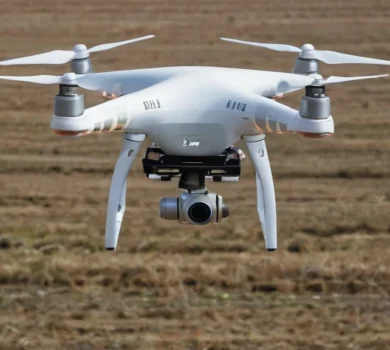
Vision-language models as aids for autonomous drones: balancing speed and precision.
A study conducted on autonomous drones showed that vision-language models, despite their potential for advanced semantic reasoning,
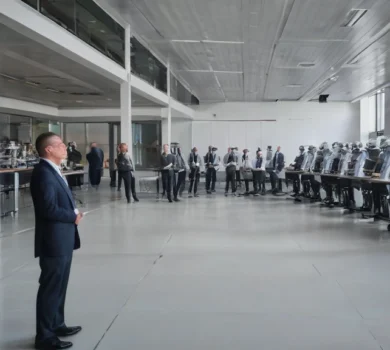
IRIM 2026 Seminar: How can robotics achieve seamless physical interaction with humans?
On October 21, 2026, the Institute for Robotics and Intelligent Machines will host a lecture.
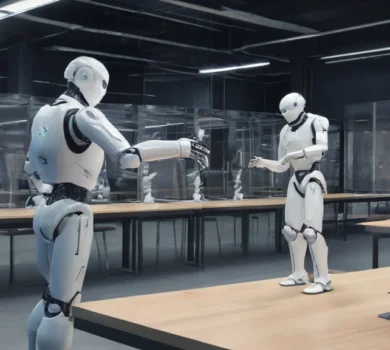
DriveWorld3D: a new generative simulation for safe autonomous driving
The new DriveWorld3D system, developed by the Robostreet team in Cambridge, is designed to help create safer models.
Microlocalization: precise positioning of mobile robots based on microscopic textures of the ground
Researchers have presented a new method for locating mobile robots with an accuracy of tens of micrometers, using microscopic textures.
Robotics as a space for creativity and diversity: experiences of researchers from the Oxford Robotics Institute
As part of the International Women in Engineering Day 2026, researchers from the Oxford Robotics Institute (ORI) shared