

Programming Universal Robots in URScript
Advanced control of UR robots
Precise automation in URScript
Flexible programming of UR robots
Process optimization for Universal Robots
Modern solutions in UR control
Full control over collaborative robots
URScript enables flexible and precise programming of Universal Robots, adapting them to various production processes. NexaRob offers support in configuration, optimization, and integration of UR robots, helping to fully utilize their potential.
Contact us Watch the videoLearn why URScript is the key to easy and flexible configuration of collaborative robots from Universal Robots
Programming industrial robots from Universal Robots in URScript
URScript (Universal Robots Script) is a dedicated language used in collaborative robots (cobots) from Universal Robots. Thanks to its scripting nature and simple syntax, it allows for quick and intuitive configuration of movements, making it an excellent choice in environments where worker safety and ease of adaptation to changing production processes are important.
Why URScript?
- Simple, script-based form: URScript resembles high-level languages (e.g., Python), which makes it easier to implement control logic even for less experienced programmers.
- Collaborative robots: Universal Robots is known for its cobots capable of safe operation near humans, and URScript enables adding instructions that respond to changing environmental conditions (e.g., detecting contact with a human).
- Flexible integration: The ability to connect with force sensors, cameras, or IoT systems makes URScript suitable for both simple and advanced applications.
How can NexaRob help?
- Needs analysis: We define the process and working environment of the cobots - whether the priority is safety, speed, or versatility.
- Code creation and optimization: We design URScript scripts, test them in a simulation environment, and then fine-tune them on the actual workstation.
- Team training: With our help, operators will learn the basics of writing URScript, which will allow them to quickly respond to changes in the production line without having to call external specialists for every fix.
See what makes URScript unique and why Universal Robots cobots are so valued in many industries.
Key Features and Application Examples in URScript
Although each robotic language is used to control movement and logic, URScript emphasizes collaboration with humans and ease of implementation. Below we present some of its characteristic features and examples of industries where UR robots gain an advantage:
Collaboration and safety
Easy limitation of force and speed: URScript allows you to easily set the robot's operating parameters so that when it collides with a human, the force is minimal.
Application: Industries requiring frequent human-robot interactions (assembly of small components, packaging in small facilities).
Flexible motion paths
The ability to define linear movements (movel) or point-oriented movements (movej) in a simple scripting style.
.
Application: Simple pick & place operations, low-volume palletizing, and performing tasks based on manual "training" along a trajectory (so-called freedrive).
Quick adaptation to new tasks
URScript allows you to create short functions (e.g., for gripper manipulation) and call them at various points in the process.
Application: Lines where the assortment changes regularly and motion sequences need to be reprogrammed frequently.
Integration with sensors and vision systems
URScript enables receiving data from a camera or force sensor and modifying motion parameters on the fly.
Application: Delicate assembly (electronics, medical industry), sorting objects by their position or shape.
Stop and emergency shutdown functions
Built-in commands allow you to quickly interrupt robot operation in case of violation of the safety zone or exceeding the permissible force.
Application: Applications where immediate stopping is critical in case of contact with a person or an unexpected object.
URScript provides UR robots a user-friendly and agile platform for defining movements, even in processes where humans and machines share the same workstation. NexaRob helps companies prepare applications based on URScript - from the first trajectory sketches, through integration tests, to final implementation in a production environment.
Learn about the various ways to create code for Universal Robots robots and choose the solution that best suits your process.
Main Modes and Programming Methods in URScript
Online, Offline, Freedrive, and More
Programming Universal Robots cobots in URScript can be done in several modes, depending on the needs and skills of your team. At NexaRob, we help you choose the appropriate method so that implementation and code maintenance are fast, safe, and flexible. Below, we highlight the key modes:
Teach Pendant (Online Programming)
- Direct control: The operator uses the robot's touch panel (pendant) to set up the trajectory point by point and define the URScript logic "on the fly".
- Quick adjustments on the line: It is an ideal solution for minor changes - corrections can be made without requiring a long downtime.
- Limitations: For more complex sequences (e.g., many motion points), it may be time-consuming and require caution to avoid introducing unwanted errors.
Offline Programming (Simulation Software)
- Working on a computer: The URScript code and the motion plan are created in a virtual environment before being transferred to the actual cobot.
- Time saving: The line can operate while engineers prepare a new version of the code outside the production hall. After uploading it to the robot, usually only minor adjustments are needed, and production can resume.
- Application: For high-load lines, where stopping the cobot for longer modifications is difficult to accept.
Freedrive and Learning by Demonstration
- Combining methods: In Freedrive mode, the operator "demonstratively" moves the cobot's arm to the target points, and URScript records these positions and creates a motion trajectory from them.
- Gradual Improvement: Once recorded, the path can be further edited in offline mode or using the Teach Pendant, refining parameters such as speed or smooth transitions.
Online Programming remote (Network Control)
- Remote access: If the network infrastructure is properly secured, the NexaRob team or your engineers can log in to the UR controller and make changes to the URScript code remotely.
- Expert support: This enables quick response to errors or optimization of motion without requiring physical presence near the cobot.
Programming methods in URScript should be flexible - often several approaches are combined in one factory. Teach Pendant works well for quick corrections on the line, Freedrive facilitates "teaching" trajectories, and simulation tools (offline) help refine complex applications without long downtime cobot. In the following blocks, we will describe how URScript it works with vision systems and other devices so that the Universal robot Robots becomes increasingly intelligent and useful.
Learn how Universal Robots cobots can record images and data from sensors to intelligently respond to changing conditions in the process.
Integration with Vision Systems and Sensors in URScript Code
Universal Robots robots, controlled by URScript, are known for their easy collaboration with humans. However, in addition to human-robot interaction, they can also take into account information from cameras, force sensors or other devices. This integration allows the cobot to continuously adapt its movement to the situation.
Vision Systems
- Protocols and libraries: URScript can receive data from 2D/3D cameras, which enables dynamic path correction during pick & place, sorting or quality control operations.
- Object Recognition: The camera identifies the position and shape of the part, and the robot calculates offsets - useful when objects are arranged in a disorganized manner.
Force and Moment Sensors
- Pressure control: In applications requiring precise contact (e.g., assembly of delicate components), URScript can check values from a sensor and automatically limit speed or stop movement, preventing damage.
- Collision detection- The robot immediately triggers an emergency action when the torque on the axis exceeds a safe level.
Digital and Analog Input/Output Support
- Integrated control: During operation, the robot can activate grippers, valves or feeders based on data from URScript.
- Analog data: Useful in processes of dispensing liquids, controlling temperature or pressure - just add the appropriate logic to the script.
Application examples
- Food Industry: Gentle gripping of fruits and placing them on belts, with a camera verifying quality or size.
- Electronics: Assembly of microcircuits, where the robot adjusts the force when inserting sensitive components onto PCB boards.
- Logistics: Sorting packages using cameras to scan codes, which allows URScript to quickly assign an object to the appropriate storage zone.
Integration of Universal Robots robots with vision systems and sensors - controlled in code URScript - opens up flexible and intelligent possibilities for your production line. NexaRob supports companies in selecting the right equipment, writing code, and performing integration tests, so that cobots UR can effectively interact with the environment and people, while ensuring safety and process efficiency.
A practical example showing how URScript helps maintain precision and safety when assembling sensitive electronic components.
Case Study: Delicate Assembly in the Electronics Industry
In the electronics industry, where components are often extremely fragile, not only accuracy but also appropriate limitation of force and speed of movements is important. Below we present how code written in URScript can facilitate these demanding tasks:
Context and Main Challenges
- Delicate Components: Sensors, integrated circuits or sensitive connectors that can be easily damaged by excessive pressure.
- Product variety: Assembly of different product variants on one line, which requires the robot to quickly switch between procedures.
- Working near the operator: The cobot must safely share space with a person who provides the next elements.
Force and moment control
- URScript allows you to retrieve values from the robot's built-in sensors, so that if the resistance is too high, the system automatically stops the movement, preventing damage to the part.
- Press force verification: For each type of component, you can define the maximum torque on the axis, after which the cobot interrupts the operation.
Parameterized URScript modules
- The code is divided into assembly functions (e.g., InsertConnector, FastenScrew), where each of them allows you to easily change the speed or press depth depending on the product variant.
- Quick switching: When a new series of assemblies appears, simply edit the appropriate values in the script (e.g., press force, movement angles).
Effects and Benefits
- Reduced damage: The use of controlled pressing and torque monitoring has minimized the number of incorrectly assembled parts.
- 20% increase in efficiency: Thanks to seamless offline integration and Teach Pendant, switching to a new product variant has become faster.
- Safe collaboration: The robot and operator worked effectively side by side, without exposing humans to the risk of collision or pinching.
This case study shows how URScript can help robots Universal Robots in the precise and safe assembly of delicate components. NexaRob provided full support - from requirements analysis, through code writing and testing, to operator training, which allowed the client to accelerate the process and improve production quality.
How to maintain high efficiency and safety when operating Universal Robots cobots in URScript?
Optimization of Codes and Robot Safety Procedures for UR
After creating an application in URScript, it is worth taking care of its long-term maintenance and improvement. At NexaRob, we recommend a number of practices that help avoid downtime, increase efficiency and ensure operator safety:
Cycle time and motion path analysis
- Monitoring statistics: The robot can report the number of cycles performed, as well as collect data on any downtimes or errors - this makes it easier to identify "bottlenecks".
- Parameter correction: Often, you can shorten the travel distance or increase the speed while maintaining full compliance with safety standards.
Code structure and readability
- Refactoring: Removing repetitive sections by creating functions and modules facilitates making modifications and prevents errors.
- Consistent naming: Clear descriptions of variables and procedures (e.g., pickOffset, safeMove) help operators and engineers quickly understand the script's logic.
Safety procedures and emergency systems
- Emergency stop conditions: URScript enables immediate stop to be called when the robot detects an unexpected collision or a signal from the safety curtain.
- Limiting zones: You can define areas in the robot's workspace where the speed and force of the cobot are automatically reduced to protect people and equipment.
Updates and scalability
- New firmware versions: Universal Robots occasionally releases controller improvements. It is worth assessing whether newer features will bring benefits to your process.
- Workstation expansion: If you want to add a second cobot or a new gripper, usually only minor changes in URScript are needed, without rewriting the entire application.
Optimization and care for safety procedures constitute the foundation of long-term operation of UR cobotsNexaRob can help you improve your code, conduct regular tests, and adapt applications to changing production requirements. This ensures that your team has a stable and efficient collaborative robot working environment.
Dispel your doubts about creating and maintaining URScript applications, and learn about our support model.
Frequently Asked Questions
Below, we answer frequently asked questions about programming Universal Robots in URScript. If you cannot find the answers here, please contact NexaRob - we will be happy to discuss the details of your project and present individual solution proposals.
No. URScript has a simple, script-like form, similar to popular high-level languages. People with basic knowledge of control logic or automation usually quickly learn its syntax. NexaRob also offers training courses to accelerate the implementation process for your team.
UR cobots are used in electronics assembly, the food sector (packaging), logistics (sorting, palletizing), and in applications requiring robot-human cooperation, such as small production lines.
It is recommended to use a dedicated offline environment (e.g., Polyscope PC version) or UR simulators, but you can also create scripts directly on the robot panel (Teach Pendant). Simulation reduces downtime by allowing you to develop movements "offline".
URScript enables receiving data from cameras (2D/3D) and sensors (e.g., force). In the code, you can then add instructions to correct the movement in real time, in order to adapt to the position of the part or gently press a specific surface.
Yes. They are designed as cobots (collaborative robots), which means they have built-in mechanisms to limit force and speed. Additionally, in URScript you can define additional emergency procedures, such as immediate stopping upon collision detection.
It depends on the variability of production. If you have a diverse product range, more frequent updates will be necessary. If the process is stable, occasional changes will suffice. A modular coding style and the use of a version control repository (e.g., Git) can help.
We cooperate with a global network of suppliers, including Universal Robots. We offer comprehensive implementations - from selecting a cobot model and accessories, through preparing applications in URScript, to providing service support and system development.
Most often, minor changes and adjustments to the URScript logic for new workstations are sufficient. Thanks to the similar architecture of the UR controller, many modules and functions can be transferred from one project to another, reducing implementation time.
We invite you to contact us - by email or phone. NexaRob will gladly advise on hardware selection, write and optimize URScript code, and conduct training for your team.

Do you have more questions?
Contact NexaRob - our specialists are available for URScript programming, hardware solution customization, and long-term service support. We will be happy to discuss your company's needs and propose a flexible and scalable solution using Universal Robots cobots.
Automate Your Business with NexaRob - Contact Us!
Interesting facts from around the world
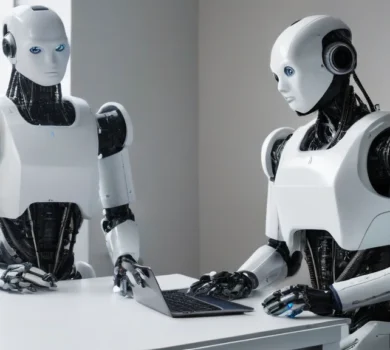
How does the new diffusion model change the approach to autonomous driving?
The new QualiDrive model introduces an innovative approach to trajectory generation in autonomous vehicle guidance - instead of
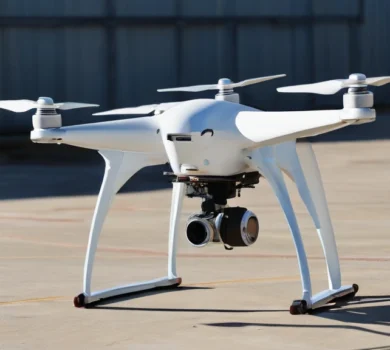
The fusion of drone and ground vehicle data improves the continuity of tracking autonomous vehicles.
A study conducted in a simulation showed that the combination of data from a drone (UAV) and a ground vehicle (UGV)
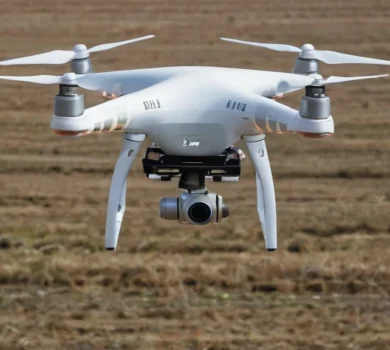
Vision-language models as aids for autonomous drones: balancing speed and precision.
A study conducted on autonomous drones showed that vision-language models, despite their potential for advanced semantic reasoning,
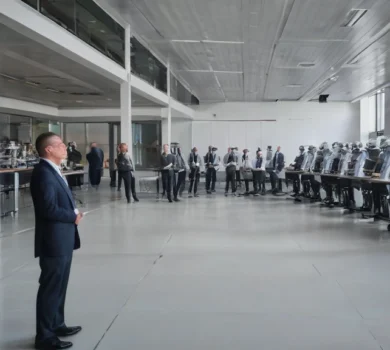
IRIM 2026 Seminar: How can robotics achieve seamless physical interaction with humans?
On October 21, 2026, the Institute for Robotics and Intelligent Machines will host a lecture.
DriveWorld3D: a new generative simulation for safe autonomous driving
The new DriveWorld3D system, developed by the Robostreet team in Cambridge, is designed to help create safer models.