

Humanoid Robot Navigator 2 NAVIAI
Intelligence and precision
Next-generation humanoid robot
Navigator 2 - Advanced AI technology
Humanoid created for interaction
Robot developed by Zhejiang Humanoid Lab
Navigator 2 - The future of automation
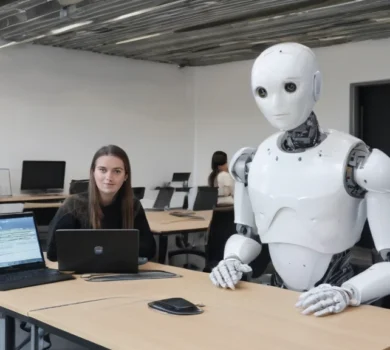
Navigator 2 is a humanoid robot from NAVIAI, developed by the Zhejiang Humanoid Robot Innovation Center. It is the second generation of the robot, presented in August 2024. Thanks to its 41 degrees of freedom and advanced artificial intelligence, it can perform complex tasks such as interacting with people, making tea, or playing chess. The project is technologically supported by SUPCON Technology Co. and represents a step towards the commercialization of humanoid robotics in China.
Contact us Watch the videoNavigator 2 - NAVIAI
Humanoid Robot Navigator 2 - NAVIAI
NAVIAI robots are a brand of humanoid robots developed by the Zhejiang Humanoid Robot Innovation Center, a Chinese research and development center established in December 2023 as an initiative of the Ningbo city government and Zhejiang University. NAVIAI is designed to work in human-designed environments such as offices, warehouses, or service areas, combining bipedal mobility with advanced artificial intelligence algorithms. Thanks to this technology, the robot can navigate stairs, enter narrow corridors, and perform basic manipulation tasks, enabling it to work similarly to humans.
The latest model from this brand, Navigator 2, is the second generation of humanoid robots, presented in August 2024 at the World Robot Conference in Beijing. Navigator 2 is an improved version of the previous Navigator α (Alpha) model and offers increased walking stability, more precise manipulation functions, and more advanced integration capabilities with AI systems. The NAVIAI project aims to create a universal platform that can be used in service and logistics sectors, as well as in education and research and development areas.
It is worth noting that SUPCON Technology Co., a leading Chinese company specializing in industrial automation and AI, is a technology partner of the Zhejiang Humanoid Robot Innovation Center, which further supports the development of the project, although it does not directly affect the production of NAVIAI robots.
History and Development
History of the NAVIAI Navigator 2 Humanoid Robot
The Zhejiang Humanoid Robot Innovation Center is a research and development center that focuses on integrating robotics research, artificial intelligence, and industrial applications. NAVIAI is one of the flagship projects of this center, aimed at demonstrating the potential of bipedal humanoids in everyday work and service environments.
Origins and assumptions of the project
- The initiative to develop a humanoid dates back to around 2020, when the Zhejiang Humanoid Robot Innovation Center team identified the need to create robots capable of working in typical office and service environments. Previous experience gained while working on mobile robots and AI techniques provided a solid foundation for developing the concept of a bipedal robot.
- In the early stages, the focus was on developing an effective motion stabilization system, based on lightweight electric actuators and advanced dynamic balancing algorithms, so that NAVIAI would be able to move freely and efficiently in office, warehouse, and service environments.
Evolution of NAVIAI and implementation plan
- In 2021, the first prototypes appeared, which were used to test walking stability, the ability to overcome obstacles such as stairs and ramps, and the transport of small objects. Presentation materials also showed integration with AI software, responsible for basic image recognition and collaboration with cloud services.
- In 2022, the Zhejiang Humanoid Robot Innovation Center announced that NAVIAI would be deployed in pilot projects in the retail industry, hotel services, and educational laboratories to gather user feedback. The company plans to further develop the project in the coming years by expanding the manipulators, increasing battery performance, and integrating with more advanced AI models.
- In 2024, the Navigator 2 model was presented - the latest generation of the NAVIAI humanoid robot, an improved version of the previous Navigator α (Alpha) model. Navigator 2 is characterized by even better walking stability, more precise manipulation functions, and wider integration with IT systems.
Although NAVIAI Robot is still in the development phase, but its modular design and carefully designed algorithms indicate broad application possibilities - from reception services and minor logistics tasks to supporting scientific and educational projects. Over time, the machine is expected to gain additional voice interaction features and the ability to manipulate heavier objects, which will further expand its potential in practical applications.
Technical Specifications
Technical Specifications of the NAVIAI Humanoid Robot
The following information is based on the official materials from the manufacturer, Zhejiang Humanoid Robot Innovation Center, regarding the NAVIAI Navigator 2 humanoid robot. NAVIAI Navigator 2 is an advanced humanoid robot designed to perform complex tasks in various environments, combining modern engineering and artificial intelligence solutions.
| Parameter | Value | Notes |
|---|---|---|
| Height | 1.65 m | Similar to the height of an average person. |
| Weight | 60 kg | Lightweight design facilitating mobility. |
| Degrees of Freedom (DoF) | 41 | Enables complex and precise movements. |
| AI computing power | 275 TOPS (trillions of operations per second) | Ensures fast data processing and reactions to complex tasks. |
| Single arm lifting capacity | 5 kg | Allows manipulation of moderately heavy objects. |
| Walking speed | Up to 6 km/h | Enables efficient movement in a human environment. |
| Battery life | Approximately 2 hours | Replaceable batteries allow for extended operating time. |
| Sensors | RGB cameras, microphones, touch sensors | Enable advanced perception of the environment and interaction with users. |
| Interactive interface | Touch screen | Facilitates communication and information presentation. |
NAVIAI Navigator 2 This is an advanced humanoid robot developed by Zhejiang Humanoid Robot Innovation Center, designed to provide support in various sectors through the automation of manual tasks. Thanks to its advanced design, integration with artificial intelligence systems, and ability to perform precise manipulations, NAVIAI Navigator 2 represents a promising solution for companies seeking modern technologies that support operational efficiency.
NAVIAI
Applications and Examples of Use
The NAVIAI robot was designed to support various sectors, such as services, logistics, and education, thanks to its unique bipedal mobility and minimalist manipulation functions. Zhejiang Humanoid Robot Innovation Center believes that NAVIAI can significantly relieve employees of tasks where traditional automation faces limitations in typically human environments.
Customer Service and Reception.
Greeting Guests and Providing Information: In hotels, shopping centers, or office buildings, Figure 02 can take over some reception duties - indicate directions, distribute leaflets, and provide information about the offer.
Reception Staff Support: The robot can transport documents, sort small packages, and perform other simple tasks, increasing team efficiency.
Light Warehouse and Logistics Tasks
Moving Small Items: Thanks to its bipedal design, NAVIAI can operate where traditional wheeled robots have limitations - for example, by overcoming stairs or narrow passages, which enables the efficient transport of small loads.
Order Management: Integration with warehouse management systems (WMS) enables automatic receipt of transport orders and reporting of progress, which improves the operation of the logistics back-end.
Education and R&D Laboratories
Research Platform: Thanks to its open API interface, NAVIAI can serve as a research tool for scientists and students, enabling testing of AI algorithms, motion control, and human-robot interaction in conditions close to reality.
Demonstrations and Workshops: The presence of the robot at conferences and educational events attracts attention, allowing for demonstrations of modern technologies and inspiring further research in the field of robotics.
Support in Offices and Institutions
Handling Small Deliveries: In office environments, NAVIAI can transport envelopes, documents, and light packages between departments, which significantly improves daily operations and reduces the need for manual transport.
Assistance in Resource Management: Integration with IoT systems and booking platforms enables the robot to support infrastructure management, for example by controlling lighting or air conditioning.
Marketing and Event Industry
Attraction at Booths: During trade fairs and events, NAVIAI can showcase products, provide information, and engage visitors, strengthening the company's image as a modern and innovative one.
Interactive Showcase: Thanks to its ability to move around and simple communication functions, the robot interacts with participants, increasing promotional impact and attracting media attention.
In each of these scenarios, the robot's bipedal mobility NAVIAI, combined with advanced AI algorithms, has the potential to significantly improve efficiency and employee comfort, introducing a novel dimension of automation in spaces traditionally dedicated to humans. The ultimate effectiveness of implementations will depend on further development of manipulation functions, battery performance, and expansion of intelligent capabilities, as planned by the manufacturer.
Technology and Innovation, Safety
NAVIAI
The NAVIAI robot, developed by Zhejiang Humanoid Robot Innovation Center, combines bipedal mechanics with basic manipulation functions and artificial intelligence elements, enabling safe and efficient operation in environments designed for humans. In 2025, the manufacturer introduced a series of updates that further enhanced the robot's efficiency and safety. Below are the key technological aspects and the manufacturer's approach to ensuring safety:
Bipedal Drive and Gait Stabilization
- Electric Actuators: NAVIAI uses lightweight but efficient actuators placed in the hip, knee, and torso joints. This allows the robot to easily navigate stairs, ramps, and narrow passages typical of office and service environments. The 2025 updates optimized their operation, resulting in even smoother movement with lower energy consumption.
- Balance Algorithms: The built-in system analyzes data from accelerometers and gyroscopes in real time, dynamically correcting movement. The new generation of algorithms enables NAVIAI to maintain a stable posture even in very variable conditions, minimizing the risk of tipping over.
Manipulators and Grippers
- Light Duty Arms: The current version of NAVIAI is capable of carrying small objects (usually weighing a few kilograms), which is sufficient for performing basic service tasks and minor warehouse operations.
- Pressure Sensors: The company plans to further develop its manipulators by introducing advanced pressure sensors, which will allow for precise adjustment of the gripping force to suit a variety of objects - from delicate to more durable ones.
AI and Machine Learning Systems
- Object Recognition: NAVIAI uses cameras and machine learning algorithms to analyze images, enabling it to identify obstacles and objects in its field of vision. The latest updates allow the robot to learn movement patterns and dynamically respond to changes in the environment in real time.
- Voice Command Interpretation: Fourier Intelligence is working on implementing speech recognition modules, so that NAVIAI can perform simple voice commands, which is especially useful in reception applications.
Safe Human-Robot Collaboration
- Force Limiters and Collision Detection: NAVIAI is equipped with software and hardware mechanisms that automatically reduce torque in the joints when it comes into contact with a human, and also stop movement when unexpected resistance is detected. Improvements introduced in 2025 further minimize the risk of injury.
- E-Stop Button: A standard emergency stop button allows the operator to immediately shut down the robot's drives in critical situations, providing an additional level of safety in accordance with the latest industry standards.
Thanks to these technological solutions and systematic updates in 2025, NAVIAI not only increases operational efficiency but also ensures a high standard of safety, making it an ideal tool for working in human-designed environments.
NAVIAI
Integration and Compatibility, Personalization and Customization of Solutions
Zhejiang Humanoid Robot Innovation Center emphasizes that the NAVIAI robot is easy to implement and flexible in adapting to the specific requirements of various industries and processes. Updates in 2025 confirm that the manufacturer is constantly developing the platform, enabling its seamless integration with existing IT systems and adaptation to individual operational needs. Below are the main assumptions regarding integration and personalization options:
Open Programming Interface (API)
- Developer Tool Set: The manufacturer provides comprehensive documentation and libraries that enable the creation of dedicated applications for controlling robot movement, integration with external AI services (such as speech recognition and image analysis), and expansion of NAVIAI's functionality with additional modules.
- AI Algorithm Implementation Capability: Thanks to the open API, NAVIAI can be expanded with image analysis functions, gesture recognition, and adaptation to specific procedures within a company, which enables precise customization of the robot to individual operational needs.
Connectivity and Communication
- Wi-Fi, Ethernet: The robot uses standard network protocols, enabling remote monitoring, software updates, and integration with existing IT infrastructure, including warehouse management systems (WMS) or enterprise resource planning (ERP).
- Cloud Management: NAVIAI transmits operational data, such as movement routes and energy consumption, to the cloud, where it is analyzed to optimize processes and support updates and development of AI algorithms.
Hardware Personalization
- Gripper Variants: Depending on the type of items being transported - from small packages to documents and small industrial components - the robot can be equipped with various versions of grippers, which differ in shape and precision level.
- Configurable Sensors: In projects where additional data is required, NAVIAI can be expanded with additional sensors, such as depth sensors, thermal cameras, or ultrasonic sensors, enabling even better adaptation to specific work scenarios.
Visual Personalization
- Housing with Logo and Corporate Colors: For applications in the service or marketing sector, it is possible to customize the robot's appearance by modifying the color scheme of the housing and adding logos, which strengthens the company's brand consistency.
- Interactive Panels: In some versions of NAVIAI, it is possible to equip the robot with a screen (e.g., located in the chest area), which will enable the presentation of information, supporting communication and marketing functions.
Support for Pilot Implementations
- Test Programs in Real-World Environments: The manufacturer encourages collaboration with partners who want to test the robot in real operating conditions. This makes it possible to adapt NAVIAI's functions to actual requirements and usage scenarios.
- Capability to Expand Functionality: Thanks to its open software architecture and modular design, the robot can be systematically developed - both in terms of manipulators, battery performance, and AI functions - which enables flexible adaptation to changing market needs.
Thanks to these solutions, the Robot NAVIAI It has the potential to be easily integrated with existing IT systems and adapted to the specifics of a particular organization or research project. This approach enables versatile implementations - from service and logistics applications to educational projects - and supports effective collaboration with personnel while minimizing infrastructure adaptation costs.
NAVIAI
Benefits for Customers
The NAVIAI robot has the potential to become a versatile assistant in many sectors - from services, through education, to light logistics applications. Thanks to its bipedal design, NAVIAI moves freely in standard rooms, performing tasks in direct contact with personnel. Updates in 2025 confirm that the solutions implemented in NAVIAI bring even greater operational efficiency. The key benefits resulting from its implementation are presented below:
Time and Resource Savings
- NAVIAI takes over repetitive, monotonous tasks, such as moving documents, distributing informational materials, or performing basic cleaning tasks, allowing employees to focus on more complex tasks.
- Bipedal mobility enables efficient operation in standard spaces, eliminating the need for costly infrastructure reconstruction (e.g., installation of rail tracks).
Modernizing Customer Service
- In hotels, conference centers and shopping malls, NAVIAI can act as a reception assistant - welcoming guests, handing out leaflets and directing them to the appropriate departments, which relieves staff and strengthens the company's modern image.
- After implementing advanced AI modules that enable speech recognition, the robot will be able to answer simple customer questions in different languages, supporting the international nature of the service.
Easy Implementation in Warehouse Processes
- - Integration with WMS systems and the ability to transport small items enables the automation of transportation tasks in warehouses and offices.
- - The bipedal design allows it to overcome stairs and narrow passages, which is crucial in areas where traditional wheeled robot solutions (e.g., AGV carts) have limitations.
Educational and Research Support
- Thanks to its open API interface and humanoid form, NAVIAI is an excellent experimental platform for universities and laboratories, enabling students and scientists to develop their own AI algorithms, robot control systems, and research on human-machine interaction.
- Presentations at conferences and educational events attract the attention of the media and participants, promoting modern solutions in the field of robotics.
Expanding Automation Potential
- NAVIAI introduces an element of "human ergonomics" into automation, enabling the performance of tasks requiring mobility similar to that of a human.
- In the future, the development of manipulators and AI functions will allow for the gradual expansion of the range of tasks that the robot can perform, adapting to the changing needs of the company.
Thanks to these benefits, the implementation of the Robot NAVIAI contributes to increased operational efficiency, improved customer service quality, and the introduction of innovative solutions that automate daily processes. Current development work in 2025 focuses on further improving manipulation functions and energy efficiency, which makes it NAVIAI an increasingly versatile support tool in various environments.
FAQ - 9 frequently asked questions
Humanoid Robot NAVIAI
Below we present short answers to the main questions related to the NAVIAI Robot. If you lack detailed explanations or need additional information, please contact us or review the full FAQ section.
Currently, the manufacturer is conducting pilot projects and focusing on tests with selected partners. Wide commercial implementations will be possible after the completion of the development phase and the collection of appropriate feedback.
Due to the early stage of development, Zhejiang Humanoid Robot Innovation Center does not provide an official price list. Costs depend on the software version, manipulator end-effectors, and the scope of implementation support.
Prototype tests indicate several hours of operation, depending on the nature of the tasks performed (walking intensity, frequency of object handling). The manufacturer is constantly striving to improve energy efficiency.
The current arm design is intended for light tasks, with a lifting capacity of a few kilograms. Future variants may be equipped with actuators with higher torque, but at this stage, development focuses on precise manipulation of lightweight objects.
The robot is equipped with force limiters in the joints, a collision detection system, and an emergency stop button (E-Stop). Nevertheless, the operator should follow basic health and safety procedures and the manufacturer's instructions.
Currently, the main focus is on stable walking and basic manipulation functions. The manufacturer plans to develop AI functionalities that will enable the interpretation of voice commands and the detection of people and obstacles in the field of view.
Yes, Zhejiang Humanoid Robot Innovation Center announces options for visual customization, allowing adaptation of the housing (e.g., logo, color scheme) and manipulator ends to individual customer needs.
The implementation of an open API is planned, which will enable automatic task assignment and progress reporting in warehouse and office environments. The integration configuration will be adapted to the specifics of the client's system.
NAVIAI is primarily designed for indoor use - in offices, warehouses, and other standard environments. Operation outdoors or in difficult, highly uneven terrain is not planned at this stage of development.

More questions?
If you would like to learn more about humanoid robots, we invite you to browse our complete FAQ section. You will find additional questions, detailed instructions, and helpful tips there.
Why NexaRob?
Your Trusted Partner in the Field of Humanoid Robotics - Knowledge, Passion, and Innovation
NexaRob closely monitors the work carried out by the Zhejiang Humanoid Robot Innovation Center, including the NAVIAI project. Our team combines engineering expertise with experience in artificial intelligence and implementation management, which allows us to support companies and institutions in fully utilizing the potential of humanoid robots. A key element of our mission is to provide valuable automation solutions that relieve personnel and deliver real business benefits.
- Expertise in Humanoid Robotics NexaRob collaborates with many manufacturers and research institutions around the world. This enables us to offer a comparison of various humanoid models - including NAVIAI - and adapt them to specific customer requirements.
- Individual Approach to Projects We analyze the infrastructure and processes within an organization to propose an optimal robot implementation plan, including manipulator configuration, integration with IT systems, and personnel training. Our solutions are tailored to individual needs.
- Implementation Support and Service We offer comprehensive assistance with robot assembly, configuration, and team training. Our after-sales service includes both technical advice and software updates or ongoing support in the event of any malfunctions.
- Innovation and Continuous Development NexaRob participates in pilot projects and R&D work to continuously expand its offerings and update its knowledge base. As a result, our customers have access to innovative features in the field of AI and humanoid robotics.
If you would like to learn more about the capabilities of the NAVIAI Robot or are wondering whether humanoids would be suitable for your business or institution, please contact us. Together we will determine how the robot can relieve your team, improve customer service, and contribute to increased efficiency.
Automate Your Business with NexaRob - Contact Us!
Join NexaRob and Together Let's Develop Humanoid Robotics
Do you want to become our Partner?
NexaRob is constantly looking for partners and customers interested in implementing humanoids in their daily operations. We believe that collaboration between manufacturers, integrators, and end-users leads to the most successful projects - those in which robots effectively support people in their tasks.

United States

China

Japan

Germany

India

United Kingdom

France

Italy

Canada

South Korea

Brazil

Australia

Spain

Mexico

Indonesia

Netherlands

Saudi Arabia

Turkey

Switzerland

Taiwan

Poland

Sweden

Belgium

Thailand

Ireland

Austria

Norway

Israel

United Arab Emirates

Argentina

South Africa

Denmark

Philippines

Singapore

Malaysia

Colombia

Bangladesh

Egypt

Chile

Finland

Vietnam

Portugal

Czech Republic

Romania

New Zealand

Peru

Greece

Ukraine

Slovakia

Hungary

Slovenia

Croatia

Serbia

Bulgaria

Estonia

Latvia

Lithuania

Iceland

Luxembourg

Malta

Cyprus

Morocco

Algeria

Tunisia

Nigeria

Kenya

Ethiopia

Ghana

Tanzania

Uganda

Angola

Senegal

Qatar

Kuwait

Oman

Pakistan

Sri Lanka

Nepal

Kazakhstan

Uzbekistan

Mongolia

Russia

Cambodia

Myanmar

Laos

Fiji

Papua New Guinea

Venezuela

Ecuador

Uruguay

Paraguay

Bolivia

Costa Rica

Panama

Dominican Republic

Guatemala

Cuba

Jordan

Lebanon

Iran
Additional countries in Europe
These countries are hidden in readable mode so that the map is not cluttered. Click on a country to open contact information, email, and a description of the area of cooperation.
Additional countries in Asia
These countries are hidden in readable mode so that the map is not cluttered. Click on a country to open contact information, email, and a description of the area of cooperation.
Additional countries in the Americas
These countries are hidden in readable mode so that the map is not cluttered. Click on a country to open contact information, email, and a description of the area of cooperation.
Additional countries in Africa
These countries are hidden in readable mode so that the map is not cluttered. Click on a country to open contact information, email, and a description of the area of cooperation.
Additional countries in Oceania
These countries are hidden in readable mode so that the map is not cluttered. Click on a country to open contact information, email, and a description of the area of cooperation.
Albania
Andorra
Belarus
Bosnia and Herzegovina
Montenegro
Liechtenstein
North Macedonia
Monaco
Moldova
San Marino
Afghanistan
Armenia
Azerbaijan
Bahrain
Bhutan
Brunei
Georgia
Iraq
Yemen
Kyrgyzstan
North Korea
Maldives
Syria
Tajikistan
East Timor
Turkmenistan
Antigua and Barbuda
Bahamas
Barbados
Belize
Dominica
Grenada
Guyana
Haiti
Honduras
Jamaica
Nicaragua
Saint Kitts and Nevis
Saint Lucia
Saint Vincent and the Grenadines
El Salvador
Suriname
Trinidad and Tobago
Benin
Botswana
Burkina Faso
Burundi
Cape Verde
Chad
Democratic Republic of the Congo
Djibouti
Eritrea
Eswatini
Gabon
Gambia
Guinea
Guinea-Bissau
Equatorial Guinea
Cameroon
Comoros
Congo
Lesotho
Liberia
Libya
Madagascar
Malawi
Mali
Mauritania
Mauritius
Mozambique
Namibia
Niger
Central African Republic
Rwanda
Seychelles
Sierra Leone
Somalia
Sudan
South Sudan
Togo
Ivory Coast
Sao Tome and Principe
Zambia
Zimbabwe
Kiribati
Micronesia
Nauru
Palau
Samoa
Tonga
Tuvalu
Vanuatu
Marshall Islands
Solomon Islands
Why Partner with NexaRob?
Joint Investments in Innovation
We combine capital and know-how to create robotic solutions that are not only impressive but also practical and scalable across various industries.
Synergy of Competencies
Our experts represent the fields of engineering, AI, project management, and IT integration. This allows us to offer comprehensive solutions: from selecting the right humanoid, through its implementation, to development and service.
Global Perspectives
NexaRob maintains international contacts, which enables us to adapt projects to the requirements and preferences of local markets. We help in adapting robots to safety standards and cultural specifics.
We are Looking for Partners in the Following Areas:
- Production and Distribution of Humanoid Robots Together with humanoid manufacturers, such as Zhejiang Humanoid Robot Innovation Center, we develop integrated offers covering hardware, software, and service services.
- AI and IoT Technologies The integration of cloud services and machine learning algorithms with humanoids creates space for fully autonomous and intelligent scenarios, improving service and logistics processes.
- Automation and Logistics Systems Humanoids can fill the gap between classic automation (AGV carts, conveyor lines) and tasks requiring mobility and manual skills similar to humans.
Let's Join Forces
Do you want to implement a project with a humanoid such as NAVIAI or are you looking for support in the field of bipedal robotics? NexaRob invites you to cooperate - let's develop a joint strategy, adapt the robot's functions to the processes in your organization, and open the way to innovative solutions where people and machines work together in a harmonious and safe way.
Interesting facts from around the world

IRIM 2026 Seminar: How can robotics achieve seamless physical interaction with humans?
On October 21, 2026, the Institute for Robotics and Intelligent Machines will host a lecture.
DriveWorld3D: a new generative simulation for safe autonomous driving
The new DriveWorld3D system, developed by the Robostreet team in Cambridge, is designed to help create safer models.
Microlocalization: precise positioning of mobile robots based on microscopic textures of the ground
Researchers have presented a new method for locating mobile robots with an accuracy of tens of micrometers, using microscopic textures.
Robotics as a space for creativity and diversity: experiences of researchers from the Oxford Robotics Institute
As part of the International Women in Engineering Day 2026, researchers from the Oxford Robotics Institute (ORI) shared
How does a solar-powered autonomous vessel decide on the most important places to explore?
Researchers from academic and other institutions have developed a new method for mission planning for autonomous ships