

Robots for the assembly and inspection of aerospace components. NexaRob - your partner in innovation.
Robots for the Aerospace Industry
Precision for aviation and space!
Automation in the Aerospace Industry - Higher Efficiency and Safety
Robots for the Aerospace Industry
The aerospace sector is one of the most advanced and demanding industries, where both perfect quality and strict safety standards are essential. Aircraft and aerospace components must meet stringent requirements regarding materials, durability, and assembly precision. In this context, robotics and innovative automation systems play a key role, helping aeronautical companies meet growing market expectations. NexaRob, in cooperation with global suppliers of robotic technology, supports aerospace companies in integrating solutions that accelerate production, improve quality and safety, and enable them to maintain competitiveness in an increasingly demanding environment.
Application Characteristics
Key Areas of Automation in the Aerospace Industry
Robots in aviation are used at every stage of the production cycle, from advanced engineering processes, through assembly and testing of components, to logistics within plants. Below we present the most important areas where modern robotic systems and intelligent solutions help achieve higher quality, savings, and safety:
-
Production and Processing of Aerospace Components: The manufacturing of structural elements (e.g., fuselages, wings, engines) requires extreme precision and repeatability. Robots support machining, laser cutting, or drilling in high-strength materials (titanium, carbon composites).
-
Welding, Bonding, and Joining Structures: Automated welding systems reduce the impact of human error in critical processes such as welding fuselage sections or assembling load-bearing structures. As a result, the final product gains durability and safety.
-
Quality Control and Non-Destructive Testing (NDT): The aerospace industry requires accurate methods for verifying the condition of materials and connections. Robotic arms equipped with vision or ultrasonic systems enable quick, repeatable inspection of components with complex geometries.
-
Logistics and Parts Transportation in Aircraft Factories: Autonomous mobile robots (AMR, AGV) optimize the delivery of components to assembly lines. In large plants, this is especially important when punctual, coordinated supply to multiple production areas is necessary.
-
Finishing and Painting Operations: Aircraft surfaces require smooth, perfectly applied layers of paint and protective coatings. Robotic painting systems integrated with vision systems allow for the highest quality finish while reducing material waste.
- Safety and Standardization: Standards in the aerospace industry are among the most stringent in the world. Automation helps maintain consistent processing and assembly parameters, reducing the likelihood of defects and ensuring the highest safety standards for passengers and crew.
The implementation of robots in aeronautical processes contributes to shorter production times, reduced costs, and ensures consistently high quality components. This allows aerospace companies to bring new aircraft and engine models to market faster while meeting stringent industry standards.
Key Benefits
Why Automation in the Aerospace Industry Enhances Competitiveness and Safety
The implementation of robotic systems in the aerospace sector brings measurable benefits, allowing companies not only to increase efficiency but also to meet very strict quality and safety requirements. Here are six key advantages of automation in aviation:
-
Increased Precision and Repeatability: Robots ensure repeatable production and assembly quality, which is particularly important in an industry with such high technical standards. In processes where fractions of a millimeter matter, automation minimizes the risk of human error.
-
Cost and Material Optimization: Precise cutting, forming, or welding translates into reduced material consumption and waste. As a result, the costs of manufacturing and maintaining aircraft components become more predictable, supporting investment profitability.
-
Accelerated Production Processes: Robots can operate continuously without reducing speed or quality during shifts. With increased demand for structural elements for aircraft or engines, automation significantly shortens order fulfillment times.
-
Improved Safety Levels: Handling complex and potentially hazardous tasks (e.g., contact with high temperatures, chemical substances) is transferred to robots, which reduces the risk of accidents and injuries among personnel.
-
Better Quality Control: Integrated vision systems and sensors enable ongoing verification of components during machining or assembly, allowing for timely detection of irregularities. Eliminating defects in the early stages of production affects the reliability of final products.
- Flexibility in Introducing New Projects: The aerospace industry is constantly evolving, introducing new models of aircraft, helicopters, and drones. Robotics, thanks to the ability to quickly reconfigure production lines and program new work paths, supports companies in adapting to market changes.
Industries and Example Applications
Robotic Applications in Aviation - Technological Advantage and Quality at Every Stage
Automated solutions from NexaRob are used in many segments of the aerospace industry - from the production of fuselages and engines, through final assembly, to logistics management and quality control. Below are six key areas where automation brings a new level of precision and reliability:
Production and Machining of Structural Elements
The structures of aircraft fuselages, wings, and tailplanes require the use of high-strength materials such as titanium alloys or carbon composites. Automation enables cutting, milling, and drilling with exceptional precision.
Applications:
- Laser and waterjet cutting of metal and composite elements.
- Automatic forming and pressing of fuselage panels.
- Milling complex shapes in composite material.
Benefits:
- Reducing the amount of waste and optimizing raw material consumption.
- Shortened component preparation time and increased dimensional repeatability.
- Consistent part quality, facilitating subsequent assembly.
Assembly of Fuselage and Wing Segments
Joining large aircraft structural panels is a process that requires enormous precision and safety. Robots assisting in the assembly allow eliminating micro-errors that could potentially jeopardize the integrity of the structure in the future.
Applications:
- Automatic screwing, riveting, and welding of wing and fuselage panels.
- Positioning of large elements using vision systems.
- Integration with BIM (Building Information Modeling) in a version dedicated to aviation (e.g., DIGITAL TWIN of an aircraft).
Benefits:
- Stable and repeatable assembly, while maintaining strict tolerance deviations.
- Reducing the need for manual adjustment of segments.
- Better quality control at each stage of aircraft section integration.
Welding and Bonding Structures
The aerospace industry uses various techniques for joining materials - from spot welding, through arc and plasma welding, to bonding composite layers. Robots equipped with appropriate tools enable maintaining the repeatability and safety of such connections.
Applications:
- Precise welding of load-bearing engine elements and auxiliary components.
- Automated application of adhesives, resins or sealants in composite structures.
- Vision systems for monitoring the quality of welds or adhesive layers.
Benefits:
- Increased stability and service life of connections with reduced risk of human error.
- Reduction of adhesive or sealant waste through precise dispensing.
- Reduced risk of micro-damage occurring in aircraft structures.
Non-Destructive Testing and Quality Control
The aerospace industry is characterized by exceptionally stringent standards regarding the safety and durability of components. Robots, equipped with ultrasonic sensors, thermal cameras or 3D vision systems, allow for continuous monitoring of material condition and assembly quality.
Applications:
- Automated ultrasonic (NDT) and visual inspection of composite elements, detecting cracks or delaminations.
- 3D scanning of wings and fuselages to detect even minor deformations or dents.
- Integration with databases that store the inspection history of each element.
Benefits:
- Rapid identification of any irregularities helps avoid later, costly corrections.
- Real-time documentation streamlines the aircraft product certification process.
- Higher level of aircraft safety thanks to continuous quality control.
Logistics and Component Transport in Aircraft Factories
Aircraft manufacturers and service facilities require coordination of deliveries of many components (engines, avionics, cables, hydraulic elements). Mobile robots (AMR/AGV) help optimize resource allocation, improving the internal flow of goods.
Applications:
- Autonomous vehicles transporting heavy or large components (e.g., fuselage sections, wing panels).
- Delivery route planning based on data from warehouse management systems (WMS).
- Handling of receiving and shipping areas in production halls and service areas.
Benefits:
- Reduced risk of damage to components during manual handling.
- Accelerated task completion times thanks to timely deliveries.
- More ergonomic use of space in aircraft factories.
Finishing and Aircraft Testing Operations
After the aircraft structure is assembled, there is a phase of mechanical, electrical, and finishing tests. Robots equipped with tools for painting, polishing, or cabin equipment assembly help maintain the highest standards of finish and aesthetics.
Applications:
- Robotic painting and coating stations, ensuring uniform application of coatings.
- Polishing and renovation of exterior surfaces, crucial for aircraft aerodynamics and appearance.
- Checking the tightness and correctness of cabin installations (e.g., in toilets, galleys).
Benefits:
- Perfect external and internal finishing, which significantly affects the image of airlines and passenger comfort.
- Reduction of paint and finishing material consumption through precise application.
- Reduced testing time and preparation of the aircraft for test flights.
Precise and Reliable Support
Robots for the Aerospace Industry
The selection of appropriate automation systems in the aerospace industry is crucial for maintaining the highest standards of safety, quality, and timeliness. NexaRob, in cooperation with a global network of technology suppliers, offers a variety of robotic solutions tailored to the specifics of aircraft component and assembly production, inspection work, or composite material processing.
Articulated robots are characterized by a multi-axis motion system, enabling the performance of tasks with a high degree of complexity and precision. In the aerospace sector, they are particularly suitable for operations related to welding, riveting, assembly, and handling of fuselage and wing elements.
Advantages:
- Flexibility of movement in multiple planes.
- Ability to handle various tools (e.g., welding, riveting).
- Large reach and payload for heavier components.
Applications:
- Joining fuselage structures and wing panels.
- Assembly of engine parts and propulsion systems.
- Handling metal and composite prefabricated elements.
Example:
An articulated robot in an aircraft engine manufacturing plant streamlines automated riveting and welding of critical load-bearing elements, minimizing the risk of errors and improving the quality of final connections.
Cartesian robots move along the X, Y, Z axes, providing stable and repeatable operations in a limited work area. In the aerospace sector, they are often used in assembly halls and for the precise machining of flat components (e.g., composites, light alloys).
Advantages:
- Simple construction and maintenance.
- High precision of movements in three linear directions.
- Easy integration with conveyor lines and vision systems.
Applications:
- Processing and cutting composite panels.
- Precise drilling in flat structural elements (e.g., wing skins).
- Assembly and transfer of light components in enclosed production areas.
Example:
A Cartesian robot for laser cutting in an aircraft component factory reduces the preparation time for composite sheets and minimizes material losses thanks to precise beam guidance.
Cobots were created with the idea of safe and effective cooperation with people, which is particularly important in the aerospace industry - assembly operations often require a high degree of dexterity and quality control, while also taking care of the fragility of some materials.
Advantages:
- Working in close proximity to humans, without massive protective barriers.
- Simple programming and the ability to quickly adapt to different tasks.
- Improving human ergonomics, especially in repetitive or precision-demanding operations.
Applications:
- Assembly of smaller and more delicate avionics components.
- Application of protective coatings, adhesives, or sealants on small surfaces.
- Assistance in inspection processes (e.g., checking screws, cables), in parallel with inspection personnel.
Example:
A cobot assisting in the assembly of passenger cabin interiors (seats, side panels) improves process efficiency and allows operators to focus on detailed quality control and attention to detail.
In large aviation plants, smooth logistics is key - delivering parts to assembly lines or transporting finished components to storage areas. Mobile robots (AMR/AGV) eliminate bottlenecks in the halls and minimize the number of manual transport operations.
Advantages:
- Autonomous navigation in the diverse environment of an aviation plant.
- Integration with production management systems (MES, ERP) enables a harmonious flow of materials.
- Safe coexistence with personnel thanks to built-in sensors and anti-collision systems.
Applications:
- Delivery of engine components and wing parts to selected assembly stations.
- Servicing loading and unloading areas in hangars and warehouses storing large components.
- Transport of specialized tools to aircraft repair and service sections.
Example:
In an airplane factory, AMR robots deliver finished wing skin panels, synchronizing with the assembly schedule and improving coordination between production departments.
Specialized Robots for Composite Handling
In aviation, composite materials (e.g., carbon fibers) play a huge role, providing lower weight with high strength. Processing these materials requires exceptional precision and thermal control, making robots dedicated to composites an invaluable solution.
Advantages:
- Availability of special end effectors for cutting, drilling, and laminating.
- Temperature and humidity control systems for processing materials sensitive to external conditions.
- Possibility of integration with advanced vision systems for detecting cracks or delaminations.
Applications:
- Laminating and applying layers of carbon fiber fabrics in the production of fuselage and wing skins.
- Cutting composite elements of load-bearing structures (e.g., ribs, spars).
- NDT (non-destructive) testing, supported by ultrasonic inspection heads.
Example:
A specialized robot for laminating carbon fiber materials in a helicopter factory enables the creation of ultra-lightweight yet durable fuselages, while maintaining high accuracy and repeatability of the process.
Professional Robotic Solutions Integration and Comprehensive Technical Support in the Aviation Industry.
Integration and Support
The implementation of automation systems in the aviation sector requires combining knowledge from mechanical engineering, materials science, control systems, and strict safety and quality standards. NexaRob offers full support, starting with requirements analysis, through robot design and installation, to service and training, enabling aviation companies to effectively utilize the latest technologies.
Technology Implementation Process
-
Analysis and Consultation: Our experts analyze current processes, needs in terms of efficiency, precision, or materials used in aviation production. Based on the collected information, we prepare a proposal for automation solutions, optimally tailored to a given production line.
-
Design and Simulations: Working with the client, we develop a detailed plan for the implementation of robots, vision systems, and software. We perform simulations to preliminarily verify assumptions regarding efficiency, device placement, and compliance with aviation safety requirements.
-
Installation and Programming: The NexaRob team installs the selected devices and integrates them with the existing production infrastructure. We calibrate and configure the robots to ensure precise execution of tasks - whether it is welding, cutting, assembly, or logistics.
-
Testing and Staff Training: After installation, we conduct thorough tests in conditions that closely resemble real-world scenarios, checking m.in- weld quality, material handling speed, or assembly accuracy. At the same time, we provide training to our staff, imparting knowledge about operating and maintaining the robots.
- Support and Service: NexaRob provides ongoing service and upgrades for implemented systems, so that customers can adapt robotic technologies to the development of their product portfolio and the requirements of clients in the aerospace industry.
Our Support Services
-
Regular Inspections and Maintenance: Scheduled service visits help maintain the highest level of performance and reliability of robotic systems, which is of great importance for safety and timeliness in the aviation industry.
-
Modernization and Expansion: As the company develops, NexaRob supports the adaptation and expansion of production lines - e.g., by adding new workstations or extending the capabilities of robots with additional tools for machining.
-
Training and Courses: Educational programs for personnel enable efficient management and ongoing service of robots, as well as independent resolution of minor technical problems.
- Remote Diagnostics: Thanks to advanced monitoring tools, robotic systems can be serviced and diagnosed remotely in many cases, which reduces downtime and allows for quick elimination of failures.
Would you like to know how robotics can transform processes in your aviation company? Contact us at NexaRob - we will help you plan and implement solutions tailored to the most stringent standards and requirements of the aeronautical sector!
Frequently Asked Questions
The Most Important Questions about Automation and Robotics in the Aviation Industry
Are you wondering how automation can improve processes in the aerospace industry? We have prepared answers to key questions about automation - from precise machining of components and assembly of structural elements to quality control at the highest level. See below how modern technologies support the aerospace industry.
Yes. There are specialized robots equipped with tools and cooling or heating systems that allow for precise machining of composites, e.g., cutting, laminating, or quality control (NDT).
Robots take over dangerous and repetitive tasks, which reduces the risk of accidents and human errors. In addition, advanced vision systems and sensors help detect component defects at an early stage, increasing the reliability of final products.
The extent of necessary modifications depends on the scale of automation and the type of tasks. In many cases, robots can be added to the existing infrastructure without major reconstruction, although some adaptation of the factory layout may be advisable.
Mainly articulated robots (for welding, riveting, assembly), Cartesian robots (for sheet metal processing, cutting), cobots (assembly of small components) and mobile robots (transport of parts). The selection depends on the specific process and quality requirements.
NexaRob provides after-sales support, including regular inspections, training and remote diagnostics. This allows customers to maintain a high level of machine availability and respond quickly to any failures.
Yes. In the case of repairs (e.g., damage to the skin, replacement of modules), mobile and articulated robots facilitate access to hard-to-reach areas of the aircraft, perform welding operations, and also assist in NDT inspections.
Robots equipped with ultrasonic heads, thermal cameras or visual scanners allow for the detection of delamination, microcracks or other material defects in various places on the aircraft structure, ensuring repeatable and fast inspection.
This depends on the scale of implementation and the type of processes. However, high quality, reduced rejects and accelerated production often translate into measurable savings in a relatively short time, especially when it comes to expensive materials and raw materials.
Yes. Flexible robots - such as cobots or compact mobile robots - allow for robotization even in smaller plants that do not have a large area or budget for full production lines.

Do you have any further questions? Contact our team to learn about the best automation solutions for the aerospace industry. Also, visit the FAQ section where you can find answers to frequently asked questions and discover the possibilities that modern automation offers in the aviation industry.
Why NexaRob?
Your Trusted Partner in Aerospace Automation - Innovation, Precision and Safety
At NexaRob, we combine interdisciplinary technological knowledge with a passion for improving production processes to help companies in the aerospace sector achieve higher standards of quality, safety, and efficiency. Thanks to our collaboration with leading suppliers of robotic systems and many years of experience in integrating innovative solutions, we guarantee support at every stage of aeronautical project development.
-
Experience and Understanding of Industry Specifics: Our team has completed projects covering the production and assembly of aircraft components, inspection work (NDT), factory logistics, and precision material processing. This experience allows us to offer flexible solutions tailored to the stringent requirements of the industry.
-
Individual Solutions with a Focus on Safety: In the aerospace industry, maintaining the highest standards of quality and reliability is crucial. NexaRob offers robotic systems that meet these requirements while also ensuring seamless integration with existing production and control infrastructure.
-
Global Network of Partners: We cooperate with renowned manufacturers of robots, sensors, and software, which means our clients have access to the latest technologies - from advanced welding systems and ultrasonic inspection devices to mobile robots for transporting heavy and oversized components.
-
Comprehensive Support: We provide a full range of services - from initial needs analysis and consultation, through design and installation, to personnel training and service. This approach enables aerospace companies to seamlessly implement innovations without unnecessary downtime and costs.
- Supporting Sustainable Development: Automation helps optimize material consumption and reduce production defects, which has a positive impact not only on economics but also on environmental protection. In an industry where every gram and every fraction of a millimeter counts, these benefits are crucial.
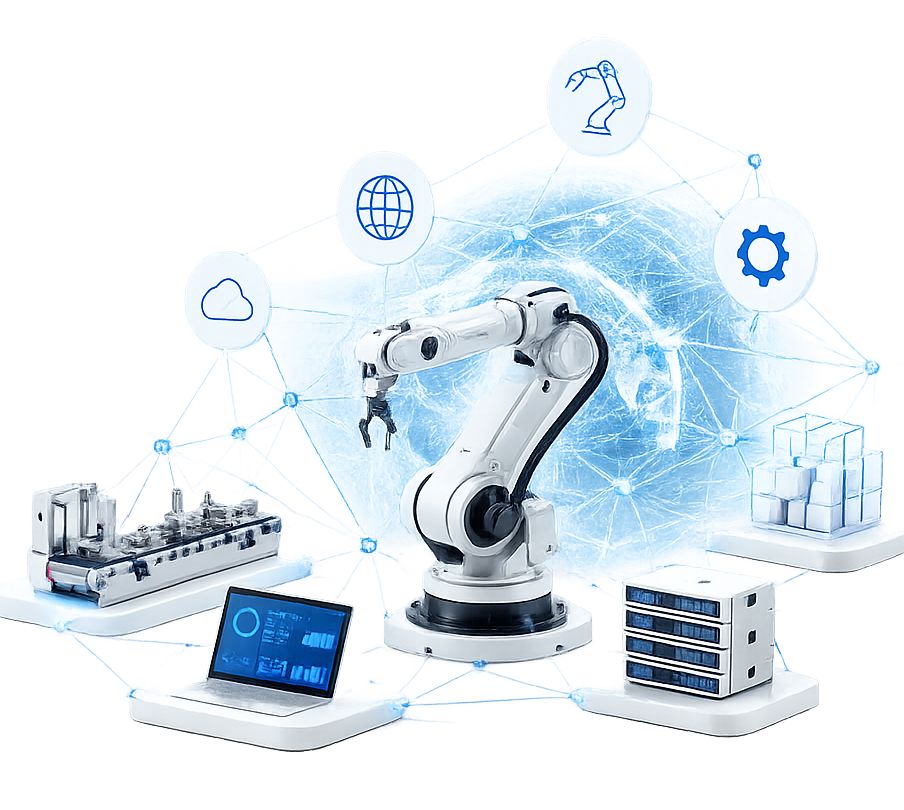
Would you like to learn more about the possibilities that robotics offers in the aerospace industry? Contact NexaRob, and together we will develop solutions that strengthen your position in the constantly evolving aeronautical sector!
Automate Your Business with NexaRob - Contact Us!
Global Reach
We operate globally, support locally
NexaRob actively collaborates with aviation companies in various regions of the world - from major passenger aircraft manufacturers to specialized helicopter plants and service centers for drones and unmanned aerial vehicles. Our experience in working in diverse production environments and under different safety standards enables us to deliver scalable solutions that genuinely support business objectives.
-
Presence in Key Aviation Markets: From North America and Europe to Asia - NexaRob participates in projects ensuring a high level of reliability, as required by aircraft, engine and avionics component manufacturers.
-
Compliance with International Standards: The solutions proposed by NexaRob take into account the aviation regulations and standards applicable in various, FAA), which allows our customers to easily certify products and use advanced technologies without worrying about legal aspects.
-
Local Service and Consulting Support: Thanks to our extensive network of service partners, our customers can count on fast and professional support in any time zone, minimizing potential downtime and costs associated with failures or upgrades.
-
Flexible Adaptation to Production Conditions: Robots and systems installed by NexaRob can be easily adapted to local preferences, work style and available infrastructure, which helps to effectively utilize resources in different industrial cultures.
- Knowledge and Experience Sharing: Operating on an international scale, NexaRob draws on best practices and innovative solutions found in various markets. We transfer the acquired knowledge and insights to subsequent projects, supporting the development of the global aviation sector.
Are you planning an international aviation project or do you want to implement automation in plants located in different countries? Contact us NexaRob and see how our global perspective and experience can help with the smooth implementation of robotic solutions!

United States

China

Japan

Germany

India

United Kingdom

France

Italy

Canada

South Korea

Brazil

Australia

Spain

Mexico

Indonesia

Netherlands

Saudi Arabia

Turkey

Switzerland

Taiwan

Poland

Sweden

Belgium

Thailand

Ireland

Austria

Norway

Israel

United Arab Emirates

Argentina

South Africa

Denmark

Philippines

Singapore

Malaysia

Colombia

Bangladesh

Egypt

Chile

Finland

Vietnam

Portugal

Czech Republic

Romania

New Zealand

Peru

Greece

Ukraine

Slovakia

Hungary

Slovenia

Croatia

Serbia

Bulgaria

Estonia

Latvia

Lithuania

Iceland

Luxembourg

Malta

Cyprus

Morocco

Algeria

Tunisia

Nigeria

Kenya

Ethiopia

Ghana

Tanzania

Uganda

Angola

Senegal

Qatar

Kuwait

Oman

Pakistan

Sri Lanka

Nepal

Kazakhstan

Uzbekistan

Mongolia

Russia

Cambodia

Myanmar

Laos

Fiji

Papua New Guinea

Venezuela

Ecuador

Uruguay

Paraguay

Bolivia

Costa Rica

Panama

Dominican Republic

Guatemala

Cuba

Jordan

Lebanon

Iran
Additional countries in Europe
These countries are hidden in readable mode so that the map is not cluttered. Click on a country to open contact information, email, and a description of the area of cooperation.
Additional countries in Asia
These countries are hidden in readable mode so that the map is not cluttered. Click on a country to open contact information, email, and a description of the area of cooperation.
Additional countries in the Americas
These countries are hidden in readable mode so that the map is not cluttered. Click on a country to open contact information, email, and a description of the area of cooperation.
Additional countries in Africa
These countries are hidden in readable mode so that the map is not cluttered. Click on a country to open contact information, email, and a description of the area of cooperation.
Additional countries in Oceania
These countries are hidden in readable mode so that the map is not cluttered. Click on a country to open contact information, email, and a description of the area of cooperation.
Albania
Andorra
Belarus
Bosnia and Herzegovina
Montenegro
Liechtenstein
North Macedonia
Monaco
Moldova
San Marino
Afghanistan
Armenia
Azerbaijan
Bahrain
Bhutan
Brunei
Georgia
Iraq
Yemen
Kyrgyzstan
North Korea
Maldives
Syria
Tajikistan
East Timor
Turkmenistan
Antigua and Barbuda
Bahamas
Barbados
Belize
Dominica
Grenada
Guyana
Haiti
Honduras
Jamaica
Nicaragua
Saint Kitts and Nevis
Saint Lucia
Saint Vincent and the Grenadines
El Salvador
Suriname
Trinidad and Tobago
Benin
Botswana
Burkina Faso
Burundi
Cape Verde
Chad
Democratic Republic of the Congo
Djibouti
Eritrea
Eswatini
Gabon
Gambia
Guinea
Guinea-Bissau
Equatorial Guinea
Cameroon
Comoros
Congo
Lesotho
Liberia
Libya
Madagascar
Malawi
Mali
Mauritania
Mauritius
Mozambique
Namibia
Niger
Central African Republic
Rwanda
Seychelles
Sierra Leone
Somalia
Sudan
South Sudan
Togo
Ivory Coast
Sao Tome and Principe
Zambia
Zimbabwe
Kiribati
Micronesia
Nauru
Palau
Samoa
Tonga
Tuvalu
Vanuatu
Marshall Islands
Solomon Islands
NexaRob
Do you want to become our Partner?
NexaRob is passionate about supporting automation in the aviation sector, seeking new ways to improve, optimize and modernize processes related to the design, production and maintenance of aircraft. In order to fully utilize the potential that robots, autonomous machines and artificial intelligence bring, we are looking for partners who share our commitment to developing innovations for modern aviation.
Why is it worth partnering with NexaRob in the aviation sector?
Joint Investments in Innovation
We collaborate with aircraft, helicopter and drone manufacturers, AI technology providers, companies offering advanced NDT inspection systems, and start-ups developing solutions related to assembly and logistics in aviation factories.
Synergy of Knowledge and Experience
Each partner brings unique expertise and resources. Together, we create projects that address the real needs of modern aerospace plants: from precise machining of composites and metals to quality control systems and advanced engine component testing.
Global Network of Contacts and New Markets
NexaRob operates in international markets, giving partners the opportunity to expand their reach, learn about the latest trends in aviation, and draw on experience gained in various technological and regulatory areas.
We are looking for Partners in the Following Areas:
-
Production of Aviation Machines and Equipment: Manufacturers of milling machines, injection molding machines or equipment for processing composites can enrich their solutions with advanced control and robotic functions, increasing the efficiency of manufacturing aircraft fuselage and wing components.
-
AI and IoT Technologies: Creators of systems for analyzing data from sensors (e.g., vibration measurements in engines, temperature monitoring in composite layers) or intelligent sensors supporting NDT inspections, who need integration with robots and autonomous vehicles on production lines.
- Providers of Processing and Assembly Solutions: Companies developing assembly lines, automatic riveting and welding stations, or systems for transporting aircraft components, wanting to add robotics and vision control elements to increase efficiency and precision.
Let's join forces and transform the aviation industry together with NexaRob.
Contact us to learn more about partnership opportunities and jointly create projects that will help you succeed in the rapidly changing aerospace market. Our partnership can help develop innovative solutions that increase productivity, improve quality control and promote further innovation in aviation.
Interesting facts from around the world
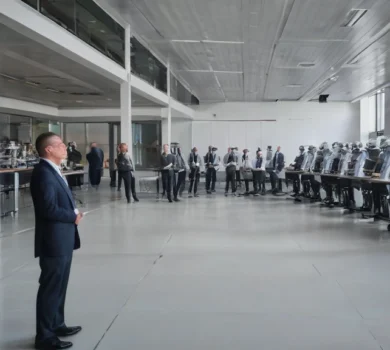
IRIM 2026 Seminar: How can robotics achieve seamless physical interaction with humans?
On October 21, 2026, the Institute for Robotics and Intelligent Machines will host a lecture.
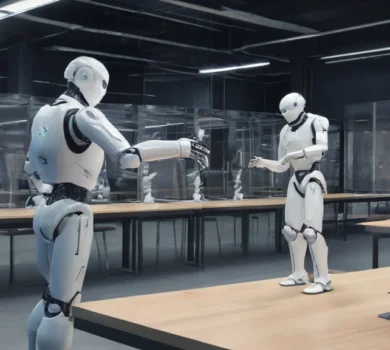
DriveWorld3D: a new generative simulation for safe autonomous driving
The new DriveWorld3D system, developed by the Robostreet team in Cambridge, is designed to help create safer models.
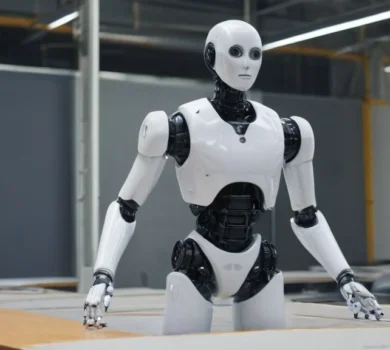
Microlocalization: precise positioning of mobile robots based on microscopic textures of the ground
Researchers have presented a new method for locating mobile robots with an accuracy of tens of micrometers, using microscopic textures.

Robotics as a space for creativity and diversity: experiences of researchers from the Oxford Robotics Institute
As part of the International Women in Engineering Day 2026, researchers from the Oxford Robotics Institute (ORI) shared
How does a solar-powered autonomous vessel decide on the most important places to explore?
Researchers from academic and other institutions have developed a new method for mission planning for autonomous ships