

Comau Robot Programming in PDL2+
Precise control of Comau robots
Advanced programming in the PDL2 language
Process optimization in automation
Efficient integration of Comau robots
Modern control technologies
PDL2 - flexible solutions for industry
The PDL2 language is a dedicated robot programming environment for Comau robots, providing precise control and optimization of industrial processes. NexaRob offers support in the configuration, implementation, and integration of Comau systems based on PDL2, adapting them to individual customer requirements.
Contact us Watch the videoLearn about Comau PDL2 - a dedicated programming language that enables precise control of Comau robots and the creation of advanced automation applications
Programming industrial Comau robots in the PDL2 language
Comau PDL2 is a specialized programming language designed for Comau robots, which allows for the creation of complex motion sequences and precise control of operations in various production processes. This language stands out due to its flexibility and ability to adapt to the specifics of particular applications, making it an ideal tool for companies striving to increase productivity and product quality.
Thanks to Comau PDL2, it is possible to define both standard and advanced operations - from simple pick & place tasks, through complex assembly sequences, to dynamic operations requiring rapid trajectory correction. The language was created with easy integration with automation systems and peripheral devices in mind, allowing robots to be connected with vision systems, sensors or PLC controllers. NexaRob, as a technology partner, uses Comau PDL2 to provide comprehensive support - from needs analysis, through design and code optimization, to operator training and service support.
Key advantages of Comau PDL2 include:
- Precise motion control: Enables accurate definition of trajectories and motion parameters, which is essential in processes requiring the highest accuracy.
- Flexibility and modularity: The code structure allows dividing the application into smaller modules, making it easier to introduce changes and quickly adapt to new production requirements.
- Easy integration: Support for various communication protocols makes Comau PDL2 compatible with other automation systems, enabling comprehensive automation of entire production lines.
How can NexaRob help?
- Needs analysis: Together with the client, we define the scope of automation, analyzing the requirements for programming in the PDL2 language. We assess whether Comau industrial robots are the best solution for a given production line and how to optimize their operation.
- Code creation and optimization: We create applications in the PDL2 language, test them in a simulation environment, and then adapt them at the workstation, ensuring stability, safety, and maximum system performance.
- Service and training: We offer dedicated training for operators and maintenance engineers, help with integrating Comau robots with existing systems, and provide service and technical support so that your team can effectively manage the system.
Learn what distinguishes Comau PDL2 and how Comau robots using this language contribute to production efficiency in various industries.
Key Features and Examples of Applications in Comau PDL2
Comau PDL2 is a tool that enables the creation of highly precise and flexible automation applications, tailored to diverse industrial requirements. This language has been developed to maximize the capabilities of Comau hardware while facilitating integration with other control and monitoring systems. Below are the most important features and examples of applications.
Advanced motion control
Comau PDL2 enables defining both standard point-to-point motions and complex trajectories, which can be precisely adjusted to the requirements of a given process.
Application: Ideal for assembly applications where precise positioning is critical, and in operations that require dynamic trajectory changes, e.g., when sorting elements.
Modular code structure
Language allows dividing the application into independent modules and procedures, which facilitates management, updating, and optimization of the code.
Application: Production lines that require frequent modifications, such as when introducing new product models or changing the configuration of operations.
Integration with vision systems and sensors
Comau PDL2 supports communication with cameras and sensors, enabling robots to automatically correct movements based on data from the environment.
Application: Processes requiring ongoing quality verification, such as checking the position of components during assembly or dynamic sorting of products.
Safety and risk management
Language enables defining emergency procedures and operational limits, which helps protect both equipment and employees.
Application: Industries where operational safety is critical, such as the automotive or chemical industry.
Versatility of applications
Comau robots programmed in PDL2 are used in many sectors - from precise electronic assembly, through welding operations, to complex logistics lines.
Application: Automotive, electronics, food and many other industries where high quality and production speed are required.
Comau PDL2 is a modern, flexible and safe tool for robot programming Comau, enabling the implementation of advanced automation tasks. NexaRob supports implementations based on PDL2 - from analyzing needs and designing code, through testing and integration with external systems, to operator training and service support. This ensures that your production line can achieve higher efficiency, precision, and flexibility in a dynamically changing industrial environment.
Learn about the various methods of creating and updating code in PDL2, so you can optimally use Comau robots in your production processes.
Main Modes and Programming Methods in Comau PDL2
Comau robots, controlled in PDL2, can be programmed in several ways - from direct code editing using the operator panel to comprehensive simulation environments that allow even the most complex sequences to be refined without interrupting production. At NexaRob, we use these methods depending on the complexity of the application, the need for quality control, or the necessity of quickly responding to changes in the line. Below, we present the most important modes and tools that together enable the creation of flexible, scalable, and safe applications:
Teach Pendant (Online Programming)
- Direct interaction with the robot: The operator can enter PDL2 commands, define motion points, or test short sequences directly on the pendant (operator panel) at the robot.
- Ideal for quick corrections: When it is necessary to modify individual parameters, such as movement speed or gripper position, the Teach Pendant allows you to avoid time-consuming stopping and switching of the entire application.
- Potential limitations: In the case of long or very complex sequences (e.g., several dozen motion points, advanced logic integrating vision control systems), using only the pendant may be insufficient. In such cases, we recommend offline tools or remote access.
Offline Programming (Simulation Environment)
- Working on a computer: PDL2 code created and modified in a simulation environment enables accurate checking of trajectories and collision analysis without interrupting the currently operating production line.
- Greater control and optimization: NexaRob engineers can refine cycle times, safety parameters, or collaboration with other devices (e.g., feeders), minimizing the risk of errors during commissioning in the real environment.
- Application in complex projects: Very useful for processes that require precise analysis of each point of movement, e.g., in the assembly of electronic components or welding of automotive parts with non-standard shapes.
Online Remote Programming (Network Control)
- Remote access to Comau robot: With proper network security, NexaRob specialists or your team of engineers can connect to the robot controller via the internet, updating the code in real time.
- Technical support from anywhere: This mode facilitates immediate support in case of unforeseen problems, failures, or the need to optimize the code. It does not require the physical presence of an engineer at the facility.
- Cost and time savings: Instead of bringing experts on site, corrections or improvements can be made to the code practically immediately, minimizing downtime in production.
Hybrid Approach
- Combining different methods: In practice, most companies use a Teach Pendant for corrections and quick fixes, and offline tools for more extensive modifications of trajectories or control logic.
- Gradual Improvement: Thanks to the iterative introduction of changes - partly in simulation tools and partly directly on the robot - it is possible to progressively improve the efficiency and quality of the process without one-time, large downtimes.
Wide range of robot programming methods Comau in PDL2 gives companies the ability to flexibly respond to production needs and efficiently develop applications, regardless of their complexity. NexaRob supports clients in adapting a specific mode to their requirements, advising on best practices for a given process - from quick corrections on the Teach Pendant to full offline simulation and remote engineering support.
Learn how Comau robots use the PDL2 language to collaborate with cameras and sensors in real time, increasing efficiency and safety on the production line
Integration with Vision Systems and Sensors in Comau PDL2
Comau robots, programmed in the PDL2 language, offer much more than just replaying pre-defined paths. Thanks to the ability to communicate with vision systems and sensors (e.g., force or torque), they gain the ability to react to changes in the environment and adjust their movement in real time. This is how this integration contributes to increased efficiency and improved quality in companies that choose it.
Vision Systems
- Full protocol support: PDL2 supports information exchange with 2D/3D cameras, allowing the Comau robot to track the position of objects on the line, even if they are arranged randomly.
- Dynamic trajectory correction: Based on data from the camera, the robot updates the movement path, avoiding errors and shortening the cycle of pick & place operations. This solution works well in industries with high variability in product shape and size.
Force and Moment Sensors
- Precise assembly and testing: Thanks to integration with sensors, the Comau robot can monitor the pressure level during the joining of elements, e.g., in the electronics or automotive industry, where even small deviations can cause product defects.
- Safety and equipment protection: If a sensor signals that the set limits have been exceeded, PDL2 automatically stops the movement, protecting the equipment from damage and ensuring safety for employees.
Additional Axes and Peripherals
- Increased kinematic complexity: Comau robots can work with rotary tables, conveyors, or other auxiliary units, and PDL2 allows for synchronous control of all elements.
- Applications in industries with multi-stage processes: Where details need to be precisely fitted, welded, or assembled, and the operator needs simultaneous supervision of several stations.
Online Monitoring and Analysis
- Real-time data reporting: The Comau robot can transmit information about force levels, the number of processed products, or any errors to external IT systems (e.g., MES, ERP), enabling better production management.
- Reduced downtime: Thanks to continuous monitoring, problems are immediately signaled, allowing personnel or remote NexaRob experts to react quickly.
Application examples
Food industry
Sorting and packing products of various shapes (e.g., fruits, vegetables) on a conveyor belt, where the Comau robot recognizes objects using a camera and adjusts its grip.
Electronics
Delicate assembly of integrated circuits, where the force sensor protects components from crushing, and the camera verifies the correct placement of each PCB board.
Logistics
The robot identifies barcodes and automatically moves packages to the appropriate storage areas, adjusting its movement depending on the size or weight of the shipment.
Through integration with vision systems and sensors, Comau robots programmed in PDL2 can dynamically respond to changing production conditions, increasing the accuracy and safety of operations. NexaRob offers comprehensive support in this area - from hardware consulting and application design to final testing, training, and service, so that the company can fully utilize the adaptability and efficiency of Comau robotics.
Learn how Comau robots with PDL2 have streamlined a complex assembly process in the electronics industry while increasing efficiency and reducing the number of defects.
Application of Comau PDL2 in Precise Assembly of Electronic Components
We present an example implementation where Comau robots programmed in PDL2 contributed to a noticeable acceleration in the assembly of delicate electronic components. This industry is characterized by both very narrow dimensional tolerances and high expectations for the reliability of finished products. Thanks to integrated motion control functions and communication with force sensors, Comau PDL2 proved to be an optimal solution for effectively handling multi-stage tasks.
Context and Main Challenges
- Small size of components: Each component required very precise positioning, and even a slight vibration of the gripper could cause damage to the part.
- Constant change in models: The plant produced a wide range of components, which required quick switching of applications and frequent modifications to the control code.
- High quality and short cycle time: With a significant production volume, every second mattered on a weekly or monthly scale, while the margin for error had to remain minimal.
Key Solutions in PDL2 Code
Modular Architecture
NexaRob prepared the application by dividing it into independent procedures (e.g., loading a component, placing it in a socket, visual verification), and parameters (speeds, currents, force limits) were extracted to configuration files. As a result, changing the product model involved editing only a few values, without having to write code from scratch.
Integration with Force Sensors
The robot monitored the pressure in real time, which made it possible to avoid crushing delicate pins of the circuit board. If the set threshold was exceeded, the movement was interrupted, and an appropriate message was sent to the operator.
Camera for Position Verification
The vision system transmitted information about any shifts of the component in the socket, and the PDL2 application corrected the trajectory on the fly, thereby reducing the percentage of assembly errors.
Effects and Benefits
- Increased Efficiency by 20-30%: Comau robots gained the ability to quickly adapt to different product variants, and automatic motion corrections reduced the time required for manual adjustments.
- Reduction of Defective Units: Precise force control and visual verification reduced the number of damaged components, which in the long run reduced costs and improved the supplier's reputation.
- Easy Scalability- When introducing new product models, it was sufficient to modify selected code modules and configuration files, without the need to postpone production while waiting for a complete reprogramming.
A case study illustrates how Comau robots programmed in PDL2 - with support from NexaRob - can significantly reduce assembly operation times in the electronics sector, while ensuring minimal damage levels and high flexibility in dealing with frequent product range changes. A comprehensive approach, covering everything from requirements analysis to training, has enabled the client to achieve measurable competitive advantages in the market.
Learn how to improve performance and maintain high safety standards in PDL2 applications, so that Comau robots operate stably in constantly changing production conditions.
Optimization of Codes and Safety Procedures in Comau PDL2
Even after successfully implementing an application in the Comau PDL2 language, regular code optimization and maintenance of safety procedures remain essential to ensure that robots function reliably and efficiently during long-term operation. Below are the key steps that NexaRob recommends for companies wishing to continuously develop and secure their automation processes:
Cycle Time Analysis and Data Monitoring
- Recording statistics- Comau robots can report the number of processed parts, occurring errors, cycle times in individual stages, and any signals from force sensors.
- Refactoring Movements- Based on the collected data, engineers can introduce minor modifications to speeds, eliminate unnecessary movement points, or change trajectories - all in order to shorten the cycle without losing quality.
Safety and Emergency Mechanisms
- Defining Zones and Force Limits- In PDL2, the operator can define the robot's range of motion, and exceeding the defined zones or force triggers a response such as reducing speed, stopping movement, or activating an alarm signal.
- Periodic Emergency Tests: NexaRob recommends periodically performing safety procedure tests to ensure that the robot responds correctly when detecting collisions or unexpected loads on the arm.
Modular Code Structure and Easy Scalability
- Procedures and Functions: A good practice is to divide the main program into smaller modules (e.g., picking up a part, assembly, verification), which makes it easier to introduce corrections and updates when product changes occur in the line.
- Adaptation to New Workstations: When a company decides to introduce additional Comau robots, it is possible to transfer some of the logic from existing applications, preserving proven procedures and standards.
Software and Firmware Updates
- New Driver Versions: The robot manufacturer - Comau - may provide updates or extensions that improve communication with peripherals or increase trajectory optimization capabilities. It is worth monitoring these improvements and implementing them if they bring real benefits.
- Technical Consultations: NexaRob experts are available for code audits and efficiency analyses, helping to select the most effective ways to develop applications.
Continuous improvement of PDL2 code and attention to safety procedures allow Comau robots work with maximum efficiency and reliability over a long period of use. NexaRob supports companies at all stages - from designing control logic, through cycle optimization, to maintenance and development of installed systems. Thanks to this, your production line can gain both higher precision and greater flexibility in an increasingly demanding market environment.
Dispel your doubts related to creating and maintaining applications in Comau PDL2 and learn how NexaRob supports your project from start to finish.
Frequently Asked Questions
Below we answer frequently asked questions about Comau robots programmed in PDL2. If you cannot find the information you are looking for here, please contact NexaRob - we will be happy to discuss all the details and present proposals tailored to your specific production needs.
It doesn't have to be. Although PDL2 contains advanced motion instructions and integration with peripheral systems, its basics are understandable for people familiar with general principles of robot programming or control logic. NexaRob provides dedicated training that will help your team quickly acquire practical skills.
Comau robots are used in many sectors. m.in- in the automotive industry (welding, assembly of components), electronics (precision assembly), food processing (packaging and handling of delicate products), or logistics (sorting and palletizing). The flexibility of PDL2 makes it adaptable to almost any application where reliability and efficiency are paramount.
Yes. Simulation tools are available that allow you to create and verify applications outside of the real environment. This makes it possible to eliminate many potential errors even before the first robot start-up on the line, reducing downtime and costs associated with any corrections.
PDL2 supports communication protocols that enable Comau robots to dynamically correct motion based on data from vision systems or sensors. In practice, this means that the robot can change its trajectory in real time, adapting to the arrangement of parts, their shape, or requirements regarding pressing force.
These robots are typically industrial, so they usually require safety zones (light curtains, safety scanners, etc.). However, speed limits and force parameters can be defined in PDL2 itself, which increases the level of safety. NexaRob helps select appropriate health and safety solutions to make human-machine collaboration as efficient and safe as possible.
This depends on the dynamics of a given production process. If processes or product ranges change frequently, code updates will be regular. In stable production lines, modifications may occur occasionally, for example, to optimize movement or adapt to new industry standards.
Migration may require an analysis of differences in syntax and approach to movements. At NexaRob, we have experience in carrying out such changes: we help identify fragments that can be adapted almost directly, as well as those that require redesign. This makes the whole process faster and easier.
We invite you to contact us by phone or email. NexaRob will conduct a preliminary analysis of your needs, advise on the selection of Comau robots, prepare code in PDL2, and also support you in optimizing movement and integration with peripheral systems.

Do you have more questions?
Contact NexaRob - our specialists offer support in designing, implementing and maintaining applications in Comau PDL2. Together we will make your automation more efficient, flexible and compliant with the highest safety standards.
Automate Your Business with NexaRob - Contact Us!
Interesting facts from around the world
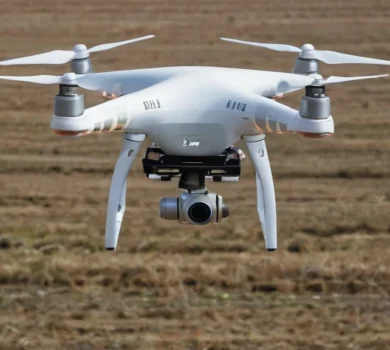
Vision-language models as aids for autonomous drones: balancing speed and precision.
A study conducted on autonomous drones showed that vision-language models, despite their potential for advanced semantic reasoning,
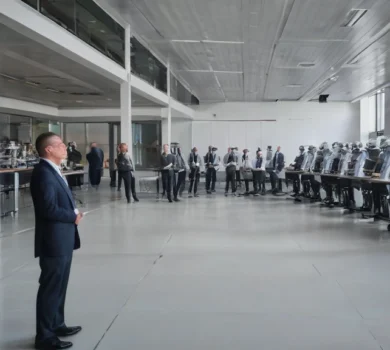
IRIM 2026 Seminar: How can robotics achieve seamless physical interaction with humans?
On October 21, 2026, the Institute for Robotics and Intelligent Machines will host a lecture.
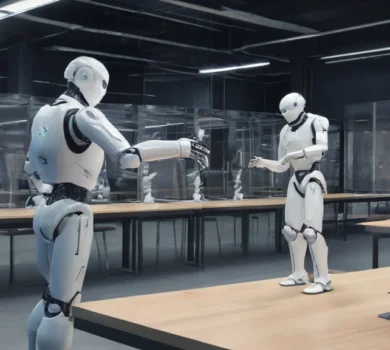
DriveWorld3D: a new generative simulation for safe autonomous driving
The new DriveWorld3D system, developed by the Robostreet team in Cambridge, is designed to help create safer models.
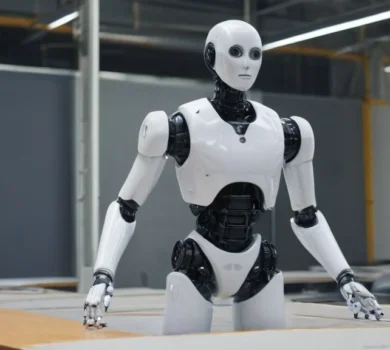
Microlocalization: precise positioning of mobile robots based on microscopic textures of the ground
Researchers have presented a new method for locating mobile robots with an accuracy of tens of micrometers, using microscopic textures.
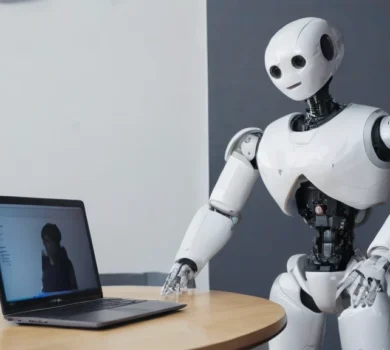
Robotics as a space for creativity and diversity: experiences of researchers from the Oxford Robotics Institute
As part of the International Women in Engineering Day 2026, researchers from the Oxford Robotics Institute (ORI) shared