

Programming in Ladder Logic (LD)
Ladder Logic - A Standard in PLCs
Advanced Process Automation
Precise Control of Machines and Robots
Optimization of Control Systems
Effective Integration with Industrial Robotics
Ladder Logic - Reliable PLC Control
Ladder Logic (LD) is a traditional programming language for PLCs, used in industrial process automation. NexaRob offers comprehensive support in PLC programming, optimization, and integration, adapting them to specific production requirements.
Contact us Watch the videoDiscover the key advantages and capabilities of Ladder Logic (LD) - the foundation of control in PLCs
Programming in Ladder Logic (LD)
Ladder Logic (LD) is one of the most recognizable and traditional programming languages used in PLCs (Programmable Logic Controller). Its main principle is a clear representation of logical sequences, resembling an electrical circuit diagram, which makes it easy for engineers and automation technicians to understand and create complex control systems. Ladder Logic has gained immense popularity in industry due to its simplicity, intuitiveness, and broad support from PLC manufacturers.
Thanks to Ladder Logic (LD), users can create programs that enable:
- Controlling the operation of machines and production lines: From simple drives or pumps to advanced systems consisting of many automation modules.
- Reading and interpreting signals from sensors: In LD, it is easy to implement conditions and dependencies, allowing the controller to make decisions based on current input signals.
- Responding to emergency situations: Programming safety rules and shutdown sequences in accordance with health and safety regulations and industry quality standards.
Why Ladder Logic (LD)?
- Intuitive, graphical notation: Ladder diagrams allow for quick creation and verification of control logic, even by those less experienced in programming.
- Wide tool support: Practically every reputable PLC manufacturer offers Ladder Logic editors and simulators, which facilitates the creation, testing, and maintenance of applications.
- Universal application in industry: LD is used in many sectors, from small assembly lines to complex process installations (e.g., in the food or chemical industry).
How can NexaRob help?
- Requirements analysis and consultation: Together with the client, we define process requirements, selecting the most appropriate solutions and PLC controller configurations.
- Writing and optimizing code: We help in creating control logic in Ladder Logic - so that it is not only correct but also easy to develop further.
- Operator training and service support: We organize workshops during which your specialists will learn the secrets of LD, and we also provide ongoing technical support, ensuring stable system operation.
See what distinguishes LD and in what applications PLC controllers achieve the highest efficiency.
Key Features and Application Examples in Ladder Logic (LD)
Ladder Logic offers a range of advanced functions that enable the creation of efficient and scalable control systems. This language has been designed to intuitively map relationships between input signals and desired output actions. Thanks to this, it is possible not only to quickly create new projects but also to easily modify existing ones, adapting them to changing plant needs.
Advanced logical and arithmetic instructions
They allow handling both simple conditions (e.g., on/off) and more complex mathematical or comparative operations.
Example of application: Temperature control of a furnace, where the signal read from the sensor must be compared with a set threshold, and depending on the result, the heating system is controlled accordingly.
Ability to handle timers and counters
They enable introducing precise delays, counting a given number of events, or generating cyclic sequences.
Example of application: In packaging systems, where after a certain time, the conveyor must be turned off or the next device started.
Safety functions and alarm handling
Ladder Logic facilitates the introduction of emergency conditions, such as stopping the line in case of detecting an incorrect signal or exceeding the set limits.
Example of application: Production lines in the food industry, where hygiene standards require a rapid reaction if the system detects the opening of covers or deviations in the operation of feeders.
Modular program structure
Program in LD can be divided into sections and function blocks, which improves maintenance and modifications.
Example of application: Extensive water and sewage installations, in which various pump and valve stations are handled by separate fragments of ladder logic.
Integration with other IEC 61131-3 standards
Ladder Logic is one of several languages described in the IEC 61131-3 standard (alongside ST, FBD, SFC and IL), which facilitates collaboration with projects created in other PLC programming languages.
Example of application: Complex production plants where different types of controllers operate (e.g., partially in SFC and partially in LD) - using the IEC standard makes it easier to maintain code consistency.
NexaRob supports enterprises at every stage of project implementation in Ladder Logic - from initial needs analysis, through programming and testing, to integration with external devices or cloud platforms. In the following sections, you will find information on how to prepare the environment for creating code in LD, integrate PLC with other systems and how to increase the reliability and safety of control system operation.
How to efficiently create and test code in Ladder Logic (LD) for PLCs
Programming Environment, Offline Editing and Debugging
PLC programming in Ladder Logic (LD) can be done using various tools - both those provided by hardware manufacturers and universal solutions compliant with the IEC 61131-3 standard. The choice of the appropriate programming environment (IDE) and working method depends on the complexity of the project, industry requirements and the team's experience. NexaRob supports companies in configuring the appropriate tools and processes so that creating and maintaining applications in LD is as efficient as possible.
Dedicated manufacturer environments
- TIA Portal (Siemens), RSLogix / Studio 5000 (Allen-Bradley) or GX Works (Mitsubishi) are examples of integrated IDEs that allow not only writing code in LD, but also configuring the network, input/output devices and communication modules.
- Advantages: Built-in simulation and diagnostics tools, direct access to the manufacturer's libraries and easy firmware updates.
Tools compliant with IEC 61131-3
- Software such as Codesys enables the creation of projects in Ladder Logic (LD), as well as in other languages of the IEC 61131-3 standard.
- Advantages: Universal approach, easy project migration between different PLC platforms and code sharing with projects written in ST (Structured Text) or FBD (Function Block Diagram).
Offline Editing and Simulations
- PLC Simulators: They allow testing ladder logic, timers, counters, or emergency conditions without the need to connect to real hardware. This significantly reduces the risk of errors and collisions in a production environment.
- Benefits: Engineers can create and verify successive versions of LD code while maintaining continuous operation of machines, which significantly shortens downtime.
Best practices in debugging
- Event and checkpoint logging: Recording the states of inputs/outputs and counter values facilitates diagnosing irregularities and quickly correcting them.
- Code versioning: Git-like systems allow tracking changes and freely reverting to previous versions, which is especially useful in plants with frequent process modifications.
- Modular tests: Dividing the project into functional blocks (FB) enables verifying each module separately before it is connected to the rest of the application.
NexaRob's role in the code creation and maintenance process
- Consultation and configuration: We help you select the IDE environment and PLC hardware in accordance with industry requirements and the scale of the planned implementation.
- Optimization: We support the refactoring of existing projects to make LD code more readable, scalable, and easier to expand in the future.
- Training and support: We organize workshops for engineering teams, showing them how to work effectively on the selected platform and implement best debugging practices.
Thanks to proper environment configuration and the use of proven engineering methods, creating and maintaining applications in Ladder Logic becomes faster, safer, and more economical. NexaRob supports companies at every stage of implementation, guaranteeing that the entire process - from writing the first line of code to updates in the production environment - runs smoothly.
How does Ladder Logic (LD) connect with devices and services in the Industry 4.0 model?
Integration with Control Systems and Cloud Platforms
Modern plants are increasingly operating according to the concept of Industry 4.0, where communication between devices, process automation, and real-time data analysis play a key role. PLCs programmed in Ladder Logic (LD) no longer function as "closed" systems - they often become part of extensive industrial networks, exchanging data with cloud applications and other devices.
Network communication in the PLC environment
- Industrial protocols: LD enables support for popular protocols such as Profinet, EtherNet/IP, or Modbus TCP, allowing PLCs to cooperate with sensors, drives, and SCADA systems.
- Simple data exchange: The inputs/outputs of the PLC controller can be mapped to registers or variables that are read or written by external software (e.g., MES, ERP).
Integration with cloud services
- Remote monitoring and analysis: Through appropriate IoT gateways or MQTT protocols, a Ladder Logic-based system can transmit key process data to the cloud (e.g., AWS, Azure, Google Cloud).
- Fast response to failures: Thanks to integration with analytical platforms, it is possible to implement predictive systems (Predictive Maintenance), as well as immediately send alerts if parameters deviate from the norm.
Control from SCADA and MES level
- Central management point: SCADA (Supervisory Control and Data Acquisition) applications enable data visualization and process control, while LD provides execution logic at the device level.
- Production optimization: Thanks to integration with MES (Manufacturing Execution System), information about task progress, efficiency or product quality can be analyzed in real time and used to improve processes.
Security and access management
- Selective data sharing: Depending on the needs, some of the information processed in the ladder logic can be sent to external systems, while the rest remains available only at the local controller level.
- Industry standards: Many companies adhere to IEC 62443 or ISO 27001 standards, which requires appropriate encryption of communication and user identity management.
How does NexaRob support integration?
- Designing a communication architecture: We help plan and configure the industrial network, taking into account bandwidth requirements, topology and data security.
- Implementation and testing: We create or modify Ladder Logic code so that PLC controllers seamlessly interact with SCADA/MES systems or cloud services.
- Industry 4.0 training: We train engineering teams on how to use analytical tools and how to fully leverage the potential of the cloud and IIoT (Industrial Internet of Things).
Thanks to clear logic Ladder Logic and appropriate integration tools, controllers PLC can fully participate in the Industry 4.0 ecosystem. NexaRob We ensure that the entire process - from selecting network protocols to exchanging data with the cloud and performing analytics - supports real business goals and improves production efficiency.
See how Ladder Logic can improve key stages of the industrial process.
Case Study: PLC-Based Production Line Optimization
In this section, we present an example scenario from the manufacturing sector in which the use of Ladder Logic (LD) in PLC controllers significantly improved the performance and quality of manufactured products. Although specific implementations may vary depending on the type of plant, the benefits and conclusions described below perfectly reflect the potential that lies in using ladder logic (LD).
Context and Main Challenges
- Process complexity: The manufacturing plant carried out a multi-stage assembly of components, where precise synchronization of robots, conveyors, and quality control stations was essential.
- Frequent line changeovers: The need to change product ranges and frequent modifications to parameters required high flexibility in the control program.
- Space and time constraints: The inability to expand the production hall meant that every downtime or incorrect movement resulted in noticeable delays, negatively affecting efficiency.
Modular Code Structure
The Ladder Logic project was divided into functional blocks (FBs) responsible for individual stages of the process (e.g., feeding, transportation, packaging). This organization made it easier to change the sequence of operations without having to modify the entire program. As a result, engineers could make corrections in individual modules (e.g., by changing transport parameters or adding an extra test phase) without risking destabilizing the entire line.
Integration with Monitoring and Diagnostics Systems
The PLC controllers communicated with the SCADA system, transmitting data about the status of the machines and any detected errors. This enabled rapid response in case of failures or malfunctions. The lines were equipped with vision sensors and pressure sensors, providing information about the quality of the assembled components. The program in LD dynamically adjusted the operation of the conveyors to avoid potential collisions and minimize waste.
Effects and Benefits
- Increased efficiency by approx. 25-30%: Reduced cycle time thanks to better coordination between stations and faster switching to new production variants.
- Improved quality and safety: Adjustment of conveyor speeds, automatic stopping of the process in case of errors, and precise control of actuators using emergency conditions implemented in LD.
- Flexibility in implementing changes: New parameters or stages of the process could be added modularly, which reduced downtime during assortment changes.
- Better diagnostics: The central SCADA system collected and analyzed data from individual stations, which improved line monitoring and contributed to faster identification of irregularities.
NexaRob supports clients in all areas - from initial process analysis and technology consulting, through the preparation and optimization of code in Ladder Logic, to testing in an offline environment and staff training. Ultimately, the production line gained a modern, scalable solution that allows it to safely and effectively respond to dynamic changes in orders and assortment.
Learn how to maintain high efficiency and reliability of applications in Ladder Logic while complying with safety requirements.
Code Optimization and Safety Procedures in the PLC Environment
After implementing the application in Ladder Logic (LD), it is worth continuing its development and improvement. NexaRob recommends a set of methods that help maintain stability, performance, and compliance with industry regulations - both in the short and long term.
Cycle time and motion path analysis
- Monitoring statistics: The PLC can report the number of cycles, downtimes or errors - this data allows for an objective assessment of efficiency and identification of bottlenecks in the process.
- Instruction optimization: Removing redundant conditions, thoughtful use of timers, and limiting nesting in ladder logic can shorten the processing time of the logic.
Structure and clarity of the code.
- Refactoring: Eliminating duplicate code fragments by creating function blocks (FB) and libraries makes the program easier to maintain and expand.
- Consistent naming: Consistent use of labels (e.g., MotorStart, SensorLowLevel) facilitates orientation in the code, which translates into faster error diagnosis.
Safety procedures
- Emergency conditions: Emergency rules implemented in LD allow you to stop the process at any time if a dangerous increase in pressure, temperature, or vibration is detected.
- Compliance tests with health and safety standards: Regularly verifying the correctness of safeguards (e.g., light curtains, safety sensors) and their cooperation with the control logic is crucial for ensuring the safety of operators and protecting equipment.
Updates and maintenance
- New versions of controller firmware: The PLC manufacturer may introduce improvements that increase processing speed, compatibility with devices, or system stability. It is recommended to periodically check for available updates.
- Application expansion: If a plant introduces new products or increases its scale of operations, the code in Ladder Logic can be flexibly expanded by adding support for additional stations or devices.
NexaRob's role in long-term support
- Periodic reviews and audits: We help analyze performance, identify potential hazards, and recommend changes to the software.
- Trajectory and sequence optimization: We verify whether it is possible to shorten the work cycle or improve material flow without loss of quality or safety.
- Operator training: We ensure that the team can independently diagnose minor problems, perform routine maintenance, and develop code in LD according to current production needs.
Systematic improvement of the code Ladder Logic and attention to meeting safety standards are the foundation for reliable operation of controllers PLC. NexaRob supports companies in implementing updates, maintaining continuous efficiency, and integrating new devices - so that your system remains competitive and safe throughout its service life.
Dispel doubts about creating and maintaining applications in Ladder Logic (LD) on PLCs.
Frequently Asked Questions
Below we present nine frequently asked questions about programming and operating PLCs in the Ladder Logic (LD) language. If you cannot find an answer to your question here, please contact NexaRob - our specialists will be happy to help you choose solutions and develop an individual cooperation model for your plant.
Not necessarily. Ladder Logic was designed to resemble electrical circuit diagrams, which makes it easier to understand the logic even for people without a strong IT background. Automation engineers often learn LD faster than typical text-based languages, although some knowledge of process control principles is helpful.
Most reputable manufacturers (e.g., Siemens, Allen-Bradley, Mitsubishi) offer support for LD, but sometimes in the form of proprietary extensions. There are also other languages from the IEC 61131-3 family (ST, FBD, SFC, IL). Usually, LD is one of the most popular and easiest to maintain, but it is always worth checking compatibility with the selected controller.
Many IEC 61131-3 compliant environments allow the use of mixed languages, e.g., ST (Structured Text) for complex calculations and LD for ladder logic handling. This allows you to take advantage of different methods without losing readability and consistency of the main control sequence.
Typically, these are automation specialists, maintenance engineers, and PLC specialists. Due to the graphical nature of LD, even operators with basic knowledge of technological processes can make simple corrections (e.g., changing times in timers). For larger changes or integration with new equipment, it is worth seeking help from experienced programmers or the NexaRob team.
It is crucial to implement appropriate emergency conditions, such as automatic process shutdown in case of exceeding limits or detecting a person in the machine's work area. Additionally, safety features (e.g., sensors, barriers) should be regularly tested to ensure they work with the PLC logic according to health and safety standards.
Yes. PLCs can communicate with external systems via industrial protocols (EtherNet/IP, Profinet, Modbus TCP, etc.), and data is then transmitted to SCADA/MES or IoT platforms in the cloud. This requires proper network and application configuration, but the LD code itself can be relatively easily adapted to such solutions.
This depends on the dynamics of changes in production processes. If the line operates stably and there is no need to add new functions, it may be sufficient to limit updates to a cyclical (e.g., quarterly) verification. In plants with high product mix variability, modifications in LD may be implemented much more frequently to adjust control parameters to new conditions.
It is usually worth analyzing the benefits of the new version. Often, updates increase stability, introduce features that facilitate debugging, or improve security. NexaRob can help with such an upgrade and verify whether the existing LD code requires changes.
We offer support at every stage of the application lifecycle: from consulting on hardware selection and network architecture, through creating or refactoring LD code, to long-term maintenance and security audits. We also conduct training for automation teams so that your company retains the necessary knowledge to independently implement smaller changes and repairs.

Do you have more questions?
Contact NexaRob - our team of experts in automation and robotics will help you develop solutions that best meet the requirements of your production line. With our support, you will implement an efficient, safe, and scalable application in Ladder Logic, while also meeting market expectations and stringent quality standards.
Automate Your Business with NexaRob - Contact Us!
Interesting facts from around the world
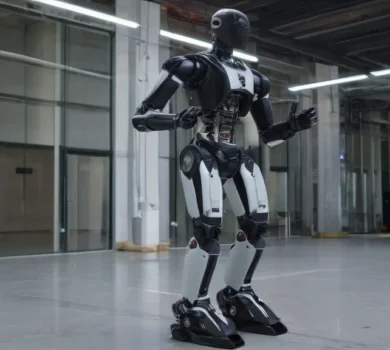
A new way to teach legged robots: dynamic actuator curriculum for tasks with limited predictability
Researchers have identified a key problem in reinforcement learning for legged robots: some tasks are
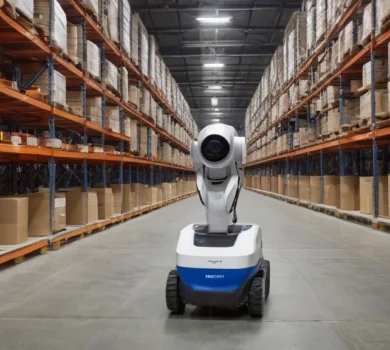
CT-SAFR: a new framework for safe and transparent reasoning of autonomous robots
The new CT-SAFR framework, presented at the IEEE CAI conference in May 2026, can detect false
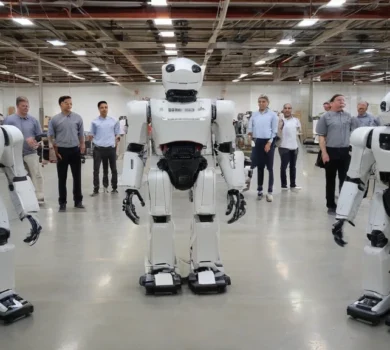
Robotics in additive manufacturing: lectures at the University of Michigan
The Robotics Seminar Series at the University of Michigan in 2026 focused on new
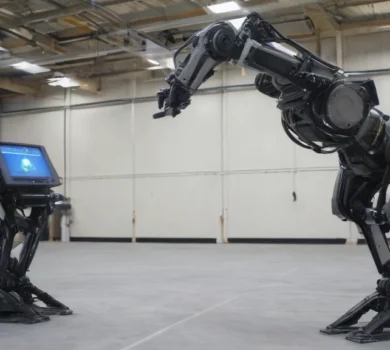
Dynamic Creatures separates from Boston Dynamics - a new era of humanoid specialization
In August 2026, Dynamic Creatures officially split from Boston Dynamics, forming an independent company.
European robotics in the spotlight at the European Parliament
On September 2, 2026, the European Parliament in Brussels became the setting for one