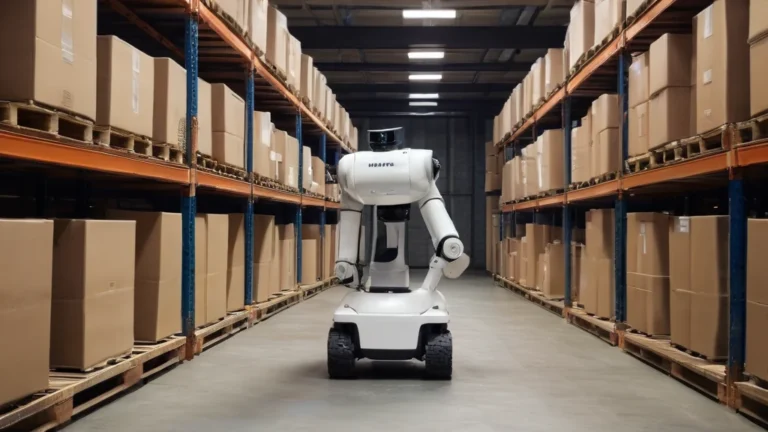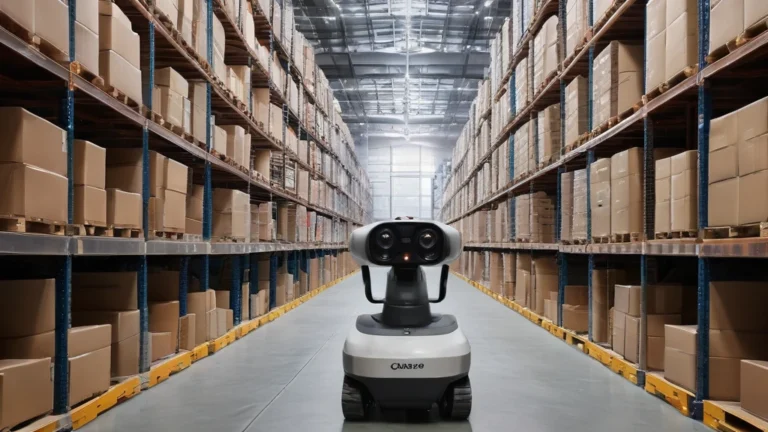

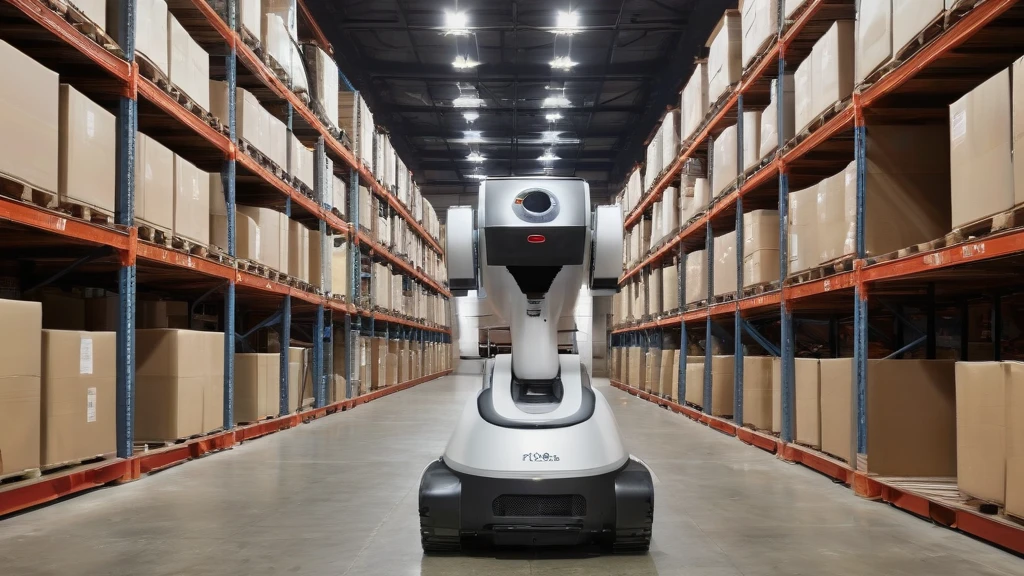
Faced with a global labor shortage, especially among truck drivers and warehouse workers, logistics is increasingly investing in AI-powered robots. In the recent period, sales of professional robots for transporting goods increased by 44% year over year - proof of the rapid growth of automation in an industry that must cope with unstable working conditions and growing demand.
The development of automation in logistics as a response to the labor crisis.
Modern logistics faces a challenge for which there is no clear solution: there are not enough people to handle transportation, warehousing, and distribution. According to data from the International Road Transport Union (IRU), there are currently over 3 million truck drivers missing worldwide. This shortage is not just a local problem - it is a global obstacle to supply chain continuity, especially in regions with strong demographic constraints, such as Japan or Germany. In this context, the development of AI robotics becomes not only a technological option but an operational necessity.
In the recent period, sales of professional service robots The number of robots designed for transporting goods has increased by 44% year-on-year. This is not just a statistic - it's a signal that the industry is starting to invest in solutions that can operate continuously and do not require rest. This growth shows that logistics companies are not waiting for the future - they are already looking for ways to increase efficiency through automation.
How does AI enable robots to cope with instability?
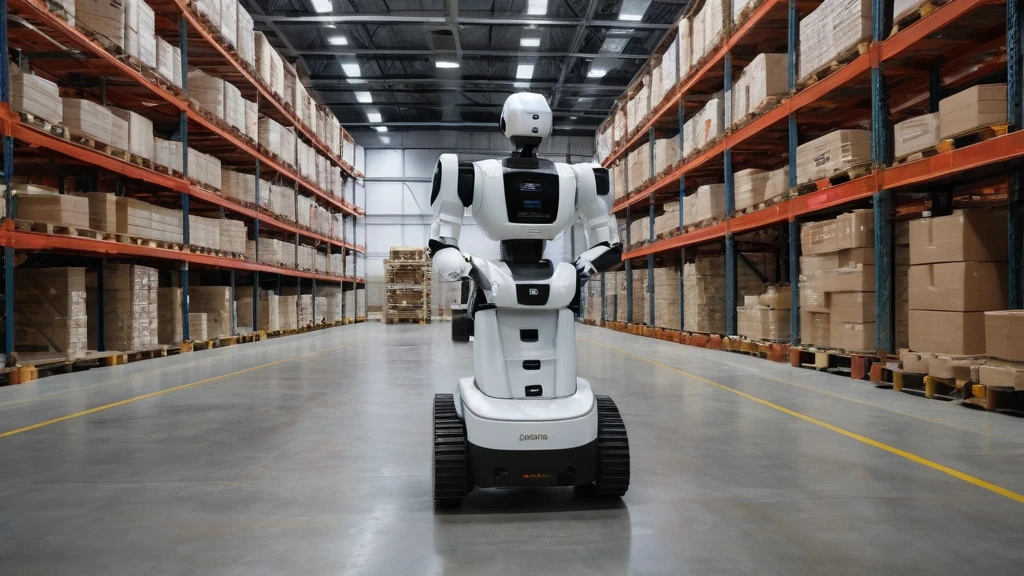
The key advantage of modern robots is not only their ability to repeat tasks, but also their adaptability. In logistics, there are no two identical orders - products change, packages vary in size, and delivery routes are dynamic. Robots equipped with artificial intelligence learn to handle these diverse conditions through experience, rather than precise programming. This means that they can independently learn new ways of packing, recognize different types of goods using computer vision, and move autonomously around the warehouse without constant supervision.
In practice, this means that tasks that previously required hours of work - such as machine calibration or changing settings in a system - can be completed in seconds. These solutions not only speed up processes but also reduce human errors and increase safety in the workplace.
 Enlarged imageClose zoomPrevious image
The role of robots in different working conditions
Robots are not a one-size-fits-all solution - their role depends on the context. In some cases, they act as partners to humans, supporting them in their daily work and increasing team efficiency. In others, they automate difficult, unpleasant or dangerous tasks that are difficult for employees to perform, especially in physically demanding conditions. This is particularly important in countries where an aging population forces companies to provide better working conditions for older people.
In Germany, Japan, and the USA, various factors are driving the need for automation: demographic shifts, new working time regulations, or a lack of qualified workers in e-commerce. All these factors show that robots are not just a technological tool - they are an element of a survival and development strategy for the entire logistics industry.
In practice, the role of robots in logistics is not limited to warehouses - it extends to transshipment stations, seaports, and distribution points. In conditions where delivery time is critical, such systems can operate 24/7 without fatigue, which allows for faster order processing and reduction of delays in the supply chain. In countries with limited access to labor, such as Japan and Germany, AI robots are no longer just an alternative - they are becoming a key element of the operational strategy of logistics companies. Their ability to collaborate with people in real time, supporting employees in difficult tasks, transforms the work environment into a more flexible and safer workplace.
What remains uncertain? Limitations and perspectives.
Although data indicates dynamic development of automation, it should be remembered that AI-powered robots are not a solution to all problems. Their effectiveness depends on the quality of data, infrastructure, and adaptation to specific working conditions. Many companies still face difficulties in integrating new systems with existing processes. Furthermore, although robots can replace some employees, this does not automatically lead to a reduction in employment - often, new roles are created related to the maintenance and supervision of systems.
In the future, it will be crucial not only to develop technology but also to create new competencies. The future of logistics is not about robots completely replacing people - but about them working together to create more flexible and resilient supply systems.