

Programming DENSO Robots in PacScript
Precise control of DENSO robots
Advanced programming in PacScript
Process optimization in automation
Effective integration of DENSO robots
Flexible solutions for precision applications
Modern DENSO control technologies
PacScript is a key tool for programming DENSO robots, enabling precise control and optimization of processes. NexaRob offers support in the configuration, integration, and optimization of systems based on PacScript, ensuring the highest quality of automation in demanding applications.
Contact us Watch the videoLearn how PacScript enables precise control of DENSO robots and supports various processes in modern industry.
Programming industrial DENSO Robots in PacScript
PacScript (also known as PacScript Language) is a dedicated programming language for DENSO robots, designed for flexibility and intuitive operation. Thanks to its clear structure and rich command library, PacScript makes it easier for engineers to create applications for tasks that require both high precision and rapid adaptation to changing production conditions.
Why PacScript?
- Simple, understandable syntax: Created so that teams with basic knowledge of control logic can quickly create and modify robot code.
- Precise motion instructions: PacScript supports both point-to-point (PTP) movements and linear or arc trajectories, allowing you to adapt the robot's operation to specific needs.
- Integration with the DENSO ecosystem: Robots equipped with PacScript work seamlessly with other DENSO automation solutions, creating a consistent and comprehensive working environment.
How can NexaRob help?
- Needs analysis: We start by conducting consultations to define requirements and business goals.
- Code creation and optimization: We handle the entire process - from writing applications in PacScript, through offline testing, to deployment on the workstation.
- Operator training: NexaRob ensures that personnel gains confidence in operating and modifying PacScript code, which allows for a quick response in case of changes in production.
See what makes PacScript unique and in which processes DENSO robots perform best.
Key Features and Application Examples in PacScript
Although most robotic languages are used to control motion and logic, PacScript provides unique capabilities that simplify and accelerate the creation of applications for DENSO robots. Below we present the key advantages of the language and examples of industries where these robots are particularly appreciated:
Rich motion instructions
PacScript supports various robot operating modes.m.in- point, line, arc - which allows for designing smooth and precise trajectories.
Application: Precise assembly in electronics, handling delicate products in the pharmaceutical sector.
Modular code structure
The program can be divided into modules and procedures, which makes it easier to manage the project and speeds up the implementation of changes.
Application: Production lines with multiple stations, where each station requires its own parameters and motion sequences.
Integration with control systems
DENSO robots support communication with other automation devices, PLCs or vision systems, making them part of a comprehensive production line.
Application: Applications where the robot receives data on the position of parts from 2D/3D cameras and dynamically adjusts its movement, e.g., in the food or logistics industry.
Advanced safety procedures
PacScript allows you to set force and speed limits for motion and define emergency procedures in case of collisions or exceeding safety zones.
Application: Whether in the automotive sector or the chemical industry, protecting operators and equipment is a priority.
Safety and scalability
DENSO robots operate in many sectors: from assembling small components to packaging or testing products.
Application: Companies looking for compact but efficient solutions where precision and speed are key.
PacScript is a flexible language, which supports DENSO robots in performing advanced, precise, and safe industrial operations. NexaRob It helps companies implement these technologies at every stage - from analysis and configuration, through writing code and testing, to service and training. As a result, your production line can operate faster, more stably, and with lower risk of errors.
Discover the various ways to create code for DENSO robots and choose the solution that best suits your processes.
Main Modes and Programming Methods in PacScript
Online, Offline, Freedrive, and More
Programming DENSO robots in the PacScript language can be done in several modes - from editing directly on the operator panel to advanced simulation environments. At NexaRob, we help you choose the appropriate method so that code implementation and maintenance are fast, safe, and tailored to the needs of your team. Below, we present the key modes:
Teach Pendant (Online Programming)
- Direct Editing: Using the panel (pendant), the operator can define trajectories and sequences of movements, which are immediately saved in the PacScript code.
- Quick adjustments on the line: Ideal for minor changes without requiring a long production downtime.
- Limitations: In the case of more complex applications (a large number of points or advanced logic), it requires caution and is more time-consuming than working in an offline environment.
Offline Programming (Simulation Environment)
- Working on a computer: PacScript code and trajectories can be created in simulation software (e.g., DENSO WinCAPS) and then uploaded to the robot.
- Time saving: Production does not have to stop during the preparation of a new version of the code, which minimizes downtime.
- Application: Complex applications or highly automated lines, where each mistake generates significant costs.
Online Remote Programming (Network Control)
- Remote access: If the network infrastructure is properly secured, the NexaRob team or your specialists can connect to the DENSO robot via the network and make changes to the PacScript code without being physically present at the workstation.
- Expert support: This allows for quick problem solving without requiring an engineer to be sent on site.
Hybrid Approach
- Combining methods: Typically, a Teach Pendant is used for simple corrections or initial calibration, combined with simulation software to optimize more complex trajectories and processes.
- Gradual Improvement: Once written, the code can be iteratively improved in an offline environment, and final corrections are made online on robots already operating on the line.
Programming methods in PacScript. are versatile and often combined, depending on the specifics of production and the dynamics of changes in the process. This makes it possible to improve the operation of DENSO robots in both simple and very complex applications. In the following sections, we will show how these robots can work with vision systems or sensors, gaining greater flexibility and safety.
Discover how DENSO robots can use cameras and sensors to dynamically respond to changing conditions on the production line.
Integration with Vision Systems and Sensors in PacScript.
DENSO robots programmed in PacScript are not limited to static, pre-defined motion paths. Thanks to integration with vision systems and sensors (force, torque or presence), they can actively adapt their tasks to the current situation at the workstation. Below we show how PacScript supports this flexibility:
Vision Systems
- Protocols and libraries: DENSO provides communication tools that allow data from 2D/3D cameras to be transmitted to the robot, and PacScript allows the trajectory to be dynamically corrected.
- Application: Detection of the position of parts in loosely scattered batches, visual quality control or product sorting by shape.
Force and Moment Sensors
- Precise assembly: In delicate component assembly applications, the robot can monitor the pressing force level to avoid damaging sensitive parts.
- Collision detection- When the sensor exceeds a set threshold, PacScript can immediately stop the movement and trigger emergency procedures, preventing more serious damage.
Control of Additional Axes and Peripherals
- Greater flexibility: DENSO robots can share control with additional axes (e.g., rotary tables), and PacScript synchronizes their operation, which is especially useful in multi-faceted machining or welding of parts with complex shapes.
- Unified platform: Communication with other industrial controllers and PLC systems is also possible, providing a consistent automation environment.
Application examples
Food industry
The robot recognizes the size of the fruit using a camera and adjusts the grip to gently place them in packaging.
Electronics
Precise insertion of modules into motherboards, where the force sensor ensures correct pressing without the risk of breaking a pin.
Logistics
Sorting packages by barcodes recognized visually; PacScript calculates the offset on the fly so that the robot places the shipments in the correct location.
PacScript Integration with vision systems and sensors allows DENSO robots to adapt to unforeseen deviations and react to current conditions on the line. NexaRob supports the entire process - from designing the vision and sensor infrastructure, through writing and optimizing code, to full implementation and staff training. As a result, your line becomes more flexible, efficient and ready for the challenges of modern production.
See how the PacScript language helped improve key assembly stages in the demanding electronics industry.
Case Study: Automation of Precision Assembly with DENSO Robots and PacScript
Below, we present an example implementation in the electronics sector, where DENSO robots - controlled in the PacScript language - enabled significant acceleration and improvement in the assembly process. Especially in applications requiring high accuracy, precise motion control and dynamic response to minor deviations are key to success.
Context and Main Challenges
- Delicate Components: Even a small amount of pressure could damage sensitive components, leading to costly losses.
- Tight Dimensional Tolerances: Components had to be inserted with an accuracy of fractions of a millimeter in order for the final product to meet strict quality standards.
- Frequent variant changes: Production included various series of devices, which required quick switching to new assembly sequences.
Solutions in PacScript Code
Application of dynamic force control
The robot monitored the pressure level in real time (in conjunction with a force sensor), adjusting the pressing speed and torque to prevent damage to the components. Exceeding the set threshold immediately triggered emergency procedures, preventing cracks or deformation of the part.
Modular structure of the assembly code
Each operation (e.g., tightening screws, connecting fittings, positioning seals) had its own procedure in PacScript, which made it easier to implement changes for subsequent product series. Parameters - such as insertion depth or movement speed - were described in a separate configuration file, which accelerated adaptation to new products.
Visual verification
The camera checked the correct positioning of the component before and after assembly; if a deviation occurred, PacScript corrected the trajectory or signaled to the operator that manual inspection was required. As a result, the number of defective components released to subsequent stages of the production line decreased significantly.
Effects and Benefits
- Reduction in the number of rejected items: Thanks to precise force control and visual verification, the number of damaged or incorrectly assembled components decreased by approximately 30%.
- Increased efficiency: Smooth adaptation of the robot to new device models, combined with a reduction in cycle time, resulted in an improvement of up to 20% in production speed.
- Ease of code modification: The modular approach and separate parameter configuration enabled quick process changes when introducing new products.
Thanks to the possibilities PacScript - including force control and dynamic visual verification - rDENSO robots have successfully met the requirements of the electronics industry, improving assembly quality and efficiency. NexaRob supported the investor at every stage, from process analysis, through implementation and testing, to operator training, guaranteeing a stable and scalable production system.
Learn how to maintain high efficiency and safety of applications written in PacScript, even with increasing production requirements.
Optimization of Codes and Safety Procedures in PacScript
After implementing the application in the PacScript language, it is worth taking care of regular analysis and improvement of the code. NexaRob offers support in optimizing motion paths, code structures and safety procedures, so that DENSO robots maintain stable, efficient and safe operation for a long time.
Cycle time and motion analysis
- Statistics and logs: The robot can record the number of cycles, the time of individual operations or errors, making it easier for engineers to identify areas requiring improvement.
- Trajectory refactoring: Often, a slight shortening of the path or an increase in motion speed (while maintaining safe limits) allows you to speed up the process without compromising quality.
Code structure and readability
- Modularity: Removing repetitive code fragments by creating common functions reduces the risk of errors and improves the introduction of changes.
- Documentation and naming: Consistent, descriptive variable names (e.g., pPickOffset, nForceLimit) speed up debugging and facilitate teamwork.
Safety and emergency systems
- Robot stop conditions: PacScript enables immediate interruption of movement in the event of a collision, exceeding the safety zone, or excessive torque on the axis.
- Regular safety tests: We recommend periodic checks of the proper functioning of light curtains, scanners, or other protection systems, as well as updating the code in accordance with new industry requirements.
Updates and scalability
- New firmware versions: DENSO sometimes releases improvements or additional features for controllers - it is worth assessing whether they will bring real improvements to your application.
- Workstation expansion: If you plan to increase the number of robots or add more devices (e.g., grippers, positioners), PacScript can be easily extended with new support modules.
Code optimization and care for safety procedures in PacScript allow DENSO robots to operate at maximum efficiency with minimal risk of failure. NexaRob helps companies analyze performance, refactor existing applications, and ensure the highest safety standards so that your team can enjoy a stable and efficient production process.
Dispel your doubts regarding the creation and maintenance of applications in PacScript, and learn about our support model.
Frequently Asked Questions
Below are answers to frequently asked questions about programming DENSO robots in the PacScript language. If you do not find the issue you are interested in here, please contact NexaRob - we will be happy to discuss your needs and propose solutions tailored to your production conditions.
No. PacScript is designed to allow even people with basic knowledge of control logic to quickly understand the syntax. If necessary, NexaRob offers training courses that will accelerate language acquisition.
DENSO robots are popular in electronics assembly, the food industry (sorting, packaging), pharmaceuticals (precision dispensing, inspection), and also in general light industry, where high accuracy and a relatively small working space are required.
You can use simulation software (e.g., DENSO WinCAPS) to create and test code outside the production line. This helps reduce downtime when implementing new solutions or optimizing trajectories.
Yes. PacScript enables communication with 2D/3D cameras and readings from various sensors. The code can dynamically correct the motion trajectory, e.g., based on data about the position of a part or the pressing force.
Standard DENSO models use safety features (light curtains, enclosures). PacScript also allows you to implement emergency stop procedures, speed and force limitations depending on the work area. If you are aiming for higher interaction with humans, there are models with an increased level of safety.
It depends on the dynamics of your production. If new products or variable versions appear from time to time, the code should be modified more frequently. In a stable line, only minor corrections occur as improvements or new health and safety regulations are introduced.
Yes. We cooperate with global suppliers, including DENSO. We can help you choose the optimal robot model, hardware configuration, write PacScript code, and also provide service and development of the line in the future.
Most of the logic (e.g., pick & place modules) can be transferred with minimal changes. NexaRob supports the migration process, adapting parameters to the new design or lifting capacity, so as to avoid downtime and compatibility issues.
We encourage you to contact us by email or phone. NexaRob will conduct a preliminary analysis of your needs, advise on equipment selection, prepare the PacScript code and provide training. As a result, you will gain efficient, flexible and safe automation in your plant.

Do you have more questions?
Contact NexaRob - our specialists will be happy to discuss your production process and develop an efficient, scalable and safe application in PacScript, tailored to the growing challenges of your company.
Automate Your Business with NexaRob - Contact Us!
Interesting facts from around the world
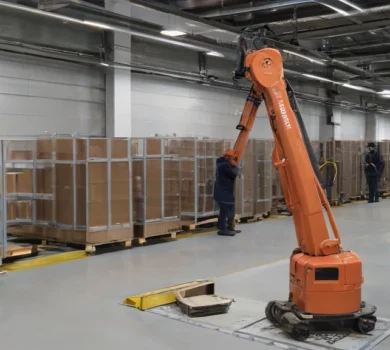
GAM: a new basic model for robotic manipulation in industry.
Amazon introduced the Generalized Action Model (GAM) - an advanced foundational model for robotic manipulation, which
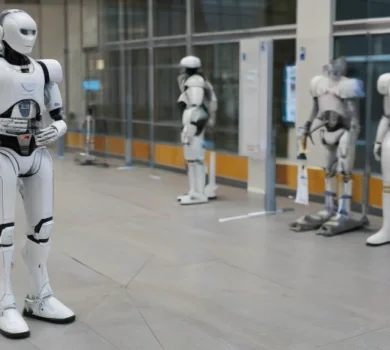
Fraunhofer IPA presents robotics for the circular economy at the European Parliament
On September 2, 2026, the Fraunhofer Institute for Manufacturing Engineering and Automation IPA (IPA)
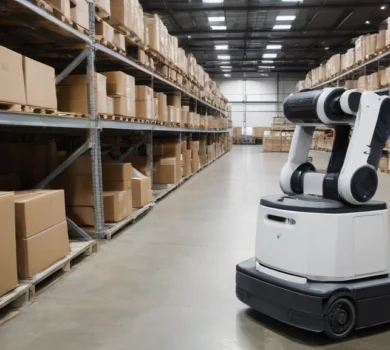
A new method helps people predict errors in self-driving cars
Researchers from MIT and Motional have developed a system that allows people to predict errors in self-driving cars.
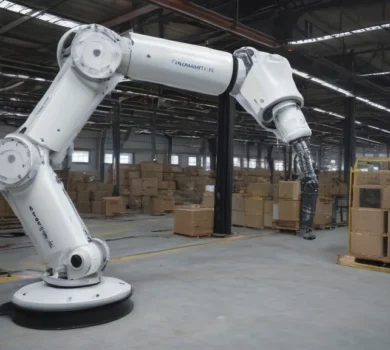
How intelligent memory coding can save energy in autonomous vehicles
A new method called MotiMem-Omega can reduce energy consumption in the memory interface of an autonomous vehicle by
KEENON unveiled the KOM 3.0 at WRC 2026: robots think before they act
At the World Robot Conference 2026, KEENON Robotics presented KOM 3.0 - a new generation of AI architecture,