

Humanoid Robot Optimus
Optimus - The power of future technology!
Revolution in humanoid robotics
Optimus - Precision and intelligence
Designed for people, created by technology
Optimus - A partner in the automation of the future
A new standard in humanoid technology
Meet the Optimus humanoid robot - advanced technology created to support humans. From automating work to intelligent solutions for industry, Optimus is shaping a new era of human-machine interaction!
Contact us Watch the videoOptimus - Tesla
Humanoid Robot Optimus
Optimus is a humanoid robot being developed by Tesla, a company best known for producing electric cars and advanced artificial intelligence systems. The robot will leverage Tesla’s expertise in the field of electric drives as well as image processing and machine learning algorithms. m.in- from the Autopilot function in vehicles of the brand. The goal of the project is to build a machine capable of operating in a human environment, mastering tasks such as moving objects or using simple tools, and ultimately performing more complex tasks.
Even at the initial presentation stage, Optimus generated great interest from the media and experts in the field of robotics. Tesla plans to implement technologies developed as part of its autonomous driving program into the robots, which could potentially allow Optimus to "learn" about its surroundings and interact with them in a more natural way. The robot is ultimately intended to be a solution that supports people in monotonous, risky or simply tedious tasks, which, according to official announcements, may accelerate the automation of many industries and processes.
History and Development
Humanoid Robot Optimus
Discover the fascinating story of the Tesla Optimus humanoid robot - from the first announcements in 2021, through subsequent stages of prototype development, to ambitious production plans. This fact-based story shows how quickly technology can change the world.
Project announcement (2021)
- For the first time, the world heard about Optimus in August 2021 during "Tesla AI Day." Elon Musk announced that the company intends to build a humanoid robot using artificial intelligence solutions developed for the Autopilot function. Preliminary parameters were also presented - height of approximately 173 cm, weight of approximately 57 kg and projected lifting capabilities.
Presentation at "Cyber Rodeo" (April 2022)
- On April 7, 2022, during the "Cyber Rodeo" event held at the newly opened Tesla Giga Texas factory, a visual mockup was presented showcasing the concept of the Tesla humanoid robot. Elon Musk confirmed at the time that Optimus could be ready for initial production as early as 2023. He also announced that the long-term goal is to create a machine capable of performing "everything people don't want to do" - i.e., tasks requiring repetitive, monotonous, or potentially dangerous activities.
Conceptual prototype and further plans (June 2022)
- In June 2022, Elon Musk announced that the first robot prototype would be shown later that year during the second edition of "Tesla AI Day." On Twitter, it was announced that the physical demonstration would differ from the mockup presented in April, suggesting that research and development work is progressing rapidly and the design is still evolving.
Second "AI Day" - semi-functional prototypes (September 2022)
- In September 2022, during the second "Tesla AI Day," the company presented two working (although still prototype) units of Optimus. One of them was able to walk across the stage, and the other - in a slightly more advanced housing - demonstrated arm and hand movements. Although it was not yet a product ready for widespread deployment, the demonstration represented an important step towards fulfilling Tesla's promise of rapid project development.
New demonstrations and skills (September 2023)
- In the fall of 2023, Tesla published a video showing Optimus performing a series of new tasks: sorting colored blocks, assessing the position of its own limbs in space, and demonstrating increased flexibility by holding a pose similar to a yoga pose for a moment. This was the first public demonstration suggesting the robot's ability to combine object recognition with fairly smooth motor skills.
Generation 2 (December 2023 - May 2024)
- December 2023: A video appeared on social media (on Musk’s account on X, formerly Twitter) showing Optimus in a version referred to as “Generation 2.” The improved robot design featured a sleeker silhouette, more advanced hands, and an increased range of motion. The short clip showed “dance” moves and surprisingly precise kitchen tasks (e.g., cracking an egg).
- May 2024: In another video, also presented on the X platform, Optimus Generation 2 performed various tasks in one of Tesla's factories, indicating attempts to introduce the robot into a real working environment. Critics pointed out that some of the operations may have been assisted by teleoperation, rather than being fully autonomous.
Critical comments and competitor reactions
- Industry experts and competing robotics companies often point out that Tesla's promotional videos do not always demonstrate the robot's full autonomy. Some of the presented operations may require remote control or operator support. In response, other humanoid manufacturers (such as Boston Dynamics) published their own materials, highlighting the advanced capabilities of their machines in fully autonomous operation.
Production plans and further development (June - October 2024)
- June 2024: Elon Musk stated that Optimus will enter limited production in 2025. Plans include deploying a thousand robots on Tesla's assembly lines, followed by the possibility of expanding production for other companies in 2026.
- "We, Robot" (October 2024): During the "We, Robot" event organized by Tesla, new interactive demonstrations of Optimus' capabilities were presented. Although some observers positively assessed the progress in the robot's development, there were also opinions that many of the presented functions still rely on teleoperation. Elon Musk expressed confidence that in the future, Optimus will be able to perform a variety of household and industrial tasks and that it could be sold at a price of around $30,000.
Significance of the project
- Despite the doubts raised by critics, the very fact of Optimus' accelerated development indicates that humanoid robots are becoming an increasingly real part of the automation market. Tesla's involvement - a company with significant capital and reach - makes the project attractive to both investors and potential customers of robotic solutions. If the declarations about introducing a mass-market, relatively affordable humanoid robot prove true, Optimus may accelerate the revolution in many sectors of the economy, from logistics and production to services and care.
This story shows how Tesla's ambitious plans in the field of humanoid robotics are gradually becoming a reality. From the first prototype to subsequent demonstration generations, Optimus is evolving into a machine capable of operating in the human world - although key challenges, such as fully autonomous control or safe coexistence with humans, still require long-term research and testing.
Technical Specifications
Technical Specifications of the Optimus Humanoid Robot
The following information is based on available materials regarding the humanoid robot Optimus, developed by Tesla. Optimus was designed to perform monotonous, dangerous, or undesirable tasks for humans, with potential applications in various industries.
| Parameter | Value | Notes |
|---|---|---|
| Height | 173 cm | Similar to the height of an average person. |
| Weight | 57 kg | Lightweight design that facilitates movement. |
| Load capacity | Up to 20 kg | Enables the transport of moderately heavy objects. |
| Maximum movement speed | Approximately 8 km/h | Enables efficient movement in a human environment. |
| Movement capabilities | Walking, climbing stairs, manipulating objects | Advanced motion control algorithms. |
| Sensors | Cameras, force and torque sensors | Enable perception of the environment and interaction with objects. |
| Control system | Artificial intelligence based on Tesla technology | Utilizes experience from Tesla's autonomous vehicles. |
| Power supply | High energy density battery | Provides several hours of operation on a single charge. |
| User interface | Screen on the robot's head | Enables communication and displays information. |
Optimus is an advanced humanoid robot developed by Tesla, designed to perform monotonous, dangerous or undesirable tasks for humans. Thanks to its advanced design, integration with artificial intelligence technologies and the experience of Tesla in the field of autonomous systems, Optimus has the potential to be used in various industries, from industry to home services. Its humanoid structure and mobility allow it to interact effectively in an environment designed for humans.
Optimus
Applications and Examples of Use
Optimus is a versatile humanoid whose potential applications extend far beyond standard ideas about robotics. From warehouses and production plants, through customer service, to tasks requiring work in difficult and dangerous environments - this robot has the chance to find its place in many areas of life.
Below are some of the most important examples of Optimus's use and the potential benefits that its implementation may bring in logistics, industry, services, education, and everyday life. Although the robot is still under development, Tesla's intensive engineering work indicates ambitious plans to introduce humanoid solutions into practice.
Logistics and warehousing
Carrying loads:
Preliminary specifications indicate that Optimus will be able to lift and transport small or medium-sized packages, making it potentially useful in distribution centers and warehouses.
Sorting products:
Thanks to its cameras and image recognition algorithms, the robot can automatically classify and place goods on specific shelves.
Manufacturing Industry
Simple assembly work:
In manufacturing plants where flexibility and the ability to operate human tools are important, a humanoid can improve work or relieve employees of the most monotonous tasks.
Quality control:
Combined with computer vision systems, Optimus can be used for basic product inspections in hard-to-reach places or under potentially hazardous conditions.
Services and trade
Customer service at information points:
In a development version, the robot could greet customers and provide basic information and directions in a store or hotel.
Assistance in restaurants and cafes:
Theoretically, it is possible to perform simple kitchen tasks or serve drinks if an appropriate level of precision and safety can be ensured.
Dangerous and monotonous tasks
Work in hazardous areas:
The robot can replace a human in places with high levels of noise, dust, or chemical contamination.
Example rescue operations:
Theoretically, it is also possible to use the humanoid in search and rescue missions, although this area will require further, advanced adaptation (especially in the context of resistance to environmental conditions).
Support in household tasks
Assistance with simple activities:
Ultimately, Optimus could take care of carrying groceries or sorting waste.
Personal assistant:
With appropriate software and integration with smart home systems, the humanoid can support elderly or disabled people in their daily activities.
Education and technology demonstrations
Presentation of robotics capabilities:
Demonstrations in schools, universities, and science centers could help younger generations become familiar with the potential and limitations of modern automation.
Research platform:
Research laboratories can use Optimus to conduct experiments in machine learning, environmental perception, or human-robot interaction.
Due to ongoing development and testing, examples of its use Optimus in practice are currently limited. However, given the intensity of engineering work and Tesla's access to financial resources and data from autonomous driving systems, it can be expected that in the coming years, this brand's humanoid robot will be increasingly presented in various environments and tested for efficiency, safety, and economic viability of implementations.
Technology and Innovation, Safety
Optimus
Optimus is the result of combining advanced technology and innovative solutions from Tesla, which aim to create a humanoid capable of efficient and safe work in various environments. The use of experience from the Autopilot system, the development of precise sensors, and attention to energy efficiency are just some of the elements that define its design.
Below, we outline the key technologies used in Optimus, focusing on artificial intelligence, mechanics, and energy management, as well as solutions that increase safety for both users and the environment.
Advanced AI and sensor systems
- Artificial intelligence based on Autopilot experience The Optimus robot draws on algorithms used in the Autopilot system, which is used in Tesla cars. This means that many solutions from the field of image processing, object recognition, and motion planning have been adapted to the realities of a robot moving on two legs.
- Multi-directional cameras and sensors To ensure that the robot has "awareness" of its surroundings, the design provides for the use of cameras with different resolutions and fields of view, depth sensors, gyroscopes, and accelerometers. These elements allow for early detection of obstacles, maintaining balance, and performing manual tasks precisely.
Drives inspired by Tesla's electric drive systems
- According to the manufacturer, the actuators, joints, and other mechanical components in the robot's arms and legs are based on knowledge gained during the design of electric vehicle motors. This is intended to make Optimus energy-efficient while still offering sufficient power for basic physical tasks.
Innovations in energy management
- High energy density batteries Tesla is developing lithium-ion batteries with a focus on long range for cars. A similar approach for the robot should enable longer autonomous operation on a single charge.
- Energy regeneration The robot can theoretically recover some energy during movements - for example, when bending its knees or rotating limbs - although the details of such solutions have not yet been presented in detail.
Safety system and robot control
- Limiting speed and force To avoid risks to people in the vicinity, the control algorithms limit the maximum speed and torque of the joints. In emergency situations, the robot should automatically switch to a safe mode.
- Collision detection and emergency stop The use of a series of sensors (cameras, lidars, pressure sensors) enables early recognition of dangerous events. If an object or person is detected within the robot's range of motion, it can stop or back away.
- Data integrity and resistance to manipulation In the humanoid robot project, securing communication and software is also important. Tesla - as with cars - aims to develop protocols that minimize the risk of unauthorized access.
Potential hazards and preventive measures
- Legislative control Due to the nature of humanoids (being in public spaces, interacting with people), regulatory bodies may introduce additional safety standards and certification tests.
- Collaboration with operators In the early stages of development, robots will likely operate in a semi-autonomous or teleoperated mode, which means that it is necessary to train supervisors to avoid accidents and errors during operation.
Technologies developed for Optimus largely result from the innovations that Tesla it has introduced in the automotive and energy industries. Although many solutions are still in the prototype phase, the manufacturer emphasizes the priority of safety and compatibility with the existing ecosystem of devices and AI systems.
Optimus
Integration and Compatibility, Personalization and Customization of Solutions
Optimus is not only an advanced technological humanoid but also a platform designed with flexibility, personalization, and easy integration into various environments in mind. Thanks to innovative solutions such as Over-the-Air (OTA) updates, collaboration with IoT systems, or modular design, the robot can be adapted to the specific requirements of different industries. In this section, we present key elements related to the possibilities of personalization, integration, and future development of the Optimus ecosystem.
Integration with Tesla software
- AI platform and Over-the-Air (OTA) updates: The robot can use a similar software architecture as Tesla vehicles, which in the future will allow for remote updates of functions and algorithms. This strategy provides users with quick access to fixes and new features without the need for direct hardware intervention.
- Potential collaboration with the IoT ecosystem: Thanks to connectivity modules (Wi-Fi, Bluetooth, and possibly 5G), Optimus has the potential to become part of a broader network of smart devices - e.g., in factories, warehouses, or home management systems (smart home).
Ability to cooperate in diverse environments
- Support for various tools: The humanoid design is intended to facilitate taking over the functions of a machine or device operator, as these were designed with human ergonomics in mind. This applies to tools, warehouse carts, or switches in standard control panels.
- Flexible adjustment of autonomy level: The manufacturer anticipates semi-autonomous modes in which humans can decide on some tasks in real time (teleoperation), as well as more advanced fully autonomous functions.
Task personalization and hardware configuration
- Modular approach to design: In the future, Optimus may have interchangeable components, such as grippers (e.g., adapted for delicate tasks in catering or for strong grips in logistics).
- Industry-specific software: Depending on the needs, manufacturers or third parties may offer software packages optimized for specific applications, such as vision systems for quality control, advanced motion planning in narrow warehouse corridors, or voice interactions in customer service.
Adaptation to safety requirements and industry standards
- Certifications according to industrial standards: In order for the robot to operate in industry, it will be necessary to obtain certificates that comply with applicable regulations (e.g., CE in the European Union or OSHA in the USA).
- Parameters adapted to the application: Depending on the industry (e.g., food, pharmaceutical), the robot may need special protective coatings, filters, or increased resistance to moisture and dust.
Development prospects and developer ecosystem
- Possibility of creating additional applications: If Tesla provides developers with APIs (application programming interfaces), there will be an opportunity to create their own extensions that improve the range of functions of the robot.
- Community and exchange of experiences: An important element in the development of humanoids is the cooperation between users and engineers in order to identify and solve errors, as well as propose new functionalities. Thanks to this, Optimus can be constantly improved based on real market needs.
Integration and compatibility are key to popularizing humanoid robots in industry and everyday life. Engineers Tesla, using existing software solutions and hardware designs, are trying to create a machine that is flexible enough to be used in many areas - from production lines to the home environment. The ability to personalize both at the hardware and software levels will allow it to be adapted in the future Optimus for specific tasks, thereby increasing its usefulness and appeal to potential users.
Optimus
Benefits for Customers
Introducing Optimus into daily work opens up completely new opportunities for businesses. Automation of repetitive tasks, improved safety, and the robot's ability to function in human-centered environments are just some of the key benefits.
Optimus has been designed to deliver real business value - from increasing work efficiency and application flexibility to long-term development potential through remote updates. In this section, we present how a humanoid robot can transform the way companies operate and influence their future development.
- Automation of repetitive tasks: Optimus - Tesla can take over routine, monotonous or physically strenuous activities, allowing employees to focus on more demanding and creative aspects of work.
- Improved safety: Replacing people in hazardous environments - such as contaminated areas, high-noise environments or those exposed to chemicals - can minimize the risk of accidents and occupational diseases.
- Increased efficiency and continuity of work: A humanoid robot does not experience fatigue in the same way as a human, which translates into longer and more consistent work throughout the day. In production facilities, this can mean improved process flow and more efficient use of resources.
- Easy adaptation to the human environment: Because Optimus is designed with an anthropomorphic structure in mind, it can function in spaces and using tools intended for humans without major changes. This often simplifies implementation in existing infrastructure.
- Flexibility and a wide range of applications: Depending on needs and selected software, the robot can perform various roles - from warehouse and production tasks to customer service, as well as educational or experimental tasks. This versatility increases the potential return on investment.
- Possibility of development and updates: Tesla's use of AI architecture and over-the-air (OTA) remote update systems means that Optimus can gain new features as software development progresses. Users do not have to buy subsequent generations of hardware to take advantage of improvements.
- Image of innovation: The implementation of a humanoid robot can positively influence the perception of the company as modern and focused on advanced technologies. In some industries, this is an additional marketing asset and a differentiator from the competition.
FAQ - 9 frequently asked questions
Humanoid Robot Optimus
We have prepared answers to frequently asked questions that explain the details regarding the technology, capabilities, and development prospects of the Tesla humanoid. Learn more about potential applications, costs, and the current status of the project.
At this stage (according to publicly available information), Optimus remains in the prototype and testing phase. Tesla states that partial production may begin in the coming years, but no official date for mass availability has been announced.
Elon Musk suggested that Optimus could reach a price of around $30,000 in the long term. However, this is not a confirmed value or an official price list, and actual costs may vary depending on the degree of development and availability.
In demonstrations and video materials, both elements of autonomy and moments indicating remote control (teleoperation) can be seen. Tesla intends to develop the technology towards maximum autonomy, but in some applications, human support may still be necessary.
Thanks to its humanoid design and AI systems, the robot should be able to move in places designed for humans, such as standard doors, stairs, or corridors. However, the final effectiveness depends on the degree to which the software is adapted to specific conditions.
According to Tesla, the robot will have numerous safety features, such as limiting maximum force and movement speed, collision detection systems, and an emergency stop mode. Safety standards will also depend on local regulations and future certifications.
There is no precise, official information available. Estimates suggest several hours of active operation, but the actual time may depend on the intensity of the tasks performed and further battery optimization.
Tesla has not yet presented details about compatibility and APIs, but it seems likely that the robot will eventually support communication protocols (Wi-Fi, Bluetooth, 5G), which will enable integration with various IoT platforms and management systems.
So far, most demonstrations show the robot operating in office or light manufacturing environments. Tesla has not yet revealed plans to adapt the design for extreme environments. However, specialized versions may appear in the future.
The manufacturer has not yet released detailed information about the modularity of the design. However, given the needs of various industries, we can expect solutions that allow tools or equipment to be adapted for specific applications.

More questions?
If you would like to learn more about humanoid robots, we invite you to browse our complete FAQ section. You will find additional questions, detailed instructions, and helpful tips there.
Why NexaRob?
Your Trusted Partner in the Field of Humanoid Robotics - Knowledge, Passion, and Innovation
At NexaRob, we believe that the future of automation and interaction with technology lies in humanoid robots such as Tesla Optimus. Our mission is to support companies, institutions, and technology enthusiasts in fully utilizing the potential of advanced robotic solutions. Thanks to our experience and individual approach, we help at every stage of implementation - from consulting to integration and system development.
- Expertise in Humanoid Robotics Thanks to our collaboration with global leaders in the humanoid robotics industry, we have access to the latest technologies and trends. We help clients choose robots that are best suited to their needs - from automating processes in industry to innovative research and educational projects.
- Individual approach to each project We understand that each client has unique needs. That is why we offer a detailed analysis of requirements, local conditions and business goals in order to propose an optimal solution - both in terms of hardware and software.
- Comprehensive technical support Our support does not end at the implementation stage. We provide regular training, technical service, and the possibility of system upgrades so that the robot can meet all requirements even in changing market conditions.
- Innovation and access to the latest technologies We follow the development of artificial intelligence, vision systems and advanced mechanics in order to provide solutions that realistically increase the efficiency and competitiveness of our clients.
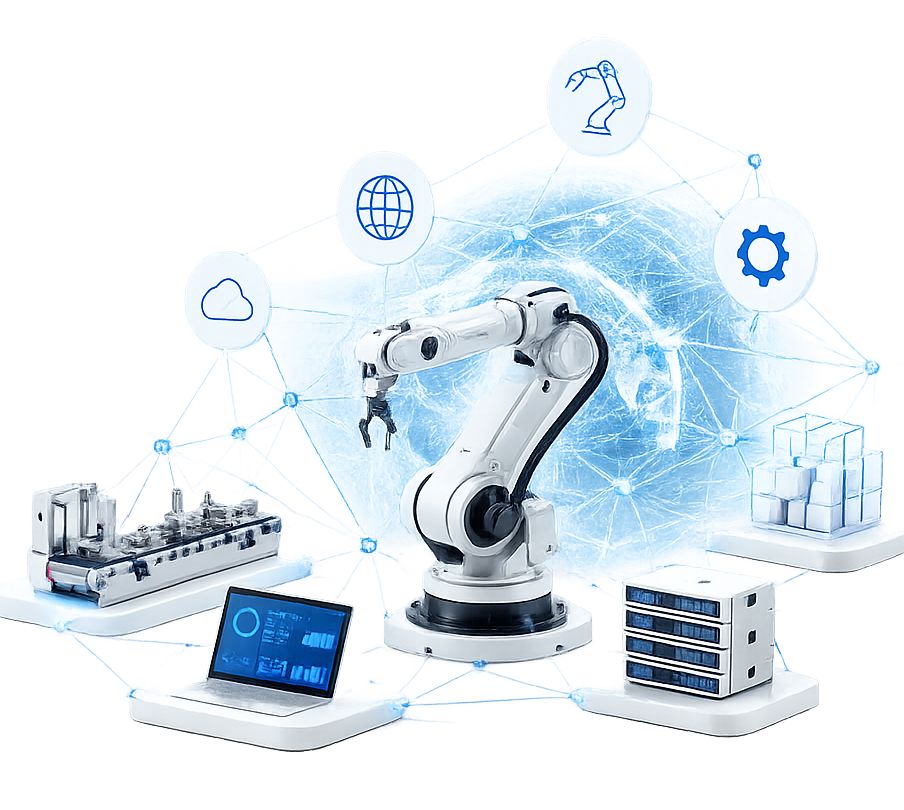
Would you like to learn more about the possibilities of implementing Optimus or find out what benefits it can bring to your company? Contact us - we will be happy to help you create a solution tailored to your needs!
Automate Your Business with NexaRob - Contact Us!
Join NexaRob and Together Let's Develop Humanoid Robotics
Do you want to become our Partner?
NexaRob is actively looking for partners who share our vision of the future based on humanoid robotics. Collaboration with ambitious companies, research institutions and technology enthusiasts allows us to jointly develop innovative solutions and implement projects that change the way people and machines interact. Together we can create a strong ecosystem based on knowledge, experience and common goals.

United States

China

Japan

Germany

India

United Kingdom

France

Italy

Canada

South Korea

Brazil

Australia

Spain

Mexico

Indonesia

Netherlands

Saudi Arabia

Turkey

Switzerland

Taiwan

Poland

Sweden

Belgium

Thailand

Ireland

Austria

Norway

Israel

United Arab Emirates

Argentina

South Africa

Denmark

Philippines

Singapore

Malaysia

Colombia

Bangladesh

Egypt

Chile

Finland

Vietnam

Portugal

Czech Republic

Romania

New Zealand

Peru

Greece

Ukraine

Slovakia

Hungary

Slovenia

Croatia

Serbia

Bulgaria

Estonia

Latvia

Lithuania

Iceland

Luxembourg

Malta

Cyprus

Morocco

Algeria

Tunisia

Nigeria

Kenya

Ethiopia

Ghana

Tanzania

Uganda

Angola

Senegal

Qatar

Kuwait

Oman

Pakistan

Sri Lanka

Nepal

Kazakhstan

Uzbekistan

Mongolia

Russia

Cambodia

Myanmar

Laos

Fiji

Papua New Guinea

Venezuela

Ecuador

Uruguay

Paraguay

Bolivia

Costa Rica

Panama

Dominican Republic

Guatemala

Cuba

Jordan

Lebanon

Iran
Additional countries in Europe
These countries are hidden in readable mode so that the map is not cluttered. Click on a country to open contact information, email, and a description of the area of cooperation.
Additional countries in Asia
These countries are hidden in readable mode so that the map is not cluttered. Click on a country to open contact information, email, and a description of the area of cooperation.
Additional countries in the Americas
These countries are hidden in readable mode so that the map is not cluttered. Click on a country to open contact information, email, and a description of the area of cooperation.
Additional countries in Africa
These countries are hidden in readable mode so that the map is not cluttered. Click on a country to open contact information, email, and a description of the area of cooperation.
Additional countries in Oceania
These countries are hidden in readable mode so that the map is not cluttered. Click on a country to open contact information, email, and a description of the area of cooperation.
Albania
Andorra
Belarus
Bosnia and Herzegovina
Montenegro
Liechtenstein
North Macedonia
Monaco
Moldova
San Marino
Afghanistan
Armenia
Azerbaijan
Bahrain
Bhutan
Brunei
Georgia
Iraq
Yemen
Kyrgyzstan
North Korea
Maldives
Syria
Tajikistan
East Timor
Turkmenistan
Antigua and Barbuda
Bahamas
Barbados
Belize
Dominica
Grenada
Guyana
Haiti
Honduras
Jamaica
Nicaragua
Saint Kitts and Nevis
Saint Lucia
Saint Vincent and the Grenadines
El Salvador
Suriname
Trinidad and Tobago
Benin
Botswana
Burkina Faso
Burundi
Cape Verde
Chad
Democratic Republic of the Congo
Djibouti
Eritrea
Eswatini
Gabon
Gambia
Guinea
Guinea-Bissau
Equatorial Guinea
Cameroon
Comoros
Congo
Lesotho
Liberia
Libya
Madagascar
Malawi
Mali
Mauritania
Mauritius
Mozambique
Namibia
Niger
Central African Republic
Rwanda
Seychelles
Sierra Leone
Somalia
Sudan
South Sudan
Togo
Ivory Coast
Sao Tome and Principe
Zambia
Zimbabwe
Kiribati
Micronesia
Nauru
Palau
Samoa
Tonga
Tuvalu
Vanuatu
Marshall Islands
Solomon Islands
Why Is It Worth Cooperating with NexaRob?
Joint Investments in Innovation
We strive to develop technologies that meet real market needs. We combine knowledge and experience in the fields of artificial intelligence, automation and humanoid robotics to create solutions that change technological standards.
Synergy of Knowledge and Experience
Each partner brings unique competencies that enrich our capabilities. Thanks to cooperation, we create solutions tailored to the needs of various industries - from industry and logistics to education and scientific research.
Global Network of Contacts and New Markets
Our experience in international markets allows us to support partners in global expansion. By adapting robots to local standards and requirements, we jointly open up new business opportunities.
We are Looking for Partners in the Following Areas:
- Production and Distribution of Humanoid Robots: Together, we develop and promote solution packages in the market, leveraging our customer base interested in modern technologies.
- AI and IoT Technologies: We are looking for developers of data analysis systems, machine learning algorithms, and software that can be integrated with humanoid robotics.
- Automation and Logistics Solutions: We collaborate with companies developing process automation systems, integrating them with humanoid robotics to offer synergistic solutions to clients from various sectors.
Let's Join Forces
Contact us and see how NexaRob can work with you to develop the future of humanoid robotics.
Interesting facts from around the world
Vision-language models as aids for autonomous drones: balancing speed and precision.
A study conducted on autonomous drones showed that vision-language models, despite their potential for advanced semantic reasoning,
IRIM 2026 Seminar: How can robotics achieve seamless physical interaction with humans?
On October 21, 2026, the Institute for Robotics and Intelligent Machines will host a lecture.
DriveWorld3D: a new generative simulation for safe autonomous driving
The new DriveWorld3D system, developed by the Robostreet team in Cambridge, is designed to help create safer models.
Microlocalization: precise positioning of mobile robots based on microscopic textures of the ground
Researchers have presented a new method for locating mobile robots with an accuracy of tens of micrometers, using microscopic textures.
Robotics as a space for creativity and diversity: experiences of researchers from the Oxford Robotics Institute
As part of the International Women in Engineering Day 2026, researchers from the Oxford Robotics Institute (ORI) shared