
SCARA Robots
Speed and Precision!
Ideal for assembly and manipulation
SCARA - Compact and Efficient
Automation with Maximum Efficiency
SCARA Robots for Precise Production
Dynamic Solutions for Industry
SCARA robots are compact and fast automation systems, ideal for assembly, packaging, and handling components. Thanks to their high precision and speed, they are used in electronics, automotive, and many other industries.
Contact us Watch the videoSpeed and Precision Assembly in a Compact Form
SCARA Robots
SCARA (Selective Compliance Assembly Robot Arm) robots have gained popularity in many industrial sectors due to their exceptional speed and precision of movement in the plane. Their name refers to "selective compliance" - the robot is flexible in the horizontal axis, but rigid in the vertical axis, which makes it an excellent choice for assembling, transferring, and sorting light components.
Why Consider SCARA Robots?
Thanks to their simple construction and relatively small size, these robots offer high performance and short cycle times for repetitive assembly operations. Moreover, ease of programming and high flexibility of movement in two horizontal axes make SCARA ideal for pick & place processes or arranging components on a conveyor belt.
SCARA Robots (Selective Compliance Assembly Robot Arm)
Construction and Operating Principle
SCARA (Selective Compliance Assembly Robot Arm) robots are characterized by their distinctive "arm" construction with two rotary axes in the horizontal plane and a vertical Z axis, which is much more rigid. This design ensures high speed and precision for assembly, sorting or transferring light components.
Mechanical Design
- A robotic arm with two rotary joints. Most SCARA robots have two arms connected by hinges, which allows for horizontal movement. This enables the robot to easily maneuver between several mounting points.
- Servo drives and high-precision gears. Each rotational axis is usually driven by a servo motor coupled with precision gears (e.g., harmonic). This ensures high accuracy and smoothness of movements.
- Rigid vertical (Z) axis. The SCARA robot is "selectively compliant" - this means that in the horizontal axes, it can gently absorb small errors or vibrations, while remaining rigid in the vertical axis. This feature works especially well when tightening or inserting components in assembly processes.
Motion Principle.
- Smooth movements in a plane. Two rotary joints enable fast movement along the X and Y axes, making SCARA robots excellent for repetitive pick & place tasks.
- Control of the Z-axis position. The Z-axis is responsible for raising and lowering the gripper (or other tool), while ensuring a stable position during the joining of components or dispensing of substances.
- Precise positioning. A SCARA arm can achieve very small deviations in part placement, which affects the high quality of the final products.
- Fewer complex axes: Compared to articulated (robotic) robots, SCARA has a limited range of rotation, which simplifies programming and control.
- Ease of programming paths: movements in two horizontal axes and one vertical axis are intuitive, and the trajectory planning itself is done using basic coordinate systems.
Key Advantages
Key Advantages of SCARA Robots
SCARA robots provide a unique combination of speed, accuracy, and compact design, making them one of the most popular solutions in industries requiring high-performance assembly.
- Lightning-Fast Cycle Times Thanks to rotary joints in the horizontal plane, the SCARA robot can move very quickly between successive points, reducing cycle time in pick & place or simple assembly tasks.
- High Precision and Stability The rigid Z-axis structure and precise servo drives allow for maintaining consistent quality and accuracy with each subsequent movement. This is extremely important in assembly processes where minimal tolerances are critical.
- Compact Dimensions and Easy Integration The small size and relatively low weight of the SCARA robot make it easy to integrate into existing production lines. The smaller dimensions of SCARA robots also mean less space requirements and lower investment costs.
- Low Maintenance Costs A simpler rotary design compared to articulated robots means fewer components that are subject to wear. In addition, ease of servicing and maintenance translates into shorter downtimes.
- Versatility of Applications Although SCARA robots are mainly associated with assembly and pick & place, they can also be successfully used in quality control, packaging or simple machining operations.
Applications in Industry
SCARA Robots
SCARA robots, thanks to their specific design and high dynamics of movements in the plane, are used in many industrial processes. Below we present examples of areas where SCARA robots perform particularly well:
Assembly and Precision Machining
Precise joining of elements: SCARA robots are excellent for screwing screws, pressing components or soldering small parts.
Processing delicate materials: Due to the stable Z-axis and smooth horizontal movements, SCARA robots can perform light tasks such as applying seals or applying adhesives.
Pick & Place / Manipulation
Fast transfer of elements: High speed and a small range of motion in the vertical axis make SCARA ideal for pick & place tasks, especially with small and medium-sized components.
Sorting and segregation: The ability to perform rapid movements on the X and Y axes enables effective grouping, transferring or packing products of various shapes.
Quality Control
Cooperation with vision systems: Stable movement in the plane allows SCARA robots to precisely position cameras or sensors, which facilitates optical inspection and measurements.
Assembly correctness verification: Thanks to its high repeatability, the robot can detect minimal deviations in the shape or position of elements.
Packaging and Palletizing
Automated packaging lines: SCARA robots can quickly place products in packaging, such as boxes, trays, or blisters.
Layer formation on pallets: Although robots with a larger reach (e.g., articulated robots) are usually chosen for palletizing, SCARAs perform well with smaller loads in a limited space.
Electronics and Electrical Assembly
PCB board assembly: SCARA robots perfectly perform tasks related to the assembly of electronic components, transferring and positioning SMD or THT components.
Automatic functional tests: A stable and repeatable Z-axis facilitates performing contact tests (e.g., pressing measurement probes) without the risk of damaging elements.
Examples of Non-Standard Applications
Simple machining applications: SCARA robots can be used for small milling, polishing, or surface cleaning tasks, especially if they require 2D operation with gentle pressure.
Automation in laboratories: Due to their compact size and precision, SCARAs are suitable for manipulating samples, dispensing reagents, or scanning codes in laboratory equipment.
SCARA Robots
Industries Where SCARA Robots Are Most Commonly Used
Although SCARA robots have gained particular recognition in the electronics industry, their applications extend far beyond the high-tech sector. Here are the key industries where SCARA robots are becoming increasingly popular:

Assembly and soldering of small components, screwing, or applying solder paste.

Assembly of light parts, such as electronic modules, sensors, or lighting systems.
Quality control of smaller body and interior vehicle components.

Fast packaging and sorting of finished products on high-throughput production lines.

Precise dispensing of drug ingredients, sorting ampoules or vials.
Manipulation of medical instruments in sterile conditions.


Automatic sorting of small packages, arranging parcels on conveyor belts.
Order fulfillment in distribution centers requiring fast and precise flow of goods.


Toys and Gadgets
Assembly of small components, assembling electronic mechanisms in toys.
Packaging and labeling of small products intended for retail sale.
High speed, precision and ease of integration make robots SCARA increasingly popular in many industries. They are particularly well suited for applications where a large number of parts need to be handled quickly while maintaining high quality standards.
SCARA Robots
Technical Requirements and Integration
In order to fully utilize their potential in the production process, SCARA robots must be properly selected based on operating parameters, control capabilities and safety requirements. Below we present key aspects that should be considered before implementation.
Operating Parameters
Range of Motion
SCARA robots move mainly in a plane (two rotary joints) and in the vertical axis (Z). Therefore, it is necessary to precisely determine the maximum range, especially when assembling components arranged on a larger surface.
Load Capacity and Dynamics
Higher loads require the use of more powerful servo drives and appropriately reinforced construction. It is also worth checking the maximum speed and acceleration in order not to exceed the permissible values in tasks with short cycles.
Working Environment
In industries such as food or pharmaceuticals, hygienic requirements and appropriate anti-corrosion coatings are important. In production plants with high dust levels or humidity, the appropriate IP protection class should be taken into account.
Integration with Control Systems
Controllers and Interfaces
Most SCARA robots work with popular communication protocols (e.g., EtherCAT, Profinet) and PLC systems. For more advanced applications (e.g., electronics assembly), a connection to dedicated CAD/CAM software may be necessary.
Vision Systems and IoT
SCARA robots are often used in pick & place applications with vision cameras to identify and position parts. They can be integrated into IoT platforms for remote monitoring, allowing real-time tracking of operating parameters.
Support Services
Implementing a SCARA robot can be easier with the help of integration experts. If you need support with configuration, check out Support Services.
Safety and Standards
Robot Work Area
Due to high accelerations and speeds, safety fences or light curtains are often necessary in many applications to protect operators from accidentally entering the robot's operating area.
Standards and Certificates
SCARA robots should comply with ISO 10218 standards for industrial robot safety. Additionally, if the robot operates under special conditions (e.g., a clean room environment), it is worth ensuring that the manufacturer provides appropriate certificates.
Risk Assessment
When designing a workstation with a SCARA robot, a risk assessment is performed that takes into account: m.in- speeds of movements, use of grippers, and potential collisions with the environment.
SCARA Robots
Comparison with Other Types of Robots
SCARA robots (Selective Compliance Assembly Robot Arm) are devices designed for precise and fast operations in a horizontal plane. Thanks to their flexibility in two-dimensional movements and rigidity in the vertical axis, they are ideal for tasks such as assembly, sorting, or packaging. To fully understand their capabilities and choose the optimal solution, it is worth comparing SCARA robots with other types, such as Cartesian, articulated, Delta, cylindrical, collaborative robots (cobots), or Gantry.
SCARA vs. Cartesian
SCARA and Cartesian (XYZ) robots differ primarily in kinematics and movement. SCARA utilizes two rotary joints in the horizontal plane and a rigid vertical axis, which gives it high dynamics and speed with a small working range. This makes it ideal for assembly and pick & place applications, especially when rapid transfer of small components or tightening of small screws is critical. On the other hand, a Cartesian robot moves in three (or sometimes four) linear axes, which simplifies trajectory programming and ensures high precision of movements along straight coordinates (X, Y, Z). This works well in processes requiring stable product handling over a larger area (e.g., a large assembly line), as well as in applications such as 3D printing or milling of light materials.
In practice, the choice between SCARA and Cartesian depends on priorities and conditions in the plant. When high performance and limited workspace are important, SCARA is often the better solution. If, however, the application requires a large linear range and a relatively simple path of motion, a Cartesian robot will provide a more economical and stable approach.
SCARA vs Articulated (robotic)
Articulated robots are the most recognizable type of industrial robots, distinguished by 4-6 rotary axes, which translates into impressive flexibility and range of motion. They can work at various angles, easily reach hard-to-reach places and perform complex movements, such as arc welding, spot welding or CNC machine operation. Meanwhile SCARA are characterized by a smaller number of axes (usually 3-4) and focus on fast movements in the horizontal plane, while maintaining the rigidity of the vertical axis. As a result, in typical assembly tasks requiring a rapid cycle (e.g., tightening small screws, applying small components), SCARA outperforms articulated robots in terms of work rate and ease of programming.
However, when the application requires complete freedom of movement, reaching for elements arranged at different angles, or performing machining processes in multiple planes, an articulated robot will prove to be unbeatable. Additionally, robotic arms can lift much heavier loads, which is important in industries such as automotive and metalworking. On the other hand, SCARA robots are usually designed for light tasks, where speed and repeatability are more important than high load capacity or complex trajectories.
SCARA vs Delta
Robots Delta are known for their extremely short cycle times and high precision in pick & place operations, especially in the food and pharmaceutical industries. Thanks to three (or four) arms attached to a common platform, they can quickly move light objects in a limited space. Meanwhile SCARA They maintain their advantage in more “linear” assembly processes, where precision is required while simultaneously applying pressure to the components (e.g., screwing in screws, pressing in parts).
Furthermore, Delta robots can be more complex to maintain (especially when replacing components or servicing the arms), which translates into higher operating costs. SCARA robots are generally simpler and more compact, and their design facilitates quick servicing and modification of equipment. Delta robots may prove unbeatable in ultra-dynamic tasks with small product sizes, while SCARA robots allow for greater flexibility in assembling components with various shapes, especially when control in the vertical (Z) axis is required.
Ultimately, if extreme transfer speed of very light objects is key, Delta robots may be the perfect solution. However, SCARA robots will perform better in applications where the priority is fast and stable assembly of components, dispensing or precise screwing with a moderate range of motion in the Z-axis.
SCARA vs Cobots
Collaborative Robots (Cobots) are designed to operate safely in close proximity to humans, often without the need for safety barriers. Equipped with advanced force and torque sensors and safety systems, they can detect contact with an operator and stop within a fraction of a second. SCARA do not usually have such advanced mechanisms for collaboration with people - these are classic industrial robots that require additional protective measures (barriers, light curtains) to ensure safety.
On the other hand, SCARA robots generally operate faster and have higher throughput in assembly cycles than typical cobots. In applications where pure performance and short cycle times are critical, a SCARA robot will be more efficient. However, if the application requires interaction with an operator - for example, collaborative assembly or transferring components in variable conditions - a cobot may prove to be more cost-effective, eliminating the need to build expensive safety zones.
Furthermore, cobots are often chosen by companies that are just starting their journey into robotics, due to their ease of programming and faster task modification (so-called quick changeovers). SCARA robots require a more detailed analysis of the workstation and often target high-volume production with a consistent flow of components.
SCARA vs Gantry
Gantry Robots are systems that move along guides in two or three linear axes (similar to Cartesian), but usually with a much larger range and load capacity. They are used in heavier applications, e.g., in the metal industry, high-bay warehouses, or production lines, where large and heavy loads need to be transported. Meanwhile SCARA They perform best in light and medium assembly and manipulation tasks, where small dimensions prevail and every fraction of a second counts.
In Gantry applications, the ability to cover a large working area (e.g., an entire production hall) and high structural stability are key. The SCARA robot is much more compact and mobile, but it cannot handle such loads or operate in such a vast working area. If you need to quickly and precisely move hundreds of small parts over a small area, SCARA may be the optimal choice. When handling large objects, Gantry is unbeatable thanks to its gantry design, which can be moved across the entire work area.
In summary, Gantry robots are an excellent solution for tasks requiring “strength and reach,” while SCARA robots excel in applications where speed and agility in a plane are important with relatively small loads.
When considering the implementation of SCARA robots, it is worth comparing their parameters with various technologies (e.g., Delta, Cobots, Gantry, or Cartesian). Each type has its strengths and weaknesses, so before making a decision, we recommend conducting a thorough analysis of processes, working conditions, and expectations regarding production speed. If you have any doubts, please contact our team of experts or consult the following resources: Selection Guide - we will help you choose the solution that best suits your needs.
Frequently Asked Questions
Frequently Asked Questions About SCARA Robots
The price depends on several factors, such as the size and reach of the arm, the type of drives (servo, stepper), the level of automation (e.g., integration with vision systems), and the manufacturer. In simple terms, basic models can start at just a few tens of thousands of zlotys, while advanced designs for fast, specialized tasks can cost several hundred thousand zlotys.
Yes. SCARA robots have a relatively simple mechanical design and are usually equipped with intuitive software. If modifications are needed (e.g., changing the gripper, adding a force sensor, moving the robot to a different process), this can be done relatively quickly, but it is crucial to properly plan the trajectory and calibrate the system.
This depends on the intensity of use and environmental conditions. Manufacturers usually recommend periodic inspections after a certain number of operating hours (e.g., every 6 or 12 months). During these inspections, the condition of the joints, motors, and control systems is checked. You can find more information in the Service and Modernization section.
Traditional SCARA robots are primarily designed for fast operation within safety zones (fences, light curtains). They are not typically equipped with advanced safety systems common in collaborative robots. If you require direct human-robot collaboration, consider choosing Collaborative Robots (Cobots).
Yes. Modern SCARA robots often offer support for communication protocols (EtherCAT, Profinet) and can be connected to vision systems (2D, 3D). This enables the identification of products "on the fly" and real-time adaptation of the robot's movement. To learn more, check out IoT Integration.
The speed depends on the model and drives used, but in pick & place tasks, SCARA robots can perform several operations per second. For more precise operations (e.g., assembly of small components), the speed is adjusted to the required level of accuracy.
Much depends on the team's experience and the available programming environment. Most manufacturers strive to simplify interfaces and provide built-in trajectory creators or ready-made macros. Compared to articulated robots, SCARAs are usually easier to learn due to the smaller number of axes and limited kinematics.
Of course. If your company has repetitive, relatively light assembly, packaging, or sorting tasks, a SCARA may be the ideal choice. The cost and space required to implement such a robot are often relatively small, which benefits small and medium-sized enterprises.

Do you have more questions?
Contact us or visit the FAQ section for detailed answers to all questions regarding SCARA robots.
Why NexaRob?
Implementing a SCARA robot is not just about purchasing equipment - it is also an investment in the future of your company. At NexaRob, we offer comprehensive support at every stage of implementation to ensure a quick and trouble-free transformation of your production processes.
- Individual Approach to Each Project Before recommending a specific SCARA model, we always thoroughly analyze the processes in your company, the available space, the required operating speeds, and the complexity of the tasks. This ensures that you receive a customized solution without overpaying for unnecessary features.
- Extensive Experience in Integration Our implementation team consists of engineers with many years of experience in the automation industry. We assist with configuration, programming, and optimization of robot operation, and we also integrate them with vision systems or IoT - so that your production line can fully utilize the potential of the new solution.
- Reliable Service and Modernization Support Investing in a SCARA robot requires securing service and regular inspections. Our after-sales support includes rapid response to inquiries, spare parts from trusted suppliers, and robot modernization as market needs change.
- Flexible Financing We understand that automation is a significant step for any company. That's why we offer various financing options - from leasing and long-term rental to subscription models (Robot-as-a-Service), allowing you to tailor investment costs to your capabilities.
- Focus on Industry 4.0 Development At NexaRob, we focus on innovation. We monitor the latest trends and robotic technologies to guarantee our customers access to solutions based on artificial intelligence, Big Data, or advanced vision systems. This allows you to confidently enter the era of Industry 4.0.

Do you have questions about SCARA robots or need comprehensive support? Contact us to jointly select the optimal solution for your company and prepare for the challenges of the modern market.
Automate Your Business with NexaRob - Contact Us!
Global Reach
We operate globally, support locally
NexaRob is a company with international experience, operating in over 100 countries. Thanks to our extensive network of partners and representatives, we can provide:
- Fast Implementations: regardless of the location of the company, we offer consulting and technical support tailored to your market.
- Local Servicing: our regional service teams guarantee efficient after-sales service and regular robot inspections.
- Best Practices from Around the World: We draw on global trends and implement them locally, so your company benefits from the latest innovations, regardless of its geographical location.
We work with companies of various sizes and diverse needs - from small workshops to international corporations. Our goal is to provide proven and scalable robotic solutions that facilitate the transformation towards Industry 4.0.

United States

China

Japan

Germany

India

United Kingdom

France

Italy

Canada

South Korea

Brazil

Australia

Spain

Mexico

Indonesia

Netherlands

Saudi Arabia

Turkey

Switzerland

Taiwan

Poland

Sweden

Belgium

Thailand

Ireland

Austria

Norway

Israel

United Arab Emirates

Argentina

South Africa

Denmark

Philippines

Singapore

Malaysia

Colombia

Bangladesh

Egypt

Chile

Finland

Vietnam

Portugal

Czech Republic

Romania

New Zealand

Peru

Greece

Ukraine

Slovakia

Hungary

Slovenia

Croatia

Serbia

Bulgaria

Estonia

Latvia

Lithuania

Iceland

Luxembourg

Malta

Cyprus

Morocco

Algeria

Tunisia

Nigeria

Kenya

Ethiopia

Ghana

Tanzania

Uganda

Angola

Senegal

Qatar

Kuwait

Oman

Pakistan

Sri Lanka

Nepal

Kazakhstan

Uzbekistan

Mongolia

Russia

Cambodia

Myanmar

Laos

Fiji

Papua New Guinea

Venezuela

Ecuador

Uruguay

Paraguay

Bolivia

Costa Rica

Panama

Dominican Republic

Guatemala

Cuba

Jordan

Lebanon

Iran
Additional countries in Europe
These countries are hidden in readable mode so that the map is not cluttered. Click on a country to open contact information, email, and a description of the area of cooperation.
Additional countries in Asia
These countries are hidden in readable mode so that the map is not cluttered. Click on a country to open contact information, email, and a description of the area of cooperation.
Additional countries in the Americas
These countries are hidden in readable mode so that the map is not cluttered. Click on a country to open contact information, email, and a description of the area of cooperation.
Additional countries in Africa
These countries are hidden in readable mode so that the map is not cluttered. Click on a country to open contact information, email, and a description of the area of cooperation.
Additional countries in Oceania
These countries are hidden in readable mode so that the map is not cluttered. Click on a country to open contact information, email, and a description of the area of cooperation.
Albania
Andorra
Belarus
Bosnia and Herzegovina
Montenegro
Liechtenstein
North Macedonia
Monaco
Moldova
San Marino
Afghanistan
Armenia
Azerbaijan
Bahrain
Bhutan
Brunei
Georgia
Iraq
Yemen
Kyrgyzstan
North Korea
Maldives
Syria
Tajikistan
East Timor
Turkmenistan
Antigua and Barbuda
Bahamas
Barbados
Belize
Dominica
Grenada
Guyana
Haiti
Honduras
Jamaica
Nicaragua
Saint Kitts and Nevis
Saint Lucia
Saint Vincent and the Grenadines
El Salvador
Suriname
Trinidad and Tobago
Benin
Botswana
Burkina Faso
Burundi
Cape Verde
Chad
Democratic Republic of the Congo
Djibouti
Eritrea
Eswatini
Gabon
Gambia
Guinea
Guinea-Bissau
Equatorial Guinea
Cameroon
Comoros
Congo
Lesotho
Liberia
Libya
Madagascar
Malawi
Mali
Mauritania
Mauritius
Mozambique
Namibia
Niger
Central African Republic
Rwanda
Seychelles
Sierra Leone
Somalia
Sudan
South Sudan
Togo
Ivory Coast
Sao Tome and Principe
Zambia
Zimbabwe
Kiribati
Micronesia
Nauru
Palau
Samoa
Tonga
Tuvalu
Vanuatu
Marshall Islands
Solomon Islands
NexaRob
Do you want to become our Partner?
At NexaRob, we believe in the power of synergy. Together with our partners, we deliver innovative automation and robotics systems that address the challenges of modern industry. Are you interested in cooperation? Here are some reasons why it is worth joining forces with NexaRob:
Why is it worth cooperating with NexaRob?
Access to Modern Technologies
Thanks to cooperation with global manufacturers, AI, IoT and vision system suppliers, our partners can create even more advanced and multifunctional solutions for their customers.
Technical and Marketing Support
We organize training courses, webinars and educational materials that will help you develop your skills in robotics. We also offer marketing support so that you can effectively reach a wider audience.
Synergy and Joint Development
Our goal is mutual development and knowledge sharing. Together with our partners, we develop new modules, integrations and industry applications, which allows you to gain a competitive advantage in your niche.
Who are we looking for?
- Manufacturers of advanced industrial and collaborative robots.
- Suppliers of AI, IoT and vision system technologies.
- Companies offering innovative autonomous systems and fleet management solutions.
- Partners providing technologies dedicated to Industry 4.0.
Join the global NexaRob network!
If you want to develop the robotics and automation industry together with us, contact us today. Together we will deliver innovative technologies that will improve production processes around the world!
Interesting facts from around the world
Robotic soccer: B-Human wins the world championship - and humans learn from robots
The B-Human team from Germany won the world championship in robotic soccer and took home two titles.
The RIG Industrial Council supports the integration of AI robotics with industry in Germany
In July 2026, the German Institute of Robotics (RIG) will launch the first permanent Industrial Council - a new initiative.
A new way to teach legged robots: dynamic actuator curriculum for tasks with limited predictability
Researchers have identified a key problem in reinforcement learning for legged robots: some tasks are
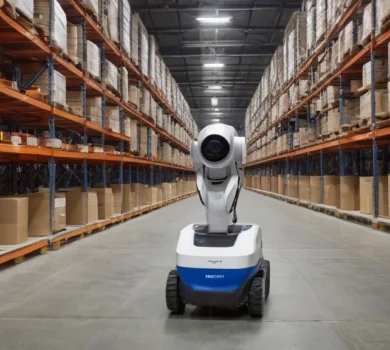
CT-SAFR: a new framework for safe and transparent reasoning of autonomous robots
The new CT-SAFR framework, presented at the IEEE CAI conference in May 2026, can detect false
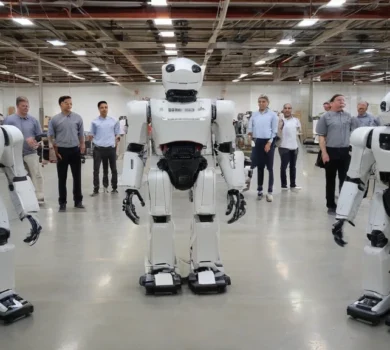
Robotics in additive manufacturing: lectures at the University of Michigan
The Robotics Seminar Series at the University of Michigan in 2026 focused on new