

Torobo Humanoid Robot
Precision and power in one
Advanced robotics for your company
Safe human-robot collaboration
Versatile applications in industry
Intelligent control and force regulation
Modern solutions for automation
Torobo is a humanoid robot developed by Tokyo Robotics, designed to work in various sectors such as manufacturing, logistics, and services. Equipped with advanced torque sensors and impedance control, Torobo can safely and precisely perform tasks requiring interaction with the environment. Its design, with a height of 161.5 cm and a lifting capacity of 7 kg per arm, makes it an ideal solution for automating tasks that require human precision and strength.
Contact us Watch the videoTorobo - Tokyo Robotics
Torobo Humanoid Robot
The Torobo humanoid robot, created by Tokyo Robotics, is a versatile research and industrial platform with broad capabilities in motion control, visual processing, and support for additional effectors. It is intended to serve both as a tool for exploring advanced machine learning algorithms and as a humanoid supporting automation in human-designed environments. According to the manufacturer's information, Torobo combines a modular mechanical design with a rich set of sensors (stereo camera, depth camera, microphones) and external ports, which facilitates flexible adaptation to tasks in various industries.
A lifting capacity of up to 7 kg per arm (even in the "worst" limb position) makes the robot suitable for light industrial and service processes. Working with tools such as ROS (Robot Operating System), MoveIt, or Isaac Sim enables motion planning in virtual simulators and the implementation of control systems that integrate image recognition and force control. Torobo can also be equipped with an optional second computer (e.g., with an RTX 4070 card), which further supports processing data from visual sensors.
History and Development
ToraOne Humanoid Robot
Tokyo Robotics has so far focused on solutions integrating collaborative robots in the industrial and research sectors. In the Torobo project, the company decided to combine its experience in precise robotic manipulators with the ambition to create a bipedal platform, developing particularly in the areas of artificial intelligence and learning by movement.
From robotic manipulators to humanoid
- Previous company projects included stationary and mobile robots for industrial tasks, as well as control systems with an emphasis on force control and collision detection. Torobo is a step forward towards more complex bipedal mechanics and movements that mimic human range of motion.
- Thanks to the lifting capacity in the arms, innovative head design (optional sensors and depth camera), and omnidirectional base, the robot can function as both an assistant in logistics processes and an R&D platform for testing motion control algorithms in demanding environments.
Integration with AI systems and learning by demonstration.
- The manufacturer places great emphasis on learning by demonstration technology and force control methods (impedance, collision detection). This allows the robot to interact "gently" in conditions where human safety is a priority.
- Thanks to its support for the ROS system, Torobo can use various software packages that are compatible with it. includes motion planning (MoveIt), visualization (RViZ), or simulation (e.g., MuJoCo). The robot’s design and software enable rapid testing of reinforcement learning strategies or computer vision algorithms, with additional support from a separate computer equipped with an RTX 4070 graphics card if the client requires it.
Technical Specifications
Technical Specification of the Torobo Humanoid Robot
The table below presents the most important parameters of the Torobo humanoid robot, created by Tokyo Robotics. The platform's design is based on a combination of flexible joint configuration, support for the ROS system, and optional sensor solutions, making Torobo an attractive tool for research and semi-industrial applications.
| Parameter | Value | Notes |
|---|---|---|
| Height | 1615 mm | The robot is designed to be approximately human height. |
| Weight | Approximately 120 kg | The weight includes batteries built into the structure. |
| Single arm lifting capacity | 7 kg (even in an unfavorable position) | This allows for manipulation of objects typical of light industrial and service processes. |
| Joint configuration | - Arm: 7 axes (pair of arms) - Waist: 3 axes (2x pitch, yaw) - Neck: 3 axes (yaw, pitch, roll) - Chassis: 4 axes (omni-directional base) |
Wide range of motion, enabling the performance of tasks similar to those performed by humans. |
| Sensors (optional head) | - Wide-angle stereo camera (1x) - Fisheye camera (1x) - Depth camera (1x) - Stereo microphones (1x) |
The robot head is available as an optional version, with the possibility of selecting a set of sensors. |
| Effectors (optional) | - Speaker (1x) | Allows for voice communication or presentation of audio materials. |
| External connectors | - Digital inputs: 8 - Digital outputs: 8 - Analog inputs: 8 - Analog outputs: 8 - Ethernet: 2 ports |
Facilitates the expansion of the robot with additional accessories and integration with external systems. |
| Tool power supply (end of arm) | - 24V DC (1x) - 8 signal wires |
Allows for powering and controlling additional effectors installed in place of the hands. |
| On-board computer (optional) | - Standard PC (motion control) - Second PC (NVIDIA RTX 4070) |
The second computer can be responsible for image processing or more complex AI algorithms. |
| Battery life | Up to 3 hours | Operation during charging is possible; the time depends on the configuration. |
| Supported software | - ROS (MoveIt, RViZ) - Isaac Sim (NVIDIA) - MuJoCo (Google DeepMind) |
Allows for simulation, motion planning, and creation of personalized control applications. |
| Motion control method | - Impedance control - Collision detection - Force control - Learning by demonstration |
It facilitates safe operation in a human environment and learning new behaviors. |
Thanks to the described solutions and the use of popular robotic tools (ROS, Isaac Sim, MuJoCo)), Torobo it is a flexible platform for creating and testing advanced control, perception, and machine learning algorithms.
Torobo
Applications and Examples of Use
The Torobo robot was created with research, educational, and semi-industrial applications in mind, where the priority is the ability to interact with the environment in a way similar to humans. Thanks to its rich sensor options and software expansion capabilities, the platform can be adapted to specific challenges.
Research and Education
Testing AI Algorithms: Compatibility with ROS and popular simulators (MuJoCo, Isaac Sim) allows researchers and students to quickly implement new models for motion control, learning by demonstration, or collision detection.
Practical Exercises: Universities and R&D institutions can use Torobo in laboratories, developing skills in motion programming, vision sensor integration, and testing reactions to tactile stimuli.
Service Tasks and Marketing
Guest Service and Reception: An optional head with a set of cameras and microphones enables the robot to recognize faces or perform basic voice interactions at information points or receptions.
Events and Technology Demonstrations: A humanoid robot that showcases its manipulation capabilities and interacts with the audience attracts attention and builds the image of an organization focused on innovative solutions.
Light Industrial Applications
Precise Manipulation up to 7 kg: Torobo can transport components, sort smaller parts, or perform simple assembly tasks, using force and impedance control while ensuring personnel safety.
Omnidirectional Chassis: This allows the robot to move in multiple directions within limited spaces in production halls or warehouses, without requiring redesign of the infrastructure.
Integration with Management and IT Systems
Remote Monitoring: The robot can be connected to cloud systems, collecting data on movement and performance in real time, which supports decision-making regarding process optimization.
Network Control: Multi-port connectivity (Ethernet, analog and digital connections) simplifies connecting Torobo to existing solutions within the company (e.g., WMS, ERP), making it an element of an integrated production or logistics system.
Thanks to its flexible software architecture, extensive sensor base, and a human-robot interaction-focused approach, Torobo it can be an efficient tool in areas related to the development and practical implementation of humanoid robotics. Its capabilities prove useful in environments that require smooth movement, safe collaboration with personnel, and adaptive learning of behaviors and movement sequences.
Technology and Innovation, Safety
Torobo
Torobo from Tokyo Robotics combines advanced drive mechanisms with a rich set of sensors and machine learning algorithms. According to the manufacturer's information, the robot is adapted to interact with people and the environment in a safe way, which has been achieved through collision detection, force control, and demonstration-based learning methods.
Advanced Drives and Motion Control
- 7 axes in each arm, waist with 3 axes, and neck with 3 axes: They allow for a wide range of movements, which is useful when manipulating objects and working in confined spaces.
- Impedance Control and Collision Detection: The robot can react to unexpected obstacles by limiting the force or torque in the joints, which promotes smooth collaboration in service and research environments.
Navigation, Vision, and Interaction
- Autonomous Omnidirectional Chassis (4 axes): This allows the robot to move freely in multiple directions, which is especially useful in rooms with non-standard layouts.
- Optional Head with Camera System: A wide-angle stereo camera, a fisheye camera, and a depth camera can support object recognition and 3D mapping tasks. Stereo microphones enable basic voice interaction.
Enabling Learning and Machine Teaching
- Force Control and Demonstrations: Built-in algorithms allow Torobo to learn movements through imitation. In addition, reinforcement learning can be implemented to gradually improve the performance of tasks.
- Second Computer with RTX 4070 Card (optional): For tasks requiring more powerful data processing, such as real-time image recognition or advanced motion planning algorithms.
Torobo Robot
Integration and Compatibility, Personalization and Customization of Solutions
Torobo stands out for its flexible approach to hardware and software configuration. Thanks to various connectors, integration with the popular ROS ecosystem, and the ability to expand onboard computers, the robot can be adapted to the needs of many industries - from scientific research to light industrial applications.
Open Software Architecture
- ROS and Simulation Support: Torobo works with MoveIt and RViZ, as well as NVIDIA Isaac Sim and MuJoCo simulators, which allows for motion planning, visualization, and learning new behaviors in virtual environments before deploying them in the real world.
- Low-Level Control and Demonstration Mode: The manufacturer provides tools that enable developers to perform precise operations on joints or program robotic behaviors using the "teach-by-demonstration" method.
External Connectors and Effector Power Supply
- 8 Digital Inputs, 8 Digital Outputs, Analog I/O: This set of interfaces allows for easy connection of additional sensors, manipulators, and supporting devices.
- 24V DC in the Arm: Thanks to the built-in power supply at the end of the arm, dedicated effectors can be installed and powered, expanding the range of useful tasks (e.g., a specialized gripper, a suction cup).
Ability to Work in Various Sectors
- Light Industrial Applications: The robot can assist employees in smaller assembly or manipulation tasks, which relieves the team and increases precision.
- Marketing and Customer Service: Thanks to its humanoid design, Torobo can attract attention at booths and events, and in reception mode, it can handle basic communication tasks.
Support for Education and Research
- Two-Arm Design: 7 axes in each arm facilitate research on bimanual manipulation, e.g., for developing methods of assembling objects or jointly transporting light loads.
- Open Development Environment: Educational institutions have access to SDKs and documentation that allow them to teach students modern control and AI integration methods, expanding their skills in the field of robotics.
The aforementioned capabilities enable creative use Torobo in numerous scenarios - from supporting light warehousing and presentation tasks, through scientific and development projects, to serving as an educational tool in robotics and artificial intelligence institutions. Thanks to its open architecture and support for popular standards, the platform provides ample scope for experimentation and customization for specific implementation goals.
Torobo humanoid robot
Benefits for Customers
The Torobo humanoid robot from Tokyo Robotics stands out due to its flexible configuration and interaction capabilities, which can bring significant value in many sectors - from services and marketing, through educational and research projects, to light industrial tasks. Thanks to its unique set of drives and sensors, Torobo is able to undertake a variety of challenges requiring both mobility and precise manipulation.
Increased Efficiency and Reduced Staff Workload
- The robot can take over tasks related to the transport of small objects (7 kg lifting capacity per arm) in office or warehouse environments, freeing employees from monotonous activities.
- The omnidirectional chassis allows the robot to move efficiently in rooms full of obstacles, which supports logistics work in a flexible way.
Enhancing Image and Customer Service
- A humanoid with optional head functionality (camera, microphone, speaker) attracts attention at events, trade shows, and information points, providing guests with promotional materials or indicating directions.
- Integration with cloud-based AI services (e.g., speech recognition, testing of AI algorithms) improves the quality of interaction and allows for a differentiated offering in the industry.
Development of Innovation and Research Projects
- The solid architecture (7 axes in each arm, advanced sensors) and software support (ROS, Isaac Sim, MuJoCo) make Torobo an attractive tool for exploring new control methods and machine learning.
- Learning by demonstration or real-time collision detection allows scientists and students to practically test innovative AI algorithms and humanoid robot control models.
Flexibility in Industrial and Service Applications
- The robot can operate in small production areas where collaboration with personnel is necessary, thanks to its advanced safety features (collision detection, force control).
- Connecting to resource management systems (WMS, ERP) expands the possibilities of automating tasks such as transporting light components or office supplies.
FAQ - frequently asked questions
Torobo Humanoid Robot
Below are the answers to key questions that arise when planning the implementation or development of a project using Torobo:
The manufacturer offers the robot as part of customized projects. The final availability and delivery time depend on the selected configuration (sensor set, software) and implementation needs.
Costs depend on the hardware configuration and the scope of integration with IT systems. After defining the requirements, the implementing company (e.g., NexaRob) prepares a turnkey offer.
The official specification states 7 kg per arm, even in an unfavorable position. This value works well for tasks with medium difficulty manipulation.
The main area of use is indoor work (offices, halls, laboratories). The omnidirectional chassis performs best on a level, smooth surface.
The base version of Tokyo Robotics robots focuses on control and visual perception. Speech recognition requires additional AI services (e.g., cloud-based), which the manufacturer can help integrate.
The manufacturer states that the batteries last for about 3 hours of operation, but continuous operation is possible during charging - it all depends on the intensity of manipulation and locomotion tasks.
Yes, the robot was designed with ML and DRL experimentation in mind. An optional computer with an RTX 4070 card provides additional computing power for image processing and AI algorithms.
Thanks to the open platform and numerous external ports (Ethernet, digital, analog I/O), Torobo can work with ERP or WMS software, automatically receiving and executing tasks related to the transport of small items.
Yes, ROS support, the ability to use simulators (e.g., MuJoCo, Isaac Sim), and an open architecture make it an excellent platform in university laboratories, enabling research and the development of new motion control methods.

More questions?
If you would like to learn more about humanoid robots, we invite you to browse our complete FAQ section. You will find additional questions, detailed instructions, and helpful tips there.
Why NexaRob?
Your Trusted Partner in Humanoid Robotics - Expertise, Innovation, and Support
NexaRob supports organizations that want to implement humanoid robots into their operations, whether they are industrial companies, research institutions, or service sector entities. Robots such as Torobo from Tokyo Robotics can significantly improve logistics, education, and experimental processes, and also serve as a research platform for the development of modern AI and automation technologies.
As a technology integrator, NexaRob offers comprehensive consulting, implementation, and servicing of humanoid robotic systems. We help in adapting the robot's functions to specific applications so that it becomes real support in performing daily tasks.
- Our Expertise in Humanoid Robotics Thanks to cooperation with various technology suppliers, NexaRob offers solutions tailored to the specifics of a given environment. Our team analyzes customer needs and recommends optimal ways to implement a humanoid robot - whether in a research laboratory, in production processes, or as an interactive platform in the education sector.
- Individual Approach to Implementations We do not impose ready-made schemes - we start each project with a thorough analysis of the environment and tasks that the robot will perform. We create a detailed implementation plan covering the integration of Torobo with IT systems, the selection of manipulators and AI functionalities, to ensure maximum operational efficiency in a given organization.
- Technical Support and Service We offer comprehensive support in implementing the robot, including installation, operator training, and ongoing technical service. Additionally, we provide the possibility of expanding the robot's functions with additional modules, including advanced AI algorithms or new sensors, which allows for further development of the humanoid as technology evolves.
- Innovation and Development Potential NexaRob actively participates in R&D projects related to humanoid robotics, allowing us to help adapt Torobo to new challenges - from applications in process automation to experimental research on artificial intelligence. Our goal is not only to implement the robot but also to ensure its long-term development and adaptation to the dynamically changing needs of the market.
If you are wondering how Torobo from Tokyo Robotics can support your company, laboratory, or educational institution, contact NexaRob. Together, we will select the optimal solutions and plan a robot implementation strategy to bring tangible benefits to your organization. Together, we are building the future of automation - contact us!
Automate Your Business with NexaRob - Contact Us!
Join NexaRob and Together Let's Develop Humanoid Robotics
Do you want to become our Partner?
At NexaRob, we believe that humanoid robots, such as Torobo from Tokyo Robotics, can play a key role in the future of automation. Bipedal platforms integrated with artificial intelligence algorithms open up new possibilities in industry, education, and the service sector, providing mobility and the ability to perform complex tasks in an environment designed for humans.
We invite technology companies, research institutions, and businesses that want to implement humanoid robots into their operations and jointly develop modern automation solutions to collaborate with us.

United States

China

Japan

Germany

India

United Kingdom

France

Italy

Canada

South Korea

Brazil

Australia

Spain

Mexico

Indonesia

Netherlands

Saudi Arabia

Turkey

Switzerland

Taiwan

Poland

Sweden

Belgium

Thailand

Ireland

Austria

Norway

Israel

United Arab Emirates

Argentina

South Africa

Denmark

Philippines

Singapore

Malaysia

Colombia

Bangladesh

Egypt

Chile

Finland

Vietnam

Portugal

Czech Republic

Romania

New Zealand

Peru

Greece

Ukraine

Slovakia

Hungary

Slovenia

Croatia

Serbia

Bulgaria

Estonia

Latvia

Lithuania

Iceland

Luxembourg

Malta

Cyprus

Morocco

Algeria

Tunisia

Nigeria

Kenya

Ethiopia

Ghana

Tanzania

Uganda

Angola

Senegal

Qatar

Kuwait

Oman

Pakistan

Sri Lanka

Nepal

Kazakhstan

Uzbekistan

Mongolia

Russia

Cambodia

Myanmar

Laos

Fiji

Papua New Guinea

Venezuela

Ecuador

Uruguay

Paraguay

Bolivia

Costa Rica

Panama

Dominican Republic

Guatemala

Cuba

Jordan

Lebanon

Iran
Additional countries in Europe
These countries are hidden in readable mode so that the map is not cluttered. Click on a country to open contact information, email, and a description of the area of cooperation.
Additional countries in Asia
These countries are hidden in readable mode so that the map is not cluttered. Click on a country to open contact information, email, and a description of the area of cooperation.
Additional countries in the Americas
These countries are hidden in readable mode so that the map is not cluttered. Click on a country to open contact information, email, and a description of the area of cooperation.
Additional countries in Africa
These countries are hidden in readable mode so that the map is not cluttered. Click on a country to open contact information, email, and a description of the area of cooperation.
Additional countries in Oceania
These countries are hidden in readable mode so that the map is not cluttered. Click on a country to open contact information, email, and a description of the area of cooperation.
Albania
Andorra
Belarus
Bosnia and Herzegovina
Montenegro
Liechtenstein
North Macedonia
Monaco
Moldova
San Marino
Afghanistan
Armenia
Azerbaijan
Bahrain
Bhutan
Brunei
Georgia
Iraq
Yemen
Kyrgyzstan
North Korea
Maldives
Syria
Tajikistan
East Timor
Turkmenistan
Antigua and Barbuda
Bahamas
Barbados
Belize
Dominica
Grenada
Guyana
Haiti
Honduras
Jamaica
Nicaragua
Saint Kitts and Nevis
Saint Lucia
Saint Vincent and the Grenadines
El Salvador
Suriname
Trinidad and Tobago
Benin
Botswana
Burkina Faso
Burundi
Cape Verde
Chad
Democratic Republic of the Congo
Djibouti
Eritrea
Eswatini
Gabon
Gambia
Guinea
Guinea-Bissau
Equatorial Guinea
Cameroon
Comoros
Congo
Lesotho
Liberia
Libya
Madagascar
Malawi
Mali
Mauritania
Mauritius
Mozambique
Namibia
Niger
Central African Republic
Rwanda
Seychelles
Sierra Leone
Somalia
Sudan
South Sudan
Togo
Ivory Coast
Sao Tome and Principe
Zambia
Zimbabwe
Kiribati
Micronesia
Nauru
Palau
Samoa
Tonga
Tuvalu
Vanuatu
Marshall Islands
Solomon Islands
Why Partner with NexaRob?
Joint Investments in Innovation
We create projects integrating hardware, software, and consulting to provide our clients with comprehensive humanoid implementations. We focus on long-term cooperation, the goal of which is the development of technology and the search for new applications for humanoid robots.
Synergy of Competencies
NexaRob is a team of experts from various fields - from artificial intelligence and robotics to IT system integration. By working with us, you have access to knowledge and experience that allows you to effectively implement and adapt the robot to specific needs.
Global Reach
We operate in international markets, adapting technologies to local requirements and industry specifics. Thanks to this, our partners can count on support in adapting humanoids to various sectors and scaling implementations to new regions.
We are Looking for Partners in the Following Areas:
- Production and Distribution of Humanoid Robots We collaborate with technology providers to deliver solutions tailored to our customers' needs. If your company manufactures humanoid robots or components, we can jointly develop offerings and implementations.
- AI and IoT Technologies Artificial intelligence and IoT systems are key for humanoid robots. We are looking for partners who want to develop visual perception technologies, speech processing, and autonomous navigation systems to make humanoids even more intelligent.
- Automation and Logistics Systems Humanoid robots can support logistics operations and integration with resource management systems (WMS, ERP). We are open to collaborating with companies involved in process automation that want to deploy humanoids in modern work environments.
Let's Join Forces
If you are developing humanoid robots, offering advanced AI tools, or considering the implementation of a humanoid, NexaRob proposes a partnership to develop and promote solutions tailored to the needs of modern companies and institutions. Together, we can contribute to shaping the future of automation by introducing humanoid robots on a larger scale and genuinely making people’s daily tasks easier. Contact us and let’s start developing humanoid robotics together!
Interesting facts from around the world
How does the new diffusion model change the approach to autonomous driving?
The new QualiDrive model introduces an innovative approach to trajectory generation in autonomous vehicle guidance - instead of
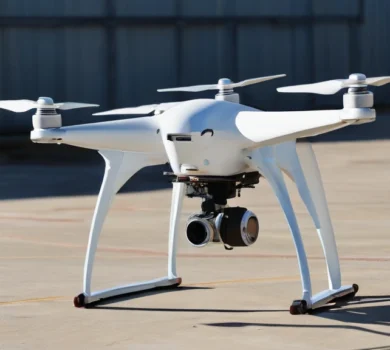
The fusion of drone and ground vehicle data improves the continuity of tracking autonomous vehicles.
A study conducted in a simulation showed that the combination of data from a drone (UAV) and a ground vehicle (UGV)
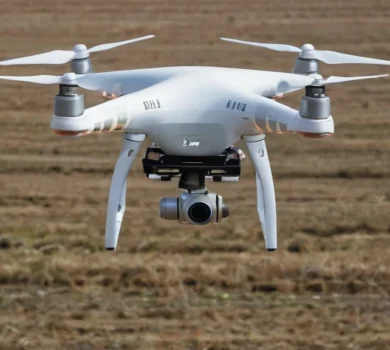
Vision-language models as aids for autonomous drones: balancing speed and precision.
A study conducted on autonomous drones showed that vision-language models, despite their potential for advanced semantic reasoning,
IRIM 2026 Seminar: How can robotics achieve seamless physical interaction with humans?
On October 21, 2026, the Institute for Robotics and Intelligent Machines will host a lecture.
DriveWorld3D: a new generative simulation for safe autonomous driving
The new DriveWorld3D system, developed by the Robostreet team in Cambridge, is designed to help create safer models.